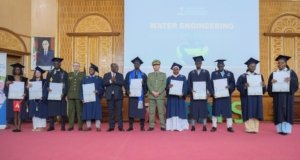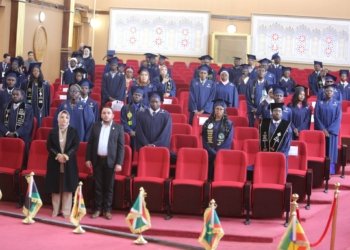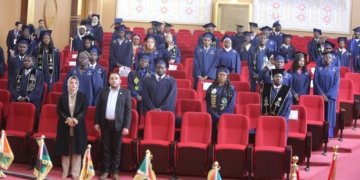

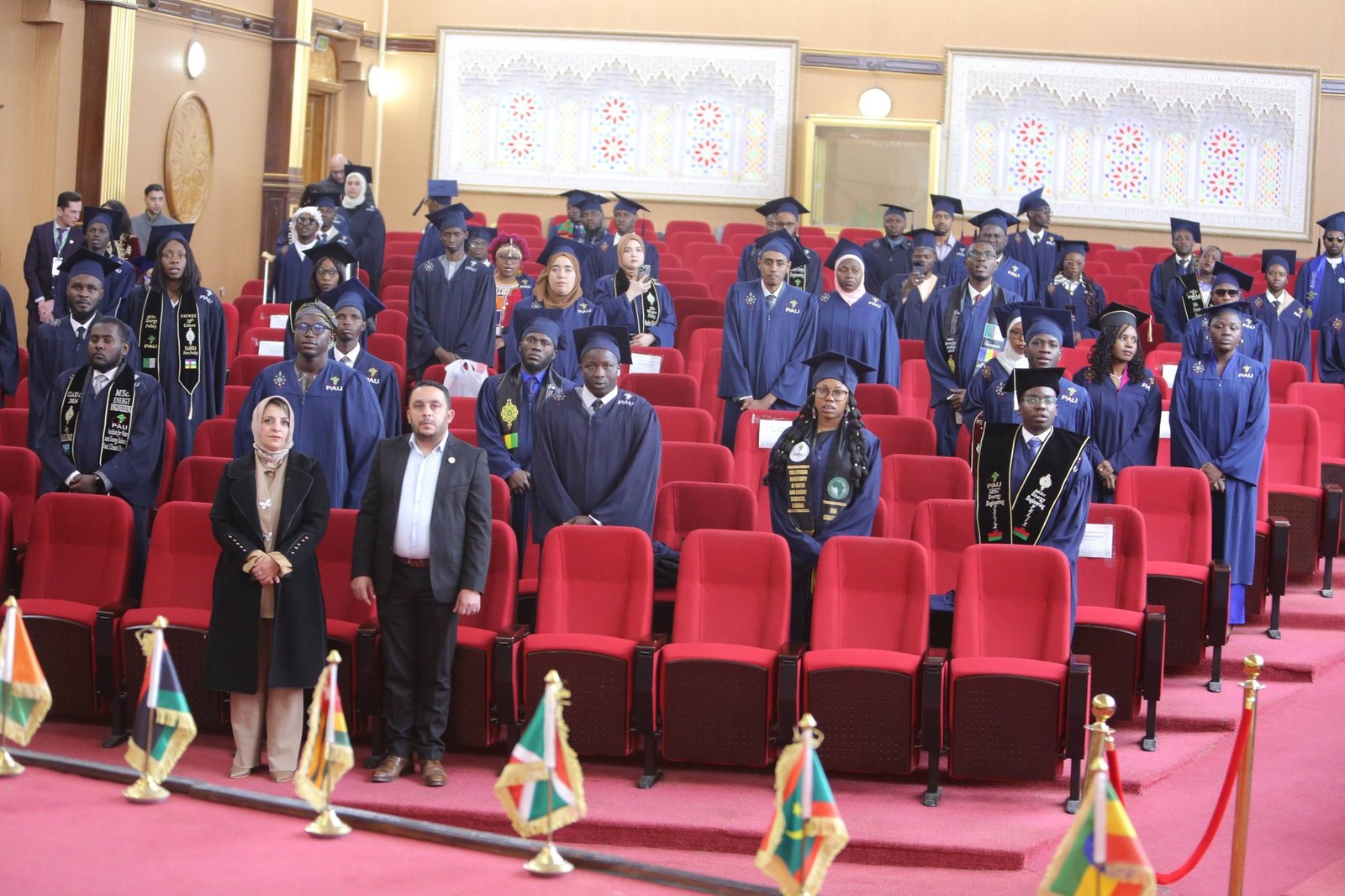

The Pan African University Institute for Water and Energy Sciences, including Climate Change, graduated 76 postgraduate students from 37 African countries on March 30 in Tlemcen, Algeria, highlighting efforts to train scientists on the continent to tackle key development challenges.
The students completed Master of Science programs across six tracks in water sciences, energy sciences and climate change, covering both engineering and policy.
Thirty-one graduates, or 41% of the cohort, are women, reflecting the university’s focus on gender equity in science, technology, engineering and mathematics education.
The graduation marks the institute’s 10th cohort and comes as the African Union has made water and sanitation its continental theme for 2026.
AU heads of state adopted a policy framework tied to Agenda 2063 earlier this year, placing graduates within a broader push to strengthen water security and sanitation systems.
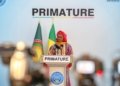
“The knowledge you carry out of this institution is not academic inventory, it is operational capacity for one of Africa’s most pressing developmental challenges,” Prof. Saidou Madougou, director of the AU Commission’s Department of Education, Science, Technology and Innovation, said.
“Agenda 2063 is no longer in its early chapters. Africa does not need you to be ready someday. It needs you to be ready now.”
Prof. Jean Koulidiati, rector of the Pan African University, said graduates carry a responsibility to advance development through education and innovation.
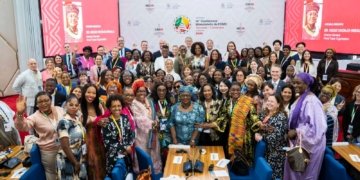
The ceremony at the University of Tlemcen was attended by several African ambassadors and Germany’s ambassador to Algeria, reflecting international support for the institute.
The university, also known as PAUWES, operates under the AU Commission and is hosted by Abou Bekr Belkaid University of Tlemcen.
The Pan African University, headquartered in Yaounde, Cameroon, runs five institutes across Africa and offers fully funded postgraduate scholarships.