
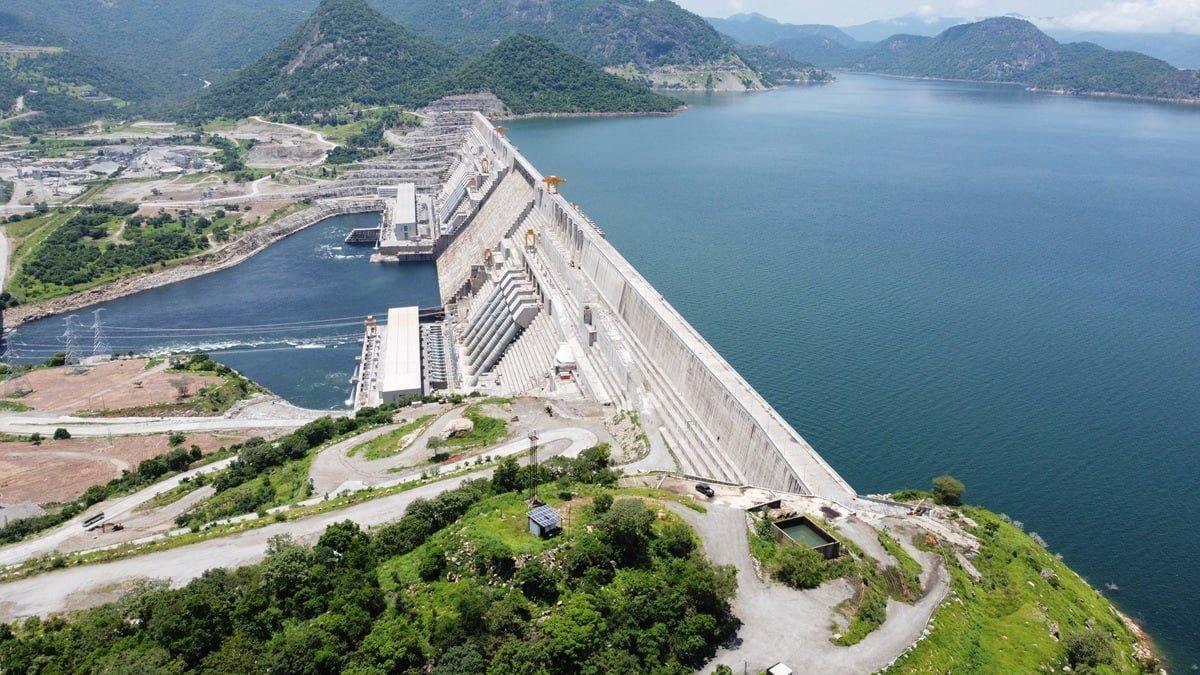

The Grand Ethiopian Renaissance Dam (GERD) generated 13,778 gigawatt-hours of electricity in the first nine months of its operational year, a 122% increase from the same period a year earlier when the facility was still ramping up capacity, state utility Ethiopian Electric Power (EEP) said Wednesday.
The output places the dam at 95.7% of its annual generation target of 18,477 GWh, with reservoir levels held steady at 629.1 meters.
The surge in output is driven by the successful integration of additional generating turbines, according to EEP.
Prime Minister Abiy Ahmed inaugurated the dam on Sept. 9, 2025, in the presence of the presidents of Djibouti, Kenya, Somalia, and South Sudan, as well as African Union and UN officials.
According to Ethiopian Electric Power, the GERD now supplies 51% of Ethiopia’s national electricity, making it the primary driver of a grid that has expanded sharply over the past seven years.
Ethiopian Electric Power data show the country’s total installed generation capacity has more than doubled since 2018, rising from 4,462 MW to 9,752 MW.
National electricity access climbed from 44% to 54% over the same period. Ethiopia generates nearly all of its power from renewable sources, including hydropower, wind, solar and geothermal installations.
The dam’s regional footprint is growing alongside its domestic output. Ethiopia exports electricity to Sudan, Djibouti, Kenya and Tanzania.
Foreign currency earnings from those sales reached $366 million this year, up $138 million from the previous year, according to Ethiopian Electric Power.
The utility projects export revenue will reach $1 billion annually as the dam reaches full capacity.
Annual generation across Ethiopia’s entire power system has grown from 15.3 terawatt-hours to 29.5 TWh over the same seven-year period, Ethiopian Electric Power data show.
The Ethiopian government has set a target of universal electricity access within five years, combining grid expansion projected to reach 78% of the population with decentralized off-grid systems, including solar and biogas installations.