

NAIROBI
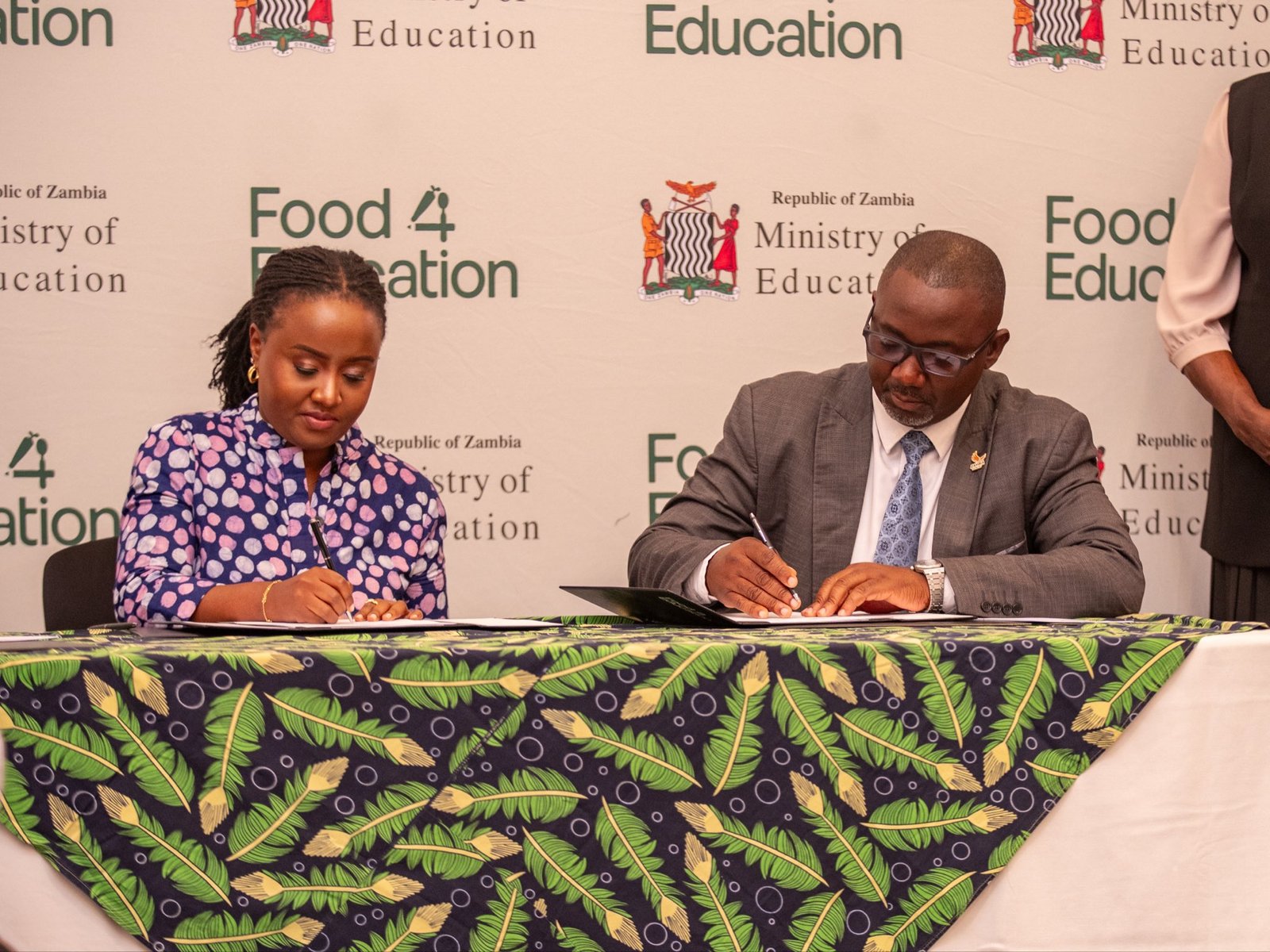
Zambia’s Ministry of Education has signed a four-year partnership with Kenya’s Food4Education to strengthen the country’s national school feeding program as it works to expand meal coverage to more learners.
The Memorandum of Understanding, signed on Monday in Lusaka, establishes a framework for technical cooperation rather than for direct program implementation.
The government will retain responsibility for financing and delivering the initiative.
The partnership aims to increase the number of children receiving school meals from 4.6 million in 8,193 schools to 5.6 million by the end of 2026.
It builds on discussions that began in August 2024 and a study visit by a Zambian delegation to Kenya earlier this year to examine school kitchen models.
Under the agreement, Food4Education will provide technical support in five areas: policy and institutional coordination, program design and operations, data and digital systems, budgeting and financing, and infrastructure planning.
The World Food Programme (WFP), which witnessed the signing, said in a social media post that the partnership will establish “a Hub of Excellence on School Feeding, model kitchens, policy support, real-time data systems and resource mobilization.”
WFP Representative and Country Director in Zambia, Cissy Kabasuuga, delivered remarks at the signing ceremony.
Food4Education Founder and Chief Executive Officer Wawira Njiru said the organization’s role is to strengthen government systems rather than implement the program.
“Zambia is doing something that the continent needs to see. It is putting its own treasury and the weight of several ministries behind its own children, building school feeding as economic infrastructure that strengthens agriculture, creates dignified livelihoods, builds human capital, and grows the economy,” Wawira Njiru said.
Head of the Presidential Delivery Unit, Kusobile Kamwambi, said the government has allocated more than 500 million kwacha ($17.8 million) annually to the program, adding that partners will help address gaps, including kitchen infrastructure.
Ministry of Education Permanent Secretary Dr. Kelvin Mambwe described universal school feeding as a strategic national investment.
“Universal school feeding is an investment in our children’s futures and our nation’s economic growth. This partnership with Food4Education helps us strengthen the systems that turn this investment into long-term returns for Zambia,” Mambwe said.
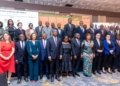
The agreement was witnessed by representatives from the Presidential Delivery Unit, the Office of the Vice President, and the World Food Program.
The partnership comes as Zambia expands access to education following the introduction of its Free Education Policy in 2022, which brought an estimated 2 million additional learners into public schools and increased demand for school meals.
Food4Education has supported government-led school feeding programs in Kenya for more than 14 years, serving more than 200 million meals.
The organization says school feeding programs can generate up to $20 in economic returns for every dollar invested.
Zambia is also set to host the Global Child Nutrition Forum in Lusaka in November 2026.