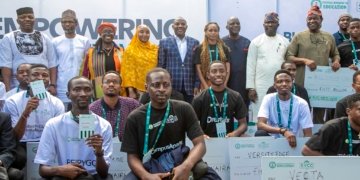

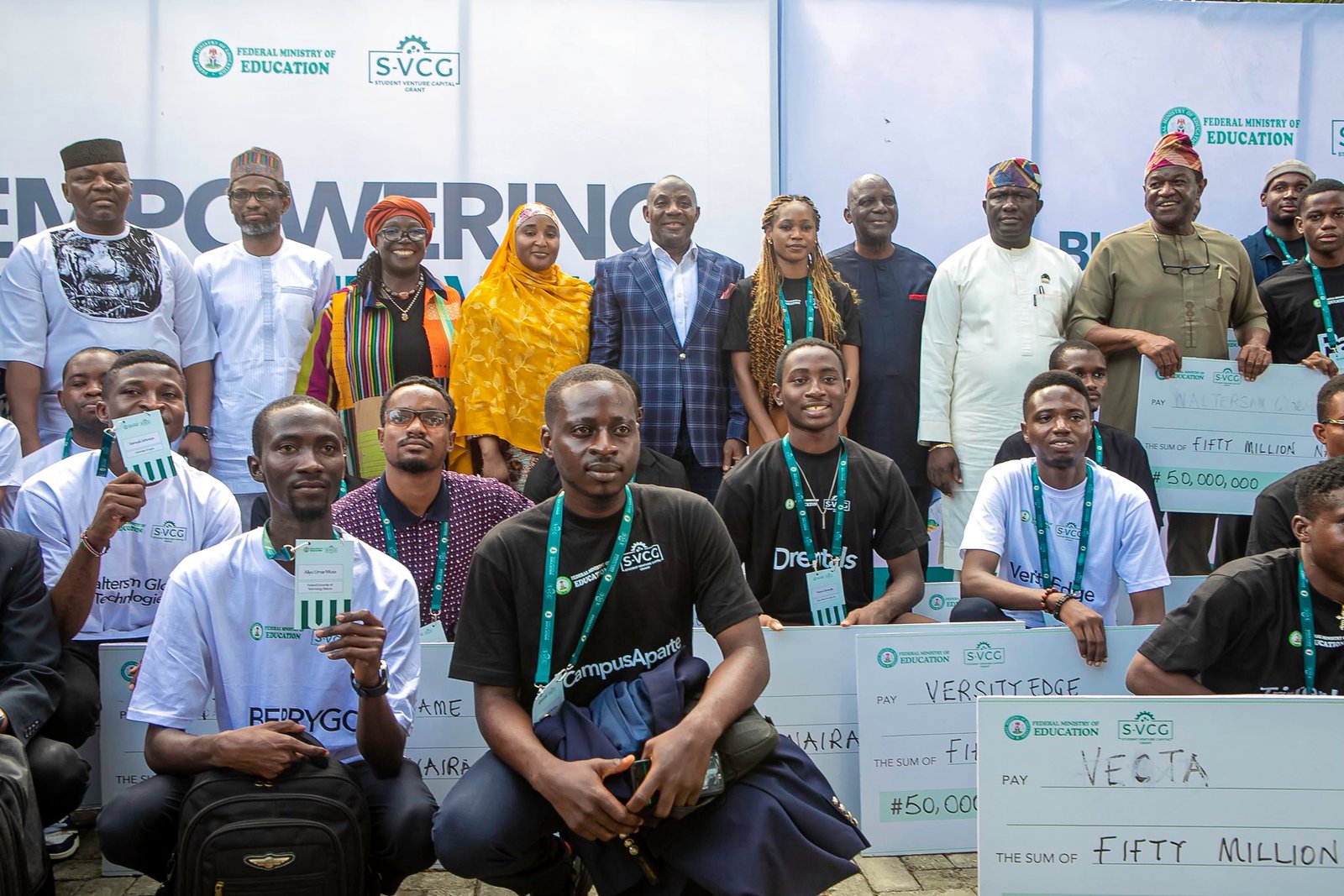

Nigeria’s federal government has awarded ₦2.5 billion ($1.62 million) in equity-free grants to 45 student ventures selected at the 2026 Student Venture Capital Grant Boot Camp and Awards, the Federal Ministry of Education said.
The event, held at the United Nations Development Programme (UNDP) Innovation Hub in Lagos late March, drew 65 finalists from a pool of more than 30,000 applications submitted across 404 tertiary institutions nationwide, according to the ministry.
Each winning venture is eligible for up to ₦50 million ($32,000) in funding, alongside mentorship, incubation support and digital tools.
The program, known as the Student Venture Capital Grant, represents the federal government’s largest single disbursement to student entrepreneurs and signals a shift in education policy toward embedding innovation and commercial skills within Nigeria’s tertiary system.
Elsie Attafuah, UNDP resident representative, said the initiative reflects a shift toward turning “talent into real advantage,” linking education, innovation and enterprise to build a pipeline of founders and job creators.
She described the program as part of a more sustainable development approach connecting skills, investment and competitiveness.
Education Minister Maruf Tunji Alausa reaffirmed the federal government’s commitment to transforming tertiary institutions into hubs of innovation, entrepreneurship and practical problem-solving, framing the initiative within President Bola Ahmed Tinubu’s Renewed Hope Agenda, according to the ministry.
Communications and Digital Economy Minister Bosun Tijani emphasized the role of digital innovation in scaling the program’s impact.
The scale of applications, with more than 30,000 from 404 institutions, points to significant demand for entrepreneurship capital among Nigeria’s student population.
The National Universities Commission estimates Nigeria’s tertiary enrollment at approximately two million students across federal and state institutions.
The ministry said it remains committed to building a pipeline of student innovators to support Nigeria’s broader economic growth objectives.