

ADDIS ABABA
Ethiopia formally received relics belonging to Emperor Tewodros II on Tuesday during a ceremony at St Martin’s Chapel at the University of Cumbria in Lancaster, returning artifacts taken to Britain following the 1868 Maqdala campaign.
The repatriated items include strands of hair belonging to the emperor and a blood-stained piece of cloth associated with his final moments at Maqdala. Following a blessing ceremony, Dr. Alula Pankhurst received the relics on behalf of the Ethiopian Heritage Authority.
In a recorded video message, Abebaw Ayalew, Director General of the Ethiopian Heritage Authority, said the items carried a weight that no archive could fully capture. “These relics constitute the bedrock of Ethiopian identity, collective memory and cultural heritage,” he said.
He described the 1868 expedition as a complex and sensitive chapter in shared history and said the handover reflected growing trust and cooperation between British and Ethiopian institutions.
Researcher Eyob Derillo, whose personal initiative and sustained engagement helped advance the repatriation, presented the Abyssinia Collection Research Project alongside Lancaster Museum’s Carolyn Dalton.
The ceremony brought together Ethiopian clergy, British scholars, diplomats from the Ethiopian Embassy in London and museum representatives.
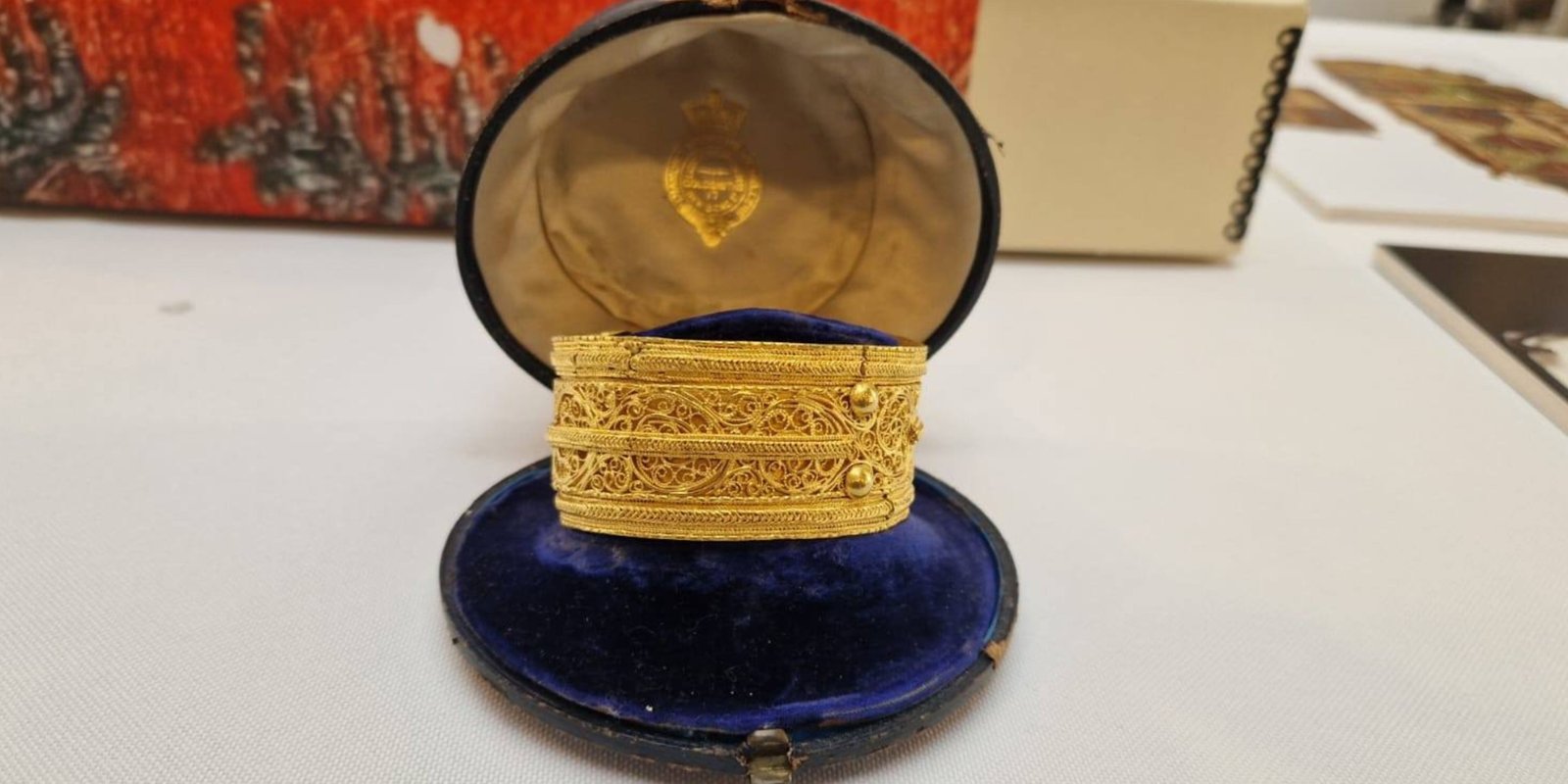
The great-grandson of Sir Robert Napier, who led the 1868 expedition, also attended. He handed over a golden bracelet originally gifted by Emperor Tewodros II to a member of the British expeditionary force and later passed down within the Napier family.
A Continent Reclaiming Its Past
Tuesday’s ceremony is the latest in a sequence of Ethiopian heritage recoveries that has accelerated over the past five years. Imperial shields, crowns and personal effects belonging to Prince Alemayehu were returned in 2021 and 2024.
A 19th-century gold imperial hairpin was repatriated in December 2025. In late 2025, Germany returned 12 historical artifacts to Ethiopia, including ceremonial crowns and paintings, from a private family collection held for over a century.
The momentum extends well beyond Ethiopia. Nigeria recovered more than 1,100 Benin Bronzes from German state museums in 2022 and a further batch from the Horniman Museum in London in 2023, after decades of formal demands by the Nigerian government and Benin royal institutions.
Senegal, Mali and South Africa have each advanced repatriation claims in recent years, with the African Union formally backing member states’ recovery efforts under its cultural heritage agenda.
For Ethiopia, the immediate priority remains the sacred Tabots, altar tablets held by the British Museum that the Ethiopian Orthodox Tewahedo Church has sought for decades. Tuesday’s ceremony moved that conversation forward. The Tabots have not moved yet.