

Bantu Gazette

Bantu Gazette
  • Energy & Trade
  • Finance
  • Health
  • Politics & Economy
  • Technology
  • Environment
  • Feature
  • Opinion
  • Changemakers
  • Tourism & Culture
  • Sports
  • Magazine
Menu
  • Black Frame Studio
  • Magazine

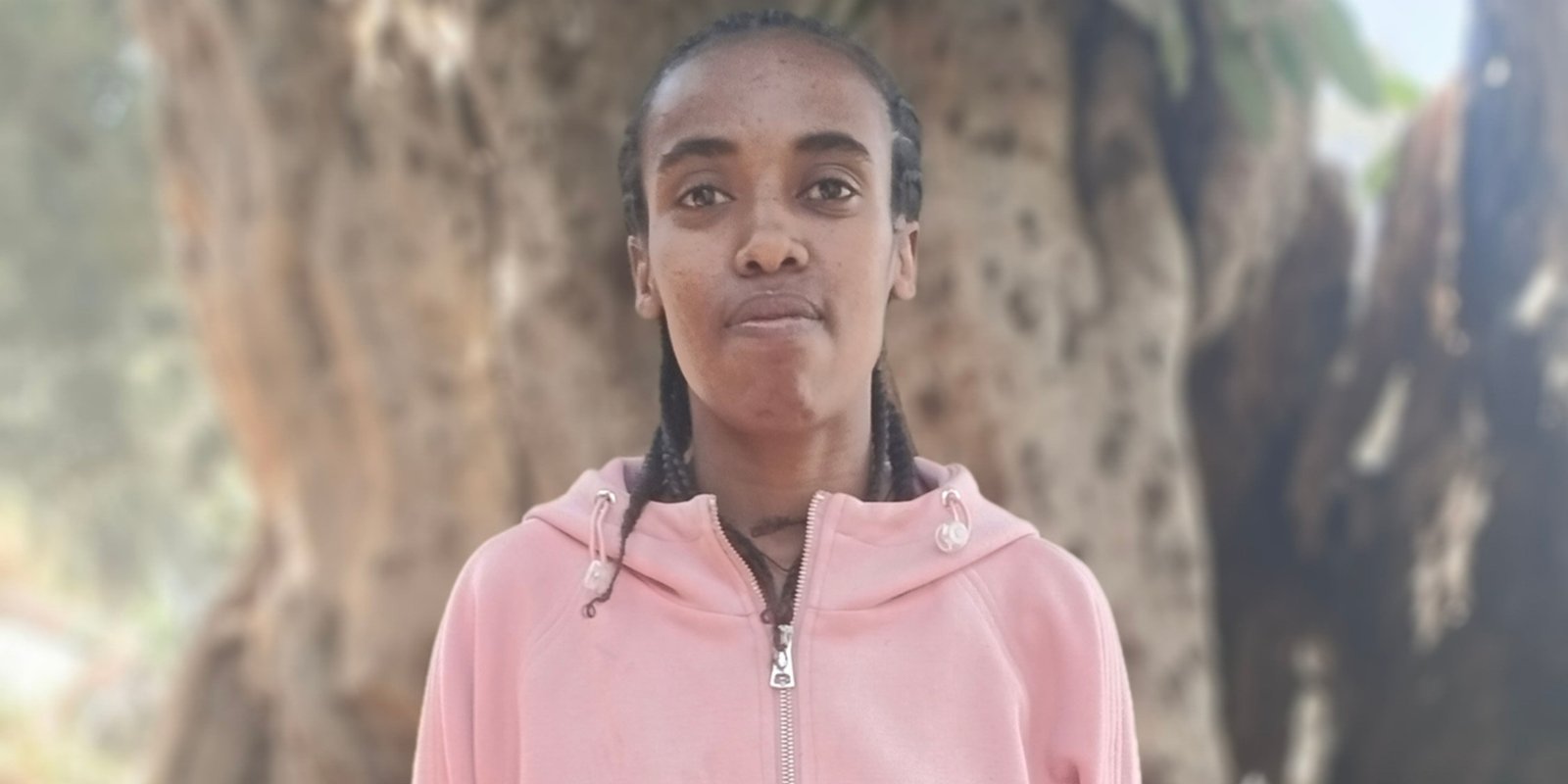
At 24, an Ethiopian Woman Preserves a 1,000-Year-Old Manuscript Tradition

Mahlet Muleta is part of a small generation keeping alive a craft that preserved Ethiopia’s sacred manuscripts for more than 1,000 years

At 24, an Ethiopian Woman Preserves a 1,000-Year-Old Manuscript Tradition

mahlet muleta

Abel Gorfu Asefaby Abel Gorfu Asefa
March 8, 2026
Reading Time: 4 mins read

At 24, an Ethiopian Woman Preserves a 1,000-Year-Old Manuscript Tradition

Mahlet Muleta is part of a small generation keeping alive a craft that preserved Ethiopia’s sacred manuscripts for more than 1,000 years

At 24, an Ethiopian Woman Preserves a 1,000-Year-Old Manuscript Tradition

mahlet muleta

At 24, an Ethiopian Woman Preserves a 1,000-Year-Old Manuscript Tradition

mahlet muleta

Abel Gorfu Asefaby Abel Gorfu Asefa
April 13, 2026
Reading Time: 4 mins read

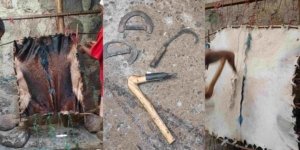
She stretches goat skin across wooden frames and scrapes it clean with steel blades, enduring the smell, the flies and the physical strain required to produce biranna, parchment made from animal skin using traditional Ethiopian techniques. Some of Ethiopia’s oldest surviving manuscripts were written on it.

Mahlet Muleta does work few young people attempt. In workshops across the country, the craft has long been dominated by older men, and some doubted she could handle the labor or refused to teach her.

Today, she is among the few young artisans preserving a tradition that has carried holy texts for more than 1,000 years in Ethiopia.

Mahlet’s journey began more than a decade ago with a simple act of kindness that led her to a craft devoted to protecting sacred texts.

As a 10th grade student, she regularly delivered food to people in need around Hana Mariam Church at her mother’s urging.

“I remember seeing an elderly priest with worn and damaged prayer books,” Mahlet recalls. “Those books immediately caught my attention.”

The pages were thick and luminous, unlike anything she had seen. She asked how they were made.

The answer introduced her to biranna, parchment prepared from goat skin using techniques passed down through generations.

During family holidays, Mahlet began experimenting with goat skins, trying to replicate what she had learned about biranna.
She often failed at first before beginning to understand the rhythm and patience the craft demanded. Her curiosity soon turned into determination.

The search for mastery took her across Ethiopia.

At Dima Giyorgis Monastery in Bahir Dar, she asked to be trained. The artisan there refused.

“I was 17 and a woman,” she recalls. “They thought I was a spy coming to steal intelligence or textbooks,” she adds with a smile.

Refusing to give up, she traveled to Amda Bet in Gondar, a historic city in northern Ethiopia, where she observed artisans at work.

Her search for guidance eventually led her to Addis Ababa, where she connected with Kirubel, founder of Hammer Birhan, a parchment-making workshop, who showed her the full process from soaking the hide to final polishing.

“That increased my confidence,” she says. “It enabled me to fully commit myself to the preparation of biranna.”

The work is exacting and physically demanding. Goat skin is considered the strongest and most durable material.

The hide is soaked in water, stretched across a wooden frame and scraped with a curved blade known as a meselecha. It dries in the sun before being smoothed with an L-shaped blade called a fas.

The process can take three days with fresh skins and up to eight with older hides.

The smell lingers in the air. Houseflies gather quickly, and the labor strains the back and arms.

“This work is physically demanding even for very strong people,” said Merigeta Zemelak Amare, a religious manuscript writer at Debre Libanos Monastery and a buyer of Mahlet’s biranna for the past three years.

“When I first heard of her, I doubted she prepared it herself. Then I saw her go through the entire process,” he told Bantu Gazette.

For the first two years, Mahlet did not sell a single piece. She bought goat skins with her own savings and focused on reproducing religious manuscripts held by the elderly priest who first inspired her.

“It was not philanthropy,” she said. “It was my vision of preserving religious manuscripts that are pillars of my religion.”

For centuries, biranna has preserved Ethiopia’s sacred manuscripts, a legacy Mahlet is now helping sustain. Some of these Orthodox manuscripts date back more than 1,000 years.
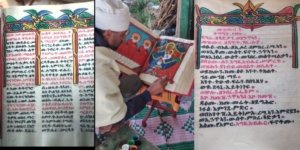
Some were buried for centuries to protect them from invasion. Their survival depended on the durability of parchment.

“If it were not for biranna, it would not have been possible to keep those books alive,” Merigeta Zemelak said.

Inside Mahlet’s workshop, the work has also created opportunity.

Yabsira Zenebe, 23, joined her three years ago at a turning point.

“I was attending college and was about to quit because of a lack of finances,” Yabsira says. “As a last resort, I met her and got the job. That changed my life.”

Beyond income, she describes a deeper reward.

“These papers are made for holy textbooks and musical instruments like the begena used to praise God,” she says. “Being part of that chain gives me spiritual satisfaction.”

“We are more like sisters,” she said, smiling as she spoke of Mahlet.

The physical cost remains real.

Mahlet speaks openly about weight loss, lower back pain and respiratory strain.

Finding workers willing to stay is difficult. Securing workspace can be a challenge because of the smell.

Still, she remains focused.

“When your main drive is the mission, anything is possible,” she said. “Challenges are not even taken into account.”

Her long-term vision stretches back centuries.

She wants to recreate what is believed to be Ethiopia’s first church library, founded in the 13th century at Hayq by the monk Abba Iyyesus Mo’a, born in 1206.

The monk gathered manuscripts from across the country, had them copied and trained hundreds of disciples, including Abune Tekle Haymanot of Debre Libanos. A Four Gospels manuscript he donated is still preserved at Hayq.

Near Debre Libanos Monastery, Mahlet has already purchased a 200-square-meter plot of land for the project.

She hopes to replicate sacred texts and gather volunteers to rewrite manuscripts that hold generations of knowledge.

“I have seen these textbooks with my own eyes,” she said quietly. “But they cannot simply be publicized. Some people would try to steal and sell them.”

The texts survived because they were written on biranna.

The future of that material now depends on a small number of artisans, including a young woman who refused to accept that she did not belong in the trade.

As the world celebrates International Women’s Day on March 8, Mahlet stands in a lineage that stretches across centuries.

She has claimed space in a male-dominated craft, invested her own resources and chosen preservation over profit.

Merigeta Zemelak struggles to summarize her impact.

“I have no words to explain her magnificent work,” he said.

In her workshop, goat skin continues to soak in water. Blades move steadily across stretched hides.

Sheet by sheet, parchment takes form, ready to carry prayers not yet written and stories not yet told.

“This is the mission I live to fulfill,” Mahlet says.

And at just 24, she has only just begun.

Get the inside Story

Stay informed on the stories shaping Africa’s future. Get breaking news, in-depth analysis, opinions and exclusive insights from across the continent delivered to your inbox, free and unfiltered.


Get in touch for more:
Felix Tih
Editorial Director, Bantu Gazette
WhatsApp
LinkedIn
X (Twitter)
Instagram

Related Posts

‘Two Days Without a Penny’: Ethiopia’s Fuel Crisis Through the Eyes of Drivers
Feature

‘Two Days Without a Penny’: Ethiopia’s Fuel Crisis Through the Eyes of Drivers

April 11, 2026
Young Ethiopian Founders Turn Ideas Into Real Solutions
Feature

Young Ethiopian Founders Turn Ideas Into Real Solutions

April 10, 2026
Ethiopia Overhauls Visa Framework to Attract Long-Term Investors
Tourism & Culture

Ethiopia Overhauls Visa Framework to Attract Long-Term Investors

April 8, 2026
Uganda Returns Rhinos to Kidepo Valley After Four Decades
Tourism & Culture

Uganda Returns Rhinos to Kidepo Valley After Four Decades

March 22, 2026
Côte d’Ivoire Receives Sacred Drum Seized During Colonial Rule
Tourism & Culture

Côte d’Ivoire Receives Sacred Drum Seized During Colonial Rule

March 15, 2026
In Kigali, Delphine Kamasiga’s Pottery Café Helps Artisans Reach New Markets
Feature

In Kigali, Delphine Kamaziga’s Pottery Café Helps Artisans Reach New Markets

March 8, 2026

Most Recent

Sahel Nations Secure Coordinated Development Frameworks to Drive Jobs, Growth
Politics & Economy

Sahel Nations Secure Coordinated Development Frameworks to Drive Jobs, Growth

by Aissatou Fall
April 21, 2026
0

Four Central Sahel countries have secured coordinated development frameworks backed by multilateral financing for the 2026-2031 period, targeting job creation,...

Read moreDetails
Ethiopia Eyes Double-Digit Growth as Reform Agenda Takes Hold

Ethiopia Eyes Double-Digit Growth as Reform Agenda Takes Hold

April 20, 2026
President El-Sisi Urges Deadlines for 377,000 Housing Units Across Egypt

President El-Sisi Urges Deadlines for 377,000 Housing Units Across Egypt

April 20, 2026
Côte d’Ivoire Creates Sovereign Development Fund to Finance Long-Term Growth

Côte d’Ivoire Creates Sovereign Development Fund to Finance Long-Term Growth

April 19, 2026
West Africa Bank Commits €310M to Guinea’s Simandou 2040 Development Plan

West Africa Bank Commits €310M to Guinea’s Simandou 2040 Development Plan

April 19, 2026
Gambia Commissions First Hybrid Green Ferry on Banjul-Barra Corridor

Gambia Commissions First Hybrid Green Ferry on Banjul-Barra Corridor

April 18, 2026
Burkina Faso Nationalizes SOFITEX to Reclaim Full Control of Cotton Sector

Burkina Faso Nationalizes SOFITEX to Reclaim Full Control of Cotton Sector

April 17, 2026
Sahel Nations Secure Coordinated Development Frameworks to Drive Jobs, Growth
Politics & Economy

Sahel Nations Secure Coordinated Development Frameworks to Drive Jobs, Growth

by Aissatou Fall
Reading Time: 2 mins read
April 21, 2026
0

Four Central Sahel countries have secured coordinated development frameworks backed by multilateral financing for the 2026-2031 period, targeting job creation,...

Read moreDetails
Ethiopia Eyes Double-Digit Growth as Reform Agenda Takes Hold
Politics & Economy

Ethiopia Eyes Double-Digit Growth as Reform Agenda Takes Hold

by Maraki Desta
Reading Time: 1 min read
April 20, 2026
0

Ethiopia's economy is growing at 9.2% and is projected to accelerate to 10.2% in the coming year, Prime Minister Abiy...

Read moreDetails
President El-Sisi Urges Deadlines for 377,000 Housing Units Across Egypt
Politics & Economy

President El-Sisi Urges Deadlines for 377,000 Housing Units Across Egypt

by Samira Benhadda
Reading Time: 2 mins read
April 20, 2026
0

President Abdel Fattah El-Sisi on Saturday urged the housing minister to set firm deadlines for delivering 377,000 housing units spanning...

Read moreDetails

At 24, an Ethiopian Woman Preserves a 1,000-Year-Old Manuscript Tradition

Mahlet Muleta is part of a small generation keeping alive a craft that preserved Ethiopia’s sacred manuscripts for more than 1,000 years

At 24, an Ethiopian Woman Preserves a 1,000-Year-Old Manuscript Tradition

mahlet muleta

She stretches goat skin across wooden frames and scrapes it clean with steel blades, enduring the smell, the flies and the physical strain required to produce biranna, parchment made from animal skin using traditional Ethiopian techniques. Some of Ethiopia’s oldest surviving manuscripts were written on it.

Mahlet Muleta does work few young people attempt. In workshops across the country, the craft has long been dominated by older men, and some doubted she could handle the labor or refused to teach her.

Today, she is among the few young artisans preserving a tradition that has carried holy texts for more than 1,000 years in Ethiopia.

Mahlet’s journey began more than a decade ago with a simple act of kindness that led her to a craft devoted to protecting sacred texts.

As a 10th grade student, she regularly delivered food to people in need around Hana Mariam Church at her mother’s urging.

“I remember seeing an elderly priest with worn and damaged prayer books,” Mahlet recalls. “Those books immediately caught my attention.”

The pages were thick and luminous, unlike anything she had seen. She asked how they were made.

The answer introduced her to biranna, parchment prepared from goat skin using techniques passed down through generations.

During family holidays, Mahlet began experimenting with goat skins, trying to replicate what she had learned about biranna.

She often failed at first before beginning to understand the rhythm and patience the craft demanded. Her curiosity soon turned into determination.

The search for mastery took her across Ethiopia.

At Dima Giyorgis Monastery in Bahir Dar, she asked to be trained. The artisan there refused.

“I was 17 and a woman,” she recalls. “They thought I was a spy coming to steal intelligence or textbooks,” she adds with a smile.

Refusing to give up, she traveled to Amda Bet in Gondar, a historic city in northern Ethiopia, where she observed artisans at work.

Her search for guidance eventually led her to Addis Ababa, where she connected with Kirubel, founder of Hammer Birhan, a parchment-making workshop, who showed her the full process from soaking the hide to final polishing.

“That increased my confidence,” she says. “It enabled me to fully commit myself to the preparation of biranna.”

The work is exacting and physically demanding. Goat skin is considered the strongest and most durable material.

The hide is soaked in water, stretched across a wooden frame and scraped with a curved blade known as a meselecha. It dries in the sun before being smoothed with an L-shaped blade called a fas.

The process can take three days with fresh skins and up to eight with older hides.

The smell lingers in the air. Houseflies gather quickly, and the labor strains the back and arms.

“This work is physically demanding even for very strong people,” said Merigeta Zemelak Amare, a religious manuscript writer at Debre Libanos Monastery and a buyer of Mahlet’s biranna for the past three years.

“When I first heard of her, I doubted she prepared it herself. Then I saw her go through the entire process,” he told Bantu Gazette.

For the first two years, Mahlet did not sell a single piece. She bought goat skins with her own savings and focused on reproducing religious manuscripts held by the elderly priest who first inspired her.

“It was not philanthropy,” she said. “It was my vision of preserving religious manuscripts that are pillars of my religion.”

For centuries, biranna has preserved Ethiopia’s sacred manuscripts, a legacy Mahlet is now helping sustain. Some of these Orthodox manuscripts date back more than 1,000 years.

Some were buried for centuries to protect them from invasion. Their survival depended on the durability of parchment.

“If it were not for biranna, it would not have been possible to keep those books alive,” Merigeta Zemelak said.

Inside Mahlet’s workshop, the work has also created opportunity.

Yabsira Zenebe, 23, joined her three years ago at a turning point.

“I was attending college and was about to quit because of a lack of finances,” Yabsira says. “As a last resort, I met her and got the job. That changed my life.”

Beyond income, she describes a deeper reward.

“These papers are made for holy textbooks and musical instruments like the begena used to praise God,” she says. “Being part of that chain gives me spiritual satisfaction.”

“We are more like sisters,” she said, smiling as she spoke of Mahlet.

The physical cost remains real.

Mahlet speaks openly about weight loss, lower back pain and respiratory strain.

Finding workers willing to stay is difficult. Securing workspace can be a challenge because of the smell.

Still, she remains focused.

“When your main drive is the mission, anything is possible,” she said. “Challenges are not even taken into account.”

Her long-term vision stretches back centuries.

She wants to recreate what is believed to be Ethiopia’s first church library, founded in the 13th century at Hayq by the monk Abba Iyyesus Mo’a, born in 1206.

The monk gathered manuscripts from across the country, had them copied and trained hundreds of disciples, including Abune Tekle Haymanot of Debre Libanos. A Four Gospels manuscript he donated is still preserved at Hayq.

Near Debre Libanos Monastery, Mahlet has already purchased a 200-square-meter plot of land for the project.

She hopes to replicate sacred texts and gather volunteers to rewrite manuscripts that hold generations of knowledge.

“I have seen these textbooks with my own eyes,” she said quietly. “But they cannot simply be publicized. Some people would try to steal and sell them.”

The texts survived because they were written on biranna.

The future of that material now depends on a small number of artisans, including a young woman who refused to accept that she did not belong in the trade.

As the world celebrates International Women’s Day on March 8, Mahlet stands in a lineage that stretches across centuries.

She has claimed space in a male-dominated craft, invested her own resources and chosen preservation over profit.

Merigeta Zemelak struggles to summarize her impact.

“I have no words to explain her magnificent work,” he said.

In her workshop, goat skin continues to soak in water. Blades move steadily across stretched hides.

Sheet by sheet, parchment takes form, ready to carry prayers not yet written and stories not yet told.

“This is the mission I live to fulfill,” Mahlet says.

And at just 24, she has only just begun.

At 24, an Ethiopian Woman Preserves a 1,000-Year-Old Manuscript Tradition

Mahlet Muleta is part of a small generation keeping alive a craft that preserved Ethiopia’s sacred manuscripts for more than 1,000 years

At 24, an Ethiopian Woman Preserves a 1,000-Year-Old Manuscript Tradition

mahlet muleta

Abel Gorfu Asefaby Abel Gorfu Asefa
March 8, 2026

She stretches goat skin across wooden frames and scrapes it clean with steel blades, enduring the smell, the flies and the physical strain required to produce biranna, parchment made from animal skin using traditional Ethiopian techniques. Some of Ethiopia’s oldest surviving manuscripts were written on it.

Mahlet Muleta does work few young people attempt. In workshops across the country, the craft has long been dominated by older men, and some doubted she could handle the labor or refused to teach her.

Today, she is among the few young artisans preserving a tradition that has carried holy texts for more than 1,000 years in Ethiopia.

Mahlet’s journey began more than a decade ago with a simple act of kindness that led her to a craft devoted to protecting sacred texts.

As a 10th grade student, she regularly delivered food to people in need around Hana Mariam Church at her mother’s urging.

“I remember seeing an elderly priest with worn and damaged prayer books,” Mahlet recalls. “Those books immediately caught my attention.”

The pages were thick and luminous, unlike anything she had seen. She asked how they were made.

The answer introduced her to biranna, parchment prepared from goat skin using techniques passed down through generations.

During family holidays, Mahlet began experimenting with goat skins, trying to replicate what she had learned about biranna.

She often failed at first before beginning to understand the rhythm and patience the craft demanded. Her curiosity soon turned into determination.

The search for mastery took her across Ethiopia.

At Dima Giyorgis Monastery in Bahir Dar, she asked to be trained. The artisan there refused.

“I was 17 and a woman,” she recalls. “They thought I was a spy coming to steal intelligence or textbooks,” she adds with a smile.

Refusing to give up, she traveled to Amda Bet in Gondar, a historic city in northern Ethiopia, where she observed artisans at work.

Her search for guidance eventually led her to Addis Ababa, where she connected with Kirubel, founder of Hammer Birhan, a parchment-making workshop, who showed her the full process from soaking the hide to final polishing.

“That increased my confidence,” she says. “It enabled me to fully commit myself to the preparation of biranna.”

The work is exacting and physically demanding. Goat skin is considered the strongest and most durable material.

The hide is soaked in water, stretched across a wooden frame and scraped with a curved blade known as a meselecha. It dries in the sun before being smoothed with an L-shaped blade called a fas.

The process can take three days with fresh skins and up to eight with older hides.

The smell lingers in the air. Houseflies gather quickly, and the labor strains the back and arms.

“This work is physically demanding even for very strong people,” said Merigeta Zemelak Amare, a religious manuscript writer at Debre Libanos Monastery and a buyer of Mahlet’s biranna for the past three years.

“When I first heard of her, I doubted she prepared it herself. Then I saw her go through the entire process,” he told Bantu Gazette.

For the first two years, Mahlet did not sell a single piece. She bought goat skins with her own savings and focused on reproducing religious manuscripts held by the elderly priest who first inspired her.

“It was not philanthropy,” she said. “It was my vision of preserving religious manuscripts that are pillars of my religion.”

For centuries, biranna has preserved Ethiopia’s sacred manuscripts, a legacy Mahlet is now helping sustain. Some of these Orthodox manuscripts date back more than 1,000 years.

Some were buried for centuries to protect them from invasion. Their survival depended on the durability of parchment.

“If it were not for biranna, it would not have been possible to keep those books alive,” Merigeta Zemelak said.

Inside Mahlet’s workshop, the work has also created opportunity.

Yabsira Zenebe, 23, joined her three years ago at a turning point.

“I was attending college and was about to quit because of a lack of finances,” Yabsira says. “As a last resort, I met her and got the job. That changed my life.”

Beyond income, she describes a deeper reward.

“These papers are made for holy textbooks and musical instruments like the begena used to praise God,” she says. “Being part of that chain gives me spiritual satisfaction.”

“We are more like sisters,” she said, smiling as she spoke of Mahlet.

The physical cost remains real.

Mahlet speaks openly about weight loss, lower back pain and respiratory strain.

Finding workers willing to stay is difficult. Securing workspace can be a challenge because of the smell.

Still, she remains focused.

“When your main drive is the mission, anything is possible,” she said. “Challenges are not even taken into account.”

Her long-term vision stretches back centuries.

She wants to recreate what is believed to be Ethiopia’s first church library, founded in the 13th century at Hayq by the monk Abba Iyyesus Mo’a, born in 1206.

The monk gathered manuscripts from across the country, had them copied and trained hundreds of disciples, including Abune Tekle Haymanot of Debre Libanos. A Four Gospels manuscript he donated is still preserved at Hayq.

Near Debre Libanos Monastery, Mahlet has already purchased a 200-square-meter plot of land for the project.

She hopes to replicate sacred texts and gather volunteers to rewrite manuscripts that hold generations of knowledge.

“I have seen these textbooks with my own eyes,” she said quietly. “But they cannot simply be publicized. Some people would try to steal and sell them.”

The texts survived because they were written on biranna.

The future of that material now depends on a small number of artisans, including a young woman who refused to accept that she did not belong in the trade.

As the world celebrates International Women’s Day on March 8, Mahlet stands in a lineage that stretches across centuries.

She has claimed space in a male-dominated craft, invested her own resources and chosen preservation over profit.

Merigeta Zemelak struggles to summarize her impact.

“I have no words to explain her magnificent work,” he said.

In her workshop, goat skin continues to soak in water. Blades move steadily across stretched hides.

Sheet by sheet, parchment takes form, ready to carry prayers not yet written and stories not yet told.

“This is the mission I live to fulfill,” Mahlet says.

And at just 24, she has only just begun.
Get the inside Story

Stay informed on the stories shaping Africa’s future. Get breaking news, in-depth analysis, opinions and exclusive insights from across the continent delivered to your inbox, free and unfiltered.


Get in touch for more:
Felix Tih
Editorial Director, Bantu Gazette
WhatsApp
LinkedIn
X (Twitter)
Instagram

Related Posts

‘Two Days Without a Penny’: Ethiopia’s Fuel Crisis Through the Eyes of Drivers

‘Two Days Without a Penny’: Ethiopia’s Fuel Crisis Through the Eyes of Drivers

by Abel Gorfu Asefa
April 11, 2026
0

...

Young Ethiopian Founders Turn Ideas Into Real Solutions

Young Ethiopian Founders Turn Ideas Into Real Solutions

by Abel Gorfu Asefa
April 10, 2026
0

...

Ethiopia Overhauls Visa Framework to Attract Long-Term Investors

Ethiopia Overhauls Visa Framework to Attract Long-Term Investors

by Felix Tih
April 7, 2026
0

...

Uganda Returns Rhinos to Kidepo Valley After Four Decades

Uganda Returns Rhinos to Kidepo Valley After Four Decades

by Amani Mwakalebela
March 22, 2026
0

...

Côte d’Ivoire Receives Sacred Drum Seized During Colonial Rule

Côte d’Ivoire Receives Sacred Drum Seized During Colonial Rule

by Aissatou Fall
March 15, 2026
0

...

In Kigali, Delphine Kamasiga’s Pottery Café Helps Artisans Reach New Markets

In Kigali, Delphine Kamaziga’s Pottery Café Helps Artisans Reach New Markets

by Felix Tih
March 8, 2026
0

...

Sahel Nations Secure Coordinated Development Frameworks to Drive Jobs, Growth
Politics & Economy

Sahel Nations Secure Coordinated Development Frameworks to Drive Jobs, Growth

by Aissatou Fall
Reading Time: 2 mins read
April 21, 2026
0

Four Central Sahel countries have secured coordinated development frameworks backed by multilateral financing for the 2026-2031 period, targeting job creation,...

Read moreDetails
Ethiopia Eyes Double-Digit Growth as Reform Agenda Takes Hold

Ethiopia Eyes Double-Digit Growth as Reform Agenda Takes Hold

by Maraki Desta
April 20, 2026
0

Ethiopia's economy is growing at 9.2% and is projected to accelerate to 10.2% in the coming year, Prime Minister Abiy...

President El-Sisi Urges Deadlines for 377,000 Housing Units Across Egypt

President El-Sisi Urges Deadlines for 377,000 Housing Units Across Egypt

by Samira Benhadda
April 20, 2026
0

President Abdel Fattah El-Sisi on Saturday urged the housing minister to set firm deadlines for delivering 377,000 housing units spanning...

Côte d’Ivoire Creates Sovereign Development Fund to Finance Long-Term Growth

Côte d’Ivoire Creates Sovereign Development Fund to Finance Long-Term Growth

by Aissatou Fall
April 19, 2026
0

Côte d'Ivoire has established a sovereign development fund to channel state resources into long-term strategic investments, formalizing a new financing...

West Africa Bank Commits €310M to Guinea’s Simandou 2040 Development Plan

West Africa Bank Commits €310M to Guinea’s Simandou 2040 Development Plan

by Marina Bisse
April 19, 2026
0

The Economic Community of West African States Bank for Investment and Development, or EBID, has signed a financing agreement with...

Next Post
Mame Khady Diouf: A Rising Force in Peace Negotiations and Mediation

Mame Khady Diouf: A Rising Force in Peace Negotiations and Mediation

Africa Emerges as the Global Swing Bloc in a Shifting Global Order

Africa Emerges as the Global Swing Bloc in a Shifting Global Order

Training Expands Poultry Support Network in Zambia

Training Expands Poultry Support Network in Zambia

Rwanda Positions Kigali Financial Centre as Africa’s Investment Gateway

Rwanda Positions Kigali Financial Centre as Africa's Investment Gateway

Bantu Gazette is a pioneering news platform that champions Africa's development, culture, and heritage. We spotlight the continent's successes, address its challenges, and provide insightful coverage of events that shape its future.

Bantu Gazette is a pioneering news platform that champions Africa's development, culture, and heritage. We spotlight the continent's successes, address its challenges, and provide insightful coverage of events that shape its future.

Our Platforms

  • Bantu Magazine
  • Bantu Brief
  • Black Frame Studio

Our Services

  • Bantu Agency
  • Advertise
  • Partnerships

Our Services

  • Editorial Director
  • Opportunities
  • Contact

Bantu Gazette is a pioneering news platform that champions Africa's development, culture, and heritage. We spotlight the continent's successes, address its challenges, and provide insightful coverage of events that shape its future.

Our Platforms

  • Bantu Magazine
  • Bantu Brief
  • Black Frame Studio

Our Services

  • Bantu Agency
  • Advertise
  • Partnerships

Our Services

  • Editorial Director
  • Opportunities
  • Contact
Bantu Gazette
  • Energy & Trade
  • Finance
  • Health
  • Politics & Economy
  • Technology
  • Environment
  • Feature
  • Opinion
  • Changemakers
  • Tourism & Culture
  • Magazine