

Bantu Gazette

Bantu Gazette
  • Energy & Trade
  • Finance
  • Health
  • Politics & Economy
  • Technology
  • Environment
  • Feature
  • Opinion
  • Changemakers
  • Tourism & Culture
  • Sports
  • Magazine
Menu
  • Black Frame Studio
  • Magazine

Africa Emerges as the Global Swing Bloc in a Shifting Global Order

War around Iran is reshaping global supply chains and strategic access, giving Africa new leverage in minerals, geography and diplomacy if leaders choose to use it.

Africa Emerges as the Global Swing Bloc in a Shifting Global Order

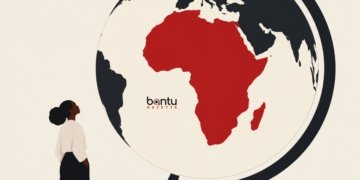
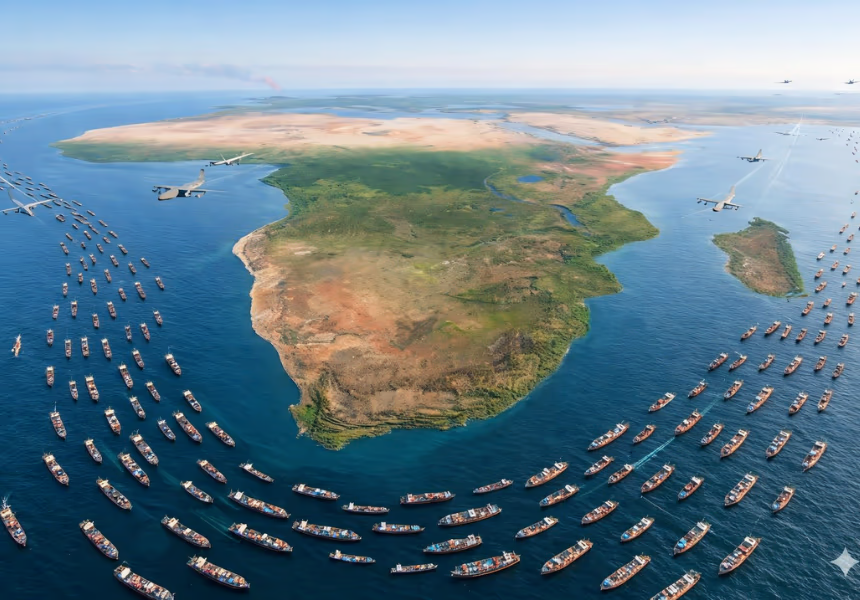
A Global Reroute: How a war in the Middle East can turn Africa into the world's most critical logistical artery. AI-generated

Bukelwa Maphangaby Bukelwa Maphanga
March 11, 2026
Reading Time: 4 mins read

Africa Emerges as the Global Swing Bloc in a Shifting Global Order

War around Iran is reshaping global supply chains and strategic access, giving Africa new leverage in minerals, geography and diplomacy if leaders choose to use it.

Africa Emerges as the Global Swing Bloc in a Shifting Global Order

A Global Reroute: How a war in the Middle East can turn Africa into the world's most critical logistical artery. AI-generated

Africa Emerges as the Global Swing Bloc in a Shifting Global Order

A Global Reroute: How a war in the Middle East can turn Africa into the world's most critical logistical artery. AI-generated

Bukelwa Maphangaby Bukelwa Maphanga
March 11, 2026
Reading Time: 4 mins read

Moments of geopolitical conflict often reshape the global economy in ways that extend far beyond the battlefield. Energy markets tighten, supply chains shift and governments begin searching for secure partners and resources.

These pressures are already visible in the aftermath of Operation Epic Fury. When the United States and Israel launched the operation against Iran on Feb. 28, 2026, the Middle East was plunged into regional war.

The immediate fallout has been severe, leaving thousands dead while disrupting aviation networks and sending energy markets into a tense brace for economic shock.

The immediate African reaction was diplomatic and urgent, with leaders across the continent calling for restraint and de-escalation. The appeals received little attention from the powers driving the conflict.

The African Union and regional powers from Pretoria to Algiers issued formal communiqués warning of regional destabilization and calling for de-escalation.

Washington and Tel Aviv offered little response while the military sorties continued.

The task for African policymakers is not to serve as the world’s moral conscience by attempting to halt foreign missiles. It is to ensure African populations do not end up paying the economic cost of those missiles. Moral appeals rarely shield our economies. Calculated leverage can.

For decades, African economies have absorbed the fallout of conflicts that begin far beyond the continent.

When tensions rise in the Middle East, the effects ripple through global energy markets, driving up fuel prices, inflation and transport costs worldwide. Much of this turbulence is tied to instability around the Strait of Hormuz, a chokepoint at the center of global oil flows.

Economists often describe the resulting energy shock as the “Hormuz Tax,” a reminder of how instability around the Strait of Hormuz ripples through economies far beyond the region and is too often treated as unavoidable in Africa.

Window of Opportunity

The resulting panic in the Global North presents a rare policy window. When major powers go to war, they begin searching urgently for secure resources and dependable geography. Africa holds both in abundance, which means the continent is no longer merely a passive arena for geopolitical competition and is emerging as a decisive swing bloc in a rapidly shifting global order.

The economics of the conflict are striking, as analysts estimate that the United States spent nearly $5.8 billion in the first 100 hours of Operation Epic Fury alone.

If the Global North holds what amounts to a blank check for regional wars, African states should recognize they hold leverage to secure their own supply chains and sovereign interests.

Competition for influence across the Global South is already underway. Weeks before Epic Fury began, Israel recognized Somaliland in a move widely viewed as an effort to secure strategic access near the Gulf of Aden as instability spread across the Red Sea region.

To use this leverage effectively, African governments must rethink how they negotiate global alignment. In the past, leaders often relied on the continent’s 54 votes in the United Nations General Assembly.

That approach carries limited weight with a U.S. administration that treats international institutions with open skepticism.

Washington may dismiss the United Nations while remaining deeply wary of expanding influence from Beijing and Moscow.

The real leverage lies in Africa’s capacity to operate as a unified nonaligned bloc that can grant or deny strategic access.

When major powers seek alignment during a global crisis, that alignment should carry a premium that includes debt restructuring and binding technology transfers.

That premium should also apply to the resources beneath African soil, as the continent controls roughly 70 percent of the world’s cobalt and about 60 percent of its manganese.

With Gulf infrastructure under direct threat and Western economies attempting to secure supply chains, these minerals now sit at the center of national security planning in both the West and the East.

Africa is positioned as the most viable large-scale supplier outside active conflict zones. The era of exporting raw minerals should give way to a firm requirement that partners build refining and processing capacity on African soil.

Geography as Leverage

As the Strait of Hormuz and surrounding airspace move closer to active war conditions, global logistics networks are already shifting south.

Commercial ships cannot reliably pass through heavily contested waters. Coastal states from Senegal to South Africa sit along the alternative maritime corridor around the Cape of Good Hope.

Flights linking Europe and Asia must increasingly route through African airspace, creating opportunities to expand refueling hubs and raise overflight revenues.

Airports in Addis Ababa, Nairobi and Kigali are positioned to capture a surge in traffic if governments invest quickly in capacity.

In return for keeping global supply chains moving, African states should require significant investment in logistics infrastructure.

Smaller states and developing regions are often told to wait out global crises. In a multipolar system defined by persistent conflict, waiting amounts to surrendering agency.

Operation Epic Fury is a tragedy for the Middle East and the globe at large. It is also a moment of clarity for Africa.

The world rarely offers the continent a seat at its most consequential tables. African leaders must use the leverage already in their hands to build one.

The competition for influence across the Global South has begun, and Africa has the ability to set the terms.



Bukelwa Maphanga


Bukelwa Maphanga
is a doctoral student in New Media and Communication and a Teaching Assistant at Ibn Haldun University in Turkey. Building on a background in Political Science and International Relations, her research examines the foreign policy strategies of small African states. She has a particular interest in the intersection of media and political economy, and is an avid advocate for African integration.

Get the inside Story

Stay informed on the stories shaping Africa’s future. Get breaking news, in-depth analysis, opinions and exclusive insights from across the continent delivered to your inbox, free and unfiltered.


Get in touch for more:
Felix Tih
Editorial Director, Bantu Gazette
WhatsApp
LinkedIn
X (Twitter)
Instagram

Related Posts

Lesotho Launches Five-Year Industrial Strategy Targeting 50,000 Jobs
Politics & Economy

Lesotho Launches Five-Year Industrial Strategy Targeting 50,000 Jobs

April 16, 2026
Benin Finance Minister Wadagni Wins Presidency in Landslide
Politics & Economy

Benin Finance Minister Wadagni Wins Presidency in Landslide

April 14, 2026
Politics & Economy

AU, Côte d’Ivoire Launch Continental Education Accountability Framework

April 13, 2026
Liberia Cabinet Adopts Infrastructure Roadmap, Monrovia Redevelopment Plan
Politics & Economy

Liberia Cabinet Adopts Infrastructure Roadmap, Monrovia Redevelopment Plan

April 13, 2026
Namibia Deepens Regional Ties Through Trade and Energy
Politics & Economy

Namibia Targets 24,000 Jobs From $3.8 Billion Investment Pipeline

April 12, 2026
Rwanda Coffee Export Earnings Reach Record $150 Million in 2025
Politics & Economy

Uganda’s Coffee Exports hit $2.5 Billion in Year to February 2026

April 7, 2026

Most Recent

Lesotho Launches Five-Year Industrial Strategy Targeting 50,000 Jobs
Politics & Economy

Lesotho Launches Five-Year Industrial Strategy Targeting 50,000 Jobs

by Naledi Kgosi
April 16, 2026
0

The Lesotho National Development Corporation has launched its Letsema Strategy 2026-2031, outlining a five-year plan to accelerate industrial growth and...

Read moreDetails
Gabon Bans Broiler Chicken Imports to Boost Local Output

Gabon Bans Broiler Chicken Imports to Boost Local Output

April 15, 2026
Morocco’s Olive Harvest Hits Record 2 Million Tons Amid Heavy Rainfall

Morocco’s Olive Harvest Hits Record 2 Million Tons Amid Heavy Rainfall

April 14, 2026
Benin Finance Minister Wadagni Wins Presidency in Landslide

Benin Finance Minister Wadagni Wins Presidency in Landslide

April 14, 2026

AU, Côte d’Ivoire Launch Continental Education Accountability Framework

April 13, 2026
Kenya Manufacturers Warn Logistics Costs Undercut Intra-African Trade Gains

Kenya Manufacturers Warn Logistics Costs Undercut Intra-African Trade Gains

April 13, 2026
Liberia Cabinet Adopts Infrastructure Roadmap, Monrovia Redevelopment Plan

Liberia Cabinet Adopts Infrastructure Roadmap, Monrovia Redevelopment Plan

April 13, 2026
Lesotho Launches Five-Year Industrial Strategy Targeting 50,000 Jobs
Politics & Economy

Lesotho Launches Five-Year Industrial Strategy Targeting 50,000 Jobs

by Naledi Kgosi
Reading Time: 2 mins read
April 16, 2026
0

The Lesotho National Development Corporation has launched its Letsema Strategy 2026-2031, outlining a five-year plan to accelerate industrial growth and...

Read moreDetails
Gabon Bans Broiler Chicken Imports to Boost Local Output
Africa

Gabon Bans Broiler Chicken Imports to Boost Local Output

by Marcelo Edjang
Reading Time: 1 min read
April 15, 2026
0

Gabon’s government has set a January 2027 deadline to ban all broiler chicken imports as it pushes to build a...

Read moreDetails
Morocco’s Olive Harvest Hits Record 2 Million Tons Amid Heavy Rainfall
Africa

Morocco’s Olive Harvest Hits Record 2 Million Tons Amid Heavy Rainfall

by Samira Benhadda
Reading Time: 1 min read
April 14, 2026
0

Morocco recorded a harvest of 2 million tons of olives in the current agricultural season, a 111% increase over the...

Read moreDetails

Africa Emerges as the Global Swing Bloc in a Shifting Global Order

War around Iran is reshaping global supply chains and strategic access, giving Africa new leverage in minerals, geography and diplomacy if leaders choose to use it.

Africa Emerges as the Global Swing Bloc in a Shifting Global Order

A Global Reroute: How a war in the Middle East can turn Africa into the world's most critical logistical artery. AI-generated

Moments of geopolitical conflict often reshape the global economy in ways that extend far beyond the battlefield. Energy markets tighten, supply chains shift and governments begin searching for secure partners and resources.

These pressures are already visible in the aftermath of Operation Epic Fury. When the United States and Israel launched the operation against Iran on Feb. 28, 2026, the Middle East was plunged into regional war.

The immediate fallout has been severe, leaving thousands dead while disrupting aviation networks and sending energy markets into a tense brace for economic shock.

The immediate African reaction was diplomatic and urgent, with leaders across the continent calling for restraint and de-escalation. The appeals received little attention from the powers driving the conflict.

The African Union and regional powers from Pretoria to Algiers issued formal communiqués warning of regional destabilization and calling for de-escalation.

Washington and Tel Aviv offered little response while the military sorties continued.

The task for African policymakers is not to serve as the world’s moral conscience by attempting to halt foreign missiles. It is to ensure African populations do not end up paying the economic cost of those missiles. Moral appeals rarely shield our economies. Calculated leverage can.

For decades, African economies have absorbed the fallout of conflicts that begin far beyond the continent.

When tensions rise in the Middle East, the effects ripple through global energy markets, driving up fuel prices, inflation and transport costs worldwide. Much of this turbulence is tied to instability around the Strait of Hormuz, a chokepoint at the center of global oil flows.

Economists often describe the resulting energy shock as the “Hormuz Tax,” a reminder of how instability around the Strait of Hormuz ripples through economies far beyond the region and is too often treated as unavoidable in Africa.

Window of Opportunity

The resulting panic in the Global North presents a rare policy window. When major powers go to war, they begin searching urgently for secure resources and dependable geography. Africa holds both in abundance, which means the continent is no longer merely a passive arena for geopolitical competition and is emerging as a decisive swing bloc in a rapidly shifting global order.

The economics of the conflict are striking, as analysts estimate that the United States spent nearly $5.8 billion in the first 100 hours of Operation Epic Fury alone.

If the Global North holds what amounts to a blank check for regional wars, African states should recognize they hold leverage to secure their own supply chains and sovereign interests.

Competition for influence across the Global South is already underway. Weeks before Epic Fury began, Israel recognized Somaliland in a move widely viewed as an effort to secure strategic access near the Gulf of Aden as instability spread across the Red Sea region.

To use this leverage effectively, African governments must rethink how they negotiate global alignment. In the past, leaders often relied on the continent’s 54 votes in the United Nations General Assembly.

That approach carries limited weight with a U.S. administration that treats international institutions with open skepticism.

Washington may dismiss the United Nations while remaining deeply wary of expanding influence from Beijing and Moscow.

The real leverage lies in Africa’s capacity to operate as a unified nonaligned bloc that can grant or deny strategic access.

When major powers seek alignment during a global crisis, that alignment should carry a premium that includes debt restructuring and binding technology transfers.

That premium should also apply to the resources beneath African soil, as the continent controls roughly 70 percent of the world’s cobalt and about 60 percent of its manganese.

With Gulf infrastructure under direct threat and Western economies attempting to secure supply chains, these minerals now sit at the center of national security planning in both the West and the East.

Africa is positioned as the most viable large-scale supplier outside active conflict zones. The era of exporting raw minerals should give way to a firm requirement that partners build refining and processing capacity on African soil.

Geography as Leverage

As the Strait of Hormuz and surrounding airspace move closer to active war conditions, global logistics networks are already shifting south.

Commercial ships cannot reliably pass through heavily contested waters. Coastal states from Senegal to South Africa sit along the alternative maritime corridor around the Cape of Good Hope.

Flights linking Europe and Asia must increasingly route through African airspace, creating opportunities to expand refueling hubs and raise overflight revenues.

Airports in Addis Ababa, Nairobi and Kigali are positioned to capture a surge in traffic if governments invest quickly in capacity.

In return for keeping global supply chains moving, African states should require significant investment in logistics infrastructure.

Smaller states and developing regions are often told to wait out global crises. In a multipolar system defined by persistent conflict, waiting amounts to surrendering agency.

Operation Epic Fury is a tragedy for the Middle East and the globe at large. It is also a moment of clarity for Africa.

The world rarely offers the continent a seat at its most consequential tables. African leaders must use the leverage already in their hands to build one.

The competition for influence across the Global South has begun, and Africa has the ability to set the terms.



Bukelwa Maphanga


Bukelwa Maphanga
is a doctoral student in New Media and Communication and a Teaching Assistant at Ibn Haldun University in Turkey. Building on a background in Political Science and International Relations, her research examines the foreign policy strategies of small African states. She has a particular interest in the intersection of media and political economy, and is an avid advocate for African integration.

Africa Emerges as the Global Swing Bloc in a Shifting Global Order

War around Iran is reshaping global supply chains and strategic access, giving Africa new leverage in minerals, geography and diplomacy if leaders choose to use it.

Africa Emerges as the Global Swing Bloc in a Shifting Global Order

A Global Reroute: How a war in the Middle East can turn Africa into the world's most critical logistical artery. AI-generated

Bukelwa Maphangaby Bukelwa Maphanga
March 11, 2026

Moments of geopolitical conflict often reshape the global economy in ways that extend far beyond the battlefield. Energy markets tighten, supply chains shift and governments begin searching for secure partners and resources.

These pressures are already visible in the aftermath of Operation Epic Fury. When the United States and Israel launched the operation against Iran on Feb. 28, 2026, the Middle East was plunged into regional war.

The immediate fallout has been severe, leaving thousands dead while disrupting aviation networks and sending energy markets into a tense brace for economic shock.

The immediate African reaction was diplomatic and urgent, with leaders across the continent calling for restraint and de-escalation. The appeals received little attention from the powers driving the conflict.

The African Union and regional powers from Pretoria to Algiers issued formal communiqués warning of regional destabilization and calling for de-escalation.

Washington and Tel Aviv offered little response while the military sorties continued.

The task for African policymakers is not to serve as the world’s moral conscience by attempting to halt foreign missiles. It is to ensure African populations do not end up paying the economic cost of those missiles. Moral appeals rarely shield our economies. Calculated leverage can.

For decades, African economies have absorbed the fallout of conflicts that begin far beyond the continent.

When tensions rise in the Middle East, the effects ripple through global energy markets, driving up fuel prices, inflation and transport costs worldwide. Much of this turbulence is tied to instability around the Strait of Hormuz, a chokepoint at the center of global oil flows.

Economists often describe the resulting energy shock as the “Hormuz Tax,” a reminder of how instability around the Strait of Hormuz ripples through economies far beyond the region and is too often treated as unavoidable in Africa.

Window of Opportunity

The resulting panic in the Global North presents a rare policy window. When major powers go to war, they begin searching urgently for secure resources and dependable geography. Africa holds both in abundance, which means the continent is no longer merely a passive arena for geopolitical competition and is emerging as a decisive swing bloc in a rapidly shifting global order.

The economics of the conflict are striking, as analysts estimate that the United States spent nearly $5.8 billion in the first 100 hours of Operation Epic Fury alone.

If the Global North holds what amounts to a blank check for regional wars, African states should recognize they hold leverage to secure their own supply chains and sovereign interests.

Competition for influence across the Global South is already underway. Weeks before Epic Fury began, Israel recognized Somaliland in a move widely viewed as an effort to secure strategic access near the Gulf of Aden as instability spread across the Red Sea region.

To use this leverage effectively, African governments must rethink how they negotiate global alignment. In the past, leaders often relied on the continent’s 54 votes in the United Nations General Assembly.

That approach carries limited weight with a U.S. administration that treats international institutions with open skepticism.

Washington may dismiss the United Nations while remaining deeply wary of expanding influence from Beijing and Moscow.

The real leverage lies in Africa’s capacity to operate as a unified nonaligned bloc that can grant or deny strategic access.

When major powers seek alignment during a global crisis, that alignment should carry a premium that includes debt restructuring and binding technology transfers.

That premium should also apply to the resources beneath African soil, as the continent controls roughly 70 percent of the world’s cobalt and about 60 percent of its manganese.

With Gulf infrastructure under direct threat and Western economies attempting to secure supply chains, these minerals now sit at the center of national security planning in both the West and the East.

Africa is positioned as the most viable large-scale supplier outside active conflict zones. The era of exporting raw minerals should give way to a firm requirement that partners build refining and processing capacity on African soil.

Geography as Leverage

As the Strait of Hormuz and surrounding airspace move closer to active war conditions, global logistics networks are already shifting south.

Commercial ships cannot reliably pass through heavily contested waters. Coastal states from Senegal to South Africa sit along the alternative maritime corridor around the Cape of Good Hope.

Flights linking Europe and Asia must increasingly route through African airspace, creating opportunities to expand refueling hubs and raise overflight revenues.

Airports in Addis Ababa, Nairobi and Kigali are positioned to capture a surge in traffic if governments invest quickly in capacity.

In return for keeping global supply chains moving, African states should require significant investment in logistics infrastructure.

Smaller states and developing regions are often told to wait out global crises. In a multipolar system defined by persistent conflict, waiting amounts to surrendering agency.

Operation Epic Fury is a tragedy for the Middle East and the globe at large. It is also a moment of clarity for Africa.

The world rarely offers the continent a seat at its most consequential tables. African leaders must use the leverage already in their hands to build one.

The competition for influence across the Global South has begun, and Africa has the ability to set the terms.



Bukelwa Maphanga


Bukelwa Maphanga
is a doctoral student in New Media and Communication and a Teaching Assistant at Ibn Haldun University in Turkey. Building on a background in Political Science and International Relations, her research examines the foreign policy strategies of small African states. She has a particular interest in the intersection of media and political economy, and is an avid advocate for African integration.

Get the inside Story

Stay informed on the stories shaping Africa’s future. Get breaking news, in-depth analysis, opinions and exclusive insights from across the continent delivered to your inbox, free and unfiltered.


Get in touch for more:
Felix Tih
Editorial Director, Bantu Gazette
WhatsApp
LinkedIn
X (Twitter)
Instagram

Related Posts

Lesotho Launches Five-Year Industrial Strategy Targeting 50,000 Jobs

Lesotho Launches Five-Year Industrial Strategy Targeting 50,000 Jobs

by Naledi Kgosi
April 16, 2026
0

...

Benin Finance Minister Wadagni Wins Presidency in Landslide

Benin Finance Minister Wadagni Wins Presidency in Landslide

by Felix Tih
April 14, 2026
0

...

AU, Côte d’Ivoire Launch Continental Education Accountability Framework

by Aissatou Fall
April 13, 2026
0

...

Liberia Cabinet Adopts Infrastructure Roadmap, Monrovia Redevelopment Plan

Liberia Cabinet Adopts Infrastructure Roadmap, Monrovia Redevelopment Plan

by Marina Bisse
April 13, 2026
0

...

Namibia Deepens Regional Ties Through Trade and Energy

Namibia Targets 24,000 Jobs From $3.8 Billion Investment Pipeline

by Naledi Kgosi
April 12, 2026
0

...

Rwanda Coffee Export Earnings Reach Record $150 Million in 2025

Uganda’s Coffee Exports hit $2.5 Billion in Year to February 2026

by Amani Mwakalebela
April 7, 2026
0

...

Lesotho Launches Five-Year Industrial Strategy Targeting 50,000 Jobs
Politics & Economy

Lesotho Launches Five-Year Industrial Strategy Targeting 50,000 Jobs

by Naledi Kgosi
Reading Time: 2 mins read
April 16, 2026
0

The Lesotho National Development Corporation has launched its Letsema Strategy 2026-2031, outlining a five-year plan to accelerate industrial growth and...

Read moreDetails
Gabon Bans Broiler Chicken Imports to Boost Local Output

Gabon Bans Broiler Chicken Imports to Boost Local Output

by Marcelo Edjang
April 15, 2026
0

Gabon’s government has set a January 2027 deadline to ban all broiler chicken imports as it pushes to build a...

Morocco’s Olive Harvest Hits Record 2 Million Tons Amid Heavy Rainfall

Morocco’s Olive Harvest Hits Record 2 Million Tons Amid Heavy Rainfall

by Samira Benhadda
April 14, 2026
0

Morocco recorded a harvest of 2 million tons of olives in the current agricultural season, a 111% increase over the...

Benin Finance Minister Wadagni Wins Presidency in Landslide

Benin Finance Minister Wadagni Wins Presidency in Landslide

by Felix Tih
April 14, 2026
0

Romuald Wadagni, the technocrat who spent a decade reshaping Benin’s public finances, has won the country’s presidential election after securing...

AU, Côte d’Ivoire Launch Continental Education Accountability Framework

by Aissatou Fall
April 13, 2026
0

The African Union Commission and Côte d'Ivoire have launched a national Spotlight report on foundational learning, positioning the country as...

Next Post
Training Expands Poultry Support Network in Zambia

Training Expands Poultry Support Network in Zambia

Rwanda Positions Kigali Financial Centre as Africa’s Investment Gateway

Rwanda Positions Kigali Financial Centre as Africa's Investment Gateway

Nigeria Approves First National Policy on Cosmetics Safety

Nigeria Approves First National Policy on Cosmetics Safety

Mozambique Launches $28 Million Recovery Project in Conflict-Hit North

Mozambique Launches $28 Million Recovery Project in Conflict-Hit North

Bantu Gazette is a pioneering news platform that champions Africa's development, culture, and heritage. We spotlight the continent's successes, address its challenges, and provide insightful coverage of events that shape its future.

Bantu Gazette is a pioneering news platform that champions Africa's development, culture, and heritage. We spotlight the continent's successes, address its challenges, and provide insightful coverage of events that shape its future.

Our Platforms

  • Bantu Magazine
  • Bantu Brief
  • Black Frame Studio

Our Services

  • Bantu Agency
  • Advertise
  • Partnerships

Our Services

  • Editorial Director
  • Opportunities
  • Contact

Bantu Gazette is a pioneering news platform that champions Africa's development, culture, and heritage. We spotlight the continent's successes, address its challenges, and provide insightful coverage of events that shape its future.

Our Platforms

  • Bantu Magazine
  • Bantu Brief
  • Black Frame Studio

Our Services

  • Bantu Agency
  • Advertise
  • Partnerships

Our Services

  • Editorial Director
  • Opportunities
  • Contact
Bantu Gazette
  • Energy & Trade
  • Finance
  • Health
  • Politics & Economy
  • Technology
  • Environment
  • Feature
  • Opinion
  • Changemakers
  • Tourism & Culture
  • Magazine