
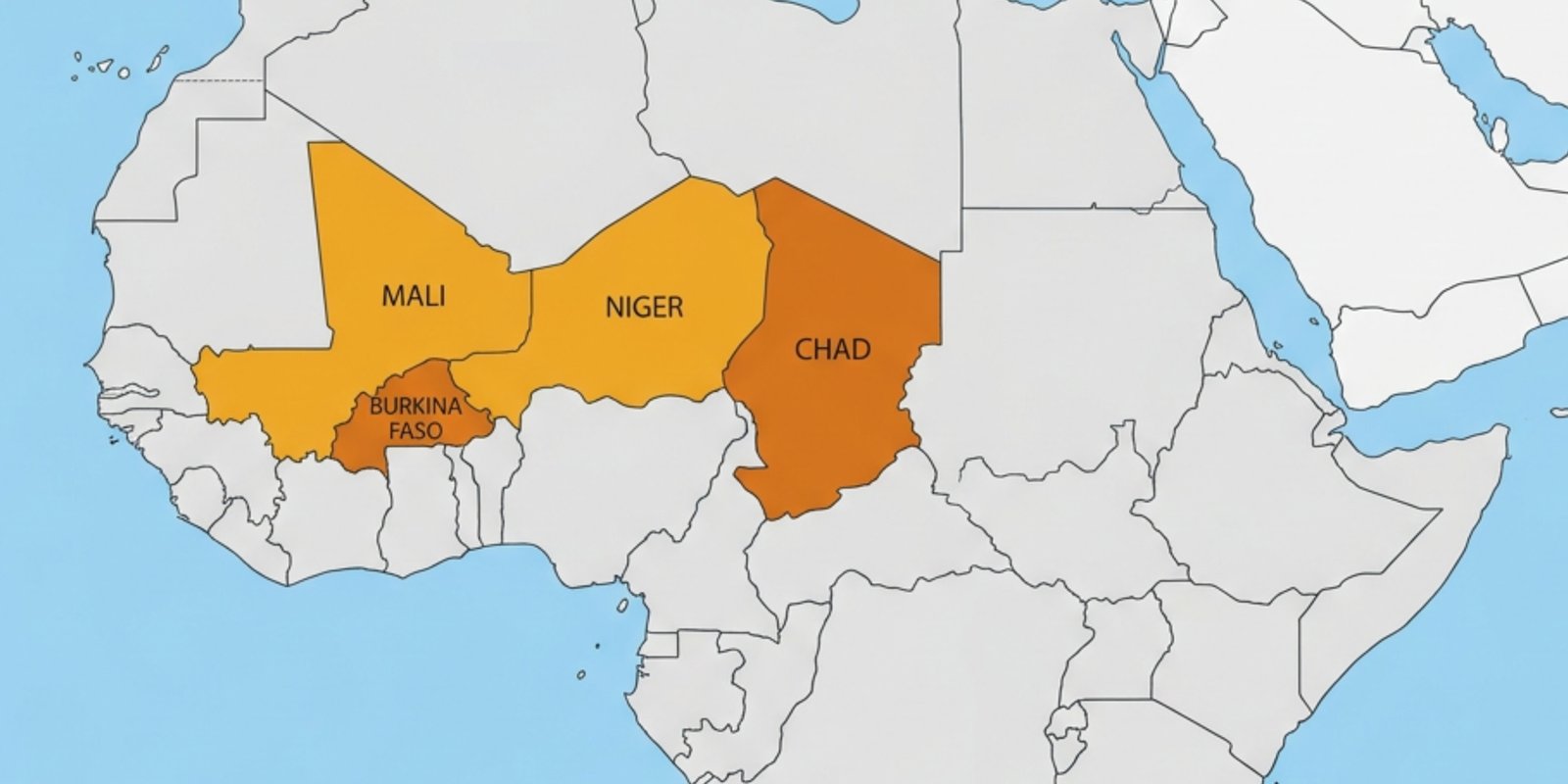

Four Central Sahel countries have secured coordinated development frameworks backed by multilateral financing for the 2026-2031 period, targeting job creation, agricultural productivity and private sector investment across one of the world’s most fragile regions.
Burkina Faso, Chad, Mali and Niger each received Country Partnership Frameworks (CPF) approved April 7 by the World Bank Group, in the first integrated strategy the institution has designed jointly for the four nations.
The frameworks deploy three arms of the World Bank Group in a coordinated approach: the International Development Association (IDA), the International Finance Corporation (IFC) and the Multilateral Investment Guarantee Agency (MIGA).
The three institutions will work jointly to expand access to finance for micro, small, and medium enterprises (MSMEs), strengthen supply chains, and create employment, particularly for youth and women.
Each framework aligns with its country’s national development plan. The partnerships map onto the following national strategies:
- Niger’s Programme de refondation de la République (Republic Refoundation Program)
- Chad’s Plan national de développement Tchad Connexion 2030 (National Development Plan Chad Connection 2030)
- Mali’s Stratégie nationale pour l’émergence et le développement durable (National Strategy for Emergence and Sustainable Development)
- Burkina Faso’s Plan national de développement 2026-2030 (National Development Plan 2026-2030)
All four emphasize governance reform, economic diversification and resilient private-sector-led growth.
Grounded in the institution’s Fragility, Conflict and Violence Strategy, the frameworks address root causes of instability by expanding access to social services and economic opportunities, with particular attention to refugees and internally displaced people.
“The CPFs will put people at the center of the action, support the key levers to accelerate growth and progress, and strengthen cross-border integration to promote balanced development in the Sahel,” said Clara de Sousa, World Bank Group Division Director for the four countries.
IFC Division Director for West Africa Olivier Buyoya said a strong private sector was essential to converting the region’s economic potential into measurable social progress, particularly in energy and agribusiness.
Muhamet Bamba Fall, director of industries at MIGA, said the agency intended to support investment flows to smaller enterprises by building on entry points created through IDA and IFC interventions and the World Bank Group Guarantee Platform.