
Bantu Gazette

Bantu Gazette
  • Energy & Trade
  • Finance
  • Health
  • Politics & Economy
  • Technology
  • Environment
  • Feature
  • Opinion
  • Changemakers
  • Tourism & Culture
  • Sports
  • Magazine
Menu
  • Black Frame Studio
  • Magazine

Nigeria Approves First National Policy on Cosmetics Safety

After nearly two decades of stalled efforts, the country moves to regulate a market valued at $7.8 billion

Nigeria Approves First National Policy on Cosmetics Safety

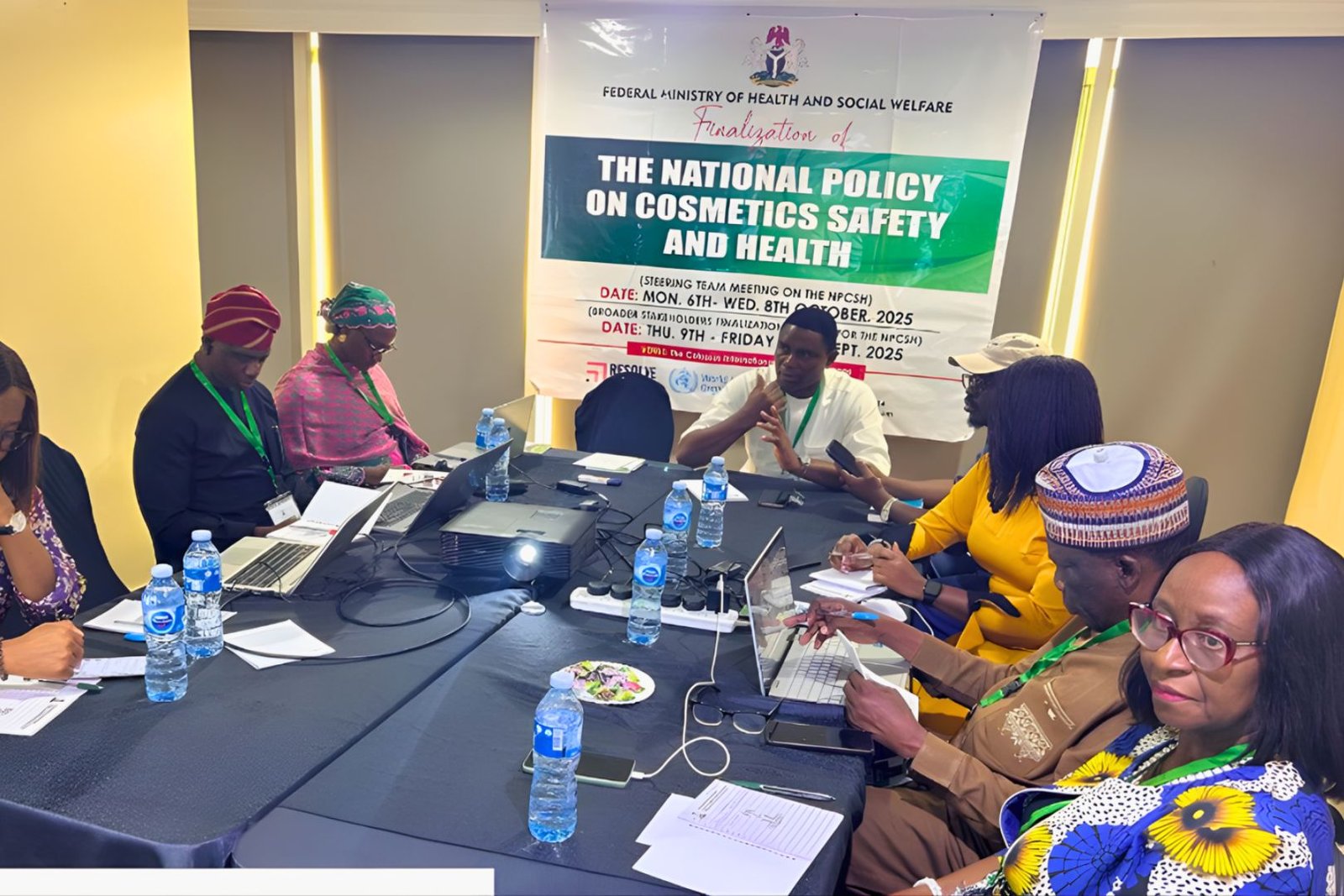
Finalization of the Natinal Policy on Cosmetics Safety amd Health.

Marcelo Edjangby Marcelo Edjang
March 15, 2026
Reading Time: 2 mins read

Nigeria Approves First National Policy on Cosmetics Safety

After nearly two decades of stalled efforts, the country moves to regulate a market valued at $7.8 billion

Nigeria Approves First National Policy on Cosmetics Safety

Finalization of the Natinal Policy on Cosmetics Safety amd Health.

Nigeria Approves First National Policy on Cosmetics Safety

Finalization of the Natinal Policy on Cosmetics Safety amd Health.

Marcelo Edjangby Marcelo Edjang
March 15, 2026
Reading Time: 2 mins read

Nigeria has approved its first national policy on cosmetics safety, establishing a unified system to regulate how cosmetic products are manufactured, imported, sold, used and disposed of across all 36 states and the Federal Capital Territory.

The move aims to strengthen oversight of Nigeria’s rapidly expanding cosmetics industry and address growing concerns about harmful ingredients, contamination and weak regulation in personal care products.

The policy was launched at the 66th National Council on Health in Calabar, the World Health Organization (WHO) said in a statement March 11.

Nigeria’s cosmetics market is valued at about $7.8 billion and has expanded rapidly in recent years, becoming an increasingly sophisticated segment of the country’s consumer sector.

Globally, the cosmetics industry is valued at more than $429.2 billion, creating economic opportunities as well as regulatory challenges, particularly in low- and middle-income countries such as Nigeria.

Since 2022, nearly 9,000 cosmetic products have been registered under national regulatory requirements overseen by the National Agency for Food and Drug Administration and Control, reflecting strengthened compliance efforts.

Research in Anambra State found lead contamination in 62% of tested cosmetics, with concentrations in some cases exceeding four times the WHO’s permissible limit.

Separate investigations in Ibadan and Lagos confirmed cadmium, lead and nickel levels above international safety thresholds in personal care products.

Market surveillance in Kano found widespread mislabeling and repackaging.

Audu Tanimu, a National Agency for Food and Drug Administration and Control officer, noted that “some products are intentionally labelled to avoid suspicion, but laboratory testing shows restricted substances.”

The policy introduces three areas of action, including a unified national regulatory system to set safety and quality standards across agencies and a national early warning system to accelerate detection of harmful products.

It also supports safer manufacturing and trade practices aligned with African Continental Free Trade Area frameworks.

The WHO worked with Nigeria’s Federal Ministry of Health, the drug regulator, state governments, civil society and industry groups to develop the policy.

Implementation is supported by funding from the U.K. Foreign, Commonwealth and Development Office and Resolve to Save Lives.

The Federal Ministry of Health, the drug regulator and private sector actors will lead the rollout across all states.


Get the inside Story

Stay informed on the stories shaping Africa’s future. Get breaking news, in-depth analysis, opinions and exclusive insights from across the continent delivered to your inbox, free and unfiltered.


Get in touch for more:
Felix Tih
Editorial Director, Bantu Gazette
WhatsApp
LinkedIn
X (Twitter)
Instagram

Related Posts

Benin Army Deploys Free Medical Care in Northern Communities Under Operation Mirador
Health

Benin Army Deploys Free Medical Care in Northern Communities Under Operation Mirador

April 6, 2026
Tanzania Accelerates Progress Toward Universal Health Coverage
Health

Tanzania Accelerates Progress Toward Universal Health Coverage

March 24, 2026
Kenya Assesses Early Childhood Development in National Health Survey
Health

Kenya Assesses Early Childhood Development in National Health Survey

March 6, 2026
Urgent Call for Action to Combat Antimicrobial Resistance in Africa
Health

Angola Accelerates Final Steps to Eradicate Guinea Worm by 2030

March 4, 2026
Africa Urged to Tackle Illicit Tobacco Trade as Global Treaty Talks Close
Health

Africa Urged to Tackle Illicit Tobacco Trade as Global Treaty Talks Close

December 3, 2025
Urgent Call for Action to Combat Antimicrobial Resistance in Africa
Health

Eswatini Launches New Epidemic Surveillance Guidelines

February 12, 2026

Most Recent

Lesotho Launches Five-Year Industrial Strategy Targeting 50,000 Jobs
Politics & Economy

Lesotho Launches Five-Year Industrial Strategy Targeting 50,000 Jobs

by Naledi Kgosi
April 16, 2026
0

The Lesotho National Development Corporation has launched its Letsema Strategy 2026-2031, outlining a five-year plan to accelerate industrial growth and...

Read moreDetails
Gabon Bans Broiler Chicken Imports to Boost Local Output

Gabon Bans Broiler Chicken Imports to Boost Local Output

April 15, 2026
Morocco’s Olive Harvest Hits Record 2 Million Tons Amid Heavy Rainfall

Morocco’s Olive Harvest Hits Record 2 Million Tons Amid Heavy Rainfall

April 14, 2026
Benin Finance Minister Wadagni Wins Presidency in Landslide

Benin Finance Minister Wadagni Wins Presidency in Landslide

April 14, 2026

AU, Côte d’Ivoire Launch Continental Education Accountability Framework

April 13, 2026
Kenya Manufacturers Warn Logistics Costs Undercut Intra-African Trade Gains

Kenya Manufacturers Warn Logistics Costs Undercut Intra-African Trade Gains

April 13, 2026
Liberia Cabinet Adopts Infrastructure Roadmap, Monrovia Redevelopment Plan

Liberia Cabinet Adopts Infrastructure Roadmap, Monrovia Redevelopment Plan

April 13, 2026
Lesotho Launches Five-Year Industrial Strategy Targeting 50,000 Jobs
Politics & Economy

Lesotho Launches Five-Year Industrial Strategy Targeting 50,000 Jobs

by Naledi Kgosi
Reading Time: 2 mins read
April 16, 2026
0

The Lesotho National Development Corporation has launched its Letsema Strategy 2026-2031, outlining a five-year plan to accelerate industrial growth and...

Read moreDetails
Gabon Bans Broiler Chicken Imports to Boost Local Output
Africa

Gabon Bans Broiler Chicken Imports to Boost Local Output

by Marcelo Edjang
Reading Time: 1 min read
April 15, 2026
0

Gabon’s government has set a January 2027 deadline to ban all broiler chicken imports as it pushes to build a...

Read moreDetails
Morocco’s Olive Harvest Hits Record 2 Million Tons Amid Heavy Rainfall
Africa

Morocco’s Olive Harvest Hits Record 2 Million Tons Amid Heavy Rainfall

by Samira Benhadda
Reading Time: 1 min read
April 14, 2026
0

Morocco recorded a harvest of 2 million tons of olives in the current agricultural season, a 111% increase over the...

Read moreDetails

Nigeria Approves First National Policy on Cosmetics Safety

After nearly two decades of stalled efforts, the country moves to regulate a market valued at $7.8 billion

Nigeria Approves First National Policy on Cosmetics Safety

Finalization of the Natinal Policy on Cosmetics Safety amd Health.

Nigeria has approved its first national policy on cosmetics safety, establishing a unified system to regulate how cosmetic products are manufactured, imported, sold, used and disposed of across all 36 states and the Federal Capital Territory.

The move aims to strengthen oversight of Nigeria’s rapidly expanding cosmetics industry and address growing concerns about harmful ingredients, contamination and weak regulation in personal care products.

The policy was launched at the 66th National Council on Health in Calabar, the World Health Organization (WHO) said in a statement March 11.

Nigeria’s cosmetics market is valued at about $7.8 billion and has expanded rapidly in recent years, becoming an increasingly sophisticated segment of the country’s consumer sector.

Globally, the cosmetics industry is valued at more than $429.2 billion, creating economic opportunities as well as regulatory challenges, particularly in low- and middle-income countries such as Nigeria.

Since 2022, nearly 9,000 cosmetic products have been registered under national regulatory requirements overseen by the National Agency for Food and Drug Administration and Control, reflecting strengthened compliance efforts.

Research in Anambra State found lead contamination in 62% of tested cosmetics, with concentrations in some cases exceeding four times the WHO’s permissible limit.

Separate investigations in Ibadan and Lagos confirmed cadmium, lead and nickel levels above international safety thresholds in personal care products.

Market surveillance in Kano found widespread mislabeling and repackaging.

Audu Tanimu, a National Agency for Food and Drug Administration and Control officer, noted that “some products are intentionally labelled to avoid suspicion, but laboratory testing shows restricted substances.”

The policy introduces three areas of action, including a unified national regulatory system to set safety and quality standards across agencies and a national early warning system to accelerate detection of harmful products.

It also supports safer manufacturing and trade practices aligned with African Continental Free Trade Area frameworks.

The WHO worked with Nigeria’s Federal Ministry of Health, the drug regulator, state governments, civil society and industry groups to develop the policy.

Implementation is supported by funding from the U.K. Foreign, Commonwealth and Development Office and Resolve to Save Lives.

The Federal Ministry of Health, the drug regulator and private sector actors will lead the rollout across all states.

Nigeria Approves First National Policy on Cosmetics Safety

After nearly two decades of stalled efforts, the country moves to regulate a market valued at $7.8 billion

Nigeria Approves First National Policy on Cosmetics Safety

Finalization of the Natinal Policy on Cosmetics Safety amd Health.

Marcelo Edjangby Marcelo Edjang
March 15, 2026

Nigeria has approved its first national policy on cosmetics safety, establishing a unified system to regulate how cosmetic products are manufactured, imported, sold, used and disposed of across all 36 states and the Federal Capital Territory.

The move aims to strengthen oversight of Nigeria’s rapidly expanding cosmetics industry and address growing concerns about harmful ingredients, contamination and weak regulation in personal care products.

The policy was launched at the 66th National Council on Health in Calabar, the World Health Organization (WHO) said in a statement March 11.

Nigeria’s cosmetics market is valued at about $7.8 billion and has expanded rapidly in recent years, becoming an increasingly sophisticated segment of the country’s consumer sector.

Globally, the cosmetics industry is valued at more than $429.2 billion, creating economic opportunities as well as regulatory challenges, particularly in low- and middle-income countries such as Nigeria.

Since 2022, nearly 9,000 cosmetic products have been registered under national regulatory requirements overseen by the National Agency for Food and Drug Administration and Control, reflecting strengthened compliance efforts.

Research in Anambra State found lead contamination in 62% of tested cosmetics, with concentrations in some cases exceeding four times the WHO’s permissible limit.

Separate investigations in Ibadan and Lagos confirmed cadmium, lead and nickel levels above international safety thresholds in personal care products.

Market surveillance in Kano found widespread mislabeling and repackaging.

Audu Tanimu, a National Agency for Food and Drug Administration and Control officer, noted that “some products are intentionally labelled to avoid suspicion, but laboratory testing shows restricted substances.”

The policy introduces three areas of action, including a unified national regulatory system to set safety and quality standards across agencies and a national early warning system to accelerate detection of harmful products.

It also supports safer manufacturing and trade practices aligned with African Continental Free Trade Area frameworks.

The WHO worked with Nigeria’s Federal Ministry of Health, the drug regulator, state governments, civil society and industry groups to develop the policy.

Implementation is supported by funding from the U.K. Foreign, Commonwealth and Development Office and Resolve to Save Lives.

The Federal Ministry of Health, the drug regulator and private sector actors will lead the rollout across all states.

Get the inside Story

Stay informed on the stories shaping Africa’s future. Get breaking news, in-depth analysis, opinions and exclusive insights from across the continent delivered to your inbox, free and unfiltered.


Get in touch for more:
Felix Tih
Editorial Director, Bantu Gazette
WhatsApp
LinkedIn
X (Twitter)
Instagram

Related Posts

Benin Army Deploys Free Medical Care in Northern Communities Under Operation Mirador

Benin Army Deploys Free Medical Care in Northern Communities Under Operation Mirador

by Joyce Waceke
April 6, 2026
0

...

Tanzania Accelerates Progress Toward Universal Health Coverage

Tanzania Accelerates Progress Toward Universal Health Coverage

by Amani Mwakalebela
March 24, 2026
0

...

Kenya Assesses Early Childhood Development in National Health Survey

Kenya Assesses Early Childhood Development in National Health Survey

by Jane Mukami
March 6, 2026
0

...

Urgent Call for Action to Combat Antimicrobial Resistance in Africa

Angola Accelerates Final Steps to Eradicate Guinea Worm by 2030

by Naledi Kgosi
March 1, 2026
0

...

Africa Urged to Tackle Illicit Tobacco Trade as Global Treaty Talks Close

Africa Urged to Tackle Illicit Tobacco Trade as Global Treaty Talks Close

by Felix Tih
November 27, 2025
0

...

Urgent Call for Action to Combat Antimicrobial Resistance in Africa

Eswatini Launches New Epidemic Surveillance Guidelines

by Jane Mukami
November 26, 2025
0

...

Lesotho Launches Five-Year Industrial Strategy Targeting 50,000 Jobs
Politics & Economy

Lesotho Launches Five-Year Industrial Strategy Targeting 50,000 Jobs

by Naledi Kgosi
Reading Time: 2 mins read
April 16, 2026
0

The Lesotho National Development Corporation has launched its Letsema Strategy 2026-2031, outlining a five-year plan to accelerate industrial growth and...

Read moreDetails
Gabon Bans Broiler Chicken Imports to Boost Local Output

Gabon Bans Broiler Chicken Imports to Boost Local Output

by Marcelo Edjang
April 15, 2026
0

Gabon’s government has set a January 2027 deadline to ban all broiler chicken imports as it pushes to build a...

Morocco’s Olive Harvest Hits Record 2 Million Tons Amid Heavy Rainfall

Morocco’s Olive Harvest Hits Record 2 Million Tons Amid Heavy Rainfall

by Samira Benhadda
April 14, 2026
0

Morocco recorded a harvest of 2 million tons of olives in the current agricultural season, a 111% increase over the...

Benin Finance Minister Wadagni Wins Presidency in Landslide

Benin Finance Minister Wadagni Wins Presidency in Landslide

by Felix Tih
April 14, 2026
0

Romuald Wadagni, the technocrat who spent a decade reshaping Benin’s public finances, has won the country’s presidential election after securing...

AU, Côte d’Ivoire Launch Continental Education Accountability Framework

by Aissatou Fall
April 13, 2026
0

The African Union Commission and Côte d'Ivoire have launched a national Spotlight report on foundational learning, positioning the country as...

Next Post
Mozambique Launches $28 Million Recovery Project in Conflict-Hit North

Mozambique Launches $28 Million Recovery Project in Conflict-Hit North

Côte d’Ivoire Receives Sacred Drum Seized During Colonial Rule

Côte d'Ivoire Receives Sacred Drum Seized During Colonial Rule

Ethiopia’s Tesfay Runs Second-Fastest Women’s Marathon Ever in Barcelona

Ethiopia’s Tesfay Runs Second-Fastest Women’s Marathon Ever in Barcelona

Southern African Countries Cut Mobile Roaming Costs Under Regional Framework

Southern African Countries Cut Mobile Roaming Costs Under Regional Framework

Bantu Gazette is a pioneering news platform that champions Africa's development, culture, and heritage. We spotlight the continent's successes, address its challenges, and provide insightful coverage of events that shape its future.

Bantu Gazette is a pioneering news platform that champions Africa's development, culture, and heritage. We spotlight the continent's successes, address its challenges, and provide insightful coverage of events that shape its future.

Our Platforms

  • Bantu Magazine
  • Bantu Brief
  • Black Frame Studio

Our Services

  • Bantu Agency
  • Advertise
  • Partnerships

Our Services

  • Editorial Director
  • Opportunities
  • Contact

Bantu Gazette is a pioneering news platform that champions Africa's development, culture, and heritage. We spotlight the continent's successes, address its challenges, and provide insightful coverage of events that shape its future.

Our Platforms

  • Bantu Magazine
  • Bantu Brief
  • Black Frame Studio

Our Services

  • Bantu Agency
  • Advertise
  • Partnerships

Our Services

  • Editorial Director
  • Opportunities
  • Contact
Bantu Gazette
  • Energy & Trade
  • Finance
  • Health
  • Politics & Economy
  • Technology
  • Environment
  • Feature
  • Opinion
  • Changemakers
  • Tourism & Culture
  • Magazine