
Bantu Gazette

Bantu Gazette
  • Policy & Governance
  • Development & Impact
  • Business, Trade & Economy
  • Energy
  • Changemakers
  • Culture & Identity
  • Perspectives
  • Magazine
Menu
  • Black Frame Studio
  • Magazine

Millions Turn Out for Ethiopia’s 7th General Election as Leaders and International Observers Monitor the Poll

The introduction of the Mirichaye digital registration platform and 19 nationally televised debates represented a significant modernization effort by Ethiopia's electoral authorities.

Millions Turn Out for Ethiopia’s 7th General Election as Leaders and International Observers Monitor the Poll

Millions Turn Out for Ethiopia’s 7th General Election as Leaders and International Observers Monitor the Poll

Kalkidan Negashby Kalkidan Negash
June 1, 2026
Reading Time: 4 mins read

Millions Turn Out for Ethiopia’s 7th General Election as Leaders and International Observers Monitor the Poll

The introduction of the Mirichaye digital registration platform and 19 nationally televised debates represented a significant modernization effort by Ethiopia's electoral authorities.

Millions Turn Out for Ethiopia’s 7th General Election as Leaders and International Observers Monitor the Poll

Millions Turn Out for Ethiopia’s 7th General Election as Leaders and International Observers Monitor the Poll

Millions Turn Out for Ethiopia’s 7th General Election as Leaders and International Observers Monitor the Poll

Millions Turn Out for Ethiopia’s 7th General Election as Leaders and International Observers Monitor the Poll

Kalkidan Negashby Kalkidan Negash
June 3, 2026
Reading Time: 4 mins read

Addis Ababa, Ethiopia

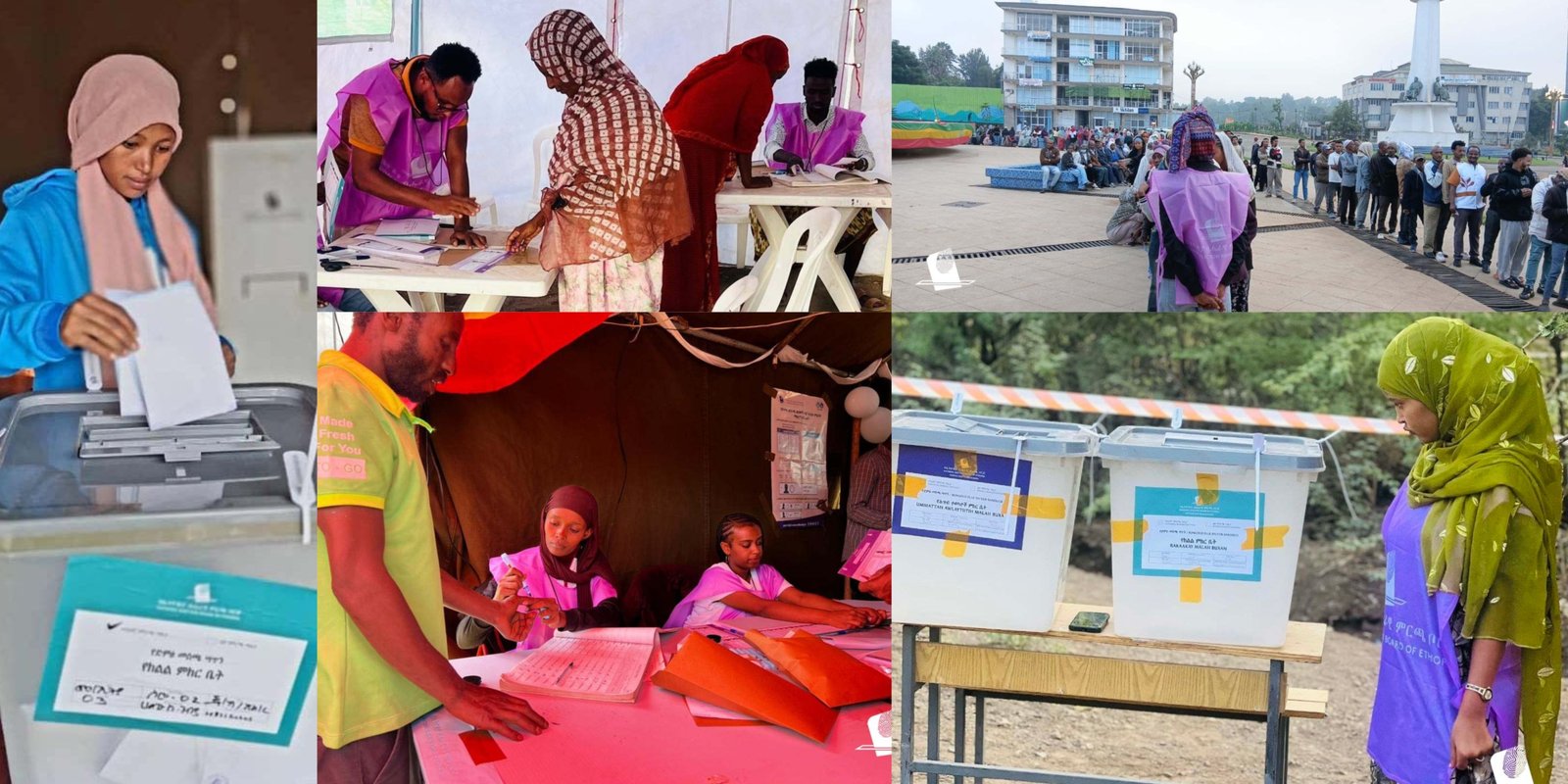
Millions of Ethiopians turned out across the country on Monday to participate in the nation’s 7th General Election, with long queues forming before dawn as voters gathered to help shape the country’s political future for the next five years.

According to the National Electoral Board of Ethiopia (NEBE), more than 54 million citizens registered to vote at over 52,000 polling stations nationwide, making it the largest voter registration exercise in the country’s history. Women account for approximately 46 percent of registered voters.

Polling stations opened at 6:00 a.m. local time, and reports from across the country indicated strong voter turnout as Ethiopians from diverse backgrounds exercised their constitutional right to vote.

The election features 42 political parties and more than 10,400 candidates contesting federal and regional positions. It also marks a significant technological milestone with the introduction of the “Mirichaye” digital voter and candidate registration platform, a first for Ethiopia’s electoral process.

Prime Minister Abiy Ahmed Praises Public Participation

Prime Minister Abiy Ahmed

Prime Minister Abiy Ahmed, who is contesting a seat in the House of Peoples’ Representatives, cast his ballot at the Beshasha polling station in the Goma 2 electoral district of Jimma Zone.

Speaking to journalists after voting, the prime minister described the large turnout as a demonstration of the Ethiopian people’s determination to chart their own democratic path.

“This is an action through which the Ethiopian people have shown that they do not need a counselor or a disciplinarian to decide what they want and desire in order to build a state and a democratic system in Ethiopia,” Abiy said.

He added that the peaceful participation of citizens had countered efforts by what he termed “historical enemies of Ethiopia” who sought to undermine the electoral process.

President Taye Calls Election a Reflection of Ethiopian Identity

President Taye Atske Selassie

President Taye Atske Selassie voted at the Arada Constituency Youth Center polling station in Addis Ababa.

“I have voted for my country, my family, and for myself as an individual,” the president said.

He emphasized that the election reflected Ethiopia’s own democratic traditions while incorporating internationally recognized electoral standards.

“The election is being held in our own way, in our own form, and through our own understanding as Ethiopians, embodying both international standards and Ethiopian characteristics.”

Mayor Adanech and Federation Speaker Join Voters
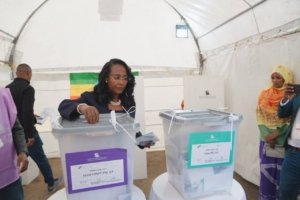
Adanech Abebe, Mayor of Addis Ababa

Addis Ababa Mayor Adanech Abiebie cast her vote at a polling station in Nifas Silk-Lafto Woreda 8, praising citizens for their enthusiastic participation.

She said the election would influence the future political, economic and social development of both the capital and the nation and expressed confidence that Ethiopia’s growing democratic culture could serve as an example for other countries.

Meanwhile, House of Federation Speaker Agegnehu Teshager voted in Gondar town’s Piassa Kebele, Election Area One, joining millions of Ethiopians participating in the process.

Opposition Leader Highlights Progress Despite Challenges

Opposition leader Eyob Mesafint of the Ethiopian Citizens for Social Justice (Ezema) party cast his vote at the Bahir Dar University polling station.

While acknowledging difficulties encountered during the electoral period, Mesafint said the process had advanced positively.

“Even though we encountered challenges during the election process, we have managed to resolve them and reach this stage,” he told reporters.

He added that Ezema observers reported voting had begun smoothly across the country at the scheduled opening time.

African Union Observers Monitor Voting Process
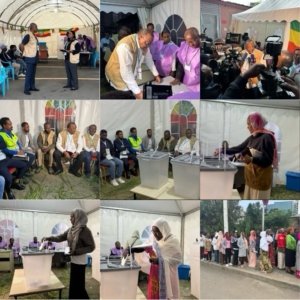
African Union Mission

The election is also being closely monitored by international observers.

Former Kenyan President Uhuru Kenyatta, who heads the African Union Election Observer Mission, arrived before polling stations opened to observe preparations at the Peter Pan Pre-Primary School polling station in Addis Ababa’s Kirkos Sub-City.

After observing voting procedures, Kenyatta commended officials for their preparedness and noted that polling had started on schedule.

He later visited another polling station at Peacock Park, where he observed a minor delay but described the overall process as orderly and positive.

Ethiopian Ambassador Highlights Historic Significance

Ethiopian Ambassador to Uganda Etsegenet Bezabih Yimenu

Speaking on the significance of the election, Ethiopian Ambassador to Uganda Etsegenet Bezabih Yimenu described the vote as a major democratic milestone.

“Ethiopia’s 7th General Election is an important process through which citizens can exercise their constitutional rights and cast their votes for their representatives in government,” Ambassador Etsegenet told Bantu Gazette.

She noted that the election has recorded a historic number of registered voters and has been strengthened by the introduction of technology-based voter and candidate registration systems.

“The registered 54 million is also a sign of the public’s desire, readiness and commitment to deciding its future. This number also indicates people’s resilience,” she said.

Addressing international concerns regarding civic space and political competition, the ambassador argued that Ethiopia’s democratic progress should be viewed within the broader context of the country’s ongoing reforms and development achievements.

She pointed to major national projects, including the Grand Ethiopian Renaissance Dam (GERD), new industrial initiatives and infrastructure developments, as evidence of the country’s transformation. She also maintained that the digital election platforms provide equal opportunities for citizens to participate in the democratic process and make informed choices.

Televised Debates Help Voters Make Decisions

Ahead of the election, NEBE organized 19 nationally televised political debates, giving voters unprecedented access to competing party platforms and policy proposals.

Voters interviewed at polling stations said the debates played an important role in helping them evaluate candidates.

Zeleke Robi, a resident of Addis Ababa’s Gulele Sub-City who has participated in all six previous elections, said the televised discussions enabled citizens to better understand which leaders were best positioned to guide the country over the next five years.

While praising improvements in voter assistance, Robi suggested that additional polling stations would help reduce lengthy queues experienced in some areas.

Voting Deferred in Some Constituencies

Despite the generally peaceful conduct of the election, voting was postponed in 46 constituencies, primarily in parts of the Tigray and Amhara regions, due to security concerns.

NEBE stated that elections in the affected areas will be rescheduled once security conditions allow, ensuring eligible voters are able to participate.

The vote is taking place against a backdrop of ongoing security challenges in some regions. Nevertheless, electoral authorities maintain that the overwhelming majority of the country remains prepared for a peaceful democratic process.

Historic Vote to Shape Ethiopia’s Future

As polling stations close and vote counting begins, Ethiopians await results that will determine the country’s leadership and policy direction through 2031.

The election is widely viewed as one of the most consequential in Ethiopia’s modern history, not only because of the record voter participation but also because of the introduction of new electoral technologies and broader public engagement through televised debates and digital registration systems.


Get the inside Story

Stay informed on the stories shaping Africa’s future. Get breaking news, in-depth analysis, opinions and exclusive insights from across the continent delivered to your inbox, free and unfiltered.


Get in touch for more:
Felix Tih
Editorial Director, Bantu Gazette
WhatsApp
LinkedIn
X (Twitter)
Instagram

Related Posts

Atlantic African States Adopt Cotonou Declaration to Boost Maritime Security and Green Trade
Policy & Governance

Atlantic African States Adopt Cotonou Declaration to Boost Maritime Security and Green Trade

July 15, 2026
Amazon Satellite Expansion, EU Investment Boost Kenya’s Digital Hub Ambitions
Policy & Governance

Kenya Enacts Sovereign Wealth Fund Law to Safeguard Resource Revenue

July 15, 2026
High-Level Training Strengthens African Diplomats’ Knowledge of Carbon Markets
Policy & Governance

High-Level Training Strengthens African Diplomats’ Knowledge of Carbon Markets

July 10, 2026
Kenya Retires Paper Logbooks in Major Digital Overhaul
Policy & Governance

Kenya Retires Paper Logbooks in Major Digital Overhaul

July 7, 2026
Rwanda Marks 32nd Liberation Day, Highlights Economic Growth
Policy & Governance

Rwanda Marks 32nd Liberation Day, Highlights Economic Growth

July 7, 2026
Gender Equality Progress Hinges on Implementation, Not New Policies, Experts Warn
Development & Impact

Gender Equality Progress Hinges on Implementation, Not New Policies, Experts Warn

July 11, 2026

Most Recent

Chad Announces Visa-Free Entry for All Africans Beginning Jan. 1, 2027
Uncategorized

Chad Announces Visa-Free Entry for All Africans Beginning Jan. 1, 2027

by Felix Tih
July 16, 2026
0

Visa-free policy places Chad among a growing number of African countries embracing open borders to advance continental integration under the...

Read moreDetails
New Africa-Wide Chief Economists Network Targets Stronger Policymaking

New Africa-Wide Chief Economists Network Targets Stronger Policymaking

July 17, 2026
Africa Ready to ‘Build and Deploy AI at Scale,’ President Kagame Tells UN Summit

Africa Ready to ‘Build and Deploy AI at Scale,’ President Kagame Tells UN Summit

July 16, 2026
TikTok Launches AI Literacy Hub in Kenya, Nigeria, South Africa as Part of Broader Safety Push

TikTok Launches AI Literacy Hub in Kenya, Nigeria, South Africa as Part of Broader Safety Push

July 15, 2026
Atlantic African States Adopt Cotonou Declaration to Boost Maritime Security and Green Trade

Atlantic African States Adopt Cotonou Declaration to Boost Maritime Security and Green Trade

July 15, 2026
Zimbabwe Expands Health Workforce to Advance Universal Health Coverage

Zimbabwe Expands Health Workforce to Advance Universal Health Coverage

July 16, 2026
Amazon Satellite Expansion, EU Investment Boost Kenya’s Digital Hub Ambitions

Kenya Enacts Sovereign Wealth Fund Law to Safeguard Resource Revenue

July 15, 2026
Chad Announces Visa-Free Entry for All Africans Beginning Jan. 1, 2027
Uncategorized

Chad Announces Visa-Free Entry for All Africans Beginning Jan. 1, 2027

by Felix Tih
Reading Time: 2 mins read
July 16, 2026
0

Visa-free policy places Chad among a growing number of African countries embracing open borders to advance continental integration under the...

Read moreDetails
New Africa-Wide Chief Economists Network Targets Stronger Policymaking
Business, Trade & Economy

New Africa-Wide Chief Economists Network Targets Stronger Policymaking

by Felix Tih
Reading Time: 2 mins read
July 17, 2026
0

Platform will bring together the continent's top economic advisers to strengthen evidence-based policymaking and develop coordinated responses to global economic...

Read moreDetails
Africa Ready to ‘Build and Deploy AI at Scale,’ President Kagame Tells UN Summit
Development & Impact

Africa Ready to ‘Build and Deploy AI at Scale,’ President Kagame Tells UN Summit

by Mary Oduor
Reading Time: 3 mins read
July 16, 2026
0

Addressing delegates at the U.N. AI for Good Summit, the Rwandan president said countries must be intentional about how AI...

Read moreDetails

Millions Turn Out for Ethiopia’s 7th General Election as Leaders and International Observers Monitor the Poll

The introduction of the Mirichaye digital registration platform and 19 nationally televised debates represented a significant modernization effort by Ethiopia's electoral authorities.

Millions Turn Out for Ethiopia’s 7th General Election as Leaders and International Observers Monitor the Poll

Millions Turn Out for Ethiopia’s 7th General Election as Leaders and International Observers Monitor the Poll

Addis Ababa, Ethiopia

Millions of Ethiopians turned out across the country on Monday to participate in the nation’s 7th General Election, with long queues forming before dawn as voters gathered to help shape the country’s political future for the next five years.

According to the National Electoral Board of Ethiopia (NEBE), more than 54 million citizens registered to vote at over 52,000 polling stations nationwide, making it the largest voter registration exercise in the country’s history. Women account for approximately 46 percent of registered voters.

Polling stations opened at 6:00 a.m. local time, and reports from across the country indicated strong voter turnout as Ethiopians from diverse backgrounds exercised their constitutional right to vote.

The election features 42 political parties and more than 10,400 candidates contesting federal and regional positions. It also marks a significant technological milestone with the introduction of the “Mirichaye” digital voter and candidate registration platform, a first for Ethiopia’s electoral process.

Prime Minister Abiy Ahmed Praises Public Participation

Prime Minister Abiy Ahmed

Prime Minister Abiy Ahmed, who is contesting a seat in the House of Peoples’ Representatives, cast his ballot at the Beshasha polling station in the Goma 2 electoral district of Jimma Zone.

Speaking to journalists after voting, the prime minister described the large turnout as a demonstration of the Ethiopian people’s determination to chart their own democratic path.

“This is an action through which the Ethiopian people have shown that they do not need a counselor or a disciplinarian to decide what they want and desire in order to build a state and a democratic system in Ethiopia,” Abiy said.

He added that the peaceful participation of citizens had countered efforts by what he termed “historical enemies of Ethiopia” who sought to undermine the electoral process.

President Taye Calls Election a Reflection of Ethiopian Identity

President Taye Atske Selassie

President Taye Atske Selassie voted at the Arada Constituency Youth Center polling station in Addis Ababa.

“I have voted for my country, my family, and for myself as an individual,” the president said.

He emphasized that the election reflected Ethiopia’s own democratic traditions while incorporating internationally recognized electoral standards.

“The election is being held in our own way, in our own form, and through our own understanding as Ethiopians, embodying both international standards and Ethiopian characteristics.”

Mayor Adanech and Federation Speaker Join Voters

Adanech Abebe, Mayor of Addis Ababa

Addis Ababa Mayor Adanech Abiebie cast her vote at a polling station in Nifas Silk-Lafto Woreda 8, praising citizens for their enthusiastic participation.

She said the election would influence the future political, economic and social development of both the capital and the nation and expressed confidence that Ethiopia’s growing democratic culture could serve as an example for other countries.

Meanwhile, House of Federation Speaker Agegnehu Teshager voted in Gondar town’s Piassa Kebele, Election Area One, joining millions of Ethiopians participating in the process.

Opposition Leader Highlights Progress Despite Challenges

Opposition leader Eyob Mesafint of the Ethiopian Citizens for Social Justice (Ezema) party cast his vote at the Bahir Dar University polling station.

While acknowledging difficulties encountered during the electoral period, Mesafint said the process had advanced positively.

“Even though we encountered challenges during the election process, we have managed to resolve them and reach this stage,” he told reporters.

He added that Ezema observers reported voting had begun smoothly across the country at the scheduled opening time.

African Union Observers Monitor Voting Process

African Union Mission

The election is also being closely monitored by international observers.

Former Kenyan President Uhuru Kenyatta, who heads the African Union Election Observer Mission, arrived before polling stations opened to observe preparations at the Peter Pan Pre-Primary School polling station in Addis Ababa’s Kirkos Sub-City.

After observing voting procedures, Kenyatta commended officials for their preparedness and noted that polling had started on schedule.

He later visited another polling station at Peacock Park, where he observed a minor delay but described the overall process as orderly and positive.

Ethiopian Ambassador Highlights Historic Significance

Ethiopian Ambassador to Uganda Etsegenet Bezabih Yimenu

Speaking on the significance of the election, Ethiopian Ambassador to Uganda Etsegenet Bezabih Yimenu described the vote as a major democratic milestone.

“Ethiopia’s 7th General Election is an important process through which citizens can exercise their constitutional rights and cast their votes for their representatives in government,” Ambassador Etsegenet told Bantu Gazette.

She noted that the election has recorded a historic number of registered voters and has been strengthened by the introduction of technology-based voter and candidate registration systems.

“The registered 54 million is also a sign of the public’s desire, readiness and commitment to deciding its future. This number also indicates people’s resilience,” she said.

Addressing international concerns regarding civic space and political competition, the ambassador argued that Ethiopia’s democratic progress should be viewed within the broader context of the country’s ongoing reforms and development achievements.

She pointed to major national projects, including the Grand Ethiopian Renaissance Dam (GERD), new industrial initiatives and infrastructure developments, as evidence of the country’s transformation. She also maintained that the digital election platforms provide equal opportunities for citizens to participate in the democratic process and make informed choices.

Televised Debates Help Voters Make Decisions

Ahead of the election, NEBE organized 19 nationally televised political debates, giving voters unprecedented access to competing party platforms and policy proposals.

Voters interviewed at polling stations said the debates played an important role in helping them evaluate candidates.

Zeleke Robi, a resident of Addis Ababa’s Gulele Sub-City who has participated in all six previous elections, said the televised discussions enabled citizens to better understand which leaders were best positioned to guide the country over the next five years.

While praising improvements in voter assistance, Robi suggested that additional polling stations would help reduce lengthy queues experienced in some areas.

Voting Deferred in Some Constituencies

Despite the generally peaceful conduct of the election, voting was postponed in 46 constituencies, primarily in parts of the Tigray and Amhara regions, due to security concerns.

NEBE stated that elections in the affected areas will be rescheduled once security conditions allow, ensuring eligible voters are able to participate.

The vote is taking place against a backdrop of ongoing security challenges in some regions. Nevertheless, electoral authorities maintain that the overwhelming majority of the country remains prepared for a peaceful democratic process.

Historic Vote to Shape Ethiopia’s Future

As polling stations close and vote counting begins, Ethiopians await results that will determine the country’s leadership and policy direction through 2031.

The election is widely viewed as one of the most consequential in Ethiopia’s modern history, not only because of the record voter participation but also because of the introduction of new electoral technologies and broader public engagement through televised debates and digital registration systems.

Millions Turn Out for Ethiopia’s 7th General Election as Leaders and International Observers Monitor the Poll

The introduction of the Mirichaye digital registration platform and 19 nationally televised debates represented a significant modernization effort by Ethiopia's electoral authorities.

Millions Turn Out for Ethiopia’s 7th General Election as Leaders and International Observers Monitor the Poll

Millions Turn Out for Ethiopia’s 7th General Election as Leaders and International Observers Monitor the Poll

Kalkidan Negashby Kalkidan Negash
June 1, 2026

Addis Ababa, Ethiopia

Millions of Ethiopians turned out across the country on Monday to participate in the nation’s 7th General Election, with long queues forming before dawn as voters gathered to help shape the country’s political future for the next five years.

According to the National Electoral Board of Ethiopia (NEBE), more than 54 million citizens registered to vote at over 52,000 polling stations nationwide, making it the largest voter registration exercise in the country’s history. Women account for approximately 46 percent of registered voters.

Polling stations opened at 6:00 a.m. local time, and reports from across the country indicated strong voter turnout as Ethiopians from diverse backgrounds exercised their constitutional right to vote.

The election features 42 political parties and more than 10,400 candidates contesting federal and regional positions. It also marks a significant technological milestone with the introduction of the “Mirichaye” digital voter and candidate registration platform, a first for Ethiopia’s electoral process.

Prime Minister Abiy Ahmed Praises Public Participation

Prime Minister Abiy Ahmed

Prime Minister Abiy Ahmed, who is contesting a seat in the House of Peoples’ Representatives, cast his ballot at the Beshasha polling station in the Goma 2 electoral district of Jimma Zone.

Speaking to journalists after voting, the prime minister described the large turnout as a demonstration of the Ethiopian people’s determination to chart their own democratic path.

“This is an action through which the Ethiopian people have shown that they do not need a counselor or a disciplinarian to decide what they want and desire in order to build a state and a democratic system in Ethiopia,” Abiy said.

He added that the peaceful participation of citizens had countered efforts by what he termed “historical enemies of Ethiopia” who sought to undermine the electoral process.

President Taye Calls Election a Reflection of Ethiopian Identity

President Taye Atske Selassie

President Taye Atske Selassie voted at the Arada Constituency Youth Center polling station in Addis Ababa.

“I have voted for my country, my family, and for myself as an individual,” the president said.

He emphasized that the election reflected Ethiopia’s own democratic traditions while incorporating internationally recognized electoral standards.

“The election is being held in our own way, in our own form, and through our own understanding as Ethiopians, embodying both international standards and Ethiopian characteristics.”

Mayor Adanech and Federation Speaker Join Voters

Adanech Abebe, Mayor of Addis Ababa

Addis Ababa Mayor Adanech Abiebie cast her vote at a polling station in Nifas Silk-Lafto Woreda 8, praising citizens for their enthusiastic participation.

She said the election would influence the future political, economic and social development of both the capital and the nation and expressed confidence that Ethiopia’s growing democratic culture could serve as an example for other countries.

Meanwhile, House of Federation Speaker Agegnehu Teshager voted in Gondar town’s Piassa Kebele, Election Area One, joining millions of Ethiopians participating in the process.

Opposition Leader Highlights Progress Despite Challenges

Opposition leader Eyob Mesafint of the Ethiopian Citizens for Social Justice (Ezema) party cast his vote at the Bahir Dar University polling station.

While acknowledging difficulties encountered during the electoral period, Mesafint said the process had advanced positively.

“Even though we encountered challenges during the election process, we have managed to resolve them and reach this stage,” he told reporters.

He added that Ezema observers reported voting had begun smoothly across the country at the scheduled opening time.

African Union Observers Monitor Voting Process

African Union Mission

The election is also being closely monitored by international observers.

Former Kenyan President Uhuru Kenyatta, who heads the African Union Election Observer Mission, arrived before polling stations opened to observe preparations at the Peter Pan Pre-Primary School polling station in Addis Ababa’s Kirkos Sub-City.

After observing voting procedures, Kenyatta commended officials for their preparedness and noted that polling had started on schedule.

He later visited another polling station at Peacock Park, where he observed a minor delay but described the overall process as orderly and positive.

Ethiopian Ambassador Highlights Historic Significance

Ethiopian Ambassador to Uganda Etsegenet Bezabih Yimenu

Speaking on the significance of the election, Ethiopian Ambassador to Uganda Etsegenet Bezabih Yimenu described the vote as a major democratic milestone.

“Ethiopia’s 7th General Election is an important process through which citizens can exercise their constitutional rights and cast their votes for their representatives in government,” Ambassador Etsegenet told Bantu Gazette.

She noted that the election has recorded a historic number of registered voters and has been strengthened by the introduction of technology-based voter and candidate registration systems.

“The registered 54 million is also a sign of the public’s desire, readiness and commitment to deciding its future. This number also indicates people’s resilience,” she said.

Addressing international concerns regarding civic space and political competition, the ambassador argued that Ethiopia’s democratic progress should be viewed within the broader context of the country’s ongoing reforms and development achievements.

She pointed to major national projects, including the Grand Ethiopian Renaissance Dam (GERD), new industrial initiatives and infrastructure developments, as evidence of the country’s transformation. She also maintained that the digital election platforms provide equal opportunities for citizens to participate in the democratic process and make informed choices.

Televised Debates Help Voters Make Decisions

Ahead of the election, NEBE organized 19 nationally televised political debates, giving voters unprecedented access to competing party platforms and policy proposals.

Voters interviewed at polling stations said the debates played an important role in helping them evaluate candidates.

Zeleke Robi, a resident of Addis Ababa’s Gulele Sub-City who has participated in all six previous elections, said the televised discussions enabled citizens to better understand which leaders were best positioned to guide the country over the next five years.

While praising improvements in voter assistance, Robi suggested that additional polling stations would help reduce lengthy queues experienced in some areas.

Voting Deferred in Some Constituencies

Despite the generally peaceful conduct of the election, voting was postponed in 46 constituencies, primarily in parts of the Tigray and Amhara regions, due to security concerns.

NEBE stated that elections in the affected areas will be rescheduled once security conditions allow, ensuring eligible voters are able to participate.

The vote is taking place against a backdrop of ongoing security challenges in some regions. Nevertheless, electoral authorities maintain that the overwhelming majority of the country remains prepared for a peaceful democratic process.

Historic Vote to Shape Ethiopia’s Future

As polling stations close and vote counting begins, Ethiopians await results that will determine the country’s leadership and policy direction through 2031.

The election is widely viewed as one of the most consequential in Ethiopia’s modern history, not only because of the record voter participation but also because of the introduction of new electoral technologies and broader public engagement through televised debates and digital registration systems.

Get the inside Story

Stay informed on the stories shaping Africa’s future. Get breaking news, in-depth analysis, opinions and exclusive insights from across the continent delivered to your inbox, free and unfiltered.


Get in touch for more:
Felix Tih
Editorial Director, Bantu Gazette
WhatsApp
LinkedIn
X (Twitter)
Instagram

Related Posts

Atlantic African States Adopt Cotonou Declaration to Boost Maritime Security and Green Trade

Atlantic African States Adopt Cotonou Declaration to Boost Maritime Security and Green Trade

by Genoveva Ntutumu
July 14, 2026
0

...

Amazon Satellite Expansion, EU Investment Boost Kenya’s Digital Hub Ambitions

Kenya Enacts Sovereign Wealth Fund Law to Safeguard Resource Revenue

by Waceke Nganga
July 14, 2026
0

...

High-Level Training Strengthens African Diplomats’ Knowledge of Carbon Markets

High-Level Training Strengthens African Diplomats’ Knowledge of Carbon Markets

by Felix Tih
July 8, 2026
0

...

Kenya Retires Paper Logbooks in Major Digital Overhaul

Kenya Retires Paper Logbooks in Major Digital Overhaul

by Waceke Nganga
July 6, 2026
0

...

Rwanda Marks 32nd Liberation Day, Highlights Economic Growth

Rwanda Marks 32nd Liberation Day, Highlights Economic Growth

by Amani Mwakalebela
July 5, 2026
0

...

Gender Equality Progress Hinges on Implementation, Not New Policies, Experts Warn

Gender Equality Progress Hinges on Implementation, Not New Policies, Experts Warn

by Felix Tih
June 26, 2026
0

...

Chad Announces Visa-Free Entry for All Africans Beginning Jan. 1, 2027
Uncategorized

Chad Announces Visa-Free Entry for All Africans Beginning Jan. 1, 2027

by Felix Tih
Reading Time: 2 mins read
July 16, 2026
0

Visa-free policy places Chad among a growing number of African countries embracing open borders to advance continental integration under the...

Read moreDetails
New Africa-Wide Chief Economists Network Targets Stronger Policymaking

New Africa-Wide Chief Economists Network Targets Stronger Policymaking

by Felix Tih
July 16, 2026
0

Platform will bring together the continent's top economic advisers to strengthen evidence-based policymaking and develop coordinated responses to global economic...

Africa Ready to ‘Build and Deploy AI at Scale,’ President Kagame Tells UN Summit

Africa Ready to ‘Build and Deploy AI at Scale,’ President Kagame Tells UN Summit

by Mary Oduor
July 15, 2026
0

Addressing delegates at the U.N. AI for Good Summit, the Rwandan president said countries must be intentional about how AI...

TikTok Launches AI Literacy Hub in Kenya, Nigeria, South Africa as Part of Broader Safety Push

TikTok Launches AI Literacy Hub in Kenya, Nigeria, South Africa as Part of Broader Safety Push

by Waceke Nganga
July 15, 2026
0

New in-app hub aims to help users identify AI-generated content and understand how artificial intelligence is used on the platform,...

Atlantic African States Adopt Cotonou Declaration to Boost Maritime Security and Green Trade

Atlantic African States Adopt Cotonou Declaration to Boost Maritime Security and Green Trade

by Genoveva Ntutumu
July 14, 2026
0

Ministers meeting in Benin pledge closer cooperation on maritime security, green logistics corridors and sustainable energy as the Process of...

Next Post
African Electric Mobility Firm Spiro Raises $215 Million for Continental Expansion

African Electric Mobility Firm Spiro Raises $215 Million for Continental Expansion

Research Finds Consumer Demand, Not Herd Size, Drives African Dairy Development

Research Finds Consumer Demand, Not Herd Size, Drives African Dairy Development

Rwanda’s RSSB Tigers Make History with 2026 BAL Championship Victory

Rwanda’s RSSB Tigers Make History with 2026 BAL Championship Victory

Dangote Retains Africa’s Most Admired Brand Title for 8th Consecutive Year

Dangote Retains Africa’s Most Admired Brand Title for 8th Consecutive Year

Bantu Gazette is a pioneering news platform that champions Africa's development, culture, and heritage. We spotlight the continent's successes, address its challenges, and provide insightful coverage of events that shape its future.

Bantu Gazette is a pioneering news platform that champions Africa's development, culture, and heritage. We spotlight the continent's successes, address its challenges, and provide insightful coverage of events that shape its future.

Our Platforms

  • Bantu Magazine
  • Bantu Brief
  • Black Frame Studio

Our Services

  • Bantu Agency
  • Advertise
  • Partnerships

Our Services

  • Editorial Director
  • Opportunities
  • Contact

Bantu Gazette is a pioneering news platform that champions Africa's development, culture, and heritage. We spotlight the continent's successes, address its challenges, and provide insightful coverage of events that shape its future.

Our Platforms

  • Bantu Magazine
  • Bantu Brief
  • Black Frame Studio

Our Services

  • Bantu Agency
  • Advertise
  • Partnerships

Our Services

  • Editorial Director
  • Opportunities
  • Contact
Bantu Gazette
  • Energy & Trade
  • Finance
  • Health
  • Politics & Economy
  • Technology
  • Environment
  • Feature
  • Opinion
  • Changemakers
  • Tourism & Culture
  • Magazine