

Bantu Gazette

Bantu Gazette
  • Policy & Governance
  • Development & Impact
  • Business, Trade & Economy
  • Energy
  • Changemakers
  • Culture & Identity
  • Perspectives
  • Magazine
Menu
  • Black Frame Studio
  • Magazine

Beyond Technical Expertise, Africa’s Public-Sector Reformers Put Leadership to the Test

From digital finance in Kenya to tax reform in Ghana, LEAPS is betting that Africa’s public-sector transformation ultimately depends on people who can lead change.

Beyond Technical Expertise, Africa’s Public-Sector Reformers Put Leadership to the Test

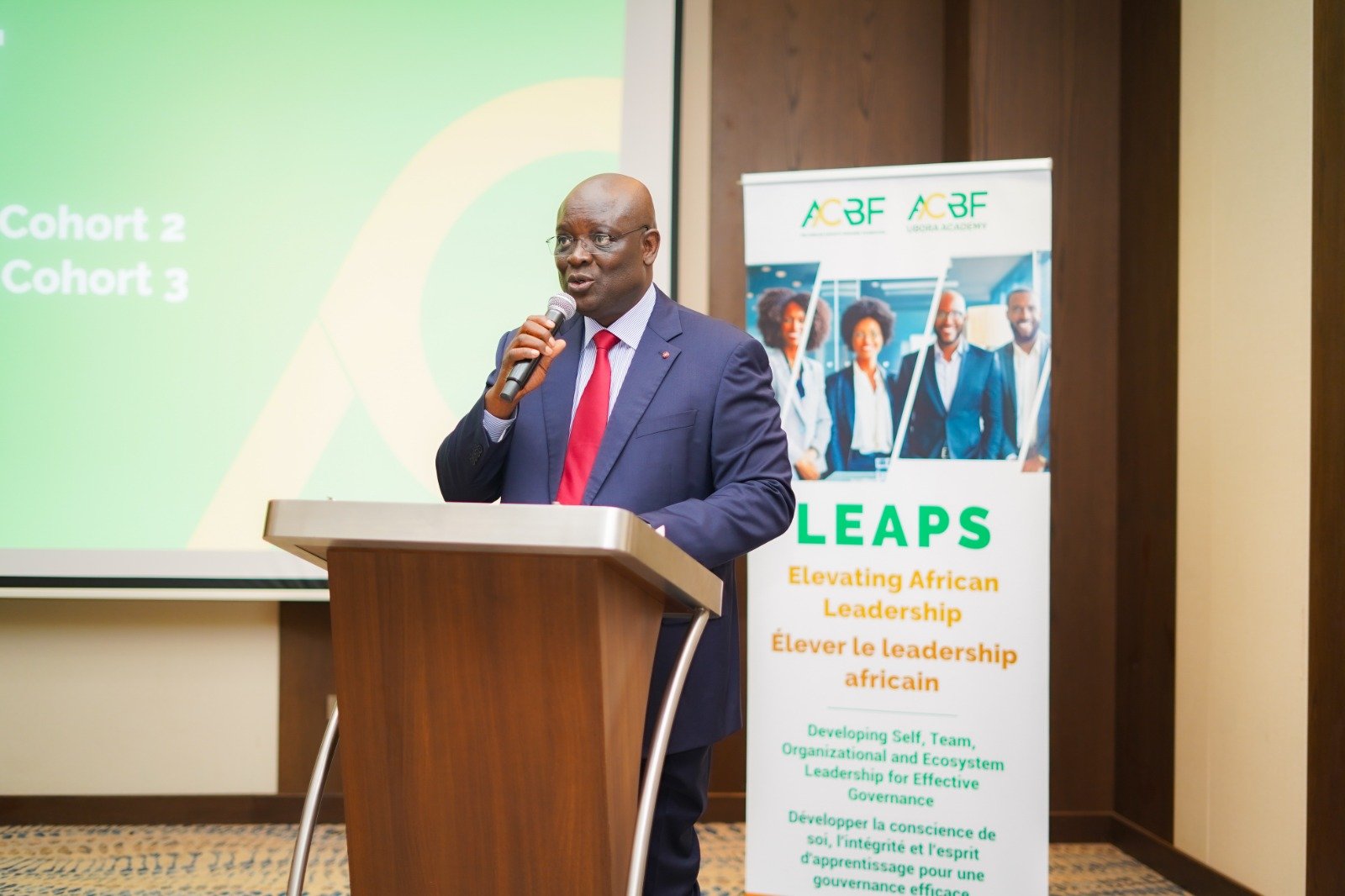
ACBF Executive Secretary Mamadou Biteye

Felix Tihby Felix Tih
September 3, 2026
Reading Time: 4 mins read

Beyond Technical Expertise, Africa’s Public-Sector Reformers Put Leadership to the Test

From digital finance in Kenya to tax reform in Ghana, LEAPS is betting that Africa’s public-sector transformation ultimately depends on people who can lead change.

Beyond Technical Expertise, Africa’s Public-Sector Reformers Put Leadership to the Test

ACBF Executive Secretary Mamadou Biteye

Beyond Technical Expertise, Africa’s Public-Sector Reformers Put Leadership to the Test

ACBF Executive Secretary Mamadou Biteye

Felix Tihby Felix Tih
September 3, 2026
Reading Time: 4 mins read

When Kenya’s Jacob K. Muimi began developing digital systems for public financial management, the technical questions were familiar: What should the system do? How should it work? How could processes be automated?

Then came a different set of questions. What do users need? What are they afraid of? Who will champion the system? And how do you persuade people to change the way they work?

Muimi, head of ICT at the Public Financial Management Reform Secretariat in Kenya’s National Treasury, said those questions captured a shift from thinking like a system developer to thinking like a leader.

He shared his experience during a webinar convened by the African Capacity Building Foundation (ACBF) on its Leadership Excellence in Africa’s Public Sector (LEAPS) program on Thursday.

Officials from several African countries reflected on what happens when technical expertise is paired with leadership skills and applied to real public-sector reforms.

“Systems do not reform themselves. Budgets do not implement themselves. Digital platforms do not transform institutions by themselves,” ACBF Executive Secretary Mamadou Biteye said. “People do.”

The argument comes at a consequential moment for African governments. Fiscal pressures, declining external support, demands for better services and increasingly complex reforms are forcing public institutions to deliver more, often with fewer resources.

Adil Ababou, senior program officer at the Gates Foundation, which supports LEAPS, said public financial management reforms have traditionally concentrated on technical capacity, including better budgeting, administration, digital systems and expenditure management.

But technical skills alone cannot answer questions such as how to build consensus around difficult reforms, overcome resistance, work across institutional boundaries or sustain momentum when politics become challenging.

“People lead reforms,” Ababou said.

Rodolphe Bance, ACBF’s head of the Economic and Social Governance Unit, said the foundation’s research has identified leadership as a major capacity gap in Africa for implementing policy and reform.

A technically skilled auditor, debt manager or ICT expert, in other words, is not automatically equipped to lead an institution.

LEAPS was designed to bridge that divide.

The original six-month program targeted senior public financial management officials and combined online learning with case studies, technical seminars, 360-degree assessments, coaching and mentorship.

Bance said 79 officials completed the first cohort and 88 completed the second, while 116 are participating in the third. The program has reached participants from Côte d’Ivoire, Ethiopia, Ghana, Kenya, Nigeria, Senegal, Tanzania, The Gambia and Zimbabwe, as well as the African Union.

Those numbers, however, tell only part of the story because the real test begins when officials return to their ministries, agencies and teams.

When leadership leaves the classroom

In Kenya, Muimi said LEAPS changed how his team approaches digital transformation.

Instead of beginning with technology, the team increasingly starts with people by listening to users, understanding their fears and pain points, examining business processes and identifying internal champions before deploying systems.

“It has to be people-centered development,” Muimi said.

That lesson is significant as African governments accelerate digitalization. A platform can be technically impressive and still fail if the people expected to use it resist, misunderstand or feel excluded from the change.

Zimbabwe provided another example. Thomson Masvaure, deputy accountant general, described reforms that require extensive coordination across government institutions, including the country’s transition in public-sector accounting.

Such reforms require more than accounting knowledge, he said. They demand stakeholder coordination, change management and teams capable of working across institutional boundaries. Coaching under LEAPS provided practical lessons that helped officials identify team strengths, close skills gaps and bring managers together.

In Ghana, Dr. Birago Antwi-Ajay of the Ghana Revenue Authority placed the challenge within a wider African reality: Dwindling external support is increasing pressure on countries to mobilize more domestic revenue.

But collecting more revenue cannot simply mean tougher enforcement.

“The human factor would always be paramount,” Antwi-Ajay said.

She argued that tax administrations need a more people-centered approach, making compliance easier for taxpayers while coaching officials to engage citizens differently.

Côte d’Ivoire’s Chantal Irma Ackah, an official in the Ministry of Economy, Finance and Budget, described collaboration as a form of institutional resilience when governments face fiscal pressure and budget constraints.

Participatory leadership, delegation and strategic communication can give teams greater ownership of reforms, reduce institutional inertia and improve coordination, she said. She cited efforts to improve citizen-oriented communication, including simplified reports for citizens and Parliament.

Her broader point was that leadership learned by one person can spread. Individual leadership can become a catalyst for institutional transformation as new practices move through teams and eventually into the wider governance system.

That diffusion is what Sam Bwaya, the LEAPS head coach, sees coaching trying to unlock.

The program uses 360-degree assessments and personal development plans to help senior officials understand how others experience their leadership. Coaching then adds reflection and accountability.

One question coaches repeatedly ask, Bwaya said, is: “What assumptions have you made?”

LEAPS makes a new leap

The original LEAPS model focused heavily on public financial management in selected countries. ACBF is now taking lessons from that pilot and expanding them through a broader executive program available to public-sector officials across Africa.

Bakary Diallo, director of ACBF’s Ubora Academy, announced during the webinar that the new LEAPS Executive Program will run for four months and be delivered online.

According to Diallo, LEAPS is moving beyond its original PFM focus to serve current and emerging leaders across the public sector, including officials managing teams, departments, programs and projects, implementing policies or preparing for senior leadership responsibilities.

The program has five modules covering African leadership paradigms, self-awareness and emotional intelligence, high-performing and inclusive teams, strategic organizational change, and stakeholder engagement and systemic transformation.

The new format retains important elements of the original model, including self-paced learning, facilitated sessions, coaching and mentoring, technical seminars, peer exchange and workplace application. It will be offered in English and French.

Biteye said expansion also raises a bigger challenge: Leadership development cannot remain an opportunity for isolated individuals.

Graduates should become mentors, reform champions and catalysts for changing institutional culture, he said. Alumni networks need strengthening, coaching and mentorship should become embedded within government institutions, and leadership outcomes should be tracked over time.

Ababou said, LEAPS ultimately should not be judged by how many officials complete its modules, but by whether the gains become embedded in teams and institutions.

Mohamed Salat Osman, a program officer at ACBF and moderator of the webinar, repeatedly returned the discussion to that institutional question, asking participants how leadership lessons were translating into digital reform, domestic revenue mobilization, accountability and collaboration.

Bance closed the session by setting an ambition beyond improving the management styles of a few hundred officials. ACBF wants to create a critical mass of African leaders capable of driving transformation across institutions and countries.

That may ultimately be LEAPS’ biggest test.

Get the inside Story

Stay informed on the stories shaping Africa’s future. Get breaking news, in-depth analysis, opinions and exclusive insights from across the continent delivered to your inbox, free and unfiltered.


Get in touch for more:
Felix Tih
Editorial Director, Bantu Gazette
WhatsApp
LinkedIn
X (Twitter)
Instagram

Related Posts

Africa Foresight Network Launches with Call for Africans to Shape Their Own Futures
Partner Content

Africa Foresight Network Launches with Call for Africans to Shape Their Own Futures

August 27, 2026
Mindset Shift Could Unlock Africa’s Development Financing Potential
Policy & Governance

Mindset Shift Could Unlock Africa’s Development Financing Potential

September 1, 2026
Machines Can Now See, Analyze, Decide and Act, Rwanda Defense Official Warns Africa on Autonomous Weapons
Policy & Governance

Machines Can Now See, Analyze, Decide and Act, Rwanda Defense Official Warns Africa on Autonomous Weapons

August 19, 2026
Policy & Governance

Côte d’Ivoire Ambassador Highlights Growing Ties With Türkiye at Independence Day Celebration

August 13, 2026
Somalia Maritime Summit Adopts Ambitious Roadmap for Security, Governance and Blue Economy
Policy & Governance

Somalia Maritime Summit Adopts Ambitious Roadmap for Security, Governance and Blue Economy

August 9, 2026
Kenya President Announces Plan for Free Higher Education Starting in Sept. 2026
Policy & Governance

Kenya President Announces Plan for Free Higher Education Starting in Sept. 2026

August 6, 2026

Most Recent

Beyond Technical Expertise, Africa’s Public-Sector Reformers Put Leadership to the Test
Policy & Governance

Beyond Technical Expertise, Africa’s Public-Sector Reformers Put Leadership to the Test

by Felix Tih
September 3, 2026
0

From digital finance in Kenya to tax reform in Ghana, LEAPS is betting that Africa’s public-sector transformation ultimately depends on...

Read moreDetails
Kenya’s Wawira Njiru Awarded 2026 German Africa Prize for School Feeding Initiative

Kenya’s Wawira Njiru Awarded 2026 German Africa Prize for School Feeding Initiative

September 3, 2026
$5 Billion Digital Corridor to Link African Markets, Payments

$5 Billion Digital Corridor to Link African Markets, Payments

September 1, 2026
African-Led Heart Study Reaches Major Scientific Milestone

African-Led Heart Study Reaches Major Scientific Milestone

September 3, 2026
Ethiopia Reports More Than $14.4 Million in Exports Under African Free Trade Area

Ethiopia Reports More Than $14.4 Million in Exports Under African Free Trade Area

September 3, 2026
Interpol Cybercrime Chief Warns Criminal Networks are Outpacing Institutions

Interpol Cybercrime Chief Warns Criminal Networks are Outpacing Institutions

September 1, 2026
New Data Hub to Strengthen Health Decision-Making Across Africa

New Data Hub to Strengthen Health Decision-Making Across Africa

August 28, 2026
Beyond Technical Expertise, Africa’s Public-Sector Reformers Put Leadership to the Test
Policy & Governance

Beyond Technical Expertise, Africa’s Public-Sector Reformers Put Leadership to the Test

by Felix Tih
Reading Time: 4 mins read
September 3, 2026
0

From digital finance in Kenya to tax reform in Ghana, LEAPS is betting that Africa’s public-sector transformation ultimately depends on...

Read moreDetails
Kenya’s Wawira Njiru Awarded 2026 German Africa Prize for School Feeding Initiative
Development & Impact

Kenya’s Wawira Njiru Awarded 2026 German Africa Prize for School Feeding Initiative

by Waceke Nganga
Reading Time: 2 mins read
September 3, 2026
0

Food4Education founder Wawira Njiru is honored for transforming school feeding in Kenya while creating jobs, supporting farmers and strengthening local...

Read moreDetails
$5 Billion Digital Corridor to Link African Markets, Payments
Business, Trade & Economy

$5 Billion Digital Corridor to Link African Markets, Payments

by Marina Bisse
Reading Time: 2 mins read
September 1, 2026
0

AfCFTA and Quest Ghana plan a continent-wide platform for payments, commodities and commerce, with Seychelles providing sovereign support to the...

Read moreDetails

Beyond Technical Expertise, Africa’s Public-Sector Reformers Put Leadership to the Test

From digital finance in Kenya to tax reform in Ghana, LEAPS is betting that Africa’s public-sector transformation ultimately depends on people who can lead change.

Beyond Technical Expertise, Africa’s Public-Sector Reformers Put Leadership to the Test

ACBF Executive Secretary Mamadou Biteye

When Kenya’s Jacob K. Muimi began developing digital systems for public financial management, the technical questions were familiar: What should the system do? How should it work? How could processes be automated?

Then came a different set of questions. What do users need? What are they afraid of? Who will champion the system? And how do you persuade people to change the way they work?

Muimi, head of ICT at the Public Financial Management Reform Secretariat in Kenya’s National Treasury, said those questions captured a shift from thinking like a system developer to thinking like a leader.

He shared his experience during a webinar convened by the African Capacity Building Foundation (ACBF) on its Leadership Excellence in Africa’s Public Sector (LEAPS) program on Thursday.

Officials from several African countries reflected on what happens when technical expertise is paired with leadership skills and applied to real public-sector reforms.

“Systems do not reform themselves. Budgets do not implement themselves. Digital platforms do not transform institutions by themselves,” ACBF Executive Secretary Mamadou Biteye said. “People do.”

The argument comes at a consequential moment for African governments. Fiscal pressures, declining external support, demands for better services and increasingly complex reforms are forcing public institutions to deliver more, often with fewer resources.

Adil Ababou, senior program officer at the Gates Foundation, which supports LEAPS, said public financial management reforms have traditionally concentrated on technical capacity, including better budgeting, administration, digital systems and expenditure management.

But technical skills alone cannot answer questions such as how to build consensus around difficult reforms, overcome resistance, work across institutional boundaries or sustain momentum when politics become challenging.

“People lead reforms,” Ababou said.

Rodolphe Bance, ACBF’s head of the Economic and Social Governance Unit, said the foundation’s research has identified leadership as a major capacity gap in Africa for implementing policy and reform.

A technically skilled auditor, debt manager or ICT expert, in other words, is not automatically equipped to lead an institution.

LEAPS was designed to bridge that divide.

The original six-month program targeted senior public financial management officials and combined online learning with case studies, technical seminars, 360-degree assessments, coaching and mentorship.

Bance said 79 officials completed the first cohort and 88 completed the second, while 116 are participating in the third. The program has reached participants from Côte d’Ivoire, Ethiopia, Ghana, Kenya, Nigeria, Senegal, Tanzania, The Gambia and Zimbabwe, as well as the African Union.

Those numbers, however, tell only part of the story because the real test begins when officials return to their ministries, agencies and teams.

When leadership leaves the classroom

In Kenya, Muimi said LEAPS changed how his team approaches digital transformation.

Instead of beginning with technology, the team increasingly starts with people by listening to users, understanding their fears and pain points, examining business processes and identifying internal champions before deploying systems.

“It has to be people-centered development,” Muimi said.

That lesson is significant as African governments accelerate digitalization. A platform can be technically impressive and still fail if the people expected to use it resist, misunderstand or feel excluded from the change.

Zimbabwe provided another example. Thomson Masvaure, deputy accountant general, described reforms that require extensive coordination across government institutions, including the country’s transition in public-sector accounting.

Such reforms require more than accounting knowledge, he said. They demand stakeholder coordination, change management and teams capable of working across institutional boundaries. Coaching under LEAPS provided practical lessons that helped officials identify team strengths, close skills gaps and bring managers together.

In Ghana, Dr. Birago Antwi-Ajay of the Ghana Revenue Authority placed the challenge within a wider African reality: Dwindling external support is increasing pressure on countries to mobilize more domestic revenue.

But collecting more revenue cannot simply mean tougher enforcement.

“The human factor would always be paramount,” Antwi-Ajay said.

She argued that tax administrations need a more people-centered approach, making compliance easier for taxpayers while coaching officials to engage citizens differently.

Côte d’Ivoire’s Chantal Irma Ackah, an official in the Ministry of Economy, Finance and Budget, described collaboration as a form of institutional resilience when governments face fiscal pressure and budget constraints.

Participatory leadership, delegation and strategic communication can give teams greater ownership of reforms, reduce institutional inertia and improve coordination, she said. She cited efforts to improve citizen-oriented communication, including simplified reports for citizens and Parliament.

Her broader point was that leadership learned by one person can spread. Individual leadership can become a catalyst for institutional transformation as new practices move through teams and eventually into the wider governance system.

That diffusion is what Sam Bwaya, the LEAPS head coach, sees coaching trying to unlock.

The program uses 360-degree assessments and personal development plans to help senior officials understand how others experience their leadership. Coaching then adds reflection and accountability.

One question coaches repeatedly ask, Bwaya said, is: “What assumptions have you made?”

LEAPS makes a new leap

The original LEAPS model focused heavily on public financial management in selected countries. ACBF is now taking lessons from that pilot and expanding them through a broader executive program available to public-sector officials across Africa.

Bakary Diallo, director of ACBF’s Ubora Academy, announced during the webinar that the new LEAPS Executive Program will run for four months and be delivered online.

According to Diallo, LEAPS is moving beyond its original PFM focus to serve current and emerging leaders across the public sector, including officials managing teams, departments, programs and projects, implementing policies or preparing for senior leadership responsibilities.

The program has five modules covering African leadership paradigms, self-awareness and emotional intelligence, high-performing and inclusive teams, strategic organizational change, and stakeholder engagement and systemic transformation.

The new format retains important elements of the original model, including self-paced learning, facilitated sessions, coaching and mentoring, technical seminars, peer exchange and workplace application. It will be offered in English and French.

Biteye said expansion also raises a bigger challenge: Leadership development cannot remain an opportunity for isolated individuals.

Graduates should become mentors, reform champions and catalysts for changing institutional culture, he said. Alumni networks need strengthening, coaching and mentorship should become embedded within government institutions, and leadership outcomes should be tracked over time.

Ababou said, LEAPS ultimately should not be judged by how many officials complete its modules, but by whether the gains become embedded in teams and institutions.

Mohamed Salat Osman, a program officer at ACBF and moderator of the webinar, repeatedly returned the discussion to that institutional question, asking participants how leadership lessons were translating into digital reform, domestic revenue mobilization, accountability and collaboration.

Bance closed the session by setting an ambition beyond improving the management styles of a few hundred officials. ACBF wants to create a critical mass of African leaders capable of driving transformation across institutions and countries.

That may ultimately be LEAPS’ biggest test.

Beyond Technical Expertise, Africa’s Public-Sector Reformers Put Leadership to the Test

From digital finance in Kenya to tax reform in Ghana, LEAPS is betting that Africa’s public-sector transformation ultimately depends on people who can lead change.

Beyond Technical Expertise, Africa’s Public-Sector Reformers Put Leadership to the Test

ACBF Executive Secretary Mamadou Biteye

Felix Tihby Felix Tih
September 3, 2026

When Kenya’s Jacob K. Muimi began developing digital systems for public financial management, the technical questions were familiar: What should the system do? How should it work? How could processes be automated?

Then came a different set of questions. What do users need? What are they afraid of? Who will champion the system? And how do you persuade people to change the way they work?

Muimi, head of ICT at the Public Financial Management Reform Secretariat in Kenya’s National Treasury, said those questions captured a shift from thinking like a system developer to thinking like a leader.

He shared his experience during a webinar convened by the African Capacity Building Foundation (ACBF) on its Leadership Excellence in Africa’s Public Sector (LEAPS) program on Thursday.

Officials from several African countries reflected on what happens when technical expertise is paired with leadership skills and applied to real public-sector reforms.

“Systems do not reform themselves. Budgets do not implement themselves. Digital platforms do not transform institutions by themselves,” ACBF Executive Secretary Mamadou Biteye said. “People do.”

The argument comes at a consequential moment for African governments. Fiscal pressures, declining external support, demands for better services and increasingly complex reforms are forcing public institutions to deliver more, often with fewer resources.

Adil Ababou, senior program officer at the Gates Foundation, which supports LEAPS, said public financial management reforms have traditionally concentrated on technical capacity, including better budgeting, administration, digital systems and expenditure management.

But technical skills alone cannot answer questions such as how to build consensus around difficult reforms, overcome resistance, work across institutional boundaries or sustain momentum when politics become challenging.

“People lead reforms,” Ababou said.

Rodolphe Bance, ACBF’s head of the Economic and Social Governance Unit, said the foundation’s research has identified leadership as a major capacity gap in Africa for implementing policy and reform.

A technically skilled auditor, debt manager or ICT expert, in other words, is not automatically equipped to lead an institution.

LEAPS was designed to bridge that divide.

The original six-month program targeted senior public financial management officials and combined online learning with case studies, technical seminars, 360-degree assessments, coaching and mentorship.

Bance said 79 officials completed the first cohort and 88 completed the second, while 116 are participating in the third. The program has reached participants from Côte d’Ivoire, Ethiopia, Ghana, Kenya, Nigeria, Senegal, Tanzania, The Gambia and Zimbabwe, as well as the African Union.

Those numbers, however, tell only part of the story because the real test begins when officials return to their ministries, agencies and teams.

When leadership leaves the classroom

In Kenya, Muimi said LEAPS changed how his team approaches digital transformation.

Instead of beginning with technology, the team increasingly starts with people by listening to users, understanding their fears and pain points, examining business processes and identifying internal champions before deploying systems.

“It has to be people-centered development,” Muimi said.

That lesson is significant as African governments accelerate digitalization. A platform can be technically impressive and still fail if the people expected to use it resist, misunderstand or feel excluded from the change.

Zimbabwe provided another example. Thomson Masvaure, deputy accountant general, described reforms that require extensive coordination across government institutions, including the country’s transition in public-sector accounting.

Such reforms require more than accounting knowledge, he said. They demand stakeholder coordination, change management and teams capable of working across institutional boundaries. Coaching under LEAPS provided practical lessons that helped officials identify team strengths, close skills gaps and bring managers together.

In Ghana, Dr. Birago Antwi-Ajay of the Ghana Revenue Authority placed the challenge within a wider African reality: Dwindling external support is increasing pressure on countries to mobilize more domestic revenue.

But collecting more revenue cannot simply mean tougher enforcement.

“The human factor would always be paramount,” Antwi-Ajay said.

She argued that tax administrations need a more people-centered approach, making compliance easier for taxpayers while coaching officials to engage citizens differently.

Côte d’Ivoire’s Chantal Irma Ackah, an official in the Ministry of Economy, Finance and Budget, described collaboration as a form of institutional resilience when governments face fiscal pressure and budget constraints.

Participatory leadership, delegation and strategic communication can give teams greater ownership of reforms, reduce institutional inertia and improve coordination, she said. She cited efforts to improve citizen-oriented communication, including simplified reports for citizens and Parliament.

Her broader point was that leadership learned by one person can spread. Individual leadership can become a catalyst for institutional transformation as new practices move through teams and eventually into the wider governance system.

That diffusion is what Sam Bwaya, the LEAPS head coach, sees coaching trying to unlock.

The program uses 360-degree assessments and personal development plans to help senior officials understand how others experience their leadership. Coaching then adds reflection and accountability.

One question coaches repeatedly ask, Bwaya said, is: “What assumptions have you made?”

LEAPS makes a new leap

The original LEAPS model focused heavily on public financial management in selected countries. ACBF is now taking lessons from that pilot and expanding them through a broader executive program available to public-sector officials across Africa.

Bakary Diallo, director of ACBF’s Ubora Academy, announced during the webinar that the new LEAPS Executive Program will run for four months and be delivered online.

According to Diallo, LEAPS is moving beyond its original PFM focus to serve current and emerging leaders across the public sector, including officials managing teams, departments, programs and projects, implementing policies or preparing for senior leadership responsibilities.

The program has five modules covering African leadership paradigms, self-awareness and emotional intelligence, high-performing and inclusive teams, strategic organizational change, and stakeholder engagement and systemic transformation.

The new format retains important elements of the original model, including self-paced learning, facilitated sessions, coaching and mentoring, technical seminars, peer exchange and workplace application. It will be offered in English and French.

Biteye said expansion also raises a bigger challenge: Leadership development cannot remain an opportunity for isolated individuals.

Graduates should become mentors, reform champions and catalysts for changing institutional culture, he said. Alumni networks need strengthening, coaching and mentorship should become embedded within government institutions, and leadership outcomes should be tracked over time.

Ababou said, LEAPS ultimately should not be judged by how many officials complete its modules, but by whether the gains become embedded in teams and institutions.

Mohamed Salat Osman, a program officer at ACBF and moderator of the webinar, repeatedly returned the discussion to that institutional question, asking participants how leadership lessons were translating into digital reform, domestic revenue mobilization, accountability and collaboration.

Bance closed the session by setting an ambition beyond improving the management styles of a few hundred officials. ACBF wants to create a critical mass of African leaders capable of driving transformation across institutions and countries.

That may ultimately be LEAPS’ biggest test.

Get the inside Story

Stay informed on the stories shaping Africa’s future. Get breaking news, in-depth analysis, opinions and exclusive insights from across the continent delivered to your inbox, free and unfiltered.


Get in touch for more:
Felix Tih
Editorial Director, Bantu Gazette
WhatsApp
LinkedIn
X (Twitter)
Instagram

Related Posts

Africa Foresight Network Launches with Call for Africans to Shape Their Own Futures

Africa Foresight Network Launches with Call for Africans to Shape Their Own Futures

by Felix Tih
August 27, 2026
0

...

Mindset Shift Could Unlock Africa’s Development Financing Potential

Mindset Shift Could Unlock Africa’s Development Financing Potential

by Felix Tih
August 26, 2026
0

...

Machines Can Now See, Analyze, Decide and Act, Rwanda Defense Official Warns Africa on Autonomous Weapons

Machines Can Now See, Analyze, Decide and Act, Rwanda Defense Official Warns Africa on Autonomous Weapons

by Mary Oduor
August 16, 2026
0

...

Côte d’Ivoire Ambassador Highlights Growing Ties With Türkiye at Independence Day Celebration

by Felix Tih
August 11, 2026
0

...

Somalia Maritime Summit Adopts Ambitious Roadmap for Security, Governance and Blue Economy

Somalia Maritime Summit Adopts Ambitious Roadmap for Security, Governance and Blue Economy

by Felix Tih
August 6, 2026
0

...

Kenya President Announces Plan for Free Higher Education Starting in Sept. 2026

Kenya President Announces Plan for Free Higher Education Starting in Sept. 2026

by Waceke Nganga
August 3, 2026
0

...

Beyond Technical Expertise, Africa’s Public-Sector Reformers Put Leadership to the Test
Policy & Governance

Beyond Technical Expertise, Africa’s Public-Sector Reformers Put Leadership to the Test

by Felix Tih
Reading Time: 4 mins read
September 3, 2026
0

From digital finance in Kenya to tax reform in Ghana, LEAPS is betting that Africa’s public-sector transformation ultimately depends on...

Read moreDetails
Kenya’s Wawira Njiru Awarded 2026 German Africa Prize for School Feeding Initiative

Kenya’s Wawira Njiru Awarded 2026 German Africa Prize for School Feeding Initiative

by Waceke Nganga
September 3, 2026
0

Food4Education founder Wawira Njiru is honored for transforming school feeding in Kenya while creating jobs, supporting farmers and strengthening local...

$5 Billion Digital Corridor to Link African Markets, Payments

$5 Billion Digital Corridor to Link African Markets, Payments

by Marina Bisse
September 1, 2026
0

AfCFTA and Quest Ghana plan a continent-wide platform for payments, commodities and commerce, with Seychelles providing sovereign support to the...

African-Led Heart Study Reaches Major Scientific Milestone

African-Led Heart Study Reaches Major Scientific Milestone

by Felix Tih
September 1, 2026
0

Major study shows heart failure is still killing too many people across the continent, often striking patients in the prime...

Ethiopia Reports More Than $14.4 Million in Exports Under African Free Trade Area

Ethiopia Reports More Than $14.4 Million in Exports Under African Free Trade Area

by Kalkidan Negash
August 31, 2026
0

Ethiopia says AfCFTA exports topped $14.4 million through May 2026, with 37 private exporters participating as its African trade destinations...

Bantu Gazette is a pioneering news platform that champions Africa's development, culture, and heritage. We spotlight the continent's successes, address its challenges, and provide insightful coverage of events that shape its future.

Bantu Gazette is a pioneering news platform that champions Africa's development, culture, and heritage. We spotlight the continent's successes, address its challenges, and provide insightful coverage of events that shape its future.

Our Platforms

  • Bantu Magazine
  • Bantu Brief
  • Black Frame Studio

Our Services

  • Bantu Agency
  • Advertise
  • Partnerships

Our Services

  • Editorial Director
  • Opportunities
  • Contact

Bantu Gazette is a pioneering news platform that champions Africa's development, culture, and heritage. We spotlight the continent's successes, address its challenges, and provide insightful coverage of events that shape its future.

Our Platforms

  • Bantu Magazine
  • Bantu Brief
  • Black Frame Studio

Our Services

  • Bantu Agency
  • Advertise
  • Partnerships

Our Services

  • Editorial Director
  • Opportunities
  • Contact
Bantu Gazette
  • Energy & Trade
  • Finance
  • Health
  • Politics & Economy
  • Technology
  • Environment
  • Feature
  • Opinion
  • Changemakers
  • Tourism & Culture
  • Magazine