
Bantu Gazette

Bantu Gazette
  • Policy & Governance
  • Development & Impact
  • Business, Trade & Economy
  • Energy
  • Changemakers
  • Culture & Identity
  • Perspectives
  • Magazine
Menu
  • Black Frame Studio
  • Magazine

What Can Africa Achieve Without a Security Council Seat?

Africa’s push for a permanent U.N. Security Council seat remains stalled. Elsewhere, the continent is building leverage through taxes, debt, ratings and minerals

What Can Africa Achieve Without a Security Council Seat?

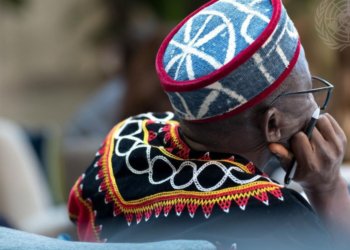
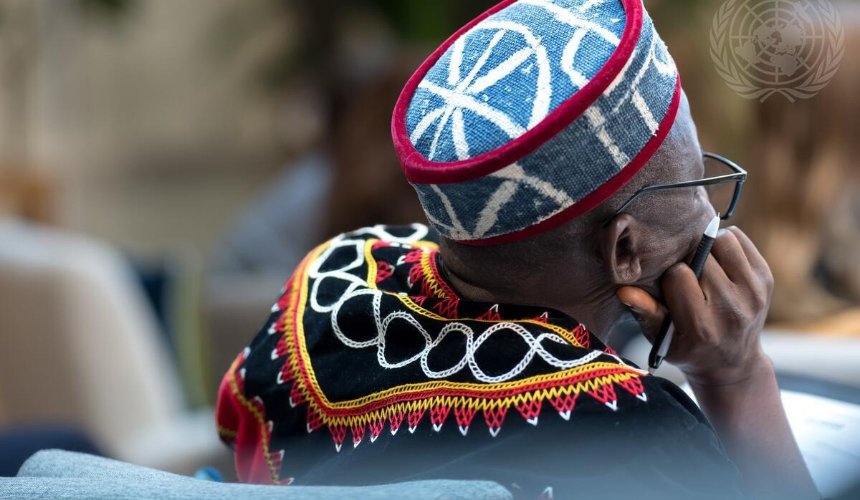
An African audience member listening in on a high level plenary session. UNGA

Bukelwa Maphangaby Bukelwa Maphanga
September 30, 2026
Reading Time: 7 mins read

What Can Africa Achieve Without a Security Council Seat?

Africa’s push for a permanent U.N. Security Council seat remains stalled. Elsewhere, the continent is building leverage through taxes, debt, ratings and minerals

What Can Africa Achieve Without a Security Council Seat?

An African audience member listening in on a high level plenary session. UNGA

What Can Africa Achieve Without a Security Council Seat?

An African audience member listening in on a high level plenary session. UNGA

Bukelwa Maphangaby Bukelwa Maphanga
September 30, 2026
Reading Time: 7 mins read

For 81 years, African heads of state have taken the rostrum in New York and made essentially the same request, in the same patient register, to an audience that has mostly declined to answer. This year was no different. Nigeria’s Vice President Kashim Shettima told the General Assembly that “the world of 2026 cannot remain captive to the distribution of power in 1945.”

South Africa’s Minister of International Relations and Cooperation Ronald Lamola, delivering the complaint with a sharper edge, pointed out that over the past decade, 70% of Security Council resolutions have concerned conflicts on the African continent, a continent that has never had a permanent vote on a single one of them.

Read six days of speeches closely, though, and it becomes clear that this demand, however constant, is no longer where all the work is happening. African diplomacy at the 81st United Nations General Assembly was running on two tracks. One is aimed at a Security Council that keeps declining to move. The second, quieter track is built around instruments that do not require the council’s permission at all, including a tax treaty, a rating agency, a minerals strategy and a debtors’ coalition.

Where a goal needs only a General Assembly majority and African capital to advance, it is moving. Where it still needs the Security Council to say yes, or a creditor to be generous, it remains stuck.

The demand that won’t die and the door that won’t open

About two-thirds of African addresses delivered across the week returned to the Ezulwini Consensus and the demand for permanent representation and veto power. The position is not softening so much as hardening around a more specific ask. Congo’s foreign minister called two permanent seats with veto power “not a request, but a right.”

Ezulwini Consensus was drafted in March 2005 in the Ezulwini Valley of Eswatini (formerly Swaziland) and formally adopted at the AU Summit later that year. The consensus seeks to address what African leaders call a “historical injustice”: most of Africa was not self-governing when the UN was founded in 1945, leaving the continent without permanent representation on the UN’s most powerful body.

Benin’s delegation framed the same grievance more wistfully, insisting the U.N. still matters “not because we harbor nostalgia for the world of 1945,” but because 2026 needs a forum where states can act in concert. It then noted that Africa still does not have a seat at that forum’s most powerful table.

What has changed is the fine print. Shettima wants the two seats “including the veto, for as long as it exists.” Sierra Leone’s President Julius Maada Bio adds the same qualifier, “if it is retained,” while Mauritius has gone further, backing the French-Mexican initiative to restrain the veto in cases of mass atrocity.

Taken together, these are not requests for a ceremonial badge. They amount to a wager that Africa would accept the veto’s abolition tomorrow but will not accept being the only continent still waiting for it today.

Kenya’s President William Ruto supplied the timeline that makes the frustration legible. Security Council reform entered formal negotiations in 2008, and “17 years later, we are still negotiating,” even though the General Assembly has done this before, voting in 1963 to expand the council from 11 seats to 15.

That expansion happened because the five permanent members consented to it. Nothing in this year’s speeches suggests they are any closer to consenting again. Congo’s quiet decision to campaign instead for a nonpermanent seat in the 2030-31 term reads like an acknowledgment of that arithmetic.

Where the majority already works

Elsewhere, African states are not waiting for that consent, and the results are harder to dismiss as symbolic.

Ghana’s President John Mahama pointed out that Africa is “the largest regional voting bloc in this General Assembly,” then demonstrated what that bloc can do. His own resolution, 80/250, recognizing the trans-Atlantic slave trade as the gravest crime against humanity, passed with 123 votes.

It carries no binding force, and Mahama did not pretend otherwise. But a margin that size is not easy to wave off as theater.

Tax policy shows the same approach with more teeth behind it. African states proposed a U.N. tax convention in 2022, aiming to shift rulemaking away from the Organization for Economic Co-operation and Development (OECD), whose 38 members had spent a decade writing global tax standards, and toward a General Assembly body of 193.

That committee is now working toward final texts due in 2027. Uganda’s delegation “fully supports” the process while urging other members “to negotiate constructively,” a phrase that, in diplomatic language, quietly names who isn’t.

The treaty will bind only states that ratify it, so the leverage here is agenda-setting rather than compulsion. But agenda-setting is exactly the seat Africa never had at the OECD’s table, and it is one no single veto can revoke.

Ruto cited a UNDP estimate that biased ratings have cost African economies roughly $75 billion in excess interest and foregone lending, then delivered one of the week’s sharpest lines. “Capital must price risk. It must not price prejudice.”

Namibia’s government is answering that complaint directly, with an African-owned rating agency due to launch in Mauritius in October, built to sit alongside Moody’s, S&P and Fitch rather than replace them. Its credibility will depend less on its African identity than on whether pension funds and central banks actually use its numbers.

South Africa, meanwhile, used its 2025 Group of 20 presidency to push a complementary idea already moving through expert channels. A “borrowers’ club,” proposed by a G20 panel that included former Finance Minister Trevor Manuel, is meant to give indebted nations a coordinated voice in restructuring talks, much as creditors have long had one.

So far, the club exists on paper and in a handful of ministerial meetings. That makes it dormant leverage, but leverage nonetheless.

Minerals complete the picture, and the numbers here are among the starkest in the debate. The U.N. Economic Commission for Africa estimates that the continent holds roughly 30% of the world’s critical mineral reserves but captures less than 5% of the value those minerals generate once processed.

Zimbabwe’s first export of locally produced lithium sulphate and Niger’s newly reclaimed uranium mines are attempts to close that gap. South Africa’s own critical-minerals push, framed by Lamola as a way to “bridge the gap between wealth and poor nations,” points at the same target.

None of this required a vote in New York. It required African governments deciding to keep more processing and value at home.

What the great powers added, mostly by accident

Set this against the mood among the major powers in the same hall.

US President Donald Trump told delegates, “We want to remain a sovereign nation, and so should you,” took credit for cutting the U.N. budget by 15% and rejected any “globalist scheme” to govern artificial intelligence in favor of national development.

An institution that its largest funder is actively shrinking has less capacity, and considerably less standing, to insist on how anyone else should run a tax system or a ratings agency.

French President Emmanuel Macron struck a friendlier note, backing new permanent members, “first and foremost Africa,” and citing 128 states behind his veto-restraint initiative. But a seat endorsed at every summit and delivered at none is, in practice, a remarkably durable asset for whoever still holds the pen.

The limit, stated plainly

The strategy has a real boundary, and it lies where the Security Council still holds a veto.

Angola, Zimbabwe and Congo all asked the General Assembly for “predictable, adequate and sustainable” financing for African Union-led peace operations under Resolution 2719, adopted unanimously in 2023 and designed to cover up to 75% of an eligible operation’s costs through U.N. assessed contributions.

As of the most recent review of its implementation, the Security Council had not authorized a single operation under that framework. The proposed test case in Somalia stalled over U.S. objections.

Climate finance runs into a parallel wall. Malawi’s foreign minister asked for financing that is “predictable, grant-based and highly concessional, rather than relying on debt-creating instruments.” South Africa’s Lamola went further, describing the climate finance architecture as “stacked against developing nations.”

Africa can write its own tax rules and open its own rating agency without asking anyone’s permission. It cannot yet fund the peace operations or climate adaptation it is repeatedly asked to manage because both still run through institutions that answer to donors and the Security Council rather than to the General Assembly’s majority.

What Africa should do next

Identifying the gap is the easy part. Closing it requires using leverage that, in several cases, already exists on paper but has yet to be fully activated.

Set a hard deadline for one consolidated Security Council reform text. Sierra Leone’s Bio noted that member states were promised a “consolidated model” under the Pact for the Future by the end of this session. Africa should hold the General Assembly to that timeline publicly and use the veto-restraint initiative Mauritius already backs as a smaller, immediately achievable step that keeps the larger demand alive rather than competing with it.

Force a first case under Resolution 2719, backed by African money. The framework already permits up to 75% of an eligible operation’s costs to come from U.N. assessed contributions. African governments publicly committing the remaining 25% in advance would remove one argument against authorizing a first case.

Turn the borrowers’ club from a G20 proposal into a standing African institution. The idea, backed by a panel including Manuel, has been floated at summits since late 2025 but has not yet been formally convened. South Africa, as its most visible sponsor, is positioned to host the launch rather than wait for the G20 to do it.

Attach ratification commitments to the tax convention now, not in 2027. A treaty’s power depends on who signs early. African states negotiating as a bloc should line up a critical mass of ratifiers before the final text is adopted so the convention has weight from its first day in force.

Make the minerals strategy regional, not merely national. With roughly 30% of global critical mineral reserves and less than 5% of the value generated after processing, the gap is too large for any single country to close alone. Neighboring states competing on tax incentives to attract the same investors risk giving away precisely the value they are trying to retain. Coordinating beneficiation incentives through the African Continental Free Trade Area (AfCFTA), as several mining ministries have already begun discussing, would let Africa negotiate value addition as a continental bloc rather than as a set of competing offers.

Where this leaves things

Africa has not abandoned its demand for a Security Council seat, but it is no longer waiting on reform alone. Unlike the declarations of 1974, today’s demands come with treaties, institutions and negotiating mechanisms already taking shape. The tools for greater leverage exist. What Africa needs now is follow-through.



Bukelwa Maphanga


Bukelwa Maphanga
is a doctoral student in New Media and Communication and a Teaching Assistant at Ibn Haldun University in Turkey. Building on a background in Political Science and International Relations, her research examines the foreign policy strategies of small African states. She has a particular interest in the intersection of media and political economy and is an avid advocate for African integration.

Get the inside Story

Stay informed on the stories shaping Africa’s future. Get breaking news, in-depth analysis, opinions and exclusive insights from across the continent delivered to your inbox, free and unfiltered.


Get in touch for more:
Felix Tih
Editorial Director, Bantu Gazette
WhatsApp
LinkedIn
X (Twitter)
Instagram

Related Posts

Uganda Casts Wide Net in Talent Hunt Ahead of 2027 AFCON
Perspectives

Uganda Casts Wide Net in Talent Hunt Ahead of 2027 AFCON

September 30, 2026
When Inheritance Becomes Hierarchy
Culture & Identity

When Inheritance Becomes Hierarchy

September 30, 2026
Peace Requires Investment in the People Who Sustain It
Perspectives

Peace Requires Investment in the People Who Sustain It

September 25, 2026
Benin’s Wadagni Joins Kagame for Casual Evening Walk in Kigali
Policy & Governance

Benin’s Wadagni Joins Kagame for Casual Evening Walk in Kigali

September 18, 2026
A Work Should Not Leave Africa Without Its History Traveling With It
Culture & Identity

A Work Should Not Leave Africa Without Its History Traveling With It

September 14, 2026
Africa IP Day | One Market, Many Intellectual Property Systems. Can AfCFTA Bridge the Gap?
Development & Impact

Africa IP Day | One Market, Many Intellectual Property Systems. Can AfCFTA Bridge the Gap?

September 12, 2026

Most Recent

What Can Africa Achieve Without a Security Council Seat?
Perspectives

What Can Africa Achieve Without a Security Council Seat?

by Bukelwa Maphanga
September 30, 2026
0

Africa’s push for a permanent U.N. Security Council seat remains stalled. Elsewhere, the continent is building leverage through taxes, debt,...

Read moreDetails
Uganda Casts Wide Net in Talent Hunt Ahead of 2027 AFCON

Uganda Casts Wide Net in Talent Hunt Ahead of 2027 AFCON

September 30, 2026
Burkina Faso Opens First Gold Refinery to Boost Local Production and Revenue

Burkina Faso Opens First Gold Refinery to Boost Local Production and Revenue

September 29, 2026
When Inheritance Becomes Hierarchy

When Inheritance Becomes Hierarchy

September 30, 2026
Kenya’s President Ruto Tours Dangote’s Lagos Refinery Ahead of Lamu Groundbreaking

Kenya’s President Ruto Tours Dangote’s Lagos Refinery Ahead of Lamu Groundbreaking

September 29, 2026
Ethiopia Rules Berlin as Assefa Survives Late Scare and Adola Wins Again

Ethiopia Rules Berlin as Assefa Survives Late Scare and Adola Wins Again

September 29, 2026
Ethiopians Celebrate Meskel Holiday With Calls for Peace and Unity

Ethiopians Celebrate Meskel Holiday With Calls for Peace and Unity

September 29, 2026
What Can Africa Achieve Without a Security Council Seat?
Perspectives

What Can Africa Achieve Without a Security Council Seat?

by Bukelwa Maphanga
Reading Time: 7 mins read
September 30, 2026
0

Africa’s push for a permanent U.N. Security Council seat remains stalled. Elsewhere, the continent is building leverage through taxes, debt,...

Read moreDetails
Uganda Casts Wide Net in Talent Hunt Ahead of 2027 AFCON
Perspectives

Uganda Casts Wide Net in Talent Hunt Ahead of 2027 AFCON

by Doyinsola Ibidunni
Reading Time: 2 mins read
September 30, 2026
0

East African Country is exploring diaspora players with ancestral ties as the Cranes look to broaden their talent pool for...

Read moreDetails
Burkina Faso Opens First Gold Refinery to Boost Local Production and Revenue
Business, Trade & Economy

Burkina Faso Opens First Gold Refinery to Boost Local Production and Revenue

by Aissatou Fall
Reading Time: 2 mins read
September 29, 2026
0

West African country says new gold refinery will expand local processing, keep more value at home and strengthen revenue from...

Read moreDetails

What Can Africa Achieve Without a Security Council Seat?

Africa’s push for a permanent U.N. Security Council seat remains stalled. Elsewhere, the continent is building leverage through taxes, debt, ratings and minerals

What Can Africa Achieve Without a Security Council Seat?

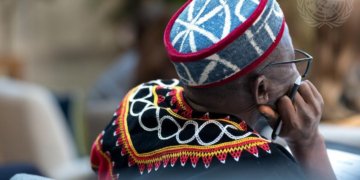
An African audience member listening in on a high level plenary session. UNGA

For 81 years, African heads of state have taken the rostrum in New York and made essentially the same request, in the same patient register, to an audience that has mostly declined to answer. This year was no different. Nigeria’s Vice President Kashim Shettima told the General Assembly that “the world of 2026 cannot remain captive to the distribution of power in 1945.”

South Africa’s Minister of International Relations and Cooperation Ronald Lamola, delivering the complaint with a sharper edge, pointed out that over the past decade, 70% of Security Council resolutions have concerned conflicts on the African continent, a continent that has never had a permanent vote on a single one of them.

Read six days of speeches closely, though, and it becomes clear that this demand, however constant, is no longer where all the work is happening. African diplomacy at the 81st United Nations General Assembly was running on two tracks. One is aimed at a Security Council that keeps declining to move. The second, quieter track is built around instruments that do not require the council’s permission at all, including a tax treaty, a rating agency, a minerals strategy and a debtors’ coalition.

Where a goal needs only a General Assembly majority and African capital to advance, it is moving. Where it still needs the Security Council to say yes, or a creditor to be generous, it remains stuck.

The demand that won’t die and the door that won’t open

About two-thirds of African addresses delivered across the week returned to the Ezulwini Consensus and the demand for permanent representation and veto power. The position is not softening so much as hardening around a more specific ask. Congo’s foreign minister called two permanent seats with veto power “not a request, but a right.”

Ezulwini Consensus was drafted in March 2005 in the Ezulwini Valley of Eswatini (formerly Swaziland) and formally adopted at the AU Summit later that year. The consensus seeks to address what African leaders call a “historical injustice”: most of Africa was not self-governing when the UN was founded in 1945, leaving the continent without permanent representation on the UN’s most powerful body.

Benin’s delegation framed the same grievance more wistfully, insisting the U.N. still matters “not because we harbor nostalgia for the world of 1945,” but because 2026 needs a forum where states can act in concert. It then noted that Africa still does not have a seat at that forum’s most powerful table.

What has changed is the fine print. Shettima wants the two seats “including the veto, for as long as it exists.” Sierra Leone’s President Julius Maada Bio adds the same qualifier, “if it is retained,” while Mauritius has gone further, backing the French-Mexican initiative to restrain the veto in cases of mass atrocity.

Taken together, these are not requests for a ceremonial badge. They amount to a wager that Africa would accept the veto’s abolition tomorrow but will not accept being the only continent still waiting for it today.

Kenya’s President William Ruto supplied the timeline that makes the frustration legible. Security Council reform entered formal negotiations in 2008, and “17 years later, we are still negotiating,” even though the General Assembly has done this before, voting in 1963 to expand the council from 11 seats to 15.

That expansion happened because the five permanent members consented to it. Nothing in this year’s speeches suggests they are any closer to consenting again. Congo’s quiet decision to campaign instead for a nonpermanent seat in the 2030-31 term reads like an acknowledgment of that arithmetic.

Where the majority already works

Elsewhere, African states are not waiting for that consent, and the results are harder to dismiss as symbolic.

Ghana’s President John Mahama pointed out that Africa is “the largest regional voting bloc in this General Assembly,” then demonstrated what that bloc can do. His own resolution, 80/250, recognizing the trans-Atlantic slave trade as the gravest crime against humanity, passed with 123 votes.

It carries no binding force, and Mahama did not pretend otherwise. But a margin that size is not easy to wave off as theater.

Tax policy shows the same approach with more teeth behind it. African states proposed a U.N. tax convention in 2022, aiming to shift rulemaking away from the Organization for Economic Co-operation and Development (OECD), whose 38 members had spent a decade writing global tax standards, and toward a General Assembly body of 193.

That committee is now working toward final texts due in 2027. Uganda’s delegation “fully supports” the process while urging other members “to negotiate constructively,” a phrase that, in diplomatic language, quietly names who isn’t.

The treaty will bind only states that ratify it, so the leverage here is agenda-setting rather than compulsion. But agenda-setting is exactly the seat Africa never had at the OECD’s table, and it is one no single veto can revoke.

Ruto cited a UNDP estimate that biased ratings have cost African economies roughly $75 billion in excess interest and foregone lending, then delivered one of the week’s sharpest lines. “Capital must price risk. It must not price prejudice.”

Namibia’s government is answering that complaint directly, with an African-owned rating agency due to launch in Mauritius in October, built to sit alongside Moody’s, S&P and Fitch rather than replace them. Its credibility will depend less on its African identity than on whether pension funds and central banks actually use its numbers.

South Africa, meanwhile, used its 2025 Group of 20 presidency to push a complementary idea already moving through expert channels. A “borrowers’ club,” proposed by a G20 panel that included former Finance Minister Trevor Manuel, is meant to give indebted nations a coordinated voice in restructuring talks, much as creditors have long had one.

So far, the club exists on paper and in a handful of ministerial meetings. That makes it dormant leverage, but leverage nonetheless.

Minerals complete the picture, and the numbers here are among the starkest in the debate. The U.N. Economic Commission for Africa estimates that the continent holds roughly 30% of the world’s critical mineral reserves but captures less than 5% of the value those minerals generate once processed.

Zimbabwe’s first export of locally produced lithium sulphate and Niger’s newly reclaimed uranium mines are attempts to close that gap. South Africa’s own critical-minerals push, framed by Lamola as a way to “bridge the gap between wealth and poor nations,” points at the same target.

None of this required a vote in New York. It required African governments deciding to keep more processing and value at home.

What the great powers added, mostly by accident

Set this against the mood among the major powers in the same hall.

US President Donald Trump told delegates, “We want to remain a sovereign nation, and so should you,” took credit for cutting the U.N. budget by 15% and rejected any “globalist scheme” to govern artificial intelligence in favor of national development.

An institution that its largest funder is actively shrinking has less capacity, and considerably less standing, to insist on how anyone else should run a tax system or a ratings agency.

French President Emmanuel Macron struck a friendlier note, backing new permanent members, “first and foremost Africa,” and citing 128 states behind his veto-restraint initiative. But a seat endorsed at every summit and delivered at none is, in practice, a remarkably durable asset for whoever still holds the pen.

The limit, stated plainly

The strategy has a real boundary, and it lies where the Security Council still holds a veto.

Angola, Zimbabwe and Congo all asked the General Assembly for “predictable, adequate and sustainable” financing for African Union-led peace operations under Resolution 2719, adopted unanimously in 2023 and designed to cover up to 75% of an eligible operation’s costs through U.N. assessed contributions.

As of the most recent review of its implementation, the Security Council had not authorized a single operation under that framework. The proposed test case in Somalia stalled over U.S. objections.

Climate finance runs into a parallel wall. Malawi’s foreign minister asked for financing that is “predictable, grant-based and highly concessional, rather than relying on debt-creating instruments.” South Africa’s Lamola went further, describing the climate finance architecture as “stacked against developing nations.”

Africa can write its own tax rules and open its own rating agency without asking anyone’s permission. It cannot yet fund the peace operations or climate adaptation it is repeatedly asked to manage because both still run through institutions that answer to donors and the Security Council rather than to the General Assembly’s majority.

What Africa should do next

Identifying the gap is the easy part. Closing it requires using leverage that, in several cases, already exists on paper but has yet to be fully activated.

Set a hard deadline for one consolidated Security Council reform text. Sierra Leone’s Bio noted that member states were promised a “consolidated model” under the Pact for the Future by the end of this session. Africa should hold the General Assembly to that timeline publicly and use the veto-restraint initiative Mauritius already backs as a smaller, immediately achievable step that keeps the larger demand alive rather than competing with it.

Force a first case under Resolution 2719, backed by African money. The framework already permits up to 75% of an eligible operation’s costs to come from U.N. assessed contributions. African governments publicly committing the remaining 25% in advance would remove one argument against authorizing a first case.

Turn the borrowers’ club from a G20 proposal into a standing African institution. The idea, backed by a panel including Manuel, has been floated at summits since late 2025 but has not yet been formally convened. South Africa, as its most visible sponsor, is positioned to host the launch rather than wait for the G20 to do it.

Attach ratification commitments to the tax convention now, not in 2027. A treaty’s power depends on who signs early. African states negotiating as a bloc should line up a critical mass of ratifiers before the final text is adopted so the convention has weight from its first day in force.

Make the minerals strategy regional, not merely national. With roughly 30% of global critical mineral reserves and less than 5% of the value generated after processing, the gap is too large for any single country to close alone. Neighboring states competing on tax incentives to attract the same investors risk giving away precisely the value they are trying to retain. Coordinating beneficiation incentives through the African Continental Free Trade Area (AfCFTA), as several mining ministries have already begun discussing, would let Africa negotiate value addition as a continental bloc rather than as a set of competing offers.

Where this leaves things

Africa has not abandoned its demand for a Security Council seat, but it is no longer waiting on reform alone. Unlike the declarations of 1974, today’s demands come with treaties, institutions and negotiating mechanisms already taking shape. The tools for greater leverage exist. What Africa needs now is follow-through.


Bukelwa Maphanga


Bukelwa Maphanga
is a doctoral student in New Media and Communication and a Teaching Assistant at Ibn Haldun University in Turkey. Building on a background in Political Science and International Relations, her research examines the foreign policy strategies of small African states. She has a particular interest in the intersection of media and political economy and is an avid advocate for African integration.

What Can Africa Achieve Without a Security Council Seat?

Africa’s push for a permanent U.N. Security Council seat remains stalled. Elsewhere, the continent is building leverage through taxes, debt, ratings and minerals

What Can Africa Achieve Without a Security Council Seat?

An African audience member listening in on a high level plenary session. UNGA

Bukelwa Maphangaby Bukelwa Maphanga
September 30, 2026

For 81 years, African heads of state have taken the rostrum in New York and made essentially the same request, in the same patient register, to an audience that has mostly declined to answer. This year was no different. Nigeria’s Vice President Kashim Shettima told the General Assembly that “the world of 2026 cannot remain captive to the distribution of power in 1945.”

South Africa’s Minister of International Relations and Cooperation Ronald Lamola, delivering the complaint with a sharper edge, pointed out that over the past decade, 70% of Security Council resolutions have concerned conflicts on the African continent, a continent that has never had a permanent vote on a single one of them.

Read six days of speeches closely, though, and it becomes clear that this demand, however constant, is no longer where all the work is happening. African diplomacy at the 81st United Nations General Assembly was running on two tracks. One is aimed at a Security Council that keeps declining to move. The second, quieter track is built around instruments that do not require the council’s permission at all, including a tax treaty, a rating agency, a minerals strategy and a debtors’ coalition.

Where a goal needs only a General Assembly majority and African capital to advance, it is moving. Where it still needs the Security Council to say yes, or a creditor to be generous, it remains stuck.

The demand that won’t die and the door that won’t open

About two-thirds of African addresses delivered across the week returned to the Ezulwini Consensus and the demand for permanent representation and veto power. The position is not softening so much as hardening around a more specific ask. Congo’s foreign minister called two permanent seats with veto power “not a request, but a right.”

Ezulwini Consensus was drafted in March 2005 in the Ezulwini Valley of Eswatini (formerly Swaziland) and formally adopted at the AU Summit later that year. The consensus seeks to address what African leaders call a “historical injustice”: most of Africa was not self-governing when the UN was founded in 1945, leaving the continent without permanent representation on the UN’s most powerful body.

Benin’s delegation framed the same grievance more wistfully, insisting the U.N. still matters “not because we harbor nostalgia for the world of 1945,” but because 2026 needs a forum where states can act in concert. It then noted that Africa still does not have a seat at that forum’s most powerful table.

What has changed is the fine print. Shettima wants the two seats “including the veto, for as long as it exists.” Sierra Leone’s President Julius Maada Bio adds the same qualifier, “if it is retained,” while Mauritius has gone further, backing the French-Mexican initiative to restrain the veto in cases of mass atrocity.

Taken together, these are not requests for a ceremonial badge. They amount to a wager that Africa would accept the veto’s abolition tomorrow but will not accept being the only continent still waiting for it today.

Kenya’s President William Ruto supplied the timeline that makes the frustration legible. Security Council reform entered formal negotiations in 2008, and “17 years later, we are still negotiating,” even though the General Assembly has done this before, voting in 1963 to expand the council from 11 seats to 15.

That expansion happened because the five permanent members consented to it. Nothing in this year’s speeches suggests they are any closer to consenting again. Congo’s quiet decision to campaign instead for a nonpermanent seat in the 2030-31 term reads like an acknowledgment of that arithmetic.

Where the majority already works

Elsewhere, African states are not waiting for that consent, and the results are harder to dismiss as symbolic.

Ghana’s President John Mahama pointed out that Africa is “the largest regional voting bloc in this General Assembly,” then demonstrated what that bloc can do. His own resolution, 80/250, recognizing the trans-Atlantic slave trade as the gravest crime against humanity, passed with 123 votes.

It carries no binding force, and Mahama did not pretend otherwise. But a margin that size is not easy to wave off as theater.

Tax policy shows the same approach with more teeth behind it. African states proposed a U.N. tax convention in 2022, aiming to shift rulemaking away from the Organization for Economic Co-operation and Development (OECD), whose 38 members had spent a decade writing global tax standards, and toward a General Assembly body of 193.

That committee is now working toward final texts due in 2027. Uganda’s delegation “fully supports” the process while urging other members “to negotiate constructively,” a phrase that, in diplomatic language, quietly names who isn’t.

The treaty will bind only states that ratify it, so the leverage here is agenda-setting rather than compulsion. But agenda-setting is exactly the seat Africa never had at the OECD’s table, and it is one no single veto can revoke.

Ruto cited a UNDP estimate that biased ratings have cost African economies roughly $75 billion in excess interest and foregone lending, then delivered one of the week’s sharpest lines. “Capital must price risk. It must not price prejudice.”

Namibia’s government is answering that complaint directly, with an African-owned rating agency due to launch in Mauritius in October, built to sit alongside Moody’s, S&P and Fitch rather than replace them. Its credibility will depend less on its African identity than on whether pension funds and central banks actually use its numbers.

South Africa, meanwhile, used its 2025 Group of 20 presidency to push a complementary idea already moving through expert channels. A “borrowers’ club,” proposed by a G20 panel that included former Finance Minister Trevor Manuel, is meant to give indebted nations a coordinated voice in restructuring talks, much as creditors have long had one.

So far, the club exists on paper and in a handful of ministerial meetings. That makes it dormant leverage, but leverage nonetheless.

Minerals complete the picture, and the numbers here are among the starkest in the debate. The U.N. Economic Commission for Africa estimates that the continent holds roughly 30% of the world’s critical mineral reserves but captures less than 5% of the value those minerals generate once processed.

Zimbabwe’s first export of locally produced lithium sulphate and Niger’s newly reclaimed uranium mines are attempts to close that gap. South Africa’s own critical-minerals push, framed by Lamola as a way to “bridge the gap between wealth and poor nations,” points at the same target.

None of this required a vote in New York. It required African governments deciding to keep more processing and value at home.

What the great powers added, mostly by accident

Set this against the mood among the major powers in the same hall.

US President Donald Trump told delegates, “We want to remain a sovereign nation, and so should you,” took credit for cutting the U.N. budget by 15% and rejected any “globalist scheme” to govern artificial intelligence in favor of national development.

An institution that its largest funder is actively shrinking has less capacity, and considerably less standing, to insist on how anyone else should run a tax system or a ratings agency.

French President Emmanuel Macron struck a friendlier note, backing new permanent members, “first and foremost Africa,” and citing 128 states behind his veto-restraint initiative. But a seat endorsed at every summit and delivered at none is, in practice, a remarkably durable asset for whoever still holds the pen.

The limit, stated plainly

The strategy has a real boundary, and it lies where the Security Council still holds a veto.

Angola, Zimbabwe and Congo all asked the General Assembly for “predictable, adequate and sustainable” financing for African Union-led peace operations under Resolution 2719, adopted unanimously in 2023 and designed to cover up to 75% of an eligible operation’s costs through U.N. assessed contributions.

As of the most recent review of its implementation, the Security Council had not authorized a single operation under that framework. The proposed test case in Somalia stalled over U.S. objections.

Climate finance runs into a parallel wall. Malawi’s foreign minister asked for financing that is “predictable, grant-based and highly concessional, rather than relying on debt-creating instruments.” South Africa’s Lamola went further, describing the climate finance architecture as “stacked against developing nations.”

Africa can write its own tax rules and open its own rating agency without asking anyone’s permission. It cannot yet fund the peace operations or climate adaptation it is repeatedly asked to manage because both still run through institutions that answer to donors and the Security Council rather than to the General Assembly’s majority.

What Africa should do next

Identifying the gap is the easy part. Closing it requires using leverage that, in several cases, already exists on paper but has yet to be fully activated.

Set a hard deadline for one consolidated Security Council reform text. Sierra Leone’s Bio noted that member states were promised a “consolidated model” under the Pact for the Future by the end of this session. Africa should hold the General Assembly to that timeline publicly and use the veto-restraint initiative Mauritius already backs as a smaller, immediately achievable step that keeps the larger demand alive rather than competing with it.

Force a first case under Resolution 2719, backed by African money. The framework already permits up to 75% of an eligible operation’s costs to come from U.N. assessed contributions. African governments publicly committing the remaining 25% in advance would remove one argument against authorizing a first case.

Turn the borrowers’ club from a G20 proposal into a standing African institution. The idea, backed by a panel including Manuel, has been floated at summits since late 2025 but has not yet been formally convened. South Africa, as its most visible sponsor, is positioned to host the launch rather than wait for the G20 to do it.

Attach ratification commitments to the tax convention now, not in 2027. A treaty’s power depends on who signs early. African states negotiating as a bloc should line up a critical mass of ratifiers before the final text is adopted so the convention has weight from its first day in force.

Make the minerals strategy regional, not merely national. With roughly 30% of global critical mineral reserves and less than 5% of the value generated after processing, the gap is too large for any single country to close alone. Neighboring states competing on tax incentives to attract the same investors risk giving away precisely the value they are trying to retain. Coordinating beneficiation incentives through the African Continental Free Trade Area (AfCFTA), as several mining ministries have already begun discussing, would let Africa negotiate value addition as a continental bloc rather than as a set of competing offers.

Where this leaves things

Africa has not abandoned its demand for a Security Council seat, but it is no longer waiting on reform alone. Unlike the declarations of 1974, today’s demands come with treaties, institutions and negotiating mechanisms already taking shape. The tools for greater leverage exist. What Africa needs now is follow-through.


Bukelwa Maphanga


Bukelwa Maphanga
is a doctoral student in New Media and Communication and a Teaching Assistant at Ibn Haldun University in Turkey. Building on a background in Political Science and International Relations, her research examines the foreign policy strategies of small African states. She has a particular interest in the intersection of media and political economy and is an avid advocate for African integration.

Get the inside Story

Stay informed on the stories shaping Africa’s future. Get breaking news, in-depth analysis, opinions and exclusive insights from across the continent delivered to your inbox, free and unfiltered.


Get in touch for more:
Felix Tih
Editorial Director, Bantu Gazette
WhatsApp
LinkedIn
X (Twitter)
Instagram

Related Posts

Uganda Casts Wide Net in Talent Hunt Ahead of 2027 AFCON

Uganda Casts Wide Net in Talent Hunt Ahead of 2027 AFCON

by Doyinsola Ibidunni
September 30, 2026
0

...

When Inheritance Becomes Hierarchy

When Inheritance Becomes Hierarchy

by Munira Bonnet
September 29, 2026
0

...

Peace Requires Investment in the People Who Sustain It

Peace Requires Investment in the People Who Sustain It

by Mame Khady Louise Diouf
September 21, 2026
0

...

Benin’s Wadagni Joins Kagame for Casual Evening Walk in Kigali

Benin’s Wadagni Joins Kagame for Casual Evening Walk in Kigali

by Amani Mwakalebela
September 17, 2026
0

...

A Work Should Not Leave Africa Without Its History Traveling With It

A Work Should Not Leave Africa Without Its History Traveling With It

by Munira Bonnet
September 12, 2026
0

...

Africa IP Day | One Market, Many Intellectual Property Systems. Can AfCFTA Bridge the Gap?

Africa IP Day | One Market, Many Intellectual Property Systems. Can AfCFTA Bridge the Gap?

by Felix Tih
September 10, 2026
0

...

What Can Africa Achieve Without a Security Council Seat?
Perspectives

What Can Africa Achieve Without a Security Council Seat?

by Bukelwa Maphanga
Reading Time: 7 mins read
September 30, 2026
0

Africa’s push for a permanent U.N. Security Council seat remains stalled. Elsewhere, the continent is building leverage through taxes, debt,...

Read moreDetails
Uganda Casts Wide Net in Talent Hunt Ahead of 2027 AFCON

Uganda Casts Wide Net in Talent Hunt Ahead of 2027 AFCON

by Doyinsola Ibidunni
September 30, 2026
0

East African Country is exploring diaspora players with ancestral ties as the Cranes look to broaden their talent pool for...

Burkina Faso Opens First Gold Refinery to Boost Local Production and Revenue

Burkina Faso Opens First Gold Refinery to Boost Local Production and Revenue

by Aissatou Fall
September 29, 2026
0

West African country says new gold refinery will expand local processing, keep more value at home and strengthen revenue from...

When Inheritance Becomes Hierarchy

When Inheritance Becomes Hierarchy

by Munira Bonnet
September 29, 2026
0

Africa’s inheritance holds knowledge worth preserving, but it also carries classifications and hierarchies that deserve closer scrutiny before we pass...

Kenya’s President Ruto Tours Dangote’s Lagos Refinery Ahead of Lamu Groundbreaking

Kenya’s President Ruto Tours Dangote’s Lagos Refinery Ahead of Lamu Groundbreaking

by Waceke Nganga
September 28, 2026
0

Ruto says the $16 billion Lamu refinery will process 700,000 barrels of crude a day, strengthen fuel security and create...

Bantu Gazette is a pioneering news platform that champions Africa's development, culture, and heritage. We spotlight the continent's successes, address its challenges, and provide insightful coverage of events that shape its future.

Bantu Gazette is a pioneering news platform that champions Africa's development, culture, and heritage. We spotlight the continent's successes, address its challenges, and provide insightful coverage of events that shape its future.

Our Platforms

  • Bantu Magazine
  • Bantu Brief
  • Black Frame Studio

Our Services

  • Bantu Agency
  • Advertise
  • Partnerships

Our Services

  • Editorial Director
  • Opportunities
  • Contact

Bantu Gazette is a pioneering news platform that champions Africa's development, culture, and heritage. We spotlight the continent's successes, address its challenges, and provide insightful coverage of events that shape its future.

Our Platforms

  • Bantu Magazine
  • Bantu Brief
  • Black Frame Studio

Our Services

  • Bantu Agency
  • Advertise
  • Partnerships

Our Services

  • Editorial Director
  • Opportunities
  • Contact
Bantu Gazette
  • Energy & Trade
  • Finance
  • Health
  • Politics & Economy
  • Technology
  • Environment
  • Feature
  • Opinion
  • Changemakers
  • Tourism & Culture
  • Magazine