
Bantu Gazette

Bantu Gazette
  • Policy & Governance
  • Development & Impact
  • Business, Trade & Economy
  • Energy
  • Changemakers
  • Culture & Identity
  • Perspectives
  • Magazine
Menu
  • Black Frame Studio
  • Magazine

Africa IP Day | One Market, Many Intellectual Property Systems. Can AfCFTA Bridge the Gap?

Africa’s innovators are crossing borders faster than IP protections can follow. Experts say AfCFTA could help build a more connected system for trade and investment.

Africa IP Day | One Market, Many Intellectual Property Systems. Can AfCFTA Bridge the Gap?
Felix Tihby Felix Tih
September 10, 2026
Reading Time: 4 mins read

Africa IP Day | One Market, Many Intellectual Property Systems. Can AfCFTA Bridge the Gap?

Africa’s innovators are crossing borders faster than IP protections can follow. Experts say AfCFTA could help build a more connected system for trade and investment.

Africa IP Day | One Market, Many Intellectual Property Systems. Can AfCFTA Bridge the Gap?
Felix Tihby Felix Tih
September 12, 2026
Reading Time: 4 mins read

A trademark registered in Rwanda does not automatically travel with a business into Ghana. Move next into Nigeria, and the process can begin again.

For a small company built around a brand, software, technology or another intangible asset, crossing a border can therefore mean navigating another set of rules, registrations and enforcement mechanisms, even as the African Continental Free Trade Area (AfCFTA) seeks to make the continent a single market.

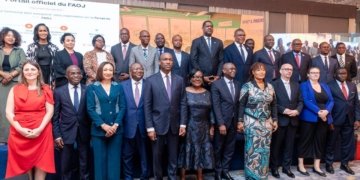
That challenge sat at the heart of Thursday’s Africa IP Day webinar, where legal, trade, technology and private-sector experts examined what happens when increasingly borderless businesses meet intellectual property rights that remain largely territorial.

Desire Loumou, head of the Intellectual Property Rights Division at the AfCFTA Secretariat and moderator of the webinar, framed the question around a continental market bringing together the African Union’s 55 member states. Marie Madeleine Bauret of the Secretariat opened the event.

The problem, speakers suggested, is not that Africa lacks intellectual pr operty institutions. It is that businesses moving across the continent must navigate a patchwork of national systems alongside regional mechanisms such as the African Intellectual Property Organization (OAPI), and the African Regional Intellectual Property Organization (ARIPO).

From Cameroon, Vanessa Halle-Fonguh, an intellectual property lawyer and partner at Nico Halle & Co. Law Firm, described the landscape as “sophisticated” but fragmented.

“Sometimes, we have IP owners, we have inventors, we have creators, and the first question they ask is, ‘Oh, how do I protect my IP in Africa?’” Halle-Fonguh said.

The better question, she argued, is which African markets matter to the business and which national or regional filing route offers the most effective protection.

When one market meets many systems

That fragmentation carries consequences beyond registration paperwork.

For businesses whose most valuable assets may be trademarks, copyrights or technology, Manasses Mwangi, a Kenyan lawyer and patent agent, argued that intellectual property cannot be separated from regional trade. Brands can reach new markets before the physical products they represent, making protection essential to cross-border expansion.

The challenge also extends to financing. Without greater coherence in how intellectual property is registered, recognized and valued, businesses can struggle to use intangible assets as collateral to secure credit.

The stakes become greater in the digital economy, where borders can disappear for customers while remaining firmly in place for regulation.

Talkmore Chidede, a senior digital trade expert at the AfCFTA Secretariat, pointed to the possibility of a technology company developing a product in Accra and serving consumers across a continental market of 1.4 billion people.

In practice, however, expanding can mean confronting different regulatory regimes, standards and administrative requirements.

The AfCFTA’s intellectual property and digital trade frameworks offer a potential response through greater harmonization, predictability and interoperability so entrepreneurs can protect innovations and operate across markets with more confidence.

But harmonizing rules alone may not solve the problem.

Serwah Prempeh, head of the Just Green Technology Transition Program at the Africa Policy Research Institute, said Africa’s layered IP architecture is compounded by uneven digitization, under-resourced IP offices and limited access to searchable information.

Those weaknesses increase transaction costs, with smaller companies bearing a disproportionate burden. Some already struggle to develop an IP strategy in one jurisdiction, making protection across several markets prohibitively expensive.

The consequences extend to local communities, where gaps in awareness, representation and enforcement can leave traditional knowledge and other community assets vulnerable to exploitation.

From protection to commercial value

For Henry Emejuo, director-general and CEO of the Pan-African Alliance of Small and Medium Industries, the issue comes down to whether existing institutions can function as a coherent commercial system.

He outlined decisions enterprises must make before expanding, including identifying their intellectual assets, prioritizing markets, conducting clearance checks, choosing national, regional or international filing routes, and preparing contracts and enforcement strategies.

The recommendations emerging from the discussion pointed toward simplification rather than another layer of bureaucracy.

Prempeh proposed an “IP facilitation” approach, similar to trade facilitation, to help smaller firms navigate cross-border intellectual property requirements.

Fernando Dos Santos, a former director-general of ARIPO and former head of Mozambique’s Industrial Property Institute, similarly argued for stronger coordination among existing institutions, better-resourced IP offices and gradual harmonization of procedures. Intellectual property, he said, should be treated as an investment and development tool rather than simply a cost.

The enforcement side remains critical. Egyptian judicial and intellectual property expert Mohamed Elzeiny brought the courts and enforcement institutions into the discussion, underscoring that rights on paper ultimately depend on businesses having confidence that they can be enforced.

The concern running through the webinar was therefore not whether Africa has intellectual property systems, but whether those systems can become connected enough to support the borderless commercial activity the AfCFTA is designed to encourage.

Innovators take home Africa IP Day prizes

The day also provided evidence of what is already being built.

In the My IP Story awards, Chioma Rosemary Onyekaba of Nigeria, founder of Beauty and Brains Foundation Printing Press, won gold.

John Wobil of Ghana’s Wobil Technologies Ltd. took silver for agricultural technologies aimed at reducing post-harvest losses and energy costs.

Grace Akatuha of Uganda, founder of Kikazi Agri-Products Ltd., received bronze for her trademarked indigenous food products.

The inaugural SG Prize awarded gold to UP-elect Sal of Benin for solar technology designed to improve neonatal care and reduce neonatal hypothermia.

Biogenics of Cameroon received silver for an agroecological innovation addressing soil degradation, costly agricultural inputs and climate change.

Lumos Laboratories of Nigeria took bronze for patented technology that turns waste into clean energy.

For the AfCFTA, those innovators illustrate both sides of the challenge. Ideas and intellectual assets are already being created across the continent. The next test is making it easier for them to cross borders and remain protected when they do.

As Halle-Fonguh put it, “African businesses are themselves increasingly becoming IP owners and exporters of brands and technology.”


 

Get the inside Story

Stay informed on the stories shaping Africa’s future. Get breaking news, in-depth analysis, opinions and exclusive insights from across the continent delivered to your inbox, free and unfiltered.


Get in touch for more:
Felix Tih
Editorial Director, Bantu Gazette
WhatsApp
LinkedIn
X (Twitter)
Instagram

Related Posts

Morocco Bets on Sports Hosting to Drive Growth and Gender Equity
Development & Impact

Morocco Bets on Sports Hosting to Drive Growth and Gender Equity

October 8, 2026
Green Mark Puts Botswana Businesses on Path to Sustainability
Development & Impact

Green Mark Puts Botswana Businesses on Path to Sustainability

October 8, 2026
Côte d’Ivoire Launches $7.7 Million Youth Fund to Back Community Projects
Development & Impact

Côte d’Ivoire Launches $7.7 Million Youth Fund to Back Community Projects

October 7, 2026
South Africa’s Billion-Tree Campaign Targets Jobs, Food Security, Greener Communities
Development & Impact

South Africa’s Billion-Tree Campaign Targets Jobs, Food Security, Greener Communities

October 8, 2026
nigeria’s lagos state bonds see strong investor demand
Development & Impact

Nigeria Launches Digital Postcode System to Improve Location-based Services

October 5, 2026
What Can Africa Achieve Without a Security Council Seat?
Perspectives

What Can Africa Achieve Without a Security Council Seat?

October 7, 2026

Most Recent

Africa Launches Own Credit Rating Agency in Push to Reshape Risk Assessments
Business, Trade & Economy

Africa Launches Own Credit Rating Agency in Push to Reshape Risk Assessments

by Sethunya Marang Motoutwane
October 8, 2026
0

AfCRA will offer an African-led view of sovereign and corporate credit risk, seeking to widen rating coverage and bring more...

Read moreDetails
Morocco Bets on Sports Hosting to Drive Growth and Gender Equity

Morocco Bets on Sports Hosting to Drive Growth and Gender Equity

October 8, 2026
Green Mark Puts Botswana Businesses on Path to Sustainability

Green Mark Puts Botswana Businesses on Path to Sustainability

October 8, 2026
Côte d’Ivoire Launches $7.7 Million Youth Fund to Back Community Projects

Côte d’Ivoire Launches $7.7 Million Youth Fund to Back Community Projects

October 7, 2026
South Africa’s Billion-Tree Campaign Targets Jobs, Food Security, Greener Communities

South Africa’s Billion-Tree Campaign Targets Jobs, Food Security, Greener Communities

October 8, 2026
Namibia Unveils 176-Carat Diamond, Biggest Find in Two Decades

Namibia Unveils 176-Carat Diamond, Biggest Find in Two Decades

October 8, 2026
nigeria’s lagos state bonds see strong investor demand

Nigeria Launches Digital Postcode System to Improve Location-based Services

October 5, 2026
Africa Launches Own Credit Rating Agency in Push to Reshape Risk Assessments
Business, Trade & Economy

Africa Launches Own Credit Rating Agency in Push to Reshape Risk Assessments

by Sethunya Marang Motoutwane
Reading Time: 3 mins read
October 8, 2026
0

AfCRA will offer an African-led view of sovereign and corporate credit risk, seeking to widen rating coverage and bring more...

Read moreDetails
Morocco Bets on Sports Hosting to Drive Growth and Gender Equity
Development & Impact

Morocco Bets on Sports Hosting to Drive Growth and Gender Equity

by Doyinsola Ibidunni
Reading Time: 4 mins read
October 8, 2026
0

Morocco's sports hosting boom has built global ambitions, but questions over public spending, stadium use and women's representation will shape...

Read moreDetails
Green Mark Puts Botswana Businesses on Path to Sustainability
Development & Impact

Green Mark Puts Botswana Businesses on Path to Sustainability

by Maureen Amogelang Garetshoge
Reading Time: 2 mins read
October 8, 2026
0

Experts say the initiative could boost sustainable business, but smaller firms will need finance, skills and support to meet rising...

Read moreDetails

Africa IP Day | One Market, Many Intellectual Property Systems. Can AfCFTA Bridge the Gap?

Africa’s innovators are crossing borders faster than IP protections can follow. Experts say AfCFTA could help build a more connected system for trade and investment.

Africa IP Day | One Market, Many Intellectual Property Systems. Can AfCFTA Bridge the Gap?

A trademark registered in Rwanda does not automatically travel with a business into Ghana. Move next into Nigeria, and the process can begin again.

For a small company built around a brand, software, technology or another intangible asset, crossing a border can therefore mean navigating another set of rules, registrations and enforcement mechanisms, even as the African Continental Free Trade Area (AfCFTA) seeks to make the continent a single market.

That challenge sat at the heart of Thursday’s Africa IP Day webinar, where legal, trade, technology and private-sector experts examined what happens when increasingly borderless businesses meet intellectual property rights that remain largely territorial.

Desire Loumou, head of the Intellectual Property Rights Division at the AfCFTA Secretariat and moderator of the webinar, framed the question around a continental market bringing together the African Union’s 55 member states. Marie Madeleine Bauret of the Secretariat opened the event.

The problem, speakers suggested, is not that Africa lacks intellectual pr operty institutions. It is that businesses moving across the continent must navigate a patchwork of national systems alongside regional mechanisms such as the African Intellectual Property Organization (OAPI), and the African Regional Intellectual Property Organization (ARIPO).

From Cameroon, Vanessa Halle-Fonguh, an intellectual property lawyer and partner at Nico Halle & Co. Law Firm, described the landscape as “sophisticated” but fragmented.

“Sometimes, we have IP owners, we have inventors, we have creators, and the first question they ask is, ‘Oh, how do I protect my IP in Africa?’” Halle-Fonguh said.

The better question, she argued, is which African markets matter to the business and which national or regional filing route offers the most effective protection.

When one market meets many systems

That fragmentation carries consequences beyond registration paperwork.

For businesses whose most valuable assets may be trademarks, copyrights or technology, Manasses Mwangi, a Kenyan lawyer and patent agent, argued that intellectual property cannot be separated from regional trade. Brands can reach new markets before the physical products they represent, making protection essential to cross-border expansion.

The challenge also extends to financing. Without greater coherence in how intellectual property is registered, recognized and valued, businesses can struggle to use intangible assets as collateral to secure credit.

The stakes become greater in the digital economy, where borders can disappear for customers while remaining firmly in place for regulation.

Talkmore Chidede, a senior digital trade expert at the AfCFTA Secretariat, pointed to the possibility of a technology company developing a product in Accra and serving consumers across a continental market of 1.4 billion people.

In practice, however, expanding can mean confronting different regulatory regimes, standards and administrative requirements.

The AfCFTA’s intellectual property and digital trade frameworks offer a potential response through greater harmonization, predictability and interoperability so entrepreneurs can protect innovations and operate across markets with more confidence.

But harmonizing rules alone may not solve the problem.

Serwah Prempeh, head of the Just Green Technology Transition Program at the Africa Policy Research Institute, said Africa’s layered IP architecture is compounded by uneven digitization, under-resourced IP offices and limited access to searchable information.

Those weaknesses increase transaction costs, with smaller companies bearing a disproportionate burden. Some already struggle to develop an IP strategy in one jurisdiction, making protection across several markets prohibitively expensive.

The consequences extend to local communities, where gaps in awareness, representation and enforcement can leave traditional knowledge and other community assets vulnerable to exploitation.

From protection to commercial value

For Henry Emejuo, director-general and CEO of the Pan-African Alliance of Small and Medium Industries, the issue comes down to whether existing institutions can function as a coherent commercial system.

He outlined decisions enterprises must make before expanding, including identifying their intellectual assets, prioritizing markets, conducting clearance checks, choosing national, regional or international filing routes, and preparing contracts and enforcement strategies.

The recommendations emerging from the discussion pointed toward simplification rather than another layer of bureaucracy.

Prempeh proposed an “IP facilitation” approach, similar to trade facilitation, to help smaller firms navigate cross-border intellectual property requirements.

Fernando Dos Santos, a former director-general of ARIPO and former head of Mozambique’s Industrial Property Institute, similarly argued for stronger coordination among existing institutions, better-resourced IP offices and gradual harmonization of procedures. Intellectual property, he said, should be treated as an investment and development tool rather than simply a cost.

The enforcement side remains critical. Egyptian judicial and intellectual property expert Mohamed Elzeiny brought the courts and enforcement institutions into the discussion, underscoring that rights on paper ultimately depend on businesses having confidence that they can be enforced.

The concern running through the webinar was therefore not whether Africa has intellectual property systems, but whether those systems can become connected enough to support the borderless commercial activity the AfCFTA is designed to encourage.

Innovators take home Africa IP Day prizes

The day also provided evidence of what is already being built.

In the My IP Story awards, Chioma Rosemary Onyekaba of Nigeria, founder of Beauty and Brains Foundation Printing Press, won gold.

John Wobil of Ghana’s Wobil Technologies Ltd. took silver for agricultural technologies aimed at reducing post-harvest losses and energy costs.

Grace Akatuha of Uganda, founder of Kikazi Agri-Products Ltd., received bronze for her trademarked indigenous food products.

The inaugural SG Prize awarded gold to UP-elect Sal of Benin for solar technology designed to improve neonatal care and reduce neonatal hypothermia.

Biogenics of Cameroon received silver for an agroecological innovation addressing soil degradation, costly agricultural inputs and climate change.

Lumos Laboratories of Nigeria took bronze for patented technology that turns waste into clean energy.

For the AfCFTA, those innovators illustrate both sides of the challenge. Ideas and intellectual assets are already being created across the continent. The next test is making it easier for them to cross borders and remain protected when they do.

As Halle-Fonguh put it, “African businesses are themselves increasingly becoming IP owners and exporters of brands and technology.”
 

Africa IP Day | One Market, Many Intellectual Property Systems. Can AfCFTA Bridge the Gap?

Africa’s innovators are crossing borders faster than IP protections can follow. Experts say AfCFTA could help build a more connected system for trade and investment.

Africa IP Day | One Market, Many Intellectual Property Systems. Can AfCFTA Bridge the Gap?
Felix Tihby Felix Tih
September 10, 2026

A trademark registered in Rwanda does not automatically travel with a business into Ghana. Move next into Nigeria, and the process can begin again.

For a small company built around a brand, software, technology or another intangible asset, crossing a border can therefore mean navigating another set of rules, registrations and enforcement mechanisms, even as the African Continental Free Trade Area (AfCFTA) seeks to make the continent a single market.

That challenge sat at the heart of Thursday’s Africa IP Day webinar, where legal, trade, technology and private-sector experts examined what happens when increasingly borderless businesses meet intellectual property rights that remain largely territorial.

Desire Loumou, head of the Intellectual Property Rights Division at the AfCFTA Secretariat and moderator of the webinar, framed the question around a continental market bringing together the African Union’s 55 member states. Marie Madeleine Bauret of the Secretariat opened the event.

The problem, speakers suggested, is not that Africa lacks intellectual pr operty institutions. It is that businesses moving across the continent must navigate a patchwork of national systems alongside regional mechanisms such as the African Intellectual Property Organization (OAPI), and the African Regional Intellectual Property Organization (ARIPO).

From Cameroon, Vanessa Halle-Fonguh, an intellectual property lawyer and partner at Nico Halle & Co. Law Firm, described the landscape as “sophisticated” but fragmented.

“Sometimes, we have IP owners, we have inventors, we have creators, and the first question they ask is, ‘Oh, how do I protect my IP in Africa?’” Halle-Fonguh said.

The better question, she argued, is which African markets matter to the business and which national or regional filing route offers the most effective protection.

When one market meets many systems

That fragmentation carries consequences beyond registration paperwork.

For businesses whose most valuable assets may be trademarks, copyrights or technology, Manasses Mwangi, a Kenyan lawyer and patent agent, argued that intellectual property cannot be separated from regional trade. Brands can reach new markets before the physical products they represent, making protection essential to cross-border expansion.

The challenge also extends to financing. Without greater coherence in how intellectual property is registered, recognized and valued, businesses can struggle to use intangible assets as collateral to secure credit.

The stakes become greater in the digital economy, where borders can disappear for customers while remaining firmly in place for regulation.

Talkmore Chidede, a senior digital trade expert at the AfCFTA Secretariat, pointed to the possibility of a technology company developing a product in Accra and serving consumers across a continental market of 1.4 billion people.

In practice, however, expanding can mean confronting different regulatory regimes, standards and administrative requirements.

The AfCFTA’s intellectual property and digital trade frameworks offer a potential response through greater harmonization, predictability and interoperability so entrepreneurs can protect innovations and operate across markets with more confidence.

But harmonizing rules alone may not solve the problem.

Serwah Prempeh, head of the Just Green Technology Transition Program at the Africa Policy Research Institute, said Africa’s layered IP architecture is compounded by uneven digitization, under-resourced IP offices and limited access to searchable information.

Those weaknesses increase transaction costs, with smaller companies bearing a disproportionate burden. Some already struggle to develop an IP strategy in one jurisdiction, making protection across several markets prohibitively expensive.

The consequences extend to local communities, where gaps in awareness, representation and enforcement can leave traditional knowledge and other community assets vulnerable to exploitation.

From protection to commercial value

For Henry Emejuo, director-general and CEO of the Pan-African Alliance of Small and Medium Industries, the issue comes down to whether existing institutions can function as a coherent commercial system.

He outlined decisions enterprises must make before expanding, including identifying their intellectual assets, prioritizing markets, conducting clearance checks, choosing national, regional or international filing routes, and preparing contracts and enforcement strategies.

The recommendations emerging from the discussion pointed toward simplification rather than another layer of bureaucracy.

Prempeh proposed an “IP facilitation” approach, similar to trade facilitation, to help smaller firms navigate cross-border intellectual property requirements.

Fernando Dos Santos, a former director-general of ARIPO and former head of Mozambique’s Industrial Property Institute, similarly argued for stronger coordination among existing institutions, better-resourced IP offices and gradual harmonization of procedures. Intellectual property, he said, should be treated as an investment and development tool rather than simply a cost.

The enforcement side remains critical. Egyptian judicial and intellectual property expert Mohamed Elzeiny brought the courts and enforcement institutions into the discussion, underscoring that rights on paper ultimately depend on businesses having confidence that they can be enforced.

The concern running through the webinar was therefore not whether Africa has intellectual property systems, but whether those systems can become connected enough to support the borderless commercial activity the AfCFTA is designed to encourage.

Innovators take home Africa IP Day prizes

The day also provided evidence of what is already being built.

In the My IP Story awards, Chioma Rosemary Onyekaba of Nigeria, founder of Beauty and Brains Foundation Printing Press, won gold.

John Wobil of Ghana’s Wobil Technologies Ltd. took silver for agricultural technologies aimed at reducing post-harvest losses and energy costs.

Grace Akatuha of Uganda, founder of Kikazi Agri-Products Ltd., received bronze for her trademarked indigenous food products.

The inaugural SG Prize awarded gold to UP-elect Sal of Benin for solar technology designed to improve neonatal care and reduce neonatal hypothermia.

Biogenics of Cameroon received silver for an agroecological innovation addressing soil degradation, costly agricultural inputs and climate change.

Lumos Laboratories of Nigeria took bronze for patented technology that turns waste into clean energy.

For the AfCFTA, those innovators illustrate both sides of the challenge. Ideas and intellectual assets are already being created across the continent. The next test is making it easier for them to cross borders and remain protected when they do.

As Halle-Fonguh put it, “African businesses are themselves increasingly becoming IP owners and exporters of brands and technology.”
 

Get the inside Story

Stay informed on the stories shaping Africa’s future. Get breaking news, in-depth analysis, opinions and exclusive insights from across the continent delivered to your inbox, free and unfiltered.


Get in touch for more:
Felix Tih
Editorial Director, Bantu Gazette
WhatsApp
LinkedIn
X (Twitter)
Instagram

Related Posts

Morocco Bets on Sports Hosting to Drive Growth and Gender Equity

Morocco Bets on Sports Hosting to Drive Growth and Gender Equity

by Doyinsola Ibidunni
October 8, 2026
0

...

Green Mark Puts Botswana Businesses on Path to Sustainability

Green Mark Puts Botswana Businesses on Path to Sustainability

by Maureen Amogelang Garetshoge
October 8, 2026
0

...

Côte d’Ivoire Launches $7.7 Million Youth Fund to Back Community Projects

Côte d’Ivoire Launches $7.7 Million Youth Fund to Back Community Projects

by Marina Bisse
October 7, 2026
0

...

South Africa’s Billion-Tree Campaign Targets Jobs, Food Security, Greener Communities

South Africa’s Billion-Tree Campaign Targets Jobs, Food Security, Greener Communities

by Nora Tabe
October 7, 2026
0

...

nigeria’s lagos state bonds see strong investor demand

Nigeria Launches Digital Postcode System to Improve Location-based Services

by Marina Bisse
October 2, 2026
0

...

What Can Africa Achieve Without a Security Council Seat?

What Can Africa Achieve Without a Security Council Seat?

by Bukelwa Maphanga
September 30, 2026
0

...

Africa Launches Own Credit Rating Agency in Push to Reshape Risk Assessments
Business, Trade & Economy

Africa Launches Own Credit Rating Agency in Push to Reshape Risk Assessments

by Sethunya Marang Motoutwane
Reading Time: 3 mins read
October 8, 2026
0

AfCRA will offer an African-led view of sovereign and corporate credit risk, seeking to widen rating coverage and bring more...

Read moreDetails
Morocco Bets on Sports Hosting to Drive Growth and Gender Equity

Morocco Bets on Sports Hosting to Drive Growth and Gender Equity

by Doyinsola Ibidunni
October 8, 2026
0

Morocco's sports hosting boom has built global ambitions, but questions over public spending, stadium use and women's representation will shape...

Green Mark Puts Botswana Businesses on Path to Sustainability

Green Mark Puts Botswana Businesses on Path to Sustainability

by Maureen Amogelang Garetshoge
October 8, 2026
0

Experts say the initiative could boost sustainable business, but smaller firms will need finance, skills and support to meet rising...

Côte d’Ivoire Launches $7.7 Million Youth Fund to Back Community Projects

Côte d’Ivoire Launches $7.7 Million Youth Fund to Back Community Projects

by Marina Bisse
October 7, 2026
0

A 4.3 billion CFA franc fund will finance youth-led projects across Côte d’Ivoire, with grants supporting health, education, culture and...

South Africa’s Billion-Tree Campaign Targets Jobs, Food Security, Greener Communities

South Africa’s Billion-Tree Campaign Targets Jobs, Food Security, Greener Communities

by Nora Tabe
October 7, 2026
0

More than 7 million trees have been planted since April as South Africa pushes a nationwide greening drive designed to...

Next Post
Dakar 2026 Olympic Flame Begins Historic Journey to Africa

Dakar 2026 Olympic Flame Begins Historic Journey to Africa

How Astronomy, Faith and the Seasons Shape Ethiopia’s 13-Month Calendar

How Astronomy, Faith and the Seasons Shape Ethiopia’s 13-Month Calendar

A Work Should Not Leave Africa Without Its History Traveling With It

A Work Should Not Leave Africa Without Its History Traveling With It

Kenya Approves First Locally Domiciled Exchange Traded Fund

Can Bank Listings Finally Deepen Central Africa’s Thin Capital Markets?

Bantu Gazette is a pioneering news platform that champions Africa's development, culture, and heritage. We spotlight the continent's successes, address its challenges, and provide insightful coverage of events that shape its future.

Bantu Gazette is a pioneering news platform that champions Africa's development, culture, and heritage. We spotlight the continent's successes, address its challenges, and provide insightful coverage of events that shape its future.

Our Platforms

  • Bantu Magazine
  • Bantu Brief
  • Black Frame Studio

Our Services

  • Bantu Agency
  • Advertise
  • Partnerships

Our Services

  • Editorial Director
  • Opportunities
  • Contact
Bantu Gazette
  • Energy & Trade
  • Finance
  • Health
  • Politics & Economy
  • Technology
  • Environment
  • Feature
  • Opinion
  • Changemakers
  • Tourism & Culture
  • Magazine