
Bantu Gazette

Bantu Gazette
  • Policy & Governance
  • Development & Impact
  • Business, Trade & Economy
  • Energy
  • Changemakers
  • Culture & Identity
  • Perspectives
  • Magazine
Menu
  • Black Frame Studio
  • Magazine

Sub-Saharan Africa’s 4.5% Growth Masks a Wider Economic Divide

Ethiopia stands out with 9.2% growth as food and energy costs, constrained financing and limited fiscal space test lower-income economies

Sub-Saharan Africa’s 4.5% Growth Masks a Wider Economic Divide

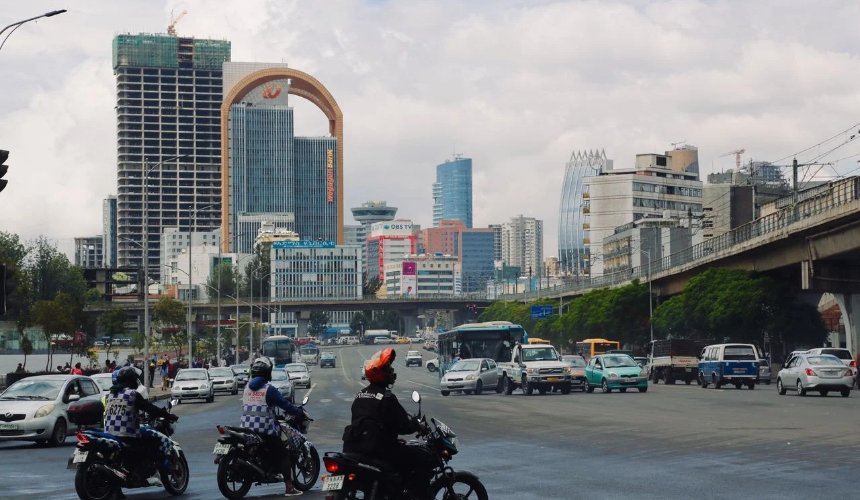
Addis Ababa, Addis Ababa, Ethiopia. Photo by Abdullah Aljaberti

Kalkidan Negashby Kalkidan Negash
October 17, 2026
Reading Time: 2 mins read

Sub-Saharan Africa’s 4.5% Growth Masks a Wider Economic Divide

Ethiopia stands out with 9.2% growth as food and energy costs, constrained financing and limited fiscal space test lower-income economies

Sub-Saharan Africa’s 4.5% Growth Masks a Wider Economic Divide

Addis Ababa, Addis Ababa, Ethiopia. Photo by Abdullah Aljaberti

Sub-Saharan Africa’s 4.5% Growth Masks a Wider Economic Divide

Addis Ababa, Addis Ababa, Ethiopia. Photo by Abdullah Aljaberti

Kalkidan Negashby Kalkidan Negash
October 17, 2026
Reading Time: 2 mins read

ADDIS ABABA

Sub-Saharan Africa is heading into 2027 with growth holding steady despite higher energy and food prices, climate shocks and uneven access to external financing.

The region’s economy is projected to expand 4.5% in both 2026 and 2027, according to the International Monetary Fund’s October World Economic Outlook (WEO). That compares with global growth of 3.1% this year and 3.4% next year.

The IMF says that stability masks substantial divergence across countries, reflecting differences in policy space, reform implementation, commodity exposure, climate shocks and access to external financing.

Oil-importing, non-resource-intensive economies are more exposed to higher energy and food prices, while some larger economies continue to benefit from earlier stabilization and reform efforts.

That divergence is visible among the region’s biggest economies. Nigeria is forecast to grow 4.2% in 2026 and 4.3% in 2027, while South Africa is projected to expand just 1% this year and 1.3% next year. Oil exporters as a group are expected to grow 4.2% in 2026 before easing slightly to 4.1% in 2027.

Some of the strongest numbers are farther east

Ethiopia’s economy is projected to grow 9.2% in 2026, matching the IMF’s estimate for 2025, before slowing to 7.8% in 2027.

Rwanda is forecast to expand 7.4% this year and 7.2% next year, while South Sudan, after an estimated 41.4% rebound in 2025, is projected to grow 10.5% in 2026 before slowing sharply to 3.9% in 2027. The Rwanda and South Sudan projections are reported in the WEO’s sub-Saharan Africa table.

Ethiopia’s growth also comes with persistent price pressures, with average consumer inflation projected at 11.7% in 2026 and 12.3% in 2027. Its current-account deficit is expected to widen to 2.5% of gross domestic product this year before narrowing to 1.3% in 2027.

Beyond the country forecasts, higher food and energy prices can widen current-account deficits in importing countries, increase external financing needs and put pressure on currencies, while low-income economies often have limited fiscal and external buffers.

Declining official development assistance can leave fewer resources available to cushion shocks and finance development needs.

Food prices remain a particular vulnerability

Extreme weather, transport disruptions and higher fertilizer costs can push food prices higher, with lower-income households especially exposed because basic necessities account for a larger share of their spending.

The IMF’s analysis finds that cost-of-living crises impose heavier burdens on poorer households, while persistent increases in the prices of basic necessities can erode real wages, weigh on domestic demand and worsen poverty outcomes.

The WEO also points to a stronger sovereign-bank nexus across emerging and developing economies.

Greater bank holdings of government securities are associated with lower lending to the private sector, particularly in high-debt emerging markets and low-income countries, potentially weakening domestic investment and reinforcing fiscal vulnerabilities.

That makes the design of fiscal support more consequential, with the IMF’s analysis finding that targeted transfers can protect vulnerable households while preserving price signals and requiring substantially fewer fiscal resources than broad price-suppressing measures.

In one simulation involving low-income developing countries facing a food-price shock, targeted transfers delivered a similar improvement in consumption for poorer households at roughly one-sixth of the fiscal cost of consumer subsidies.

The chapter also finds that stronger social-protection systems can make targeted support more effective and preserve fiscal space for future crises.


Get the inside Story

Stay informed on the stories shaping Africa’s future. Get breaking news, in-depth analysis, opinions and exclusive insights from across the continent delivered to your inbox, free and unfiltered.


Get in touch for more:
Felix Tih
Editorial Director, Bantu Gazette
WhatsApp
LinkedIn
X (Twitter)
Instagram

Related Posts

Southern Africa Bloc Seeks Private Capital to Tap 380 Million-Consumer Market
Business, Trade & Economy

Southern Africa Bloc Seeks Private Capital to Tap 380 Million-Consumer Market

October 17, 2026
Ethiopia Reports More Than $14.4 Million in Exports Under African Free Trade Area
Business, Trade & Economy

Gold, Coffee Surge Drives Ethiopia Export Revenue to $2.3 Billion as Refinery Opens

October 16, 2026
Natural Diamond Producers Sign Beijing Declaration to Boost Industry Ties With China
Business, Trade & Economy

Diamonds Power Botswana’s 8.7% Rebound as Pressure Builds for Broader Growth

October 16, 2026
Africa Launches Own Credit Rating Agency in Push to Reshape Risk Assessments
Business, Trade & Economy

Africa Launches Own Credit Rating Agency in Push to Reshape Risk Assessments

October 11, 2026
Namibia Unveils 176-Carat Diamond, Biggest Find in Two Decades
Business, Trade & Economy

Namibia Unveils 176-Carat Diamond, Biggest Find in Two Decades

October 13, 2026
Burkina Faso Opens First Gold Refinery to Boost Local Production and Revenue
Business, Trade & Economy

Burkina Faso Opens First Gold Refinery to Boost Local Production and Revenue

October 1, 2026

Most Recent

Confederation of African Football Raises Member Association Grants to Up to $700,000
Sports

Confederation of African Football Raises Member Association Grants to Up to $700,000

by Doyinsola Ibidunni
October 17, 2026
0

The governing body is raising annual grants for 54 national associations while adding more money for regional competitions, clubs and...

Read moreDetails
Sub-Saharan Africa’s 4.5% Growth Masks a Wider Economic Divide

Sub-Saharan Africa’s 4.5% Growth Masks a Wider Economic Divide

October 17, 2026
What Africa’s Leading Women Would Tell Their Younger Selves

What Africa’s Leading Women Would Tell Their Younger Selves

October 16, 2026
Southern Africa Bloc Seeks Private Capital to Tap 380 Million-Consumer Market

Southern Africa Bloc Seeks Private Capital to Tap 380 Million-Consumer Market

October 17, 2026
Ethiopia Reports More Than $14.4 Million in Exports Under African Free Trade Area

Gold, Coffee Surge Drives Ethiopia Export Revenue to $2.3 Billion as Refinery Opens

October 16, 2026
Natural Diamond Producers Sign Beijing Declaration to Boost Industry Ties With China

Diamonds Power Botswana’s 8.7% Rebound as Pressure Builds for Broader Growth

October 16, 2026
F1 Returns to Africa as Rwanda Lands 10-Year Grand Prix Deal

F1 Returns to Africa as Rwanda Lands 10-Year Grand Prix Deal

October 15, 2026
Confederation of African Football Raises Member Association Grants to Up to $700,000
Sports

Confederation of African Football Raises Member Association Grants to Up to $700,000

by Doyinsola Ibidunni
Reading Time: 1 min read
October 17, 2026
0

The governing body is raising annual grants for 54 national associations while adding more money for regional competitions, clubs and...

Read moreDetails
Sub-Saharan Africa’s 4.5% Growth Masks a Wider Economic Divide
Business, Trade & Economy

Sub-Saharan Africa’s 4.5% Growth Masks a Wider Economic Divide

by Kalkidan Negash
Reading Time: 2 mins read
October 17, 2026
0

Ethiopia stands out with 9.2% growth as food and energy costs, constrained financing and limited fiscal space test lower-income economies.

Read moreDetails
What Africa’s Leading Women Would Tell Their Younger Selves
Development & Impact

What Africa’s Leading Women Would Tell Their Younger Selves

by Felix Tih
Reading Time: 5 mins read
October 16, 2026
0

Seventeen African women leaders reflect on self-doubt, failure, identity and power, sharing lessons shaped by careers across business, technology, sports...

Read moreDetails

Sub-Saharan Africa’s 4.5% Growth Masks a Wider Economic Divide

Ethiopia stands out with 9.2% growth as food and energy costs, constrained financing and limited fiscal space test lower-income economies

Sub-Saharan Africa’s 4.5% Growth Masks a Wider Economic Divide

Addis Ababa, Addis Ababa, Ethiopia. Photo by Abdullah Aljaberti

ADDIS ABABA

Sub-Saharan Africa is heading into 2027 with growth holding steady despite higher energy and food prices, climate shocks and uneven access to external financing.

The region’s economy is projected to expand 4.5% in both 2026 and 2027, according to the International Monetary Fund’s October World Economic Outlook (WEO). That compares with global growth of 3.1% this year and 3.4% next year.

The IMF says that stability masks substantial divergence across countries, reflecting differences in policy space, reform implementation, commodity exposure, climate shocks and access to external financing.

Oil-importing, non-resource-intensive economies are more exposed to higher energy and food prices, while some larger economies continue to benefit from earlier stabilization and reform efforts.

That divergence is visible among the region’s biggest economies. Nigeria is forecast to grow 4.2% in 2026 and 4.3% in 2027, while South Africa is projected to expand just 1% this year and 1.3% next year. Oil exporters as a group are expected to grow 4.2% in 2026 before easing slightly to 4.1% in 2027.

Some of the strongest numbers are farther east

Ethiopia’s economy is projected to grow 9.2% in 2026, matching the IMF’s estimate for 2025, before slowing to 7.8% in 2027.

Rwanda is forecast to expand 7.4% this year and 7.2% next year, while South Sudan, after an estimated 41.4% rebound in 2025, is projected to grow 10.5% in 2026 before slowing sharply to 3.9% in 2027. The Rwanda and South Sudan projections are reported in the WEO’s sub-Saharan Africa table.

Ethiopia’s growth also comes with persistent price pressures, with average consumer inflation projected at 11.7% in 2026 and 12.3% in 2027. Its current-account deficit is expected to widen to 2.5% of gross domestic product this year before narrowing to 1.3% in 2027.

Beyond the country forecasts, higher food and energy prices can widen current-account deficits in importing countries, increase external financing needs and put pressure on currencies, while low-income economies often have limited fiscal and external buffers.

Declining official development assistance can leave fewer resources available to cushion shocks and finance development needs.

Food prices remain a particular vulnerability

Extreme weather, transport disruptions and higher fertilizer costs can push food prices higher, with lower-income households especially exposed because basic necessities account for a larger share of their spending.

The IMF’s analysis finds that cost-of-living crises impose heavier burdens on poorer households, while persistent increases in the prices of basic necessities can erode real wages, weigh on domestic demand and worsen poverty outcomes.

The WEO also points to a stronger sovereign-bank nexus across emerging and developing economies.

Greater bank holdings of government securities are associated with lower lending to the private sector, particularly in high-debt emerging markets and low-income countries, potentially weakening domestic investment and reinforcing fiscal vulnerabilities.

That makes the design of fiscal support more consequential, with the IMF’s analysis finding that targeted transfers can protect vulnerable households while preserving price signals and requiring substantially fewer fiscal resources than broad price-suppressing measures.

In one simulation involving low-income developing countries facing a food-price shock, targeted transfers delivered a similar improvement in consumption for poorer households at roughly one-sixth of the fiscal cost of consumer subsidies.

The chapter also finds that stronger social-protection systems can make targeted support more effective and preserve fiscal space for future crises.

Sub-Saharan Africa’s 4.5% Growth Masks a Wider Economic Divide

Ethiopia stands out with 9.2% growth as food and energy costs, constrained financing and limited fiscal space test lower-income economies

Sub-Saharan Africa’s 4.5% Growth Masks a Wider Economic Divide

Addis Ababa, Addis Ababa, Ethiopia. Photo by Abdullah Aljaberti

Kalkidan Negashby Kalkidan Negash
October 17, 2026

ADDIS ABABA

Sub-Saharan Africa is heading into 2027 with growth holding steady despite higher energy and food prices, climate shocks and uneven access to external financing.

The region’s economy is projected to expand 4.5% in both 2026 and 2027, according to the International Monetary Fund’s October World Economic Outlook (WEO). That compares with global growth of 3.1% this year and 3.4% next year.

The IMF says that stability masks substantial divergence across countries, reflecting differences in policy space, reform implementation, commodity exposure, climate shocks and access to external financing.

Oil-importing, non-resource-intensive economies are more exposed to higher energy and food prices, while some larger economies continue to benefit from earlier stabilization and reform efforts.

That divergence is visible among the region’s biggest economies. Nigeria is forecast to grow 4.2% in 2026 and 4.3% in 2027, while South Africa is projected to expand just 1% this year and 1.3% next year. Oil exporters as a group are expected to grow 4.2% in 2026 before easing slightly to 4.1% in 2027.

Some of the strongest numbers are farther east

Ethiopia’s economy is projected to grow 9.2% in 2026, matching the IMF’s estimate for 2025, before slowing to 7.8% in 2027.

Rwanda is forecast to expand 7.4% this year and 7.2% next year, while South Sudan, after an estimated 41.4% rebound in 2025, is projected to grow 10.5% in 2026 before slowing sharply to 3.9% in 2027. The Rwanda and South Sudan projections are reported in the WEO’s sub-Saharan Africa table.

Ethiopia’s growth also comes with persistent price pressures, with average consumer inflation projected at 11.7% in 2026 and 12.3% in 2027. Its current-account deficit is expected to widen to 2.5% of gross domestic product this year before narrowing to 1.3% in 2027.

Beyond the country forecasts, higher food and energy prices can widen current-account deficits in importing countries, increase external financing needs and put pressure on currencies, while low-income economies often have limited fiscal and external buffers.

Declining official development assistance can leave fewer resources available to cushion shocks and finance development needs.

Food prices remain a particular vulnerability

Extreme weather, transport disruptions and higher fertilizer costs can push food prices higher, with lower-income households especially exposed because basic necessities account for a larger share of their spending.

The IMF’s analysis finds that cost-of-living crises impose heavier burdens on poorer households, while persistent increases in the prices of basic necessities can erode real wages, weigh on domestic demand and worsen poverty outcomes.

The WEO also points to a stronger sovereign-bank nexus across emerging and developing economies.

Greater bank holdings of government securities are associated with lower lending to the private sector, particularly in high-debt emerging markets and low-income countries, potentially weakening domestic investment and reinforcing fiscal vulnerabilities.

That makes the design of fiscal support more consequential, with the IMF’s analysis finding that targeted transfers can protect vulnerable households while preserving price signals and requiring substantially fewer fiscal resources than broad price-suppressing measures.

In one simulation involving low-income developing countries facing a food-price shock, targeted transfers delivered a similar improvement in consumption for poorer households at roughly one-sixth of the fiscal cost of consumer subsidies.

The chapter also finds that stronger social-protection systems can make targeted support more effective and preserve fiscal space for future crises.

Get the inside Story

Stay informed on the stories shaping Africa’s future. Get breaking news, in-depth analysis, opinions and exclusive insights from across the continent delivered to your inbox, free and unfiltered.


Get in touch for more:
Felix Tih
Editorial Director, Bantu Gazette
WhatsApp
LinkedIn
X (Twitter)
Instagram

Related Posts

Southern Africa Bloc Seeks Private Capital to Tap 380 Million-Consumer Market

Southern Africa Bloc Seeks Private Capital to Tap 380 Million-Consumer Market

by Sethunya Marang Motoutwane
October 15, 2026
0

...

Ethiopia Reports More Than $14.4 Million in Exports Under African Free Trade Area

Gold, Coffee Surge Drives Ethiopia Export Revenue to $2.3 Billion as Refinery Opens

by Kalkidan Negash
October 15, 2026
0

...

Natural Diamond Producers Sign Beijing Declaration to Boost Industry Ties With China

Diamonds Power Botswana’s 8.7% Rebound as Pressure Builds for Broader Growth

by Maureen Amogelang Garetshoge
October 15, 2026
0

...

Africa Launches Own Credit Rating Agency in Push to Reshape Risk Assessments

Africa Launches Own Credit Rating Agency in Push to Reshape Risk Assessments

by Sethunya Marang Motoutwane
October 8, 2026
0

...

Namibia Unveils 176-Carat Diamond, Biggest Find in Two Decades

Namibia Unveils 176-Carat Diamond, Biggest Find in Two Decades

by Naledi Kgosi
October 7, 2026
0

...

Burkina Faso Opens First Gold Refinery to Boost Local Production and Revenue

Burkina Faso Opens First Gold Refinery to Boost Local Production and Revenue

by Aissatou Fall
September 29, 2026
0

...

Confederation of African Football Raises Member Association Grants to Up to $700,000
Sports

Confederation of African Football Raises Member Association Grants to Up to $700,000

by Doyinsola Ibidunni
Reading Time: 1 min read
October 17, 2026
0

The governing body is raising annual grants for 54 national associations while adding more money for regional competitions, clubs and...

Read moreDetails
Sub-Saharan Africa’s 4.5% Growth Masks a Wider Economic Divide

Sub-Saharan Africa’s 4.5% Growth Masks a Wider Economic Divide

by Kalkidan Negash
October 17, 2026
0

Ethiopia stands out with 9.2% growth as food and energy costs, constrained financing and limited fiscal space test lower-income economies.

What Africa’s Leading Women Would Tell Their Younger Selves

What Africa’s Leading Women Would Tell Their Younger Selves

by Felix Tih
October 16, 2026
0

Seventeen African women leaders reflect on self-doubt, failure, identity and power, sharing lessons shaped by careers across business, technology, sports...

Southern Africa Bloc Seeks Private Capital to Tap 380 Million-Consumer Market

Southern Africa Bloc Seeks Private Capital to Tap 380 Million-Consumer Market

by Sethunya Marang Motoutwane
October 15, 2026
0

The Southern African Development Community is pushing for more private investment as constrained public finances increase the need for infrastructure...

Ethiopia Reports More Than $14.4 Million in Exports Under African Free Trade Area

Gold, Coffee Surge Drives Ethiopia Export Revenue to $2.3 Billion as Refinery Opens

by Kalkidan Negash
October 15, 2026
0

Gold and coffee powered a 176% jump in two-month export receipts, while weak factory shipments underscored Ethiopia’s reliance on commodities...

Next Post
Confederation of African Football Raises Member Association Grants to Up to $700,000

Confederation of African Football Raises Member Association Grants to Up to $700,000

Bantu Gazette is a pioneering news platform that champions Africa's development, culture, and heritage. We spotlight the continent's successes, address its challenges, and provide insightful coverage of events that shape its future.

Bantu Gazette is a pioneering news platform that champions Africa's development, culture, and heritage. We spotlight the continent's successes, address its challenges, and provide insightful coverage of events that shape its future.

Our Platforms

  • Bantu Magazine
  • Bantu Brief
  • Black Frame Studio

Our Services

  • Bantu Agency
  • Advertise
  • Partnerships

Our Services

  • Editorial Director
  • Opportunities
  • Contact

Bantu Gazette is a pioneering news platform that champions Africa's development, culture, and heritage. We spotlight the continent's successes, address its challenges, and provide insightful coverage of events that shape its future.

Our Platforms

  • Bantu Magazine
  • Bantu Brief
  • Black Frame Studio

Our Services

  • Bantu Agency
  • Advertise
  • Partnerships

Our Services

  • Editorial Director
  • Opportunities
  • Contact
Bantu Gazette
  • Energy & Trade
  • Finance
  • Health
  • Politics & Economy
  • Technology
  • Environment
  • Feature
  • Opinion
  • Changemakers
  • Tourism & Culture
  • Magazine