Bantu Gazette

Bantu Gazette
  • Policy & Governance
  • Development & Impact
  • Business, Trade & Economy
  • Energy
  • Changemakers
  • Culture & Identity
  • Perspectives
  • Magazine
Menu
  • Black Frame Studio
  • Magazine

Africa Launches Own Credit Rating Agency in Push to Reshape Risk Assessments

AfCRA will offer an African-led view of sovereign and corporate credit risk, seeking to widen rating coverage and bring more local data and expertise into investor assessments

Africa Launches Own Credit Rating Agency in Push to Reshape Risk Assessments

Africa Credit Rating Agency (AfCRA)

Sethunya Marang Motoutwaneby Sethunya Marang Motoutwane
October 8, 2026
Reading Time: 3 mins read

Africa Launches Own Credit Rating Agency in Push to Reshape Risk Assessments

AfCRA will offer an African-led view of sovereign and corporate credit risk, seeking to widen rating coverage and bring more local data and expertise into investor assessments

Africa Launches Own Credit Rating Agency in Push to Reshape Risk Assessments

Africa Credit Rating Agency (AfCRA)

Africa Launches Own Credit Rating Agency in Push to Reshape Risk Assessments

Africa Credit Rating Agency (AfCRA)

Sethunya Marang Motoutwaneby Sethunya Marang Motoutwane
October 11, 2026
Reading Time: 3 mins read

Africa has launched a credit rating agency that will develop its own approach to assessing the continent’s governments and companies, adding an African-led source of credit analysis to a market dominated by international providers.

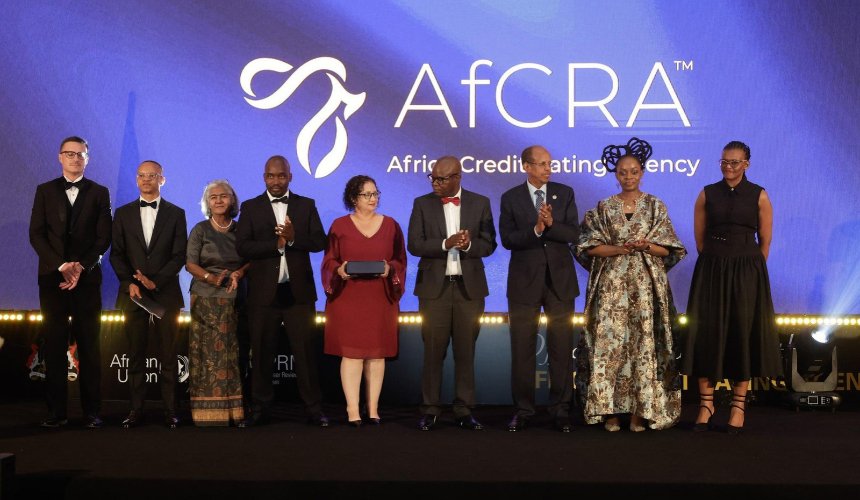
The Africa Credit Rating Agency, known as AfCRA, was officially launched in Port Louis, Mauritius, on Oct. 7 as part of an African Union (AU) effort to strengthen the continent’s financial institutions and expand its role in assessing African credit risk.

The agency will provide ratings and analysis that draw heavily on African data, expertise, and institutional structures, according to statements from the AU and the African Export-Import Bank, one of the institutions supporting its establishment.

AfCRA is intended to complement, not replace, existing international and regional rating agencies. Its backers say its success will depend on the independence of its assessments, the quality of its data, and the transparency of its methodology, rather than on whether it assigns African borrowers more favorable ratings.

“The rating methodology AfCRA develops must recognize the uniqueness of our environment and its institutional structures,” Afreximbank Senior Executive Vice President Denys Denya said at the launch. “The Agency must set its own standards and not follow those set elsewhere.”

Denya said AfCRA should remain independent and African-owned and controlled, while providing assessments that identify both strengths markets overlook and weaknesses that still need addressing.

Closing the Ratings Gap

The agency is entering a market where many African issuers remain unrated, and rating coverage of local-currency and sub-sovereign debt remains limited, according to Afreximbank. Expanding that coverage could give investors more information while supporting the development of domestic and regional capital markets.

The AU has framed the agency as part of a broader effort to strengthen Africa’s financial architecture and increase the continent’s capacity to shape assessments of its economies.

AU Commission Chairperson Mahmoud Ali Youssouf said AfCRA would provide African and international investors with independent and technically rigorous analysis that incorporates greater access to African data and economic context.

Credit ratings can affect both access to capital and the price governments and companies pay to borrow. African officials have argued that assessments that do not sufficiently account for local data, institutions and economic conditions can contribute to perceptions of higher risk.

AfCRA is not intended to shield borrowers from scrutiny or guarantee favorable ratings, Youssouf said. African governments must also continue strengthening fiscal management, transparency and debt sustainability.

That distinction is central to how AfCRA’s backers are positioning the new institution. Rather than seeking easier assessments, they say the agency should provide another source of credit opinion based on a fuller understanding of African economies and institutions.

The African Peer Review Mechanism (APRM) helped develop AfCRA after the AU endorsed its establishment in 2017. The APRM worked on its technical and institutional framework and governance arrangements designed to safeguard its analytical and operational independence.

APRM Chief Executive Officer Marie-Antoinette Rose Quatre said credibility would be the agency’s greatest asset and called on governments to provide accurate, timely information, while encouraging investors, financial institutions, and the media to scrutinize its work.

Afreximbank said that AfCRA could also strengthen competition and analytical capacity in African credit markets. The bank has argued that African multilateral financial institutions should be assessed based on their fundamentals, legal frameworks, mandates, performance, and operating models.

Mauritius will host AfCRA, with the AU citing the country’s regulatory framework, established international financial center and connections with African and global markets.

Mauritian Financial Services and Economic Planning Minister Jyoti Jeetun said the agency could help deepen capital markets and mobilize investment for infrastructure, renewable energy, telecommunications, health care and agribusiness.


Get the inside Story

Stay informed on the stories shaping Africa’s future. Get breaking news, in-depth analysis, opinions and exclusive insights from across the continent delivered to your inbox, free and unfiltered.


Get in touch for more:
Felix Tih
Editorial Director, Bantu Gazette
WhatsApp
LinkedIn
X (Twitter)
Instagram

Related Posts

Rwanda, Cambodia Launch Cross-Border Remittance Initiative to Boost Trade
Business, Trade & Economy

Rwanda, Cambodia Launch Cross-Border Remittance Initiative to Boost Trade

November 16, 2026
Namibia Launches $2.5 Billion Dangote Fuel Storage and Pipeline Project
Business, Trade & Economy

Namibia Launches $2.5 Billion Dangote Fuel Storage and Pipeline Project

November 8, 2026
Think Tanks Urge Practical Fixes to Make Africa’s Free Trade Work
Business, Trade & Economy

Think Tanks Urge Practical Fixes to Make Africa’s Free Trade Work

November 6, 2026
Dangote IPO Gives Botswana a Bigger Role in Southern African Markets
Business, Trade & Economy

Dangote IPO Gives Botswana a Bigger Role in Southern African Markets

October 29, 2026
Rwanda Coffee Sells for Record $452 Per Kilogram at Online Auction
Business, Trade & Economy

Rwanda Coffee Sells for Record $452 Per Kilogram at Online Auction

October 27, 2026
Uganda’s Kikazi Bets on Indigenous Foods and Intra-African Trade for Growth
Business, Trade & Economy

Uganda’s Kikazi Bets on Indigenous Foods and Intra-African Trade for Growth

October 21, 2026

Most Recent

Africa’s Water Security Ambitions Face a Defining Test at COP31
Development & Impact

Africa’s Water Security Ambitions Face a Defining Test at COP31

by Felix Tih
November 18, 2026
0

With a $30 billion annual financing gap, African governments face growing pressure to turn water investment priorities into projects that...

Read moreDetails
Rwanda, Cambodia Launch Cross-Border Remittance Initiative to Boost Trade

Rwanda, Cambodia Launch Cross-Border Remittance Initiative to Boost Trade

November 16, 2026
Five African Nations Finish in Dakar 2026’s Top 10 as Youth Olympics Make History

Five African Nations Finish in Dakar 2026’s Top 10 as Youth Olympics Make History

November 18, 2026
Ethiopia Pledges Early Climate Action as It Prepares to Host COP32 in 2027

Ethiopia Pledges Early Climate Action as It Prepares to Host COP32 in 2027

November 13, 2026
COP31 | UN Official Urges Shift from Climate Pledges to Concrete Action in Africa

COP31 | UN Official Urges Shift from Climate Pledges to Concrete Action in Africa

November 12, 2026
Hidden Trade Costs Threaten Africa’s Free Trade Ambitions, Report Warns

Hidden Trade Costs Threaten Africa’s Free Trade Ambitions, Report Warns

November 11, 2026
Uganda Secures Deal to Host African Humanitarian Agency

Uganda Secures Deal to Host African Humanitarian Agency

November 10, 2026
Africa’s Water Security Ambitions Face a Defining Test at COP31
Development & Impact

Africa’s Water Security Ambitions Face a Defining Test at COP31

by Felix Tih
Reading Time: 4 mins read
November 18, 2026
0

With a $30 billion annual financing gap, African governments face growing pressure to turn water investment priorities into projects that...

Read moreDetails
Rwanda, Cambodia Launch Cross-Border Remittance Initiative to Boost Trade
Business, Trade & Economy

Rwanda, Cambodia Launch Cross-Border Remittance Initiative to Boost Trade

by Amani Mwakalebela
Reading Time: 2 mins read
November 16, 2026
0

PHNOM PENH, Cambodia The National Bank of Rwanda and the National Bank of Cambodia have jointly launched a proof of...

Read moreDetails
Five African Nations Finish in Dakar 2026’s Top 10 as Youth Olympics Make History
Development & Impact

Five African Nations Finish in Dakar 2026’s Top 10 as Youth Olympics Make History

by Aissatou Fall
Reading Time: 4 mins read
November 18, 2026
0

Senegal's five gold medals included three in beach wrestling, while Kenya's women became the first African rugby sevens Olympic champions.

Read moreDetails

Africa Launches Own Credit Rating Agency in Push to Reshape Risk Assessments

AfCRA will offer an African-led view of sovereign and corporate credit risk, seeking to widen rating coverage and bring more local data and expertise into investor assessments

Africa Launches Own Credit Rating Agency in Push to Reshape Risk Assessments

Africa Credit Rating Agency (AfCRA)

Africa has launched a credit rating agency that will develop its own approach to assessing the continent’s governments and companies, adding an African-led source of credit analysis to a market dominated by international providers.

The Africa Credit Rating Agency, known as AfCRA, was officially launched in Port Louis, Mauritius, on Oct. 7 as part of an African Union (AU) effort to strengthen the continent’s financial institutions and expand its role in assessing African credit risk.

The agency will provide ratings and analysis that draw heavily on African data, expertise, and institutional structures, according to statements from the AU and the African Export-Import Bank, one of the institutions supporting its establishment.

AfCRA is intended to complement, not replace, existing international and regional rating agencies. Its backers say its success will depend on the independence of its assessments, the quality of its data, and the transparency of its methodology, rather than on whether it assigns African borrowers more favorable ratings.

“The rating methodology AfCRA develops must recognize the uniqueness of our environment and its institutional structures,” Afreximbank Senior Executive Vice President Denys Denya said at the launch. “The Agency must set its own standards and not follow those set elsewhere.”

Denya said AfCRA should remain independent and African-owned and controlled, while providing assessments that identify both strengths markets overlook and weaknesses that still need addressing.

Closing the Ratings Gap

The agency is entering a market where many African issuers remain unrated, and rating coverage of local-currency and sub-sovereign debt remains limited, according to Afreximbank. Expanding that coverage could give investors more information while supporting the development of domestic and regional capital markets.

The AU has framed the agency as part of a broader effort to strengthen Africa’s financial architecture and increase the continent’s capacity to shape assessments of its economies.

AU Commission Chairperson Mahmoud Ali Youssouf said AfCRA would provide African and international investors with independent and technically rigorous analysis that incorporates greater access to African data and economic context.

Credit ratings can affect both access to capital and the price governments and companies pay to borrow. African officials have argued that assessments that do not sufficiently account for local data, institutions and economic conditions can contribute to perceptions of higher risk.

AfCRA is not intended to shield borrowers from scrutiny or guarantee favorable ratings, Youssouf said. African governments must also continue strengthening fiscal management, transparency and debt sustainability.

That distinction is central to how AfCRA’s backers are positioning the new institution. Rather than seeking easier assessments, they say the agency should provide another source of credit opinion based on a fuller understanding of African economies and institutions.

The African Peer Review Mechanism (APRM) helped develop AfCRA after the AU endorsed its establishment in 2017. The APRM worked on its technical and institutional framework and governance arrangements designed to safeguard its analytical and operational independence.

APRM Chief Executive Officer Marie-Antoinette Rose Quatre said credibility would be the agency’s greatest asset and called on governments to provide accurate, timely information, while encouraging investors, financial institutions, and the media to scrutinize its work.

Afreximbank said that AfCRA could also strengthen competition and analytical capacity in African credit markets. The bank has argued that African multilateral financial institutions should be assessed based on their fundamentals, legal frameworks, mandates, performance, and operating models.

Mauritius will host AfCRA, with the AU citing the country’s regulatory framework, established international financial center and connections with African and global markets.

Mauritian Financial Services and Economic Planning Minister Jyoti Jeetun said the agency could help deepen capital markets and mobilize investment for infrastructure, renewable energy, telecommunications, health care and agribusiness.

Africa Launches Own Credit Rating Agency in Push to Reshape Risk Assessments

AfCRA will offer an African-led view of sovereign and corporate credit risk, seeking to widen rating coverage and bring more local data and expertise into investor assessments

Africa Launches Own Credit Rating Agency in Push to Reshape Risk Assessments

Africa Credit Rating Agency (AfCRA)

Sethunya Marang Motoutwaneby Sethunya Marang Motoutwane
October 8, 2026

Africa has launched a credit rating agency that will develop its own approach to assessing the continent’s governments and companies, adding an African-led source of credit analysis to a market dominated by international providers.

The Africa Credit Rating Agency, known as AfCRA, was officially launched in Port Louis, Mauritius, on Oct. 7 as part of an African Union (AU) effort to strengthen the continent’s financial institutions and expand its role in assessing African credit risk.

The agency will provide ratings and analysis that draw heavily on African data, expertise, and institutional structures, according to statements from the AU and the African Export-Import Bank, one of the institutions supporting its establishment.

AfCRA is intended to complement, not replace, existing international and regional rating agencies. Its backers say its success will depend on the independence of its assessments, the quality of its data, and the transparency of its methodology, rather than on whether it assigns African borrowers more favorable ratings.

“The rating methodology AfCRA develops must recognize the uniqueness of our environment and its institutional structures,” Afreximbank Senior Executive Vice President Denys Denya said at the launch. “The Agency must set its own standards and not follow those set elsewhere.”

Denya said AfCRA should remain independent and African-owned and controlled, while providing assessments that identify both strengths markets overlook and weaknesses that still need addressing.

Closing the Ratings Gap

The agency is entering a market where many African issuers remain unrated, and rating coverage of local-currency and sub-sovereign debt remains limited, according to Afreximbank. Expanding that coverage could give investors more information while supporting the development of domestic and regional capital markets.

The AU has framed the agency as part of a broader effort to strengthen Africa’s financial architecture and increase the continent’s capacity to shape assessments of its economies.

AU Commission Chairperson Mahmoud Ali Youssouf said AfCRA would provide African and international investors with independent and technically rigorous analysis that incorporates greater access to African data and economic context.

Credit ratings can affect both access to capital and the price governments and companies pay to borrow. African officials have argued that assessments that do not sufficiently account for local data, institutions and economic conditions can contribute to perceptions of higher risk.

AfCRA is not intended to shield borrowers from scrutiny or guarantee favorable ratings, Youssouf said. African governments must also continue strengthening fiscal management, transparency and debt sustainability.

That distinction is central to how AfCRA’s backers are positioning the new institution. Rather than seeking easier assessments, they say the agency should provide another source of credit opinion based on a fuller understanding of African economies and institutions.

The African Peer Review Mechanism (APRM) helped develop AfCRA after the AU endorsed its establishment in 2017. The APRM worked on its technical and institutional framework and governance arrangements designed to safeguard its analytical and operational independence.

APRM Chief Executive Officer Marie-Antoinette Rose Quatre said credibility would be the agency’s greatest asset and called on governments to provide accurate, timely information, while encouraging investors, financial institutions, and the media to scrutinize its work.

Afreximbank said that AfCRA could also strengthen competition and analytical capacity in African credit markets. The bank has argued that African multilateral financial institutions should be assessed based on their fundamentals, legal frameworks, mandates, performance, and operating models.

Mauritius will host AfCRA, with the AU citing the country’s regulatory framework, established international financial center and connections with African and global markets.

Mauritian Financial Services and Economic Planning Minister Jyoti Jeetun said the agency could help deepen capital markets and mobilize investment for infrastructure, renewable energy, telecommunications, health care and agribusiness.

Get the inside Story

Stay informed on the stories shaping Africa’s future. Get breaking news, in-depth analysis, opinions and exclusive insights from across the continent delivered to your inbox, free and unfiltered.


Get in touch for more:
Felix Tih
Editorial Director, Bantu Gazette
WhatsApp
LinkedIn
X (Twitter)
Instagram

Related Posts

Rwanda, Cambodia Launch Cross-Border Remittance Initiative to Boost Trade

Rwanda, Cambodia Launch Cross-Border Remittance Initiative to Boost Trade

by Amani Mwakalebela
November 16, 2026
0

...

Namibia Launches $2.5 Billion Dangote Fuel Storage and Pipeline Project

Namibia Launches $2.5 Billion Dangote Fuel Storage and Pipeline Project

by Sethunya Marang Motoutwane
November 6, 2026
0

...

Think Tanks Urge Practical Fixes to Make Africa’s Free Trade Work

Think Tanks Urge Practical Fixes to Make Africa’s Free Trade Work

by Maureen Amogelang Garetshoge
November 4, 2026
0

...

Dangote IPO Gives Botswana a Bigger Role in Southern African Markets

Dangote IPO Gives Botswana a Bigger Role in Southern African Markets

by Maureen Amogelang Garetshoge
October 27, 2026
0

...

Rwanda Coffee Sells for Record $452 Per Kilogram at Online Auction

Rwanda Coffee Sells for Record $452 Per Kilogram at Online Auction

by Amani Mwakalebela
October 23, 2026
0

...

Uganda’s Kikazi Bets on Indigenous Foods and Intra-African Trade for Growth

Uganda’s Kikazi Bets on Indigenous Foods and Intra-African Trade for Growth

by Sethunya Marang Motoutwane
October 19, 2026
0

...

Africa’s Water Security Ambitions Face a Defining Test at COP31
Development & Impact

Africa’s Water Security Ambitions Face a Defining Test at COP31

by Felix Tih
Reading Time: 4 mins read
November 18, 2026
0

With a $30 billion annual financing gap, African governments face growing pressure to turn water investment priorities into projects that...

Read moreDetails
Rwanda, Cambodia Launch Cross-Border Remittance Initiative to Boost Trade

Rwanda, Cambodia Launch Cross-Border Remittance Initiative to Boost Trade

by Amani Mwakalebela
November 16, 2026
0

PHNOM PENH, Cambodia The National Bank of Rwanda and the National Bank of Cambodia have jointly launched a proof of...

Five African Nations Finish in Dakar 2026’s Top 10 as Youth Olympics Make History

Five African Nations Finish in Dakar 2026’s Top 10 as Youth Olympics Make History

by Aissatou Fall
November 15, 2026
0

Senegal's five gold medals included three in beach wrestling, while Kenya's women became the first African rugby sevens Olympic champions.

Ethiopia Pledges Early Climate Action as It Prepares to Host COP32 in 2027

Ethiopia Pledges Early Climate Action as It Prepares to Host COP32 in 2027

by Felix Tih
November 12, 2026
0

Ethiopian Prime Minister Abiy Ahmed Ali urged early climate action at COP31 in Antalya, highlighting tree-planting efforts as Addis Ababa...

COP31 | UN Official Urges Shift from Climate Pledges to Concrete Action in Africa

COP31 | UN Official Urges Shift from Climate Pledges to Concrete Action in Africa

by Felix Tih
November 11, 2026
0

Claver Gatete highlights financing gaps, weak institutional arrangements and the need for sustained investment to deliver lasting climate results across...

Next Post
South African Jurist Navi Pillay Wins 2026 Nobel Peace Prize

South African Jurist Navi Pillay Wins 2026 Nobel Peace Prize

Who Gets to Define African Art? Moroccan Cubism and the Right to Self-Representation

Who Gets to Define African Art? Moroccan Cubism and the Right to Self-Representation

F1 Returns to Africa as Rwanda Lands 10-Year Grand Prix Deal

F1 Returns to Africa as Rwanda Lands 10-Year Grand Prix Deal

Natural Diamond Producers Sign Beijing Declaration to Boost Industry Ties With China

Diamonds Power Botswana’s 8.7% Rebound as Pressure Builds for Broader Growth

Bantu Gazette is a pioneering news platform that champions Africa's development, culture, and heritage. We spotlight the continent's successes, address its challenges, and provide insightful coverage of events that shape its future.

Bantu Gazette is a pioneering news platform that champions Africa's development, culture, and heritage. We spotlight the continent's successes, address its challenges, and provide insightful coverage of events that shape its future.

Our Platforms

  • Bantu Magazine
  • Bantu Brief
  • Black Frame Studio

Our Services

  • Bantu Agency
  • Advertise
  • Partnerships

Our Services

  • Editorial Director
  • Opportunities
  • Contact
Bantu Gazette
  • Energy & Trade
  • Finance
  • Health
  • Politics & Economy
  • Technology
  • Environment
  • Feature
  • Opinion
  • Changemakers
  • Tourism & Culture
  • Magazine