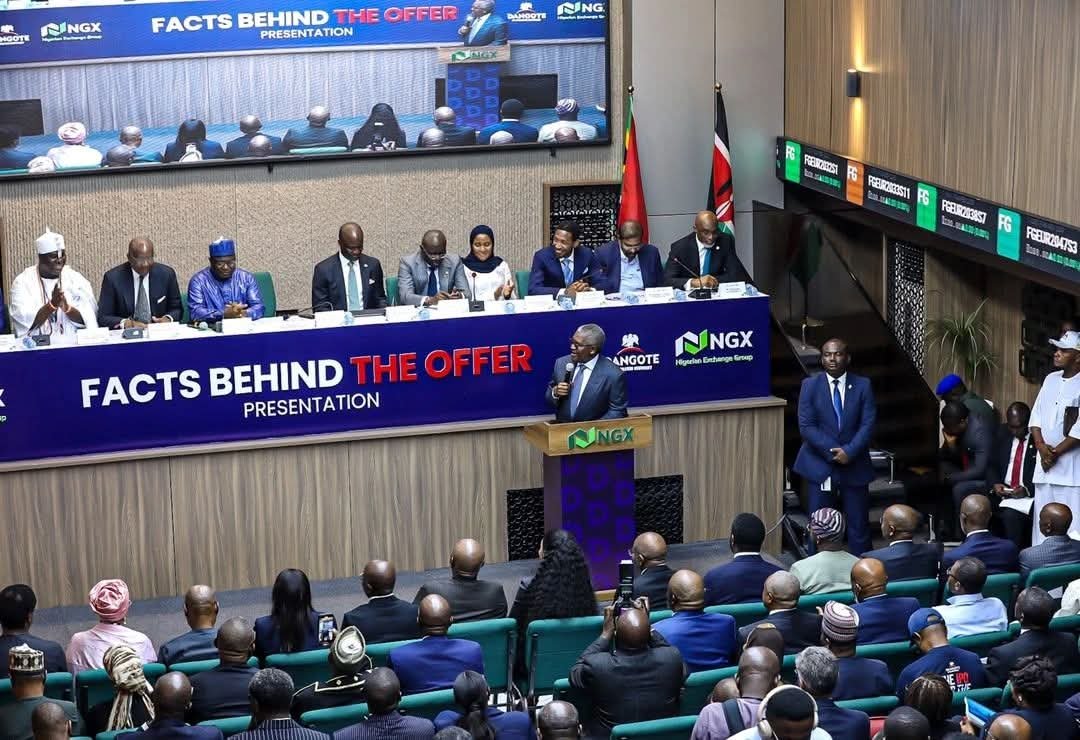

Botswana is hosting Southern African access to shares in Dangote Petroleum Refinery & Petrochemicals FZE, placing the Botswana Stock Exchange at the center of a cross-border offer that could broaden its regional reach and deepen local capital markets.
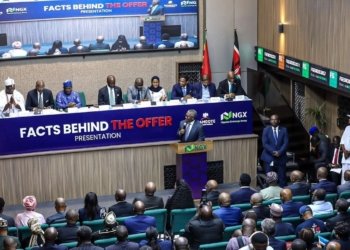
Nigerian billionaire and industrialist Aliko Dangote launched the initial public offering of his oil refinery on Sept. 14, seeking as much as $2.1 billion from investors to help finance its expansion in what has been billed as Africa’s largest share sale. The Nigerian offer comprises as many as 4.1 billion ordinary shares at 525 naira each.
Botswana is providing one of the routes into that transaction. Access Bank Botswana is offering as many as 1.299 billion unsponsored Botswana Depository Receipts at an initial indicative price of 5.85 pula ( $0.43 ) each.
One receipt represents one Dangote refinery share. Subscription money collected through Botswana will be used to apply for shares in the Nigerian IPO, subject to a maximum aggregate subscription equivalent to $500 million.
The structure allows investors to subscribe in pula through licensed BSE brokers without opening a stockbroking account in Nigeria. The offer is scheduled to close at noon on Oct. 27, with the receipts expected to list in Gaborone on Dec. 14.
Dangote has described the IPO as part of a broader effort to widen African participation in equity markets. “We want to democratize the stock market in Africa through the Dangote IPO,” Dangote said.
Interest in the offer has extended beyond Nigeria, with separate access programs targeting investors in other African markets. Botswana’s role gives the country responsibility for hosting the Southern African instrument and places the BSE within a wider effort to expand cross-border access to African securities.
Botswana hosts regional access
The Committee of SADC Stock Exchanges and the BSE announced in September that Botswana would host the regional depository receipt structure, with participating exchanges supporting investor access in their domestic markets. The arrangement places the central listing and trading venue in Gaborone.
Keith Jefferis, managing director of Econsult Botswana and a former Bank of Botswana official, said several features help explain the country’s suitability for the role.
Botswana has “no exchange controls,” Jefferis said, allowing capital to move into and out of the country subject to requirements such as know-your-customer checks. That flexibility supports an exchange handling an instrument designed for investors across several jurisdictions.
Jefferis also pointed to the BSE’s “modern electronic trading” and depository systems, which he said have spare capacity to accommodate additional listings and trading.
Ontiretse Malodzi, a partner at Edgecombe, a boutique advisory firm focused on capital flows between Africa and Southeast Asia, also linked Botswana’s selection to the country’s “institutional readiness.”
The BSE has had depository receipt listing rules in force since January 2022, while the absence of exchange controls “removes a frequent barrier” to cross-border settlement, Malodzi said.
She said international investors increasingly assess African markets according to whether they can “enter and exit easily.” Liquidity, settlement and reliable market access will therefore shape Botswana’s ability to convert the Dangote transaction into recurring regional business.
The regional market infrastructure remains under development. The Oct. 15 prospectus states that the proposed CoSSE Interconnectivity Network was unavailable for participation in the offer at that date. Participating exchanges may join later through approved agreements and regulatory arrangements.
Malodzi said the same Dangote offer has also reached investors through separate programs in Botswana, Kenya and Ethiopia, reflecting wider demand for cross-border access to major African companies and the continued use of market-specific structures.
Financial sector gains come into focus
The Dangote transaction arrives as the BSE expands the scale and range of its market.
Total market capitalization across all listed instruments reached about 1.1 trillion pula ( 79.91 billion USD ) in the nine months through September, up 62.3% from 700.4 billion pula ( 50.88 billion USD ) in the corresponding period of 2025. Exchange-traded fund turnover increased 263.1% to 1.62 billion pula ( $117. 69 million ), while bond market turnover rose 87.6% to 4.25 billion pula ( $308.80 million ).
Foreign-listed companies account for a large share of the exchange’s equity value. Foreign equity market capitalization reached 950.4 billion pula ( 69.05 billion USD ) at the end of September, compared with 60.9 billion pula ( $4.42 billion ) for domestic companies. Local institutional investors generated 92.6% of total equity turnover.
Jefferis said the Dangote receipts could “raise the profile” of the BSE, broaden the range of instruments available to investors and create additional activity for brokers and other financial services providers.
Botswana pension funds could become an important source of demand if the receipts receive Local Assets Status, he said. The country has substantial institutional savings, and regional securities listed in Gaborone could expand the range of assets available to those funds.
The capital raised through the receipts will flow into the Nigerian share offer and finance investment associated with the refinery. Botswana stands to gain through brokerage, custody, settlement, exchange activity and the expertise developed from managing a regional instrument.
Jefferis said foreign direct investment into Botswana will depend on “bankable economic opportunities” within the domestic economy.
He sees a broader opportunity in the development of Botswana’s financial sector. Repeated regional transactions could generate more business for the BSE and local financial firms while strengthening Gaborone’s role as a venue for cross-border capital raising.
Malodzi also distinguishes between portfolio diversification and broader economic diversification. The receipts give Botswana investors exposure to a large Nigerian industrial asset and widen their investment choices.
She said “the larger benefit” would emerge if the same market infrastructure eventually channels Botswana’s “substantial pension savings” toward domestic and regional companies that choose to raise capital in Gaborone.
The Dangote offer gives Botswana an opportunity to build a track record in regional securities distribution.
Trading after the Dec. 14 listing, participation from investors across SADC and additional issuers choosing the BSE would deepen that role and expand the financial sector’s contribution to Botswana’s diversification drive.
Jefferis said the transaction could serve as a “proof of concept” for “similar future initiatives” that develop Botswana as a regional financial hub and contribute to economic diversification over time.