

GABORONE
Botswana’s economy expanded 8.7% in the second quarter of 2026 as a sharp recovery in diamond production lifted national output and renewed attention on the country’s push to develop broader sources of growth.
The expansion reversed a 5.2% contraction in the same quarter of 2025, according to a Statistics Botswana report released in September.
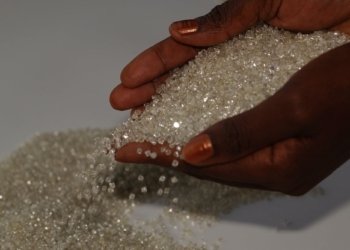
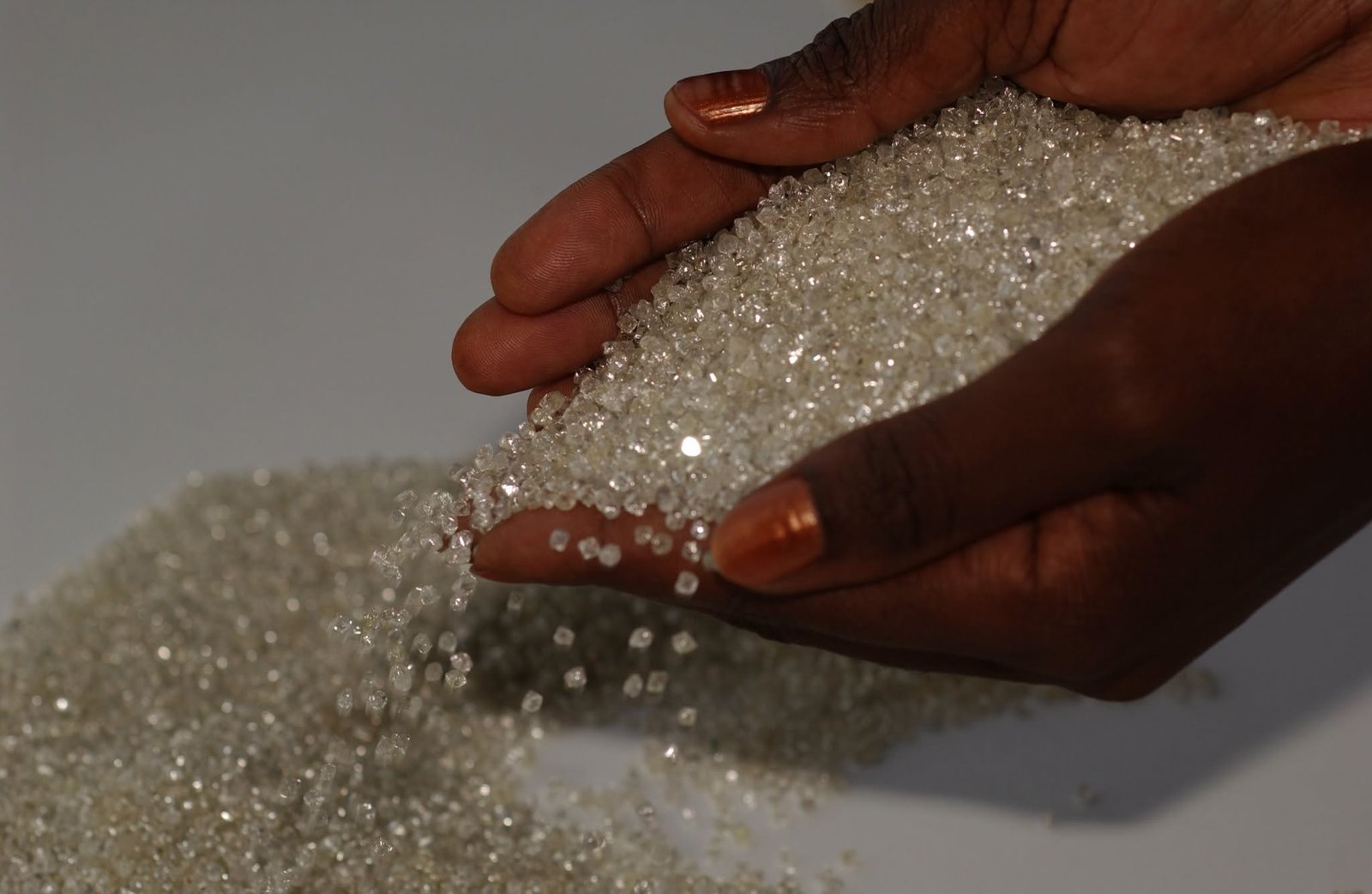
Mining and quarrying recorded an 81.7% increase in real value added, driven largely by a 94.7% rise in diamond mining as higher processing volumes and improved recovered grades lifted production at the Orapa and Jwaneng mines.
The figures reinforce the major role diamonds continue to play in Botswana’s economy as the government pursues diversification and seeks new sources of exports, investment and jobs.
Household spending remains under pressure and several industries outside mining contracted during the quarter.
Natasha Maatla Phuthego, managing director and principal economist at Maatla Advisory, described the performance as a strong operational recovery in diamond production and said the wider economic impact will depend on prices, sales and revenue.
“Production has improved, but we still need to see what happens to prices, sales, inventories and ultimately the revenue that flows to Debswana, government and the wider economy,” Phuthego said.
The production surge partly reflects a weak base a year earlier, when mining output was subdued.
Phuthego said the durability of the recovery will depend on rough diamond prices, production relative to capacity, inventory levels and demand from major markets including the US, China and India.
Those pressures form part of a broader challenge facing Botswana’s traditional growth model.
According to the World Bank, weaker demand for natural diamonds, growing competition from synthetic stones and slow progress in developing other sources of growth have reduced export earnings and government revenue. These shifts have increased Botswana’s exposure to swings in the global diamond market and strengthened the case for a broader, private-sector-led economy.
Statistics Botswana’s second-quarter figures illustrate that concentration. Non-mining GDP declined 0.2%, while manufacturing contracted 9.2%, construction fell 1.6% and agriculture, forestry and fishing declined 23%.
Diamond traders recorded a 27.9% contraction, while diamond cutting and polishing fell 21.4%.
Several services industries expanded, with wholesale and retail trade growing 3.1%, accommodation and food services 3.4%, education 3.3%, and professional, scientific and technical activities 3.8%.
Phuthego described the overall performance as a “promising mining-led rebound” and said a broader recovery would require stronger activity across manufacturing, construction, trade and services, alongside employment growth.
Growth Reaches Households More Slowly
Household spending provides another measure of how the rebound is moving through the economy.
Household final consumption expenditure fell 7.3% during the quarter, while total final consumption declined 3%. Government consumption increased 2.4% and gross fixed capital formation rose 7.8%.
Mining’s capital-intensive structure allows stronger diamond production to lift national output rapidly while income and employment gains spread more gradually through households, according to Phuthego.
“To know whether growth is improving people’s lives, we need to look beyond GDP,” she said, citing employment, youth unemployment, women’s participation in the labour market, real wages, household debt, consumer spending and access to basic services as important measures.
Trade figures also reflected the export-oriented nature of the rebound. Real exports of goods and services increased 5.2%, reversing a 4.1% decline in the corresponding period of 2025.
Real imports rose 10.7%, while domestic final demand declined 3%. Statistics Botswana attributed the overall expansion largely to increased production for external markets, particularly diamond mining.
The rebound gives Botswana an opportunity to channel diamond-generated resources toward industries capable of expanding exports, investment and employment.
Phuthego identified diamond beneficiation and jewellery, beef and agro-processing, tourism and creative industries, copper and critical minerals, financial and digital services, and manufacturing for Southern African Customs Union and African Continental Free Trade Area (AfCFTA) markets as areas with potential.
Phuthego said Botswana should use the mining-led rebound as breathing space to accelerate diversification.
The next few quarters will provide a measure of how widely the recovery spreads. Stronger non-mining investment, employment and exports would place Botswana on a more durable growth path as diamond production moves through future cycles, according to Phuthego.
“The sustainability test is simple. Can Botswana continue to grow when diamond production is flat or falling?” she said. “If non-mining investment, employment and exports strengthen over the next few quarters, then the economy will be on a more durable path.”