
COTONOU, Benin
Africa’s free-trade ambitions risk remaining on paper unless governments better coordinate infrastructure, energy, finance and policy around the practical needs of businesses, think tank leaders said at the 12th Africa Think Tank Summit.
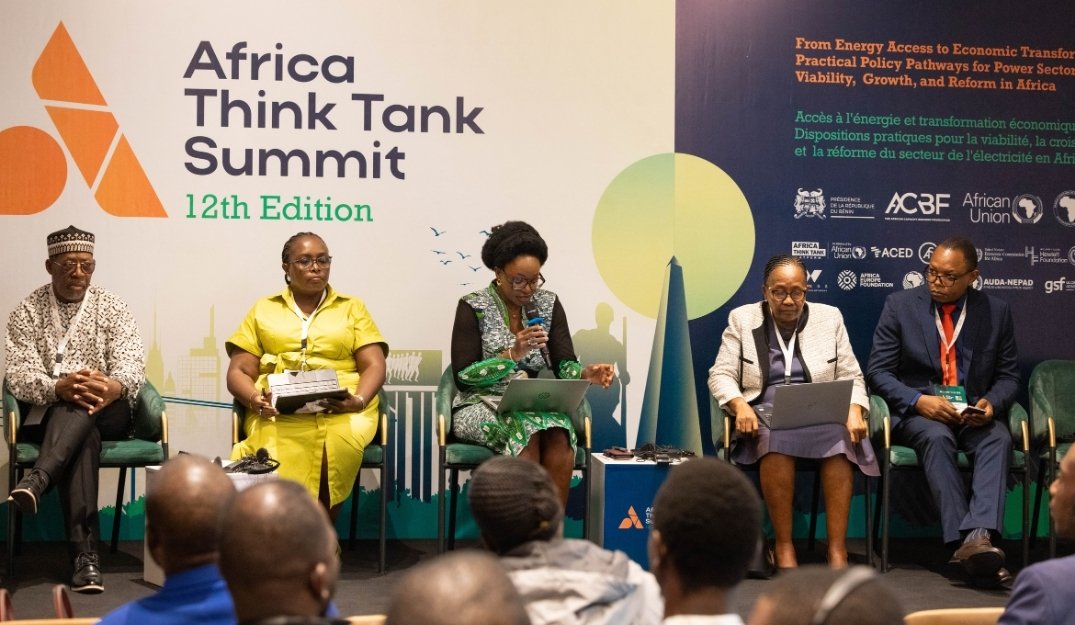
Panelists at a roundtable titled “Powering Africa’s Trade Transformation: Think Tank Insights on AfCFTA Implementation” said implementation is being held back by practical barriers including infrastructure gaps, limited access to finance, energy constraints and weak coordination.
The African Continental Free Trade Area (AfCFTA) is intended to connect 55 African Union member states into a single market of more than 1.4 billion people with a combined gross domestic product of roughly $3.4 trillion.
The discussion was hosted by the Capacity Development for Africa’s Structural Transformation (CADAST) Project of the African Capacity Building Foundation (ACBF) and moderated by Odilia B. Gnassingbe-Essonam, ACBF’s coordinator of trade programs.
It focused on how evidence from African think tanks can support regional integration and structural economic transformation.
Panelists said research must go beyond shaping policy frameworks and help governments identify the barriers preventing companies from trading across borders.
The summit, convened by ACBF, was held in Cotonou, Benin, from Oct. 28-30. Its theme was “From Energy Access to Economic Transformation: Practical Policy Pathways for Power Sector Viability, Growth, and Reform in Africa.”
Landlocked economies illustrate some of the difficulties
Gloria Somolekae, executive director of the Botswana Institute for Development Policy Analysis (BIDPA), said Botswana’s lack of direct access to the sea affects its ability to take advantage of continental trade opportunities.
She highlighted market integration and transport corridor integration as important dimensions of AfCFTA implementation.
Businesses may meet the legal requirements to trade but still struggle to benefit because of geographic and infrastructure constraints.
“Planning of infrastructure should be with regard to integration, and no country should plan alone,” Somolekae said.
Rwanda faces similar pressures
Eugenia Kayitesi, executive director of the Institute of Policy Analysis and Research in Rwanda (IPAR), said the country’s landlocked position raises the cost of doing business.
Many micro, small and medium-sized enterprises also struggle to obtain trade finance because banks are reluctant to lend, she said.
Kayitesi identified limited awareness of AfCFTA opportunities and foreign exchange volatility as additional barriers.
She called for businesses, particularly smaller firms, to receive enough information to understand the agreement and how they can access its markets.
Energy is another constraint
Zali Chikuba, executive director of the Zambia Institute for Policy Analysis and Research (ZIPAR), said reliable power is critical to making continental trade work.
Exporters of products such as beef or chicken need adequate energy throughout the production and distribution chain, including for storage and food safety, he said.
Energy therefore affects the production, preservation and movement of goods before they reach consumers.
Barnabé Okouda, executive director of the Center for Analysis and Research on Economic and Social Policies in Cameroon, was also among the roundtable presenters.
The discussion also highlighted gaps between policy commitments and implementation.
Panelists emphasized coordination, awareness and institutional capacity as countries seek to move from AfCFTA frameworks to practical results.
The AfCFTA Secretariat stressed the need to operationalize African Union-endorsed protocols and translate commitments into policies, institutional arrangements and measurable economic outcomes.
Panelists also called for clear timelines and indicators to track implementation and determine whether agreed policies are delivering results.
They said African institutions need to become more adaptive and proactive in responding to changes in global trade policy.
Panelists said effective AfCFTA implementation will require countries to better connect trade policy with infrastructure, energy systems, financing and institutions so businesses can operate across borders.