
ADDIS ABABA
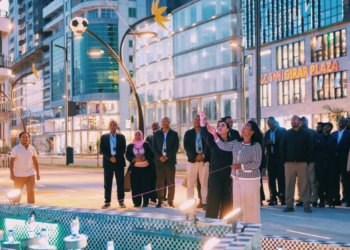
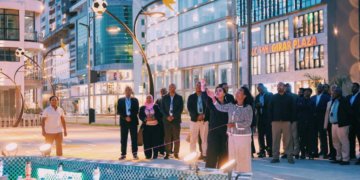
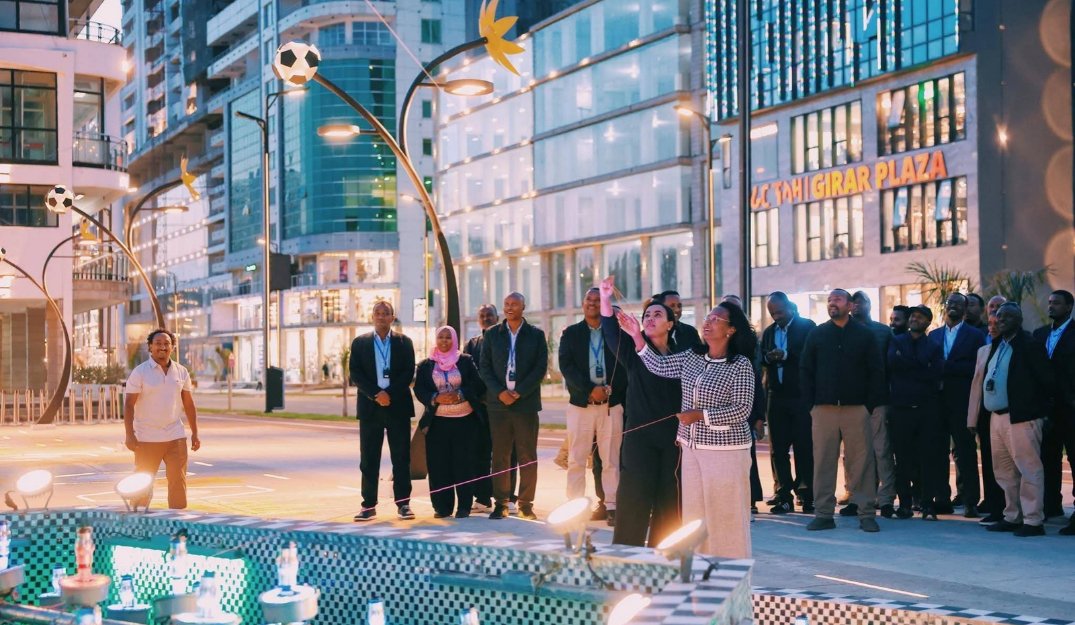
Ethiopian Prime Minister Abiy Ahmed on Wednesday, November 18, inaugurated a 57-hectare corridor development across the Bole area of Addis Ababa, delivering new roads, cycling lanes and renovated public facilities under the third phase of the country’s corridor development program.
The project covers six named routes and their connecting internal roads, among them Bole Medhanialem to Golagul and the British Embassy, Imperial Hotel to Shalla Park, and Adey Abeba Stadium to Bole Road, Abiy said in a social media post the same day.
The works add wide walkways, underground utilities, electric vehicle charging stations and parking for more than 5,000 cars. Renovated schools, libraries, playgrounds and sports fields complete the package.
Abiy presented the corridor as part of a wider vision for Ethiopian cities. “The quality of urban development increasingly defines a nation’s productivity, human dignity, social order and environmental resilience,” he wrote.
Addis Ababa Mayor Adanech Abiebie said on Thursday that more than 3,118 shops had been renovated or newly constructed, alongside the renovation of over 491 residential buildings.
“These improvements have created better business environments and income opportunities for traders, expanded employment opportunities, and provided residents with improved living conditions, easier mobility, and a higher quality of life,” she wrote on social media.
Ethiopia launched the corridor initiative in Addis Ababa in 2024 and has extended it to 75 cities, State Minister of Urban and Infrastructure Fanta Dejen told the Ethiopian News Agency in March.
The capital’s program had delivered more than 241 kilometers of cycle tracks and 426 kilometers of pedestrian walkways by July 2026, according to the city’s nonmotorized transport implementation plan for 2025 to 2028, posted in August on the Africa website of the Institute for Transportation and Development Policy.
Abiy acknowledged after the unveiling that some property owners had made significant adjustments to accommodate redevelopment, Fana Media Corporation reported. He named housing, roads and parking among the urban services that still require attention.
Housing drive targets 100,000 units
Adanech addressed the housing question on November 13, saying the city is working to build 100,000 housing units across 21 sites.
The city administration finances half of those units, and public-private partnerships and housing cooperatives are developing the remaining 50,000. She and Abiy visited 33 blocks in Tulu Dimtu and nine blocks in Qetel Tera, Addis Ketema, that day.
The mayor linked the city’s target to a national pledge. “One of the key commitments made at the Guba gathering was to deliver 1.5 million houses to citizens across the country within five years,” she wrote.
Abiy said in a social media statement that the government’s priority is to ease the housing burden and improve living conditions for families nationwide, the Ethiopian News Agency reported on November 13.
Addis Ababa, seat of the African Union, is preparing to host the 2027 United Nations Climate Change Conference (UNFCCC COP32).