
Bantu Gazette

Bantu Gazette
  • Policy & Governance
  • Development & Impact
  • Business, Trade & Economy
  • Energy
  • Changemakers
  • Culture & Identity
  • Perspectives
  • Magazine
Menu
  • Black Frame Studio
  • Magazine

Hidden Trade Costs Threaten Africa’s Free Trade Ambitions, Report Warns

The Africa Export Competitiveness Report 2025 finds that border delays, weak transport networks and uneven regulations threaten the benefits of Africa's expanding free trade market

Hidden Trade Costs Threaten Africa’s Free Trade Ambitions, Report Warns
Maureen Amogelang Garetshogeby Maureen Amogelang Garetshoge
November 10, 2026
Reading Time: 2 mins read

Hidden Trade Costs Threaten Africa’s Free Trade Ambitions, Report Warns

The Africa Export Competitiveness Report 2025 finds that border delays, weak transport networks and uneven regulations threaten the benefits of Africa's expanding free trade market

Hidden Trade Costs Threaten Africa’s Free Trade Ambitions, Report Warns
Maureen Amogelang Garetshogeby Maureen Amogelang Garetshoge
November 10, 2026
Reading Time: 2 mins read

Cotonou, Benin

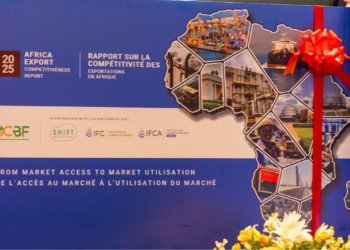
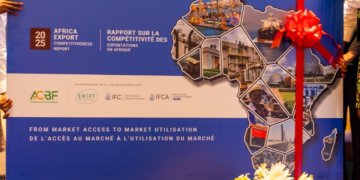
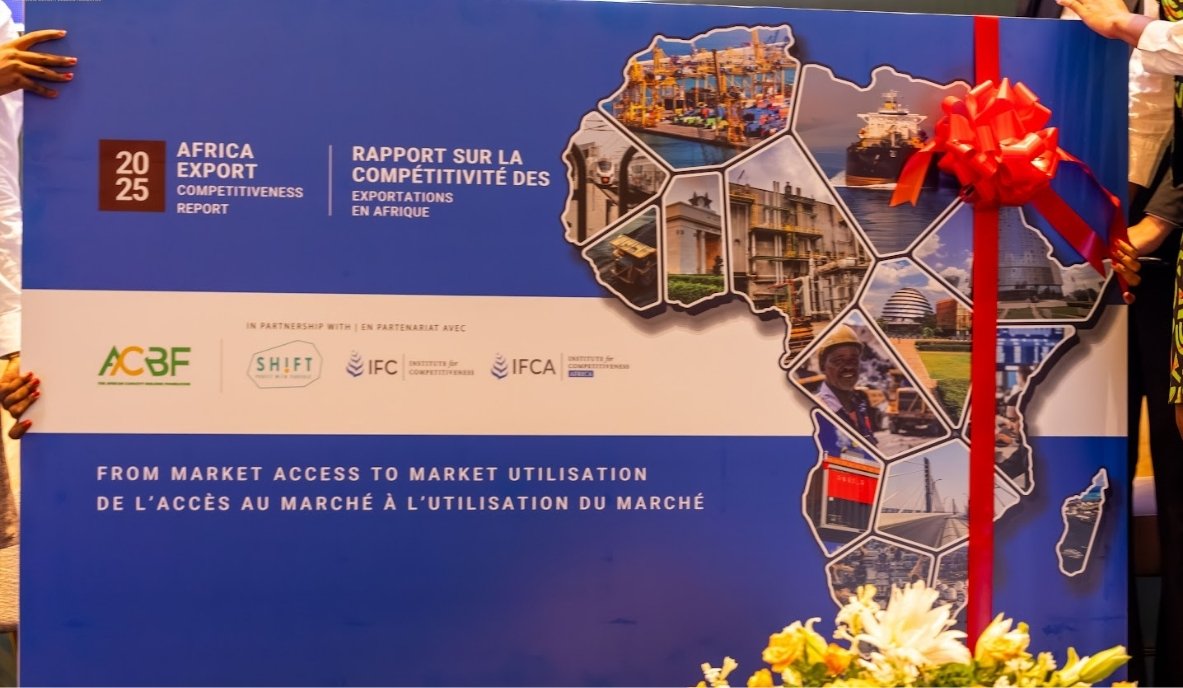
African businesses face steep non-tariff trade costs that threaten to undermine the continent’s free trade ambitions, despite progress in opening regional markets, according to a report launched at the Africa Think Tank Summit in Cotonou, Benin.

The Africa Export Competitiveness Report 2025 estimates that non-tariff costs on goods traded between African countries average the equivalent of 292% of their value, highlighting barriers that continue to constrain cross-border commerce.

The report was launched by African Capacity Building Foundation (ACBF) Executive Secretary Mamadou Biteye during the summit, held from Oct. 28-30, 2026.

Developed jointly by ACBF, Shared Value Africa and the Institute for Competitiveness, the report assesses 44 African economies, up from 40 in the previous edition and 30 in the inaugural study.

The findings raise concerns about whether the African Continental Free Trade Area (AfCFTA) can deliver its intended economic benefits without stronger action to address the practical barriers businesses face.

Infrastructure and regulations drive trade costs

Approximately 60% of Africa’s trade costs stem from behind-the-border constraints, including weak logistics, regulatory differences, fragmented standards and inadequate infrastructure, according to World Bank research cited in the report.

These barriers increase the cost of moving goods between countries, limiting businesses’ ability to take advantage of preferential market access.

The report finds that trade policy explains roughly 30% of the variation in actual export performance, underscoring the importance of productive capacity, infrastructure, skills, investment and institutional effectiveness.

It argues that signing trade agreements and reducing tariffs are insufficient unless businesses can navigate customs procedures, meet product standards, transport goods reliably and complete cross-border payments.

The findings highlight an implementation challenge facing the AfCFTA as African governments seek to translate market-opening commitments into increased trade and industrial growth.

The report identifies three stages critical to the agreement’s success: participation, readiness and utilization.

While participation creates legal trading opportunities, readiness requires countries to establish functioning systems. Utilization depends on businesses being able to access markets and benefit from preferential arrangements.

Africa struggles to capture export value

The report also highlights Africa’s limited position in global trade despite its substantial natural resources and expanding markets.

Africa accounted for just 2.63% of global merchandise exports in 2025, while primary goods represented 76.7% of the continent’s merchandise exports.

The disparity is particularly evident in the clean-energy sector.

Although Africa supplies approximately 75% of global manganese and 70% of cobalt, it captures less than 1% of the value generated by manufacturing clean-energy technologies and their components.

The report identifies industrial processing, manufacturing, investment in skills and stronger production networks as essential to increasing the value African economies retain from their resources.

During the launch, Biteye linked the findings to broader efforts to strengthen South-South collaboration and increase African participation in future research and analysis.

The report argues that the next phase of African trade integration must move beyond creating market access to ensuring businesses can use it.


Get the inside Story

Stay informed on the stories shaping Africa’s future. Get breaking news, in-depth analysis, opinions and exclusive insights from across the continent delivered to your inbox, free and unfiltered.


Get in touch for more:
Felix Tih
Editorial Director, Bantu Gazette
WhatsApp
LinkedIn
X (Twitter)
Instagram

Related Posts

Uganda Secures Deal to Host African Humanitarian Agency
Development & Impact

Uganda Secures Deal to Host African Humanitarian Agency

November 10, 2026
Mali’s Rokiatu Traoré wins United Nations Changemaker Award
Development & Impact

Mali’s Rokiatu Traoré wins United Nations Changemaker Award

November 10, 2026
Dakar 2026 opens in Senegal, bringing Olympic competition to Africa for first time
Development & Impact

Dakar 2026 opens in Senegal, bringing Olympic competition to Africa for first time

November 2, 2026
ATTS2026 | Africa’s Power Reform Push Turns to Private Capital, Regional Trade
Development & Impact

ATTS2026 | Africa’s Power Reform Push Turns to Private Capital, Regional Trade

November 2, 2026
ACBF Governors Put Implementation at the Heart of Capacity-Building Agenda
Development & Impact

ACBF Governors Put Implementation at the Heart of Capacity-Building Agenda

October 29, 2026
Burkina Faso Links Mechanized Harvests to a New Push for Local Food Processing
Development & Impact

Burkina Faso Links Mechanized Harvests to a New Push for Local Food Processing

November 1, 2026

Most Recent

Hidden Trade Costs Threaten Africa’s Free Trade Ambitions, Report Warns
Development & Impact

Hidden Trade Costs Threaten Africa’s Free Trade Ambitions, Report Warns

by Maureen Amogelang Garetshoge
November 10, 2026
0

The Africa Export Competitiveness Report 2025 finds that border delays, weak transport networks and uneven regulations threaten the benefits of...

Read moreDetails
Uganda Secures Deal to Host African Humanitarian Agency

Uganda Secures Deal to Host African Humanitarian Agency

November 10, 2026
South Sudan Adopts New Immunization Guidelines to Combat Preventable Diseases

South Sudan Adopts New Immunization Guidelines to Combat Preventable Diseases

November 10, 2026
Botswana Pushes for Greater Control Over Its Diamonds

Botswana Pushes for Greater Control Over Its Diamonds

November 10, 2026
Senegal Wins Historic Double Gold in Beach Wrestling at Dakar 2026 Youth Olympics

Senegal Wins Historic Double Gold in Beach Wrestling at Dakar 2026 Youth Olympics

November 9, 2026
Namibia Launches $2.5 Billion Dangote Fuel Storage and Pipeline Project

Namibia Launches $2.5 Billion Dangote Fuel Storage and Pipeline Project

November 8, 2026
From the Cape Flats, ‘We Ubuntu’ Imagines an Africa Held Together by Hope

From the Cape Flats, ‘We Ubuntu’ Imagines an Africa Held Together by Hope

November 6, 2026
Hidden Trade Costs Threaten Africa’s Free Trade Ambitions, Report Warns
Development & Impact

Hidden Trade Costs Threaten Africa’s Free Trade Ambitions, Report Warns

by Maureen Amogelang Garetshoge
Reading Time: 2 mins read
November 10, 2026
0

The Africa Export Competitiveness Report 2025 finds that border delays, weak transport networks and uneven regulations threaten the benefits of...

Read moreDetails
Uganda Secures Deal to Host African Humanitarian Agency
Development & Impact

Uganda Secures Deal to Host African Humanitarian Agency

by Jane Mukami
Reading Time: 2 mins read
November 10, 2026
0

ENTEBBE Uganda has signed a host country agreement with the African Union (AU) to establish the African Humanitarian Agency (AfHA),...

Read moreDetails
South Sudan Adopts New Immunization Guidelines to Combat Preventable Diseases
Policy & Governance

South Sudan Adopts New Immunization Guidelines to Combat Preventable Diseases

by Amani Mwakalebela
Reading Time: 2 mins read
November 10, 2026
0

The updated framework targets gaps in vaccine access, financing and delivery as South Sudan confronts displacement, outbreaks and shortages of...

Read moreDetails

Hidden Trade Costs Threaten Africa’s Free Trade Ambitions, Report Warns

The Africa Export Competitiveness Report 2025 finds that border delays, weak transport networks and uneven regulations threaten the benefits of Africa's expanding free trade market

Hidden Trade Costs Threaten Africa’s Free Trade Ambitions, Report Warns

Cotonou, Benin

African businesses face steep non-tariff trade costs that threaten to undermine the continent’s free trade ambitions, despite progress in opening regional markets, according to a report launched at the Africa Think Tank Summit in Cotonou, Benin.

The Africa Export Competitiveness Report 2025 estimates that non-tariff costs on goods traded between African countries average the equivalent of 292% of their value, highlighting barriers that continue to constrain cross-border commerce.

The report was launched by African Capacity Building Foundation (ACBF) Executive Secretary Mamadou Biteye during the summit, held from Oct. 28-30, 2026.

Developed jointly by ACBF, Shared Value Africa and the Institute for Competitiveness, the report assesses 44 African economies, up from 40 in the previous edition and 30 in the inaugural study.

The findings raise concerns about whether the African Continental Free Trade Area (AfCFTA) can deliver its intended economic benefits without stronger action to address the practical barriers businesses face.

Infrastructure and regulations drive trade costs

Approximately 60% of Africa’s trade costs stem from behind-the-border constraints, including weak logistics, regulatory differences, fragmented standards and inadequate infrastructure, according to World Bank research cited in the report.

These barriers increase the cost of moving goods between countries, limiting businesses’ ability to take advantage of preferential market access.

The report finds that trade policy explains roughly 30% of the variation in actual export performance, underscoring the importance of productive capacity, infrastructure, skills, investment and institutional effectiveness.

It argues that signing trade agreements and reducing tariffs are insufficient unless businesses can navigate customs procedures, meet product standards, transport goods reliably and complete cross-border payments.

The findings highlight an implementation challenge facing the AfCFTA as African governments seek to translate market-opening commitments into increased trade and industrial growth.

The report identifies three stages critical to the agreement’s success: participation, readiness and utilization.

While participation creates legal trading opportunities, readiness requires countries to establish functioning systems. Utilization depends on businesses being able to access markets and benefit from preferential arrangements.

Africa struggles to capture export value

The report also highlights Africa’s limited position in global trade despite its substantial natural resources and expanding markets.

Africa accounted for just 2.63% of global merchandise exports in 2025, while primary goods represented 76.7% of the continent’s merchandise exports.

The disparity is particularly evident in the clean-energy sector.

Although Africa supplies approximately 75% of global manganese and 70% of cobalt, it captures less than 1% of the value generated by manufacturing clean-energy technologies and their components.

The report identifies industrial processing, manufacturing, investment in skills and stronger production networks as essential to increasing the value African economies retain from their resources.

During the launch, Biteye linked the findings to broader efforts to strengthen South-South collaboration and increase African participation in future research and analysis.

The report argues that the next phase of African trade integration must move beyond creating market access to ensuring businesses can use it.

Hidden Trade Costs Threaten Africa’s Free Trade Ambitions, Report Warns

The Africa Export Competitiveness Report 2025 finds that border delays, weak transport networks and uneven regulations threaten the benefits of Africa's expanding free trade market

Hidden Trade Costs Threaten Africa’s Free Trade Ambitions, Report Warns
Maureen Amogelang Garetshogeby Maureen Amogelang Garetshoge
November 10, 2026

Cotonou, Benin

African businesses face steep non-tariff trade costs that threaten to undermine the continent’s free trade ambitions, despite progress in opening regional markets, according to a report launched at the Africa Think Tank Summit in Cotonou, Benin.

The Africa Export Competitiveness Report 2025 estimates that non-tariff costs on goods traded between African countries average the equivalent of 292% of their value, highlighting barriers that continue to constrain cross-border commerce.

The report was launched by African Capacity Building Foundation (ACBF) Executive Secretary Mamadou Biteye during the summit, held from Oct. 28-30, 2026.

Developed jointly by ACBF, Shared Value Africa and the Institute for Competitiveness, the report assesses 44 African economies, up from 40 in the previous edition and 30 in the inaugural study.

The findings raise concerns about whether the African Continental Free Trade Area (AfCFTA) can deliver its intended economic benefits without stronger action to address the practical barriers businesses face.

Infrastructure and regulations drive trade costs

Approximately 60% of Africa’s trade costs stem from behind-the-border constraints, including weak logistics, regulatory differences, fragmented standards and inadequate infrastructure, according to World Bank research cited in the report.

These barriers increase the cost of moving goods between countries, limiting businesses’ ability to take advantage of preferential market access.

The report finds that trade policy explains roughly 30% of the variation in actual export performance, underscoring the importance of productive capacity, infrastructure, skills, investment and institutional effectiveness.

It argues that signing trade agreements and reducing tariffs are insufficient unless businesses can navigate customs procedures, meet product standards, transport goods reliably and complete cross-border payments.

The findings highlight an implementation challenge facing the AfCFTA as African governments seek to translate market-opening commitments into increased trade and industrial growth.

The report identifies three stages critical to the agreement’s success: participation, readiness and utilization.

While participation creates legal trading opportunities, readiness requires countries to establish functioning systems. Utilization depends on businesses being able to access markets and benefit from preferential arrangements.

Africa struggles to capture export value

The report also highlights Africa’s limited position in global trade despite its substantial natural resources and expanding markets.

Africa accounted for just 2.63% of global merchandise exports in 2025, while primary goods represented 76.7% of the continent’s merchandise exports.

The disparity is particularly evident in the clean-energy sector.

Although Africa supplies approximately 75% of global manganese and 70% of cobalt, it captures less than 1% of the value generated by manufacturing clean-energy technologies and their components.

The report identifies industrial processing, manufacturing, investment in skills and stronger production networks as essential to increasing the value African economies retain from their resources.

During the launch, Biteye linked the findings to broader efforts to strengthen South-South collaboration and increase African participation in future research and analysis.

The report argues that the next phase of African trade integration must move beyond creating market access to ensuring businesses can use it.

Get the inside Story

Stay informed on the stories shaping Africa’s future. Get breaking news, in-depth analysis, opinions and exclusive insights from across the continent delivered to your inbox, free and unfiltered.


Get in touch for more:
Felix Tih
Editorial Director, Bantu Gazette
WhatsApp
LinkedIn
X (Twitter)
Instagram

Related Posts

Uganda Secures Deal to Host African Humanitarian Agency

Uganda Secures Deal to Host African Humanitarian Agency

by Jane Mukami
November 10, 2026
0

...

Mali’s Rokiatu Traoré wins United Nations Changemaker Award

Mali’s Rokiatu Traoré wins United Nations Changemaker Award

by Samira Benhadda
November 2, 2026
0

...

Dakar 2026 opens in Senegal, bringing Olympic competition to Africa for first time

Dakar 2026 opens in Senegal, bringing Olympic competition to Africa for first time

by Aissatou Fall
November 1, 2026
0

...

ATTS2026 | Africa’s Power Reform Push Turns to Private Capital, Regional Trade

ATTS2026 | Africa’s Power Reform Push Turns to Private Capital, Regional Trade

by Felix Tih
October 29, 2026
0

...

ACBF Governors Put Implementation at the Heart of Capacity-Building Agenda

ACBF Governors Put Implementation at the Heart of Capacity-Building Agenda

by Felix Tih
October 28, 2026
0

...

Burkina Faso Links Mechanized Harvests to a New Push for Local Food Processing

Burkina Faso Links Mechanized Harvests to a New Push for Local Food Processing

by Aissatou Fall
October 27, 2026
0

...

Hidden Trade Costs Threaten Africa’s Free Trade Ambitions, Report Warns
Development & Impact

Hidden Trade Costs Threaten Africa’s Free Trade Ambitions, Report Warns

by Maureen Amogelang Garetshoge
Reading Time: 2 mins read
November 10, 2026
0

The Africa Export Competitiveness Report 2025 finds that border delays, weak transport networks and uneven regulations threaten the benefits of...

Read moreDetails
Uganda Secures Deal to Host African Humanitarian Agency

Uganda Secures Deal to Host African Humanitarian Agency

by Jane Mukami
November 10, 2026
0

ENTEBBE Uganda has signed a host country agreement with the African Union (AU) to establish the African Humanitarian Agency (AfHA),...

South Sudan Adopts New Immunization Guidelines to Combat Preventable Diseases

South Sudan Adopts New Immunization Guidelines to Combat Preventable Diseases

by Amani Mwakalebela
November 10, 2026
0

The updated framework targets gaps in vaccine access, financing and delivery as South Sudan confronts displacement, outbreaks and shortages of...

Botswana Pushes for Greater Control Over Its Diamonds

Botswana Pushes for Greater Control Over Its Diamonds

by Maureen Amogelang Garetshoge
November 9, 2026
0

President Duma Boko outlines plans to double Botswana's De Beers stake while expanding investment in energy, agriculture and hemp to...

Senegal Wins Historic Double Gold in Beach Wrestling at Dakar 2026 Youth Olympics

Senegal Wins Historic Double Gold in Beach Wrestling at Dakar 2026 Youth Olympics

by Aissatou Fall
November 8, 2026
0

Elisabeth Diatta and Maguette Diop delivered Senegal's first two Youth Olympic gold medals within 30 minutes, sparking jubilant celebrations at...

Bantu Gazette is a pioneering news platform that champions Africa's development, culture, and heritage. We spotlight the continent's successes, address its challenges, and provide insightful coverage of events that shape its future.

Bantu Gazette is a pioneering news platform that champions Africa's development, culture, and heritage. We spotlight the continent's successes, address its challenges, and provide insightful coverage of events that shape its future.

Our Platforms

  • Bantu Magazine
  • Bantu Brief
  • Black Frame Studio

Our Services

  • Bantu Agency
  • Advertise
  • Partnerships

Our Services

  • Editorial Director
  • Opportunities
  • Contact
Bantu Gazette
  • Energy & Trade
  • Finance
  • Health
  • Politics & Economy
  • Technology
  • Environment
  • Feature
  • Opinion
  • Changemakers
  • Tourism & Culture
  • Magazine