
JUBA
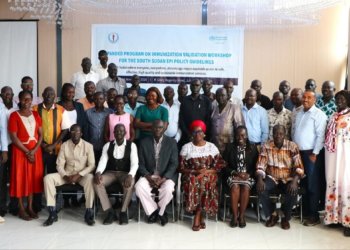
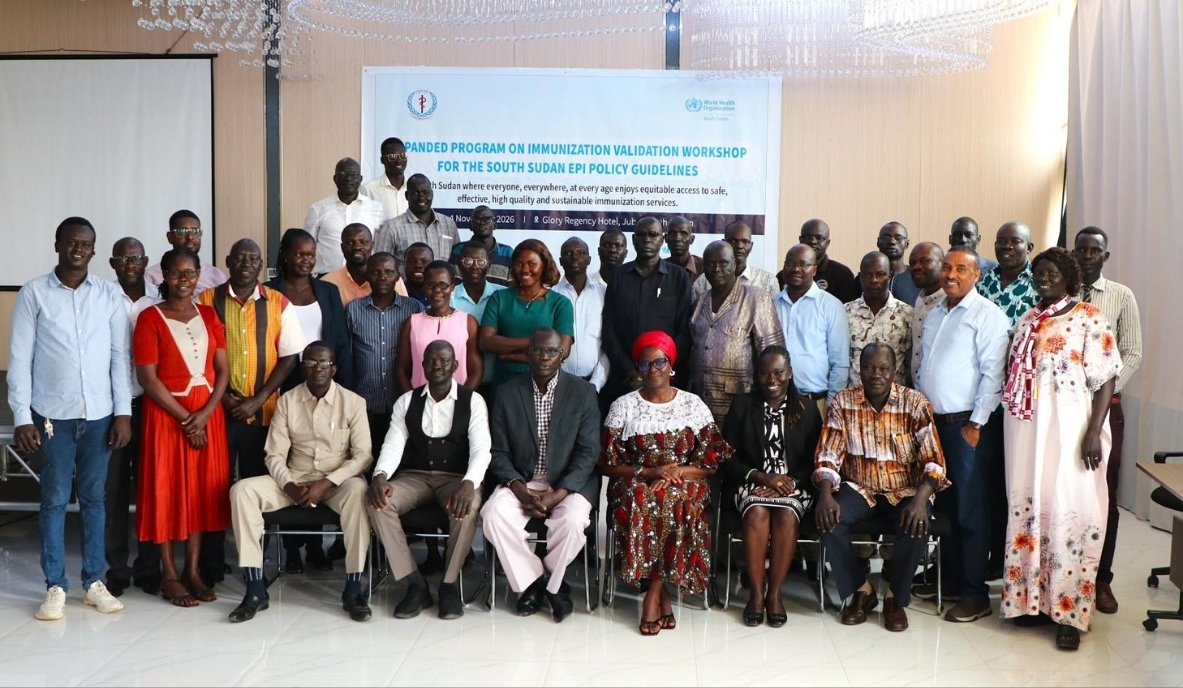
South Sudan has validated new national immunization policy guidelines aimed at strengthening vaccination services and improving protection against preventable diseases, the World Health Organization said Monday.
The National Expanded Programme on Immunization Policy Guidelines establish a framework for planning, financing, implementing and monitoring vaccination services across the country.
Developed by the Ministry of Health with support from WHO and other partners, the guidelines replace the 2009 National Immunization Policy and reflect advances in vaccine science, digital health and disease prevention.
The policy seeks to ensure equitable access to safe, effective and sustainable immunization services for people of all ages, particularly in underserved communities.
South Sudan continues to face significant challenges, including low vaccination coverage, recurring disease outbreaks, insecurity, population displacement and shortages of trained health workers.
Weak health infrastructure, vaccine dropout rates and heavy dependence on external financing have also hindered efforts to reach children who have received few or no routine vaccinations.
Despite these obstacles, the country has expanded routine immunization services, introduced vaccines against malaria and measles, strengthened vaccine storage systems and improved disease surveillance.
Dr. George Awzenio Legge, immunization program manager at the Ministry of Health, said the policy provides a clear vision for protecting communities against vaccine-preventable diseases.
He said its guiding principles include equity, accountability, community participation, evidence-based decision-making and stronger integration of vaccination services into primary health care.
Dr. Mutale Nsakashalo, WHO South Sudan’s health program cluster lead, welcomed the government’s commitment to improving immunization coverage but warned that many children remain unprotected.
“Immunization protects lives. South Sudan has made important progress in expanding vaccination services and introducing new vaccines,” Nsakashalo said.
She emphasized the need to address barriers such as long distances to health facilities, disrupted services and limited resources.
The guidelines also prioritize sustainable financing, stronger vaccine supply chains, improved health workforce capacity, community engagement and better vaccination data systems.
Aligned with South Sudan’s national health strategies and global immunization targets, the framework is expected to guide coordinated efforts by government agencies and development partners to close vaccination gaps and reach underserved populations.