
Bantu Gazette

Bantu Gazette
  • Policy & Governance
  • Development & Impact
  • Business, Trade & Economy
  • Energy
  • Changemakers
  • Culture & Identity
  • Perspectives
  • Magazine
Menu
  • Black Frame Studio
  • Magazine

When Inheritance Becomes Hierarchy

Africa’s inheritance holds knowledge worth preserving, but it also carries classifications and hierarchies that deserve closer scrutiny before we pass them on again

When Inheritance Becomes Hierarchy

Image By Munira Bonnet

Munira Bonnetby Munira Bonnet
September 29, 2026
Reading Time: 3 mins read

When Inheritance Becomes Hierarchy

Africa’s inheritance holds knowledge worth preserving, but it also carries classifications and hierarchies that deserve closer scrutiny before we pass them on again

When Inheritance Becomes Hierarchy

Image By Munira Bonnet

When Inheritance Becomes Hierarchy

Image By Munira Bonnet

Munira Bonnetby Munira Bonnet
September 29, 2026
Reading Time: 3 mins read

Africa has spent considerable time recovering what was taken, neglected or rewritten. We speak about protecting languages, restoring heritage, documenting traditions and teaching younger generations where they come from. But there is another question we ask far less often: What have we inherited that was never entirely ours?

Not every classification that survives from the past deserves to be carried forward without examination. Some distinctions hold knowledge. They tell us about lineage, place, language, belief, occupation and belonging. Others were altered, hardened or assigned new value by systems of power. The difficulty is knowing which is which.

Rwanda makes this question impossible to avoid. Hutu, Tutsi and Twa identities existed before colonial rule. They were not invented by Europeans. But colonial administration interpreted these distinctions through racial theories and gave them an institutional rigidity and political significance they had not previously held. Identity was recorded, ranked and administered. Difference acquired bureaucracy.

Since the 1994 genocide against the Tutsi, Rwanda has placed Rwandan nationhood above ethnic classification. That approach has generated debate, as any serious attempt to reconstruct identity after such violence inevitably will. My interest is not in prescribing how Rwanda should define itself. It is in the question Rwanda presents to the rest of Africa: How much of what we now defend as identity have we examined?

The question is not whether difference should disappear. It should not. The question is whether we know which differences belong to our histories and which were classified, hardened or given new meaning by somebody else’s system.

When classification obscures knowledge

Consider something as ordinary as a basket. We may identify it immediately through an ethnic group. But before repeating that classification, perhaps we should ask what it actually tells us. Who made it? Where did the technique originate? Who else practiced it? What plant was used? Who harvested and prepared the material? How did the knowledge travel? Was the distinction understood by the maker in the same way that it appears in the description today?

Sometimes the ethnic attribution is essential. Remove it and we remove knowledge. Sometimes it tells us more about the person who classified the object than the person who made it. Those are not the same thing.

For me, this question is not confined to Rwanda. Somalia makes it personal. Somalis share a language, religion and a substantial cultural inheritance, yet clan and subclan identities have repeatedly become political organizing principles. Somalia’s fragmentation cannot simply be attributed to clan. Colonial partition, dictatorship, political exclusion, violence and state collapse all belong to that history. But I still find myself asking what exactly we transmit to the next generation each time we place the clan before the Somali.

There is another inherited hierarchy, and this one we carry on our bodies. Colonialism did not introduce human difference to Africa. African societies had their own hierarchies, prejudices and systems of belonging long before Europeans arrived. We should not manufacture an innocent precolonial Africa to make a contemporary argument.

European racial thought turned physical characteristics into a purported measure of human value, then embedded those judgments within systems of government, education, scholarship and social advancement. Complexions, facial features and supposed racial origins could become evidence of who was considered more civilized, more intelligent or closer to the colonizer.

The administration that enforced this hierarchy has disappeared. The hierarchy has proved harder to dislodge because a scale of value can survive the government that installed it, carried forward instead by habit, by institutions and by the private judgments people make about one another. We can see traces of it in colorism and in the enormous market for skin lightening across parts of Africa. A darker complexion can still carry different social assumptions from a lighter one. We alter the body, sometimes without asking where the standard against which we are altering it came from.

That, to me, is where heritage becomes much more serious than preservation.

Heritage is transmission

Every generation decides, consciously or otherwise, what the next one receives. We transmit languages, techniques, recipes, ceremonies, objects and stories. But we can also transmit classifications, prejudices and hierarchies whose origins we have stopped examining.

This is central to the thinking behind The Continuum Africa. I am interested in reconnecting objects with the knowledge and practice around them because an object without that knowledge can tell only part of its own story. A basket may survive for 200 years while the knowledge of the plant, the maker, the technique, its use and the relationships around its production disappear within one generation.

The same principle applies to identity. Knowing where we come from should make our understanding of ourselves more precise, not more divided. That requires us to distinguish between remembering difference and continually organizing ourselves around it.

Africa does not need less identity. If anything, we need a much deeper knowledge of it. But depth requires scrutiny. Who named us? When? What did the name mean before? Did its meaning change? Who benefited from that change? What knowledge does the distinction preserve today? And what happens each time we repeat it?

Some inherited distinctions carry knowledge that must not be lost. Others may preserve classifications whose origins and purpose we have simply stopped questioning.

Our responsibility is to know the difference.
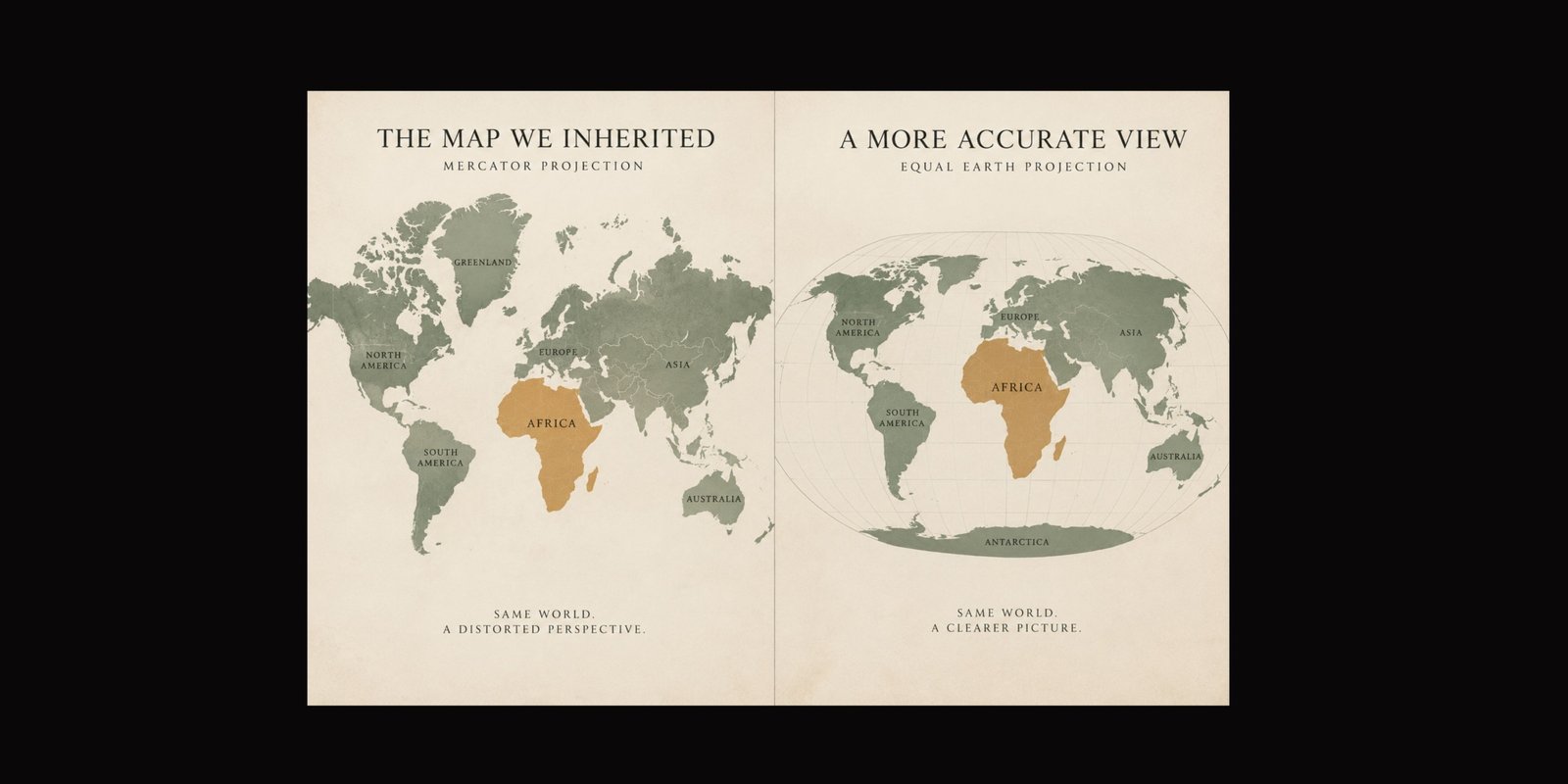
When inheritance becomes hierarchy. Image by Munira Bonnet


Get the inside Story

Stay informed on the stories shaping Africa’s future. Get breaking news, in-depth analysis, opinions and exclusive insights from across the continent delivered to your inbox, free and unfiltered.


Get in touch for more:
Felix Tih
Editorial Director, Bantu Gazette
WhatsApp
LinkedIn
X (Twitter)
Instagram

Related Posts

Ethiopians Celebrate Meskel Holiday With Calls for Peace and Unity
Culture & Identity

Ethiopians Celebrate Meskel Holiday With Calls for Peace and Unity

September 29, 2026
Peace Requires Investment in the People Who Sustain It
Perspectives

Peace Requires Investment in the People Who Sustain It

September 25, 2026
A Work Should Not Leave Africa Without Its History Traveling With It
Culture & Identity

A Work Should Not Leave Africa Without Its History Traveling With It

September 14, 2026
How Astronomy, Faith and the Seasons Shape Ethiopia’s 13-Month Calendar
Culture & Identity

How Astronomy, Faith and the Seasons Shape Ethiopia’s 13-Month Calendar

September 14, 2026
Africa IP Day | One Market, Many Intellectual Property Systems. Can AfCFTA Bridge the Gap?
Development & Impact

Africa IP Day | One Market, Many Intellectual Property Systems. Can AfCFTA Bridge the Gap?

September 12, 2026
Africa Cut Maternal Mortality for Two Decades. Why Did Progress Start Slowing in 2016?
Development & Impact

Africa Cut Maternal Mortality for Two Decades. Why Did Progress Start Slowing in 2016?

September 15, 2026

Most Recent

When Inheritance Becomes Hierarchy
Culture & Identity

When Inheritance Becomes Hierarchy

by Munira Bonnet
September 29, 2026
0

Africa’s inheritance holds knowledge worth preserving, but it also carries classifications and hierarchies that deserve closer scrutiny before we pass...

Read moreDetails
Kenya’s President Ruto Tours Dangote’s Lagos Refinery Ahead of Lamu Groundbreaking

Kenya’s President Ruto Tours Dangote’s Lagos Refinery Ahead of Lamu Groundbreaking

September 28, 2026
Ethiopia Rules Berlin as Assefa Survives Late Scare and Adola Wins Again

Ethiopia Rules Berlin as Assefa Survives Late Scare and Adola Wins Again

September 29, 2026
Ethiopians Celebrate Meskel Holiday With Calls for Peace and Unity

Ethiopians Celebrate Meskel Holiday With Calls for Peace and Unity

September 29, 2026
Senegalese Football Star Sadio Mané Launches $20 Million Agro-Processing Project in Bambali

Senegalese Football Star Sadio Mané Launches $20 Million Agro-Processing Project in Bambali

September 27, 2026
Ghana Strengthens Clinical Trial Capabilities to Improve Health Preparedness

Ghana Strengthens Clinical Trial Capabilities to Improve Health Preparedness

September 27, 2026
Water Security Moves from Commitment to Implementation at AU Public Lecture

Water Security Moves from Commitment to Implementation at AU Public Lecture

September 27, 2026
When Inheritance Becomes Hierarchy
Culture & Identity

When Inheritance Becomes Hierarchy

by Munira Bonnet
Reading Time: 3 mins read
September 29, 2026
0

Africa’s inheritance holds knowledge worth preserving, but it also carries classifications and hierarchies that deserve closer scrutiny before we pass...

Read moreDetails
Kenya’s President Ruto Tours Dangote’s Lagos Refinery Ahead of Lamu Groundbreaking
Energy

Kenya’s President Ruto Tours Dangote’s Lagos Refinery Ahead of Lamu Groundbreaking

by Waceke Nganga
Reading Time: 2 mins read
September 28, 2026
0

Ruto says the $16 billion Lamu refinery will process 700,000 barrels of crude a day, strengthen fuel security and create...

Read moreDetails
Ethiopia Rules Berlin as Assefa Survives Late Scare and Adola Wins Again
Sports

Ethiopia Rules Berlin as Assefa Survives Late Scare and Adola Wins Again

by Maraki Desta
Reading Time: 2 mins read
September 29, 2026
0

Tigst Assefa ran the third-fastest women’s marathon in history, while Guye Adola led an Ethiopian sweep of the top two...

Read moreDetails

When Inheritance Becomes Hierarchy

Africa’s inheritance holds knowledge worth preserving, but it also carries classifications and hierarchies that deserve closer scrutiny before we pass them on again

When Inheritance Becomes Hierarchy

Image By Munira Bonnet

Africa has spent considerable time recovering what was taken, neglected or rewritten. We speak about protecting languages, restoring heritage, documenting traditions and teaching younger generations where they come from. But there is another question we ask far less often: What have we inherited that was never entirely ours?

Not every classification that survives from the past deserves to be carried forward without examination. Some distinctions hold knowledge. They tell us about lineage, place, language, belief, occupation and belonging. Others were altered, hardened or assigned new value by systems of power. The difficulty is knowing which is which.

Rwanda makes this question impossible to avoid. Hutu, Tutsi and Twa identities existed before colonial rule. They were not invented by Europeans. But colonial administration interpreted these distinctions through racial theories and gave them an institutional rigidity and political significance they had not previously held. Identity was recorded, ranked and administered. Difference acquired bureaucracy.

Since the 1994 genocide against the Tutsi, Rwanda has placed Rwandan nationhood above ethnic classification. That approach has generated debate, as any serious attempt to reconstruct identity after such violence inevitably will. My interest is not in prescribing how Rwanda should define itself. It is in the question Rwanda presents to the rest of Africa: How much of what we now defend as identity have we examined?

The question is not whether difference should disappear. It should not. The question is whether we know which differences belong to our histories and which were classified, hardened or given new meaning by somebody else’s system.

When classification obscures knowledge

Consider something as ordinary as a basket. We may identify it immediately through an ethnic group. But before repeating that classification, perhaps we should ask what it actually tells us. Who made it? Where did the technique originate? Who else practiced it? What plant was used? Who harvested and prepared the material? How did the knowledge travel? Was the distinction understood by the maker in the same way that it appears in the description today?

Sometimes the ethnic attribution is essential. Remove it and we remove knowledge. Sometimes it tells us more about the person who classified the object than the person who made it. Those are not the same thing.

For me, this question is not confined to Rwanda. Somalia makes it personal. Somalis share a language, religion and a substantial cultural inheritance, yet clan and subclan identities have repeatedly become political organizing principles. Somalia’s fragmentation cannot simply be attributed to clan. Colonial partition, dictatorship, political exclusion, violence and state collapse all belong to that history. But I still find myself asking what exactly we transmit to the next generation each time we place the clan before the Somali.

There is another inherited hierarchy, and this one we carry on our bodies. Colonialism did not introduce human difference to Africa. African societies had their own hierarchies, prejudices and systems of belonging long before Europeans arrived. We should not manufacture an innocent precolonial Africa to make a contemporary argument.

European racial thought turned physical characteristics into a purported measure of human value, then embedded those judgments within systems of government, education, scholarship and social advancement. Complexions, facial features and supposed racial origins could become evidence of who was considered more civilized, more intelligent or closer to the colonizer.

The administration that enforced this hierarchy has disappeared. The hierarchy has proved harder to dislodge because a scale of value can survive the government that installed it, carried forward instead by habit, by institutions and by the private judgments people make about one another. We can see traces of it in colorism and in the enormous market for skin lightening across parts of Africa. A darker complexion can still carry different social assumptions from a lighter one. We alter the body, sometimes without asking where the standard against which we are altering it came from.

That, to me, is where heritage becomes much more serious than preservation.

Heritage is transmission

Every generation decides, consciously or otherwise, what the next one receives. We transmit languages, techniques, recipes, ceremonies, objects and stories. But we can also transmit classifications, prejudices and hierarchies whose origins we have stopped examining.

This is central to the thinking behind The Continuum Africa. I am interested in reconnecting objects with the knowledge and practice around them because an object without that knowledge can tell only part of its own story. A basket may survive for 200 years while the knowledge of the plant, the maker, the technique, its use and the relationships around its production disappear within one generation.

The same principle applies to identity. Knowing where we come from should make our understanding of ourselves more precise, not more divided. That requires us to distinguish between remembering difference and continually organizing ourselves around it.

Africa does not need less identity. If anything, we need a much deeper knowledge of it. But depth requires scrutiny. Who named us? When? What did the name mean before? Did its meaning change? Who benefited from that change? What knowledge does the distinction preserve today? And what happens each time we repeat it?

Some inherited distinctions carry knowledge that must not be lost. Others may preserve classifications whose origins and purpose we have simply stopped questioning.

Our responsibility is to know the difference.

When inheritance becomes hierarchy. Image by Munira Bonnet


When Inheritance Becomes Hierarchy

Africa’s inheritance holds knowledge worth preserving, but it also carries classifications and hierarchies that deserve closer scrutiny before we pass them on again

When Inheritance Becomes Hierarchy

Image By Munira Bonnet

Munira Bonnetby Munira Bonnet
September 29, 2026

Africa has spent considerable time recovering what was taken, neglected or rewritten. We speak about protecting languages, restoring heritage, documenting traditions and teaching younger generations where they come from. But there is another question we ask far less often: What have we inherited that was never entirely ours?

Not every classification that survives from the past deserves to be carried forward without examination. Some distinctions hold knowledge. They tell us about lineage, place, language, belief, occupation and belonging. Others were altered, hardened or assigned new value by systems of power. The difficulty is knowing which is which.

Rwanda makes this question impossible to avoid. Hutu, Tutsi and Twa identities existed before colonial rule. They were not invented by Europeans. But colonial administration interpreted these distinctions through racial theories and gave them an institutional rigidity and political significance they had not previously held. Identity was recorded, ranked and administered. Difference acquired bureaucracy.

Since the 1994 genocide against the Tutsi, Rwanda has placed Rwandan nationhood above ethnic classification. That approach has generated debate, as any serious attempt to reconstruct identity after such violence inevitably will. My interest is not in prescribing how Rwanda should define itself. It is in the question Rwanda presents to the rest of Africa: How much of what we now defend as identity have we examined?

The question is not whether difference should disappear. It should not. The question is whether we know which differences belong to our histories and which were classified, hardened or given new meaning by somebody else’s system.

When classification obscures knowledge

Consider something as ordinary as a basket. We may identify it immediately through an ethnic group. But before repeating that classification, perhaps we should ask what it actually tells us. Who made it? Where did the technique originate? Who else practiced it? What plant was used? Who harvested and prepared the material? How did the knowledge travel? Was the distinction understood by the maker in the same way that it appears in the description today?

Sometimes the ethnic attribution is essential. Remove it and we remove knowledge. Sometimes it tells us more about the person who classified the object than the person who made it. Those are not the same thing.

For me, this question is not confined to Rwanda. Somalia makes it personal. Somalis share a language, religion and a substantial cultural inheritance, yet clan and subclan identities have repeatedly become political organizing principles. Somalia’s fragmentation cannot simply be attributed to clan. Colonial partition, dictatorship, political exclusion, violence and state collapse all belong to that history. But I still find myself asking what exactly we transmit to the next generation each time we place the clan before the Somali.

There is another inherited hierarchy, and this one we carry on our bodies. Colonialism did not introduce human difference to Africa. African societies had their own hierarchies, prejudices and systems of belonging long before Europeans arrived. We should not manufacture an innocent precolonial Africa to make a contemporary argument.

European racial thought turned physical characteristics into a purported measure of human value, then embedded those judgments within systems of government, education, scholarship and social advancement. Complexions, facial features and supposed racial origins could become evidence of who was considered more civilized, more intelligent or closer to the colonizer.

The administration that enforced this hierarchy has disappeared. The hierarchy has proved harder to dislodge because a scale of value can survive the government that installed it, carried forward instead by habit, by institutions and by the private judgments people make about one another. We can see traces of it in colorism and in the enormous market for skin lightening across parts of Africa. A darker complexion can still carry different social assumptions from a lighter one. We alter the body, sometimes without asking where the standard against which we are altering it came from.

That, to me, is where heritage becomes much more serious than preservation.

Heritage is transmission

Every generation decides, consciously or otherwise, what the next one receives. We transmit languages, techniques, recipes, ceremonies, objects and stories. But we can also transmit classifications, prejudices and hierarchies whose origins we have stopped examining.

This is central to the thinking behind The Continuum Africa. I am interested in reconnecting objects with the knowledge and practice around them because an object without that knowledge can tell only part of its own story. A basket may survive for 200 years while the knowledge of the plant, the maker, the technique, its use and the relationships around its production disappear within one generation.

The same principle applies to identity. Knowing where we come from should make our understanding of ourselves more precise, not more divided. That requires us to distinguish between remembering difference and continually organizing ourselves around it.

Africa does not need less identity. If anything, we need a much deeper knowledge of it. But depth requires scrutiny. Who named us? When? What did the name mean before? Did its meaning change? Who benefited from that change? What knowledge does the distinction preserve today? And what happens each time we repeat it?

Some inherited distinctions carry knowledge that must not be lost. Others may preserve classifications whose origins and purpose we have simply stopped questioning.

Our responsibility is to know the difference.
When inheritance becomes hierarchy. Image by Munira Bonnet


Get the inside Story

Stay informed on the stories shaping Africa’s future. Get breaking news, in-depth analysis, opinions and exclusive insights from across the continent delivered to your inbox, free and unfiltered.


Get in touch for more:
Felix Tih
Editorial Director, Bantu Gazette
WhatsApp
LinkedIn
X (Twitter)
Instagram

Related Posts

Ethiopians Celebrate Meskel Holiday With Calls for Peace and Unity

Ethiopians Celebrate Meskel Holiday With Calls for Peace and Unity

by Kalkidan Negash
September 27, 2026
0

...

Peace Requires Investment in the People Who Sustain It

Peace Requires Investment in the People Who Sustain It

by Mame Khady Louise Diouf
September 21, 2026
0

...

A Work Should Not Leave Africa Without Its History Traveling With It

A Work Should Not Leave Africa Without Its History Traveling With It

by Munira Bonnet
September 12, 2026
0

...

How Astronomy, Faith and the Seasons Shape Ethiopia’s 13-Month Calendar

How Astronomy, Faith and the Seasons Shape Ethiopia’s 13-Month Calendar

by Kalkidan Negash
September 11, 2026
0

...

Africa IP Day | One Market, Many Intellectual Property Systems. Can AfCFTA Bridge the Gap?

Africa IP Day | One Market, Many Intellectual Property Systems. Can AfCFTA Bridge the Gap?

by Felix Tih
September 10, 2026
0

...

Africa Cut Maternal Mortality for Two Decades. Why Did Progress Start Slowing in 2016?

Africa Cut Maternal Mortality for Two Decades. Why Did Progress Start Slowing in 2016?

by Felix Tih
September 10, 2026
0

...

When Inheritance Becomes Hierarchy
Culture & Identity

When Inheritance Becomes Hierarchy

by Munira Bonnet
Reading Time: 3 mins read
September 29, 2026
0

Africa’s inheritance holds knowledge worth preserving, but it also carries classifications and hierarchies that deserve closer scrutiny before we pass...

Read moreDetails
Kenya’s President Ruto Tours Dangote’s Lagos Refinery Ahead of Lamu Groundbreaking

Kenya’s President Ruto Tours Dangote’s Lagos Refinery Ahead of Lamu Groundbreaking

by Waceke Nganga
September 28, 2026
0

Ruto says the $16 billion Lamu refinery will process 700,000 barrels of crude a day, strengthen fuel security and create...

Ethiopia Rules Berlin as Assefa Survives Late Scare and Adola Wins Again

Ethiopia Rules Berlin as Assefa Survives Late Scare and Adola Wins Again

by Maraki Desta
September 27, 2026
0

Tigst Assefa ran the third-fastest women’s marathon in history, while Guye Adola led an Ethiopian sweep of the top two...

Ethiopians Celebrate Meskel Holiday With Calls for Peace and Unity

Ethiopians Celebrate Meskel Holiday With Calls for Peace and Unity

by Kalkidan Negash
September 27, 2026
0

Meskel draws large crowds to Addis Ababa, where faith, tradition and appeals for peace and national unity come together during...

Senegalese Football Star Sadio Mané Launches $20 Million Agro-Processing Project in Bambali

Senegalese Football Star Sadio Mané Launches $20 Million Agro-Processing Project in Bambali

by Doyinsola Ibidunni
September 25, 2026
0

Two-time Africa Cup of Nations winner Sadio Mané invests $20.4 million in a mango-processing project in his hometown of Bambali...

Bantu Gazette is a pioneering news platform that champions Africa's development, culture, and heritage. We spotlight the continent's successes, address its challenges, and provide insightful coverage of events that shape its future.

Bantu Gazette is a pioneering news platform that champions Africa's development, culture, and heritage. We spotlight the continent's successes, address its challenges, and provide insightful coverage of events that shape its future.

Our Platforms

  • Bantu Magazine
  • Bantu Brief
  • Black Frame Studio

Our Services

  • Bantu Agency
  • Advertise
  • Partnerships

Our Services

  • Editorial Director
  • Opportunities
  • Contact

Bantu Gazette is a pioneering news platform that champions Africa's development, culture, and heritage. We spotlight the continent's successes, address its challenges, and provide insightful coverage of events that shape its future.

Our Platforms

  • Bantu Magazine
  • Bantu Brief
  • Black Frame Studio

Our Services

  • Bantu Agency
  • Advertise
  • Partnerships

Our Services

  • Editorial Director
  • Opportunities
  • Contact
Bantu Gazette
  • Energy & Trade
  • Finance
  • Health
  • Politics & Economy
  • Technology
  • Environment
  • Feature
  • Opinion
  • Changemakers
  • Tourism & Culture
  • Magazine