
African foresight practitioners are calling for stronger local knowledge, investment and participation to help Africans shape the continent’s future rather than simply anticipate it.
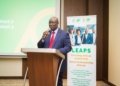
The call came during Thursday’s launch of the Africa Foresight Network (AFN) a pan-African community of practice connecting practitioners, researchers, policymakers, educators and institutions working on futures and foresight.
AFN grew from a pilot supported by the International Development Research Centre (IDRC) that included research, capacity-building, regional convenings and redevelopment of the Foresight for Development platform.
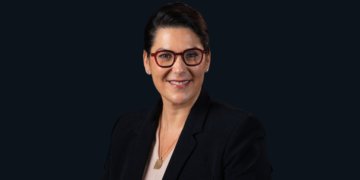
Sophia Bazile, senior project coordinator and research manager for AFN, said the network aims to connect people, institutions, knowledge and opportunities in ways that lead to action.
“We want to build an Africa that owns and shapes its futures,” Bazile said.
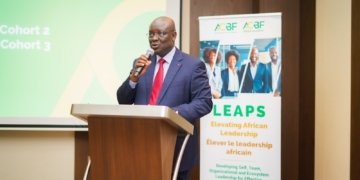
Olugbenga Adesida, founder and partner at Ihaba and co-director of the Africa Innovation Summit, said foresight must translate into action and reach decision-makers.
“There are a lot of foresight on the continent, but [it] never really leads to action,” Adesida said, adding that foresight should inform and motivate action rather than remain in reports and on bookshelves.
Building an African Foresight Ecosystem
Those challenges shaped four breakout discussions on research, capabilities, investment and learning.
In the Capabilities for Agency group, Julius Gatune Kariuki, policy adviser at the African Center for Economic Transformation, said fragmentation remains a major obstacle, with practitioners often working in silos and unaware of what others are doing.
He called for foresight literacy in education, greater use of Indigenous languages and broader participation, particularly from people who lack access to decision-making spaces.
The Research Frontier group called for mapping Africa’s foresight ecosystem and expanding research on African epistemologies and methodological innovations.
Geci Karuri-Sebina, associate professor at the University of the Witwatersrand and director of the South African Node of The Millennium Project, cautioned against allowing available funding to determine the research questions Africans pursue.
“We also need to be careful not to only couple what can be done with what can be funded,” Karuri-Sebina said.
Participants identified gender, religion, African ontologies and experiential futures among areas needing deeper contextual research.
The Investing in Ourselves group focused on African knowledge and financing.
“Within our communities in Africa, foresight already exists,” said Soha Rashed, founder of Arab Futures Societies.
Rashed said practitioners should recognize existing community knowledge rather than simply import established approaches. Participants identified African foundations, philanthropists and the diaspora as potential sources of funding.
In the Learning Futures group, Mulako Kabisa, a postdoctoral researcher at the Global Change Institute, said educating young people should be central to developing foresight capabilities while questioning whether universities should be the primary gateway to the field.
The group discussed making foresight more accessible, indigenizing its learning and involving ordinary citizens.
“There’s quite a bit of gatekeeping around futures thinking,” Kabisa said.
The launch also unveiled a redeveloped Foresight for Development platform, a nearly two-decade-old repository of African futures material being transformed into a peer-learning and community platform.
Bazile said practitioners will be able to create profiles and contribute research and other material, helping connect knowledge dispersed across the continent.
AFN now seeks to turn a dispersed foresight ecosystem into a connected community that can learn, collaborate and act together.
Through that collective effort, the network aims to strengthen Africans’ agency to imagine and shape the continent’s futures, echoing the broader African ambition of shaping its own development trajectory envisioned in the African Union’s Agenda 2063.