

Gender equality advocates have called on African governments to shift their focus from developing new gender policies to effectively implementing existing laws, arguing that the continent’s biggest challenge is no longer policy formulation but inadequate execution.
The call was made during HERizon Africa Dialogues’ virtual forum, “Bridging the Gender Divide: Moving Beyond Polarized Gender Narratives,” held virtually on Friday, June 26.
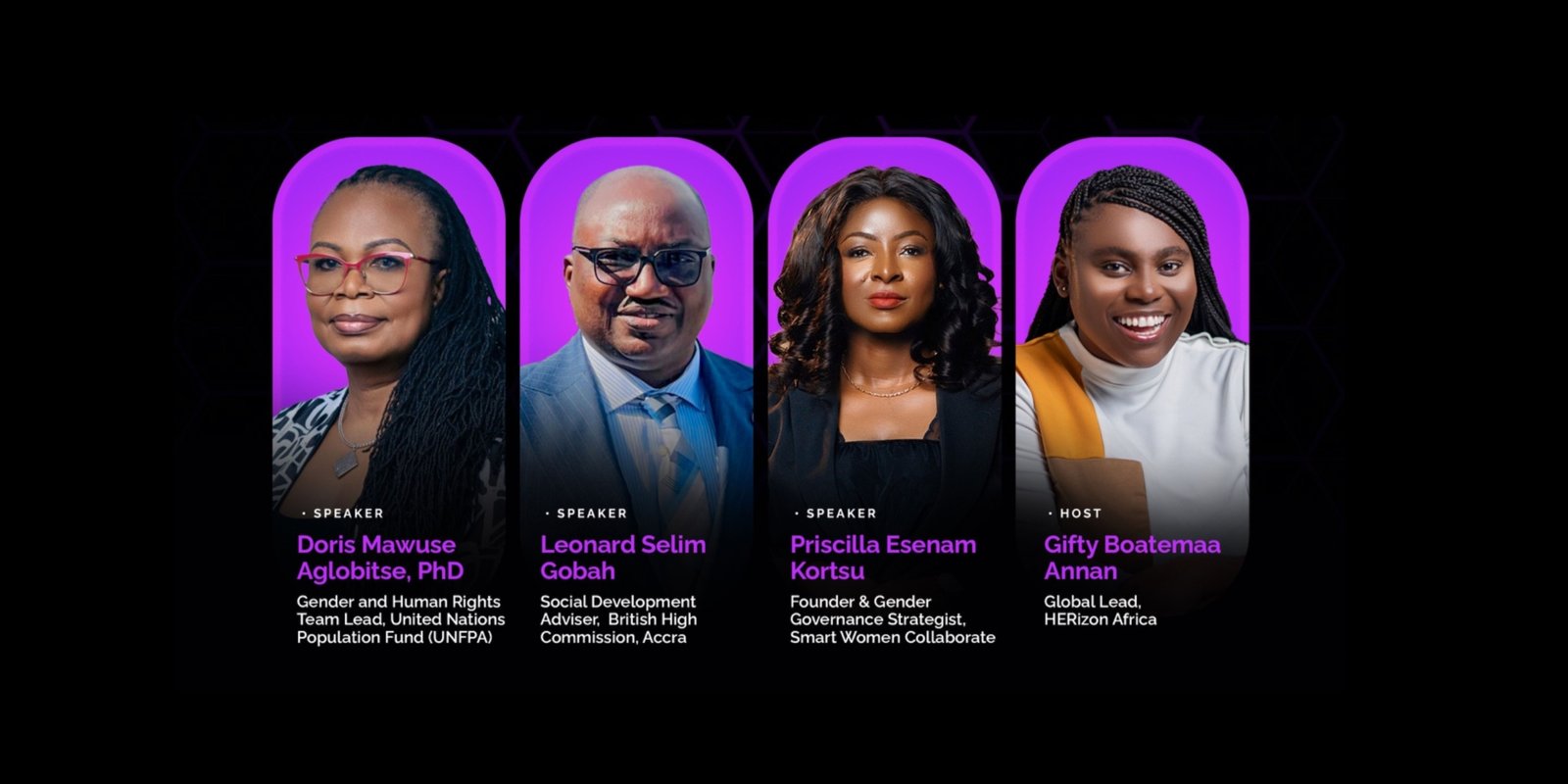
Moderating the discussion, HERizon Africa Global Lead Gifty Boatemaa Annan said the dialogue was convened to move beyond increasingly polarized narratives surrounding gender equality by revisiting the movement’s historical foundations and addressing widespread misconceptions.
She noted that public discourse increasingly portrays women and men as being in competition with one another, diluting the original purpose of the gender equality agenda.
Miss Annan said the forum was intended to help participants better understand the origins of the gender equality framework, dispel common misconceptions and encourage more balanced conversations on the issue.
Speaking during the discussion, Social Development Adviser at the British High Commission in Accra, Leonard Selim Gobah, said many African countries, including Ghana, already have comprehensive legal and policy frameworks to promote gender equality but continue to struggle with implementation.
“We have lots and lots of policies,” Gobah said.
He cited Ghana’s National Gender Policy, the Affirmative Action Act, the Domestic Violence Act and the Children’s Act, questioning whether sufficient resources are being devoted to implementing them.
“Are we really implementing them? Are we putting resources into these Acts, these policies and these guidelines? Instead of constantly launching new policies, can we invest those resources into actions that move the dial?” he said.
Gobah said implementation must be accompanied by monitoring systems and accountability mechanisms to ensure governments meet their commitments rather than allowing policy documents to remain largely symbolic.
He added that deeply entrenched cultural norms, misinformation and organized resistance continue to slow progress despite growing public support for gender equality.
Laws Alone Cannot Transform Society
Gender and Human Rights Team Lead at the United Nations Population Fund (UNFPA), Dr. Doris Mawuse Aglobitse, said sustainable progress depends on translating legislation into community ownership.
She argued that gender equality cannot be achieved by imposing solutions but through sustained dialogue involving traditional authorities, religious leaders, women, men and young people.
“Progress and resistance currently coexist,” she said.
“The gains in gender equality cannot be taken for granted. They must be protected through sustained dialogue, evidence-based policies, strong institutions and collective leadership.”
Dr. Aglobitse noted that cultural practices are not static and can evolve alongside human rights principles.
“When culture becomes an ally for human rights, transformation begins.”
She maintained that implementation must start from the family level, where inclusive decision-making can shape future generations and strengthen communities.
Budget Allocations Remain Weak
Priscilla Esenam Kortsu, Founder and Gender Governance Strategist at Smart Women Collaborate, argued that inadequate financing remains one of the biggest barriers to translating policy commitments into measurable outcomes.
“The problem is not the absence of frameworks. It is the architecture of implementation,” she said.
According to Lady Priscilla, governments continue to underfund gender-focused initiatives, making it difficult to enforce laws, establish survivor support services and expand women’s economic opportunities.
“There can be no change if there are no budgets allocated to implement these policies,” she said.
Drawing on her organization’s experience, Kortsu recounted an initiative on positive masculinity in which invitations were sent to institutions requesting male participants.
“They sent us women instead of men. That alone tells you many institutions still think gender equality is only a women’s issue.”
She urged governments to integrate gender budgeting into national planning while ensuring women participate in policy design rather than becoming passive recipients of programs developed without their input.
Beyond Women Versus Men
Speakers throughout the dialogue rejected the notion that gender equality represents competition between women and men, instead describing it as a shared development agenda.
Gobah said his own understanding evolved after witnessing gender disparities in health and development work.
“It is not about men versus women. It is about partnership. It is about creating equal opportunities so that society benefits.”
Lady Priscilla similarly stressed that gender equality should not be viewed as a women’s movement.
“It is a human movement waiting for all of us to show up,” she said.
She added that implementation efforts must include men and boys to address harmful stereotypes around masculinity while creating healthier social outcomes for both women and men.
From Commitments to Measurable Outcomes
The discussion concluded that Africa’s challenge is no longer a shortage of legal commitments but ensuring that governments provide adequate financing, institutional capacity and accountability to deliver measurable results.
Participants agreed that successful implementation would require stronger monitoring systems, sustained public education and collaboration between governments, civil society, traditional institutions and communities to translate policy commitments into tangible improvements in people’s lives.