
Bantu Gazette

Bantu Gazette
  • Policy & Governance
  • Development & Impact
  • Business, Trade & Economy
  • Energy
  • Changemakers
  • Culture & Identity
  • Perspectives
  • Magazine
Menu
  • Black Frame Studio
  • Magazine

Namibia President Presses Mining Industry to Deliver Jobs, Drive Investment

Opening the Chamber of Mines expo in Windhoek, President Netumbo Nandi-Ndaitwah urged mining firms to turn pledges into jobs, investment and value addition to growth

Namibia Deepens Regional Ties Through Trade and Energy

Namibia’s President Netumbo Nandi-Ndaitwah

Bantu Gazetteby Bantu Gazette
August 9, 2026
Reading Time: 3 mins read

Namibia President Presses Mining Industry to Deliver Jobs, Drive Investment

Opening the Chamber of Mines expo in Windhoek, President Netumbo Nandi-Ndaitwah urged mining firms to turn pledges into jobs, investment and value addition to growth

Namibia Deepens Regional Ties Through Trade and Energy

Namibia’s President Netumbo Nandi-Ndaitwah

Namibia Deepens Regional Ties Through Trade and Energy

Namibia’s President Netumbo Nandi-Ndaitwah

Bantu Gazetteby Bantu Gazette
August 12, 2026
Reading Time: 3 mins read

WINDHOEK

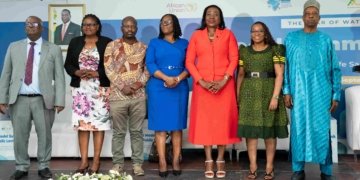
President Netumbo Nandi-Ndaitwah has called on Namibia’s mining industry to move beyond discussions and accelerate the delivery of jobs, investment and value addition through stronger cooperation between government and the private sector.

Speaking at the opening of the 13th Chamber of Mines Mining Expo and Conference in Windhoek, Nandi-Ndaitwah described the event as an important platform for engaging stakeholders, showcasing investment opportunities and strengthening collaboration across the sector.

The three-day conference, held from Aug. 4 to Aug. 6, brought together government officials, industry leaders, investors and exhibitors to discuss the future of Namibia’s mining industry.

Following the opening ceremony, the president toured the exhibition and visited exhibitors’ stands to learn more about developments and opportunities in the sector.

Addressing delegates, Nandi-Ndaitwah said mining remains a cornerstone of Namibia’s economy and will play a central role in the Eighth Administration’s goal of creating 500,000 jobs under the Sixth National Development Plan.

She said the sector had demonstrated resilience despite global economic uncertainty, contributing 14% to Namibia’s gross domestic product in 2025 and generating N$7.8 billion ($482 million) in tax revenue, a 37% increase from the previous year.

The president also pointed to growing investor confidence, reflected in the record 222 exhibitors participating in this year’s expo, representing local, regional and international companies.

Nandi-Ndaitwah said the mining industry had committed, through the Namibia Public-Private Forum, to create more than 18,000 direct jobs and facilitate $2.865 billion in new investments. She urged companies to ensure those commitments translate into tangible outcomes that benefit the broader economy.

She welcomed progress on major uranium developments, including Bannerman Energy’s Etango project and Deep Yellow’s Tumas project, while calling on the industry to intensify efforts in local beneficiation, value addition and sustainable employment creation.

The president also highlighted the importance of occupational health and safety in the mining sector. She called for the swift finalization of the Occupational Health and Safety Bill, the establishment of occupational health centers across the country and improved medical support for retired mine workers.

Nandi-Ndaitwah encouraged mining companies to invest in employee empowerment by equipping long-serving workers with skills, capital and opportunities to diversify into other sectors of the economy.

Reaffirming Namibia’s position as one of the world’s leading uranium producers, the president said the country’s mineral wealth must increasingly drive industrialization and long-term socio-economic development.

She reiterated the government’s commitment to maintaining a stable, transparent and competitive investment environment while strengthening partnerships that deliver lasting benefits for all Namibians.

Economic Backdrop

Namibia, on Africa’s southwest coast, covers 825,229 square kilometers and is the driest country in sub-Saharan Africa. Home to just over 3.1 million people, it is also among the world’s least densely populated nations.

The country is a diverse, multi-ethnic society with at least 11 ethnic groups. Since gaining independence in 1990, Namibia has built strong democratic institutions and expanded access to infrastructure, education and health services.

Those gains helped Namibia attain upper-middle-income status in the late 2000s, although the country was reclassified as a lower-middle-income economy in 2025 following a decline in gross national income per capita.

Despite its progress, Namibia remains one of the world’s most unequal countries. The legacies of colonialism and apartheid continue to shape disparities in income, land ownership and access to economic opportunities. Poverty and unemployment remain high, while climate change poses additional challenges to development.

According to the World Bank, Namibia’s economy remains heavily dependent on mining, which is a major source of exports and government revenue. Services, including finance, transport, wholesale and retail trade, account for an increasing share of gross domestic product, while agriculture and tourism remain important sources of employment, particularly in rural areas.

President Nandi-Ndaitwah, who took office in March 2025 as Namibia’s first female head of state following the November 2024 elections, has prioritized fiscal discipline, service delivery, job creation and economic transformation under the Sixth National Development Plan, launched in July 2025.

Get the inside Story

Stay informed on the stories shaping Africa’s future. Get breaking news, in-depth analysis, opinions and exclusive insights from across the continent delivered to your inbox, free and unfiltered.


Get in touch for more:
Felix Tih
Editorial Director, Bantu Gazette
WhatsApp
LinkedIn
X (Twitter)
Instagram

Related Posts

Kenya Approves First Locally Domiciled Exchange Traded Fund
Business, Trade & Economy

Can Bank Listings Finally Deepen Central Africa’s Thin Capital Markets?

September 15, 2026
$5 Billion Digital Corridor to Link African Markets, Payments
Business, Trade & Economy

$5 Billion Digital Corridor to Link African Markets, Payments

September 15, 2026
Ethiopia Reports More Than $14.4 Million in Exports Under African Free Trade Area
Business, Trade & Economy

Ethiopia Reports More Than $14.4 Million in Exports Under African Free Trade Area

September 3, 2026
South Africa Allocates $1.7 Billion to Road Agency for Network Expansion
Business, Trade & Economy

South Africa Says 3% Growth Can Change Its Jobs Equation. Can It Get There?

September 1, 2026
Rwanda Taps Japanese Yen Market for First Time in Loan Deal
Business, Trade & Economy

Rwanda Taps Japanese Yen Market for First Time in Loan Deal

September 3, 2026
Kenya Approves First Locally Domiciled Exchange Traded Fund
Business, Trade & Economy

Kenya Approves First Locally Domiciled Exchange Traded Fund

August 27, 2026

Most Recent

Nairobi 2029 Puts Africa at the Heart of World Athletics
Development & Impact

Nairobi 2029 Puts Africa at the Heart of World Athletics

by Jane Mukami
September 15, 2026
0

Kenya will host the World Athletics Championships in 2029, bringing the sport’s premier global event to Africa for the first...

Read moreDetails
Cameroonian Scholar Richard Munang Takes Helm of UN University Institute in Africa

Cameroonian Scholar Richard Munang Takes Helm of UN University Institute in Africa

September 15, 2026
Kenya Approves First Locally Domiciled Exchange Traded Fund

Can Bank Listings Finally Deepen Central Africa’s Thin Capital Markets?

September 15, 2026
A Work Should Not Leave Africa Without Its History Traveling With It

A Work Should Not Leave Africa Without Its History Traveling With It

September 14, 2026
How Astronomy, Faith and the Seasons Shape Ethiopia’s 13-Month Calendar

How Astronomy, Faith and the Seasons Shape Ethiopia’s 13-Month Calendar

September 14, 2026
Dakar 2026 Olympic Flame Begins Historic Journey to Africa

Dakar 2026 Olympic Flame Begins Historic Journey to Africa

September 12, 2026
Africa IP Day | One Market, Many Intellectual Property Systems. Can AfCFTA Bridge the Gap?

Africa IP Day | One Market, Many Intellectual Property Systems. Can AfCFTA Bridge the Gap?

September 12, 2026
Nairobi 2029 Puts Africa at the Heart of World Athletics
Development & Impact

Nairobi 2029 Puts Africa at the Heart of World Athletics

by Jane Mukami
Reading Time: 2 mins read
September 15, 2026
0

Kenya will host the World Athletics Championships in 2029, bringing the sport’s premier global event to Africa for the first...

Read moreDetails
Cameroonian Scholar Richard Munang Takes Helm of UN University Institute in Africa
Development & Impact

Cameroonian Scholar Richard Munang Takes Helm of UN University Institute in Africa

by Felix Tih
Reading Time: 4 mins read
September 15, 2026
0

Dr. Munang takes charge of UNU-INRA in Accra, bringing years of experience in climate action, environmental governance and sustainable development.

Read moreDetails
Kenya Approves First Locally Domiciled Exchange Traded Fund
Business, Trade & Economy

Can Bank Listings Finally Deepen Central Africa’s Thin Capital Markets?

by Felix Tih
Reading Time: 3 mins read
September 15, 2026
0

BEAC wants a five-year roadmap to bring more financial institutions to BVMAC, testing whether new listings can add depth, disclosure...

Read moreDetails

Namibia President Presses Mining Industry to Deliver Jobs, Drive Investment

Opening the Chamber of Mines expo in Windhoek, President Netumbo Nandi-Ndaitwah urged mining firms to turn pledges into jobs, investment and value addition to growth

Namibia Deepens Regional Ties Through Trade and Energy

Namibia’s President Netumbo Nandi-Ndaitwah

WINDHOEK

President Netumbo Nandi-Ndaitwah has called on Namibia’s mining industry to move beyond discussions and accelerate the delivery of jobs, investment and value addition through stronger cooperation between government and the private sector.

Speaking at the opening of the 13th Chamber of Mines Mining Expo and Conference in Windhoek, Nandi-Ndaitwah described the event as an important platform for engaging stakeholders, showcasing investment opportunities and strengthening collaboration across the sector.

The three-day conference, held from Aug. 4 to Aug. 6, brought together government officials, industry leaders, investors and exhibitors to discuss the future of Namibia’s mining industry.

Following the opening ceremony, the president toured the exhibition and visited exhibitors’ stands to learn more about developments and opportunities in the sector.

Addressing delegates, Nandi-Ndaitwah said mining remains a cornerstone of Namibia’s economy and will play a central role in the Eighth Administration’s goal of creating 500,000 jobs under the Sixth National Development Plan.

She said the sector had demonstrated resilience despite global economic uncertainty, contributing 14% to Namibia’s gross domestic product in 2025 and generating N$7.8 billion ($482 million) in tax revenue, a 37% increase from the previous year.

The president also pointed to growing investor confidence, reflected in the record 222 exhibitors participating in this year’s expo, representing local, regional and international companies.

Nandi-Ndaitwah said the mining industry had committed, through the Namibia Public-Private Forum, to create more than 18,000 direct jobs and facilitate $2.865 billion in new investments. She urged companies to ensure those commitments translate into tangible outcomes that benefit the broader economy.

She welcomed progress on major uranium developments, including Bannerman Energy’s Etango project and Deep Yellow’s Tumas project, while calling on the industry to intensify efforts in local beneficiation, value addition and sustainable employment creation.

The president also highlighted the importance of occupational health and safety in the mining sector. She called for the swift finalization of the Occupational Health and Safety Bill, the establishment of occupational health centers across the country and improved medical support for retired mine workers.

Nandi-Ndaitwah encouraged mining companies to invest in employee empowerment by equipping long-serving workers with skills, capital and opportunities to diversify into other sectors of the economy.

Reaffirming Namibia’s position as one of the world’s leading uranium producers, the president said the country’s mineral wealth must increasingly drive industrialization and long-term socio-economic development.

She reiterated the government’s commitment to maintaining a stable, transparent and competitive investment environment while strengthening partnerships that deliver lasting benefits for all Namibians.

Economic Backdrop

Namibia, on Africa’s southwest coast, covers 825,229 square kilometers and is the driest country in sub-Saharan Africa. Home to just over 3.1 million people, it is also among the world’s least densely populated nations.

The country is a diverse, multi-ethnic society with at least 11 ethnic groups. Since gaining independence in 1990, Namibia has built strong democratic institutions and expanded access to infrastructure, education and health services.

Those gains helped Namibia attain upper-middle-income status in the late 2000s, although the country was reclassified as a lower-middle-income economy in 2025 following a decline in gross national income per capita.

Despite its progress, Namibia remains one of the world’s most unequal countries. The legacies of colonialism and apartheid continue to shape disparities in income, land ownership and access to economic opportunities. Poverty and unemployment remain high, while climate change poses additional challenges to development.

According to the World Bank, Namibia’s economy remains heavily dependent on mining, which is a major source of exports and government revenue. Services, including finance, transport, wholesale and retail trade, account for an increasing share of gross domestic product, while agriculture and tourism remain important sources of employment, particularly in rural areas.

President Nandi-Ndaitwah, who took office in March 2025 as Namibia’s first female head of state following the November 2024 elections, has prioritized fiscal discipline, service delivery, job creation and economic transformation under the Sixth National Development Plan, launched in July 2025.
Namibia President Presses Mining Industry to Deliver Jobs, Drive Investment

Opening the Chamber of Mines expo in Windhoek, President Netumbo Nandi-Ndaitwah urged mining firms to turn pledges into jobs, investment and value addition to growth

Namibia Deepens Regional Ties Through Trade and Energy

Namibia’s President Netumbo Nandi-Ndaitwah

Bantu Gazetteby Bantu Gazette
August 9, 2026

WINDHOEK

President Netumbo Nandi-Ndaitwah has called on Namibia’s mining industry to move beyond discussions and accelerate the delivery of jobs, investment and value addition through stronger cooperation between government and the private sector.

Speaking at the opening of the 13th Chamber of Mines Mining Expo and Conference in Windhoek, Nandi-Ndaitwah described the event as an important platform for engaging stakeholders, showcasing investment opportunities and strengthening collaboration across the sector.

The three-day conference, held from Aug. 4 to Aug. 6, brought together government officials, industry leaders, investors and exhibitors to discuss the future of Namibia’s mining industry.

Following the opening ceremony, the president toured the exhibition and visited exhibitors’ stands to learn more about developments and opportunities in the sector.

Addressing delegates, Nandi-Ndaitwah said mining remains a cornerstone of Namibia’s economy and will play a central role in the Eighth Administration’s goal of creating 500,000 jobs under the Sixth National Development Plan.

She said the sector had demonstrated resilience despite global economic uncertainty, contributing 14% to Namibia’s gross domestic product in 2025 and generating N$7.8 billion ($482 million) in tax revenue, a 37% increase from the previous year.

The president also pointed to growing investor confidence, reflected in the record 222 exhibitors participating in this year’s expo, representing local, regional and international companies.

Nandi-Ndaitwah said the mining industry had committed, through the Namibia Public-Private Forum, to create more than 18,000 direct jobs and facilitate $2.865 billion in new investments. She urged companies to ensure those commitments translate into tangible outcomes that benefit the broader economy.

She welcomed progress on major uranium developments, including Bannerman Energy’s Etango project and Deep Yellow’s Tumas project, while calling on the industry to intensify efforts in local beneficiation, value addition and sustainable employment creation.

The president also highlighted the importance of occupational health and safety in the mining sector. She called for the swift finalization of the Occupational Health and Safety Bill, the establishment of occupational health centers across the country and improved medical support for retired mine workers.

Nandi-Ndaitwah encouraged mining companies to invest in employee empowerment by equipping long-serving workers with skills, capital and opportunities to diversify into other sectors of the economy.

Reaffirming Namibia’s position as one of the world’s leading uranium producers, the president said the country’s mineral wealth must increasingly drive industrialization and long-term socio-economic development.

She reiterated the government’s commitment to maintaining a stable, transparent and competitive investment environment while strengthening partnerships that deliver lasting benefits for all Namibians.

Economic Backdrop

Namibia, on Africa’s southwest coast, covers 825,229 square kilometers and is the driest country in sub-Saharan Africa. Home to just over 3.1 million people, it is also among the world’s least densely populated nations.

The country is a diverse, multi-ethnic society with at least 11 ethnic groups. Since gaining independence in 1990, Namibia has built strong democratic institutions and expanded access to infrastructure, education and health services.

Those gains helped Namibia attain upper-middle-income status in the late 2000s, although the country was reclassified as a lower-middle-income economy in 2025 following a decline in gross national income per capita.

Despite its progress, Namibia remains one of the world’s most unequal countries. The legacies of colonialism and apartheid continue to shape disparities in income, land ownership and access to economic opportunities. Poverty and unemployment remain high, while climate change poses additional challenges to development.

According to the World Bank, Namibia’s economy remains heavily dependent on mining, which is a major source of exports and government revenue. Services, including finance, transport, wholesale and retail trade, account for an increasing share of gross domestic product, while agriculture and tourism remain important sources of employment, particularly in rural areas.

President Nandi-Ndaitwah, who took office in March 2025 as Namibia’s first female head of state following the November 2024 elections, has prioritized fiscal discipline, service delivery, job creation and economic transformation under the Sixth National Development Plan, launched in July 2025.
Get the inside Story

Stay informed on the stories shaping Africa’s future. Get breaking news, in-depth analysis, opinions and exclusive insights from across the continent delivered to your inbox, free and unfiltered.


Get in touch for more:
Felix Tih
Editorial Director, Bantu Gazette
WhatsApp
LinkedIn
X (Twitter)
Instagram

Related Posts

Kenya Approves First Locally Domiciled Exchange Traded Fund

Can Bank Listings Finally Deepen Central Africa’s Thin Capital Markets?

by Felix Tih
September 15, 2026
0

...

$5 Billion Digital Corridor to Link African Markets, Payments

$5 Billion Digital Corridor to Link African Markets, Payments

by Marina Bisse
September 1, 2026
0

...

Ethiopia Reports More Than $14.4 Million in Exports Under African Free Trade Area

Ethiopia Reports More Than $14.4 Million in Exports Under African Free Trade Area

by Kalkidan Negash
August 31, 2026
0

...

South Africa Allocates $1.7 Billion to Road Agency for Network Expansion

South Africa Says 3% Growth Can Change Its Jobs Equation. Can It Get There?

by Monica Brown
August 27, 2026
0

...

Rwanda Taps Japanese Yen Market for First Time in Loan Deal

Rwanda Taps Japanese Yen Market for First Time in Loan Deal

by Jane Mukami
August 27, 2026
0

...

Kenya Approves First Locally Domiciled Exchange Traded Fund

Kenya Approves First Locally Domiciled Exchange Traded Fund

by Waceke Nganga
August 25, 2026
0

...

Nairobi 2029 Puts Africa at the Heart of World Athletics
Development & Impact

Nairobi 2029 Puts Africa at the Heart of World Athletics

by Jane Mukami
Reading Time: 2 mins read
September 15, 2026
0

Kenya will host the World Athletics Championships in 2029, bringing the sport’s premier global event to Africa for the first...

Read moreDetails
Cameroonian Scholar Richard Munang Takes Helm of UN University Institute in Africa

Cameroonian Scholar Richard Munang Takes Helm of UN University Institute in Africa

by Felix Tih
September 15, 2026
0

Dr. Munang takes charge of UNU-INRA in Accra, bringing years of experience in climate action, environmental governance and sustainable development.

Kenya Approves First Locally Domiciled Exchange Traded Fund

Can Bank Listings Finally Deepen Central Africa’s Thin Capital Markets?

by Felix Tih
September 15, 2026
0

BEAC wants a five-year roadmap to bring more financial institutions to BVMAC, testing whether new listings can add depth, disclosure...

A Work Should Not Leave Africa Without Its History Traveling With It

A Work Should Not Leave Africa Without Its History Traveling With It

by Munira Bonnet
September 12, 2026
0

African artists entering global markets need to document their work, understand gallery relationships and protect the history that travels with...

How Astronomy, Faith and the Seasons Shape Ethiopia’s 13-Month Calendar

How Astronomy, Faith and the Seasons Shape Ethiopia’s 13-Month Calendar

by Kalkidan Negash
September 11, 2026
0

Ethiopia welcomes New Year 2019 through a 13-month calendar shaped by ancient timekeeping, religious tradition and the seasonal rhythms of...

Next Post
Young Africans Welcome Global Powers but Want Investment on Their Terms, Report Finds

Young Africans Welcome Global Powers but Want Investment on Their Terms, Report Finds

Côte d’Ivoire Ambassador Highlights Growing Ties With Türkiye at Independence Day Celebration

Liberia Cabinet Adopts Infrastructure Roadmap, Monrovia Redevelopment Plan

Liberian President Boakai Warns Officials Over Delays in Development Agenda

Somalia’s Omar Artan Becomes 1st non-European to Referee the UEFA Super Cup

Somalia's Omar Artan Becomes 1st non-European to Referee the UEFA Super Cup

Bantu Gazette is a pioneering news platform that champions Africa's development, culture, and heritage. We spotlight the continent's successes, address its challenges, and provide insightful coverage of events that shape its future.

Bantu Gazette is a pioneering news platform that champions Africa's development, culture, and heritage. We spotlight the continent's successes, address its challenges, and provide insightful coverage of events that shape its future.

Our Platforms

  • Bantu Magazine
  • Bantu Brief
  • Black Frame Studio

Our Services

  • Bantu Agency
  • Advertise
  • Partnerships

Our Services

  • Editorial Director
  • Opportunities
  • Contact

Bantu Gazette is a pioneering news platform that champions Africa's development, culture, and heritage. We spotlight the continent's successes, address its challenges, and provide insightful coverage of events that shape its future.

Our Platforms

  • Bantu Magazine
  • Bantu Brief
  • Black Frame Studio

Our Services

  • Bantu Agency
  • Advertise
  • Partnerships

Our Services

  • Editorial Director
  • Opportunities
  • Contact
Bantu Gazette
  • Energy & Trade
  • Finance
  • Health
  • Politics & Economy
  • Technology
  • Environment
  • Feature
  • Opinion
  • Changemakers
  • Tourism & Culture
  • Magazine