

ADDIS ABABA
A new regional health data hub has been launched to give African countries faster access to integrated health information and help governments make more informed decisions on disease outbreaks, health services and the allocation of limited resources.
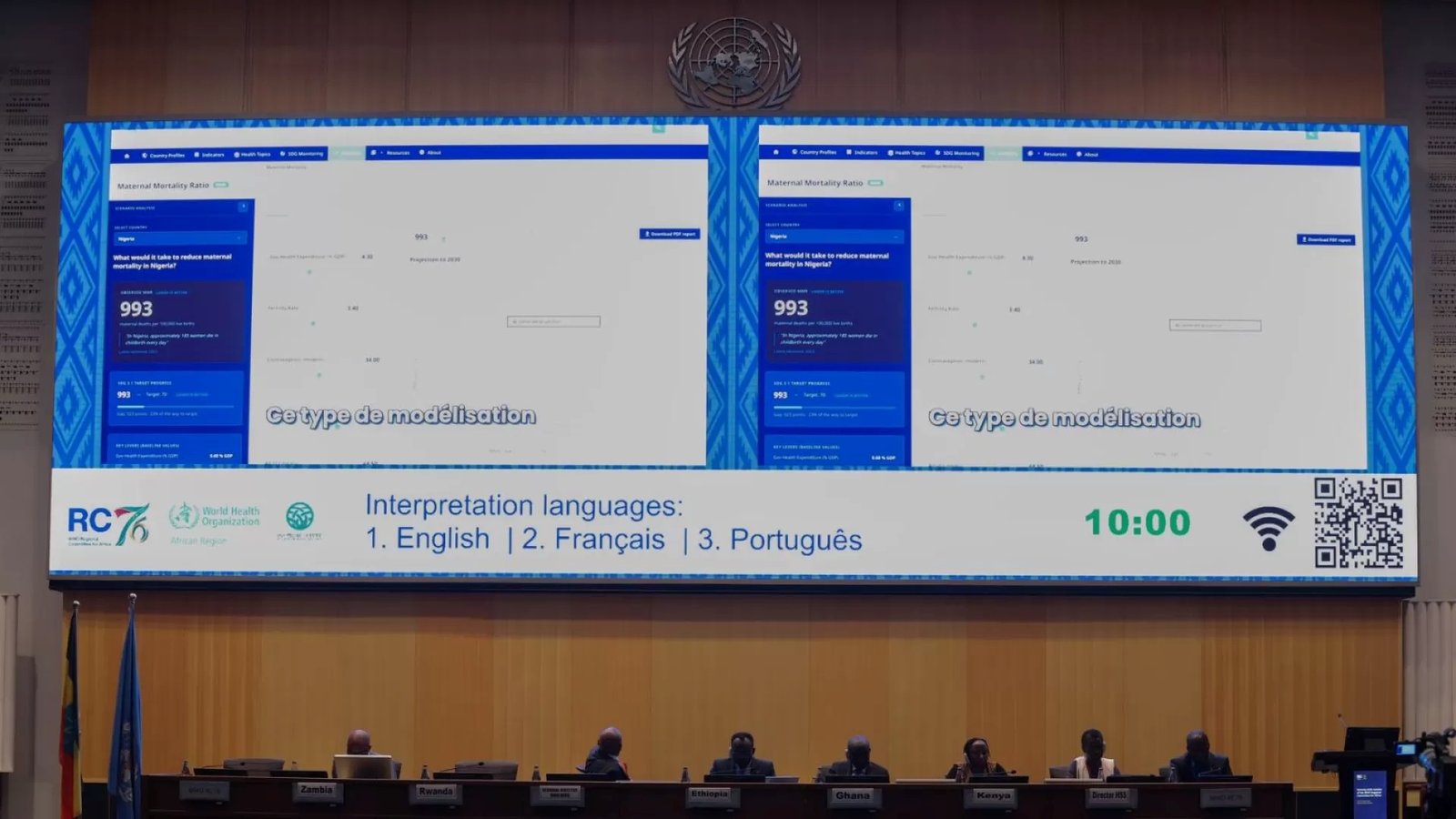
The World Health Organization Regional Office for Africa launched the Regional Health Data Hub on Thursday during the 76th session of the WHO Regional Committee for Africa, being held Aug. 25-28 in Addis Ababa, Ethiopia.
The digital platform brings together health data that are often stored across separate systems and programs, allowing governments and other users to obtain a more complete picture of population health and identify areas requiring greater attention.
The hub will support all 47 member states in the WHO African Region, according to the organization. Governments, public health institutions, researchers and development partners will be able to access harmonized health information, monitor trends and compare progress through a secure web platform. Countries will retain ownership of their data.
Fragmented health information can make it difficult for governments to determine where services and resources are most urgently needed.
Efforts to reduce maternal deaths, for example, can require data on antenatal care, skilled birth attendance, emergency obstetric services, health worker availability and medicine supplies that may be held in different systems.
WHO said integrating those datasets could help decision-makers identify underserved populations and better target resources.
“No health decision in our region should be taken in the dark,” Dr. Mohamed Yakub Janabi, WHO regional director for Africa, said in a statement. “Every policy, every investment and every action to improve people’s health should be guided by reliable evidence.”
The platform integrates information from areas including maternal, newborn, child and adolescent health, noncommunicable and infectious diseases, and health systems. Interactive dashboards, maps and analytical tools will allow users to examine trends and monitor progress toward universal health coverage.
The hub is designed to complement, rather than replace, countries’ existing health information systems. WHO said common standards will help improve interoperability and data quality while supporting secure information sharing.
A regional governance framework is also being developed to promote transparency, accountability and responsible management of health data.
The platform includes advanced analytics and artificial intelligence-enabled tools for forecasting, trend analysis and evidence generation. WHO plans to add datasets, indicators and analytical tools in phases.
The organization said the expanded capabilities are intended to help countries anticipate health challenges, improve resource allocation and build more resilient health systems across the region.