

Gaborone, Botswana
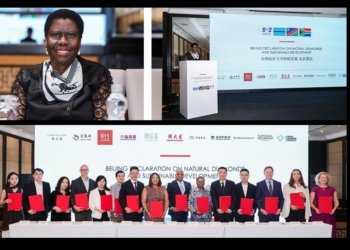
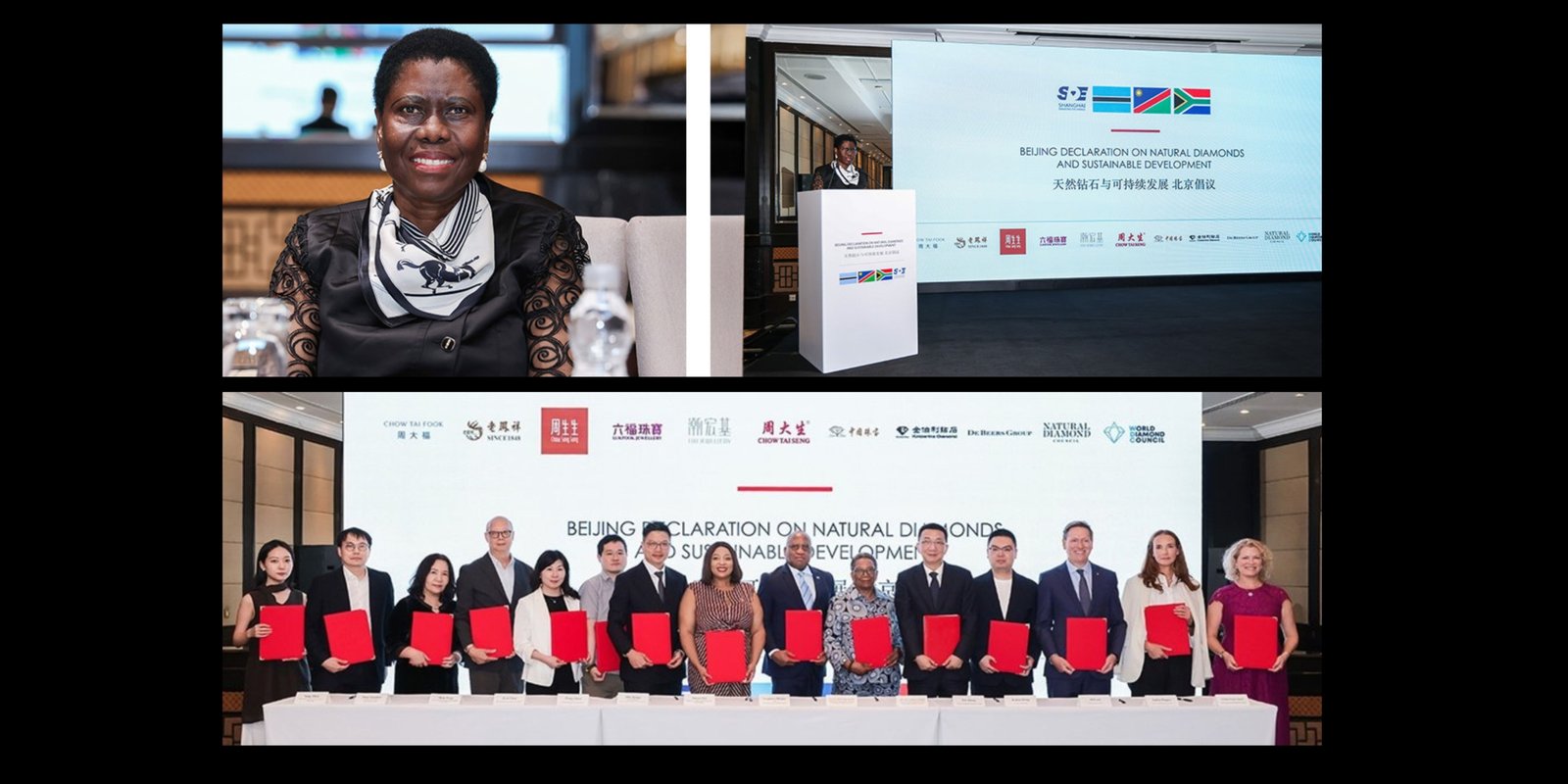
Natural diamond producers and industry leaders signed the Beijing Declaration on Natural Diamonds and Sustainable Development on Sept. 15, setting a framework for closer cooperation between China and African diamond-producing nations as the sector faces weaker demand and rising competition from lab-grown stones.
The declaration aims to promote the economic and social value of natural diamonds, including their role in supporting jobs, government revenue, infrastructure, education, health care and conservation in producing countries.
The agreement comes as African diamond producers try to tell a broader story about the stones they mine,one that goes beyond luxury and romance to national development, local industry and livelihoods.
China is central to that effort as one of the world’s most important consumer markets. Lin Qiang, president of the Shanghai Diamond Exchange, described the declaration as “a meaningful new beginning” for closer cooperation between China and African diamond-producing countries.
The Shanghai Diamond Exchange is expected to serve as “a platform and bridge” linking African producers with Chinese consumers and helping promote the value of natural diamonds in the Chinese market.
De Beers Group CEO Al Cook said the agreement could help connect African diamond-producing countries with Chinese consumers.
He said the company wants every diamond it recovers to bring “real, positive impact” to the people and places where it is found.
Botswana Seeks More Value at Home
Botswana used the Beijing event to highlight the role diamonds have played in its development.
Lekoko S. Kenosi, Botswana’s ambassador to China, said diamonds discovered shortly after independence helped finance education, health care, infrastructure and livelihood opportunities for generations of Batswana.
The country is now seeking to keep more technology, expertise and economic value within its borders through sorting, cutting and polishing. Kenosi said the “human story of origin” should be more visible to consumers who buy diamonds to mark weddings, family milestones and personal celebrations.
South Africa’s ambassador to China, Dipuo Bertha Letsatsi-Duba, said the declaration creates a framework for dialogue and cooperation between African producers and China’s natural diamond industry. She said consumer confidence remains crucial for natural diamonds because of their emotional value.
The declaration also reflects a wider push by Southern African producers to gain more influence over how diamonds are traded and marketed.
The region accounts for about 30% of the world’s rough diamond production, giving it a major stake in the future of the natural diamond market.
That effort was visible days earlier in Angola, where Botswana President Duma Boko met Angolan President João Lourenço on Sept. 8 for talks on diamond trading, energy infrastructure and broader economic cooperation.
Botswana, a longtime partner in De Beers, one of the world’s largest diamond companies, and Angola, a major diamond producer, are both seeking a stronger voice in the natural diamond market.
The talks also touched on strategic assets beyond diamonds. The two countries have discussed Angola potentially taking a stake in De Beers and Botswana acquiring a share in the $6.6 billion Lobito Oil Refinery.
Access to Angola’s energy infrastructure could help Botswana reduce fuel costs and improve supply security after shortages this year forced the landlocked country to rely on alternative routes through Mozambique and Namibia.