
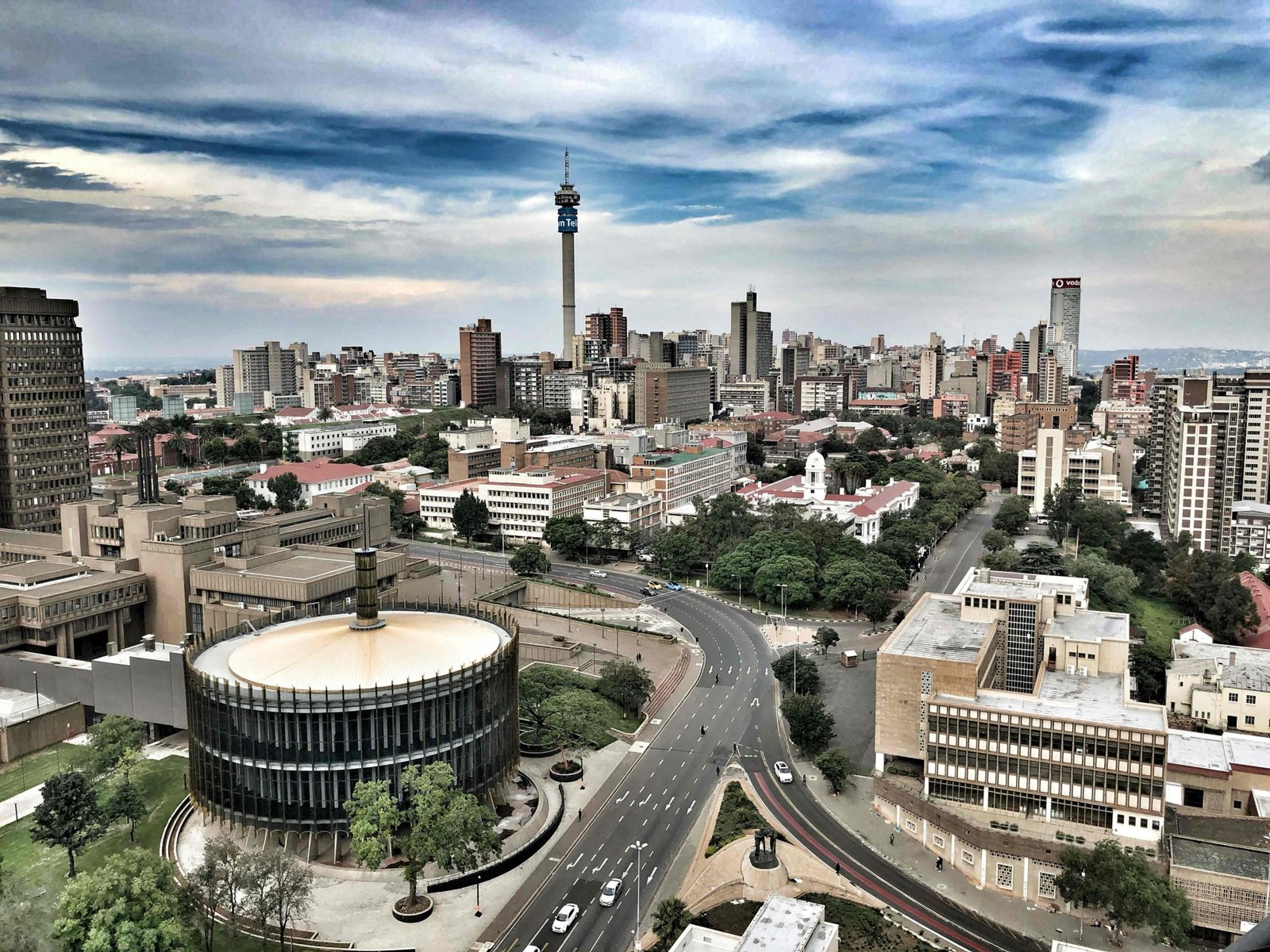
JOHANNESBURG
South Africa has spent years discussing unemployment as a social crisis. It may be time to treat it for what it also is, a growth crisis.
President Cyril Ramaphosa has now put a number on the challenge. South Africa needs to push economic growth above 3% a year, with government and business aiming to contribute to the creation of 1 million additional jobs by 2030.
It is an ambitious threshold for an economy that expanded by just 1.1% in 2025. It is also a useful one because it forces South Africa to confront an uncomfortable reality.
Stabilizing electricity supply, improving ports and restoring investor confidence will mean little to millions of citizens unless those gains eventually produce businesses, investment and jobs.
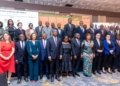
Ramaphosa acknowledged as much when he launched the third phase of the Government-Business Partnership in Johannesburg on Aug. 20.
“Phase Three must be about growth,” he said, describing the first phase as stabilization and the second as reform.
The distinction matters because South Africa has made progress on some of the constraints that helped suppress investment.
The country has gone more than a year without load shedding. Freight volumes are beginning to recover, and private operators are entering the rail system.
South Africa exited the Financial Action Task Force grey list in October 2025, while sovereign credit rating upgrades and a stronger rand have reinforced confidence in the reform program.
But Ramaphosa was careful not to equate improving indicators with economic success.
“Confidence is not an end in itself,” he said. “Confidence must lead to investment. Investment must lead to production. Production must lead to jobs.”
The question is whether removing constraints can translate into an economy growing fast enough to absorb workers, and that remains far from assured.
The International Monetary Fund (IMF) projected earlier this year that South Africa would grow by about 1.4% in 2026 and 1.5% in 2027. Moving beyond 3% would therefore require something substantially stronger than the gradual recovery anticipated in those forecasts.
Why 3% matters
The labor market gives the country little room for patience. Statistics South Africa reported that the official unemployment rate climbed to 33.6% in the second quarter of 2026.
Some 8.5 million people were unemployed, an increase of 345,000 from the previous quarter, while employment fell by 16,000.
The crisis is even more severe among younger South Africans. Youth unemployment among people ages 15 to 34 reached 47.4% in the second quarter, with about 5 million young people unemployed.
Against numbers of that scale, 3% growth begins to look less like an ambitious destination and more like a minimum requirement.
The Government-Business Partnership estimates that roughly 300,000 net new job seekers enter the labor force each year.
Its argument is that below 3% growth, job creation struggles to absorb those entrants, while sustained growth above that level could begin shifting the equation.
Ramaphosa himself described 3% not as an endpoint but as a starting point.
“Growth of 3 per cent cannot be the summit of our ambition,” he said. “It is a necessary threshold from which we must advance towards higher, sustained and more inclusive growth.”
That distinction is important because growth alone cannot carry the entire burden. An economy can expand without creating employment at the scale South Africa requires.
Ramaphosa said the composition of growth matters as much as its rate, calling for labor-intensive expansion that supports small and medium enterprises and reaches rural communities, townships and smaller towns.
That helps explain the decision to expand the partnership into tourism, agriculture and agro-processing, and mining while continuing reforms in electricity, logistics and other areas.
Tourism can generate employment across accommodation, transport, food services, retail and the creative economy. Agriculture and agro-processing can connect rural employment with exports and domestic value chains.
Mining offers another route through rising global demand for critical minerals, provided investment extends into exploration, beneficiation and supporting industries.
Infrastructure and the reforms underpinning it remain critical. Reliable electricity, functioning railways and ports, better municipal services and efficient regulation are not merely technical achievements.
They determine whether businesses can invest and expand at a cost that makes South Africa competitive.
The harder test is execution
Whether these opportunities become measurable economic activity will depend on execution.
South Africa has produced ambitious economic plans before, but the challenge has frequently emerged between policy and implementation, where regulatory delays, infrastructure weaknesses, municipal failures, limited state capacity and investment uncertainty slow progress.
Phase Three appears designed with that history in mind. Ramaphosa called for “clear objectives, measurable targets, firm timelines and accountable leaders” across every workstream, with progress monitored regularly and reported transparently.
That emphasis may ultimately matter as much as the headline growth target. If implementation falls behind, Ramaphosa said, government and business must intervene rapidly.
Regulations that unnecessarily hold back investment should be reviewed, institutional capacity strengthened and corruption confronted.
Government will need to demonstrate that reforms can move faster. Business, after demanding policy certainty and functioning infrastructure, will face its own test.
“As confidence improves, South African businesses must invest,” Ramaphosa said. “They must expand production, open new markets, develop local suppliers and create jobs.”
That is a significant challenge to the private sector. Improved sentiment, a stronger currency and better market indicators mean little to the unemployment figures unless businesses respond with capital expenditure, production and hiring.
There is also a risk in treating 3% as a finish line. South Africa cannot declare success simply because GDP crosses a numerical threshold.
Capital-intensive investment may increase output while producing relatively few jobs. Growth concentrated in established companies or particular regions could improve national statistics while leaving much of the population outside the recovery.
The real benchmark should therefore be whether faster growth expands participation in the economy.
That means more young people entering their first jobs, more small businesses accessing markets and finance, more productive investment reaching townships and rural areas, and more South African firms moving into higher-value production.
Ramaphosa captured the stakes when he said that for millions of unemployed South Africans, “economic recovery remains an abstract idea.” For a young person who has never held a job, he said, “progress must mean an opportunity to work.”
Three percent growth will not solve South Africa’s unemployment crisis, but sustained growth above that level could begin changing the arithmetic of a labor market in which new job seekers have consistently arrived faster than the economy can absorb them.
South Africa has spent the past several years trying to stabilize the foundations of its economy, and the next phase will be harder.
It must prove that reform can produce growth, that growth can produce employment and that employment can reach people who have waited years to participate in the economy.
Ramaphosa framed the challenge in similarly concrete terms. “We have shown that we can stabilise. We have shown that we can reform. We must now show that we can grow.”
The scale of the challenge
The scale of what South Africa is attempting becomes clearer against the country’s broader economic position.
South Africa is Africa’s second-largest economy and has one of the continent’s most diversified production bases, spanning mining, agriculture, manufacturing and services.
It also has a deep financial sector, significant tourism potential and an important role as a regional transport and logistics hub. Yet those strengths coexist with persistent structural weaknesses.
The World Bank describes South Africa as a dual economy characterized by low growth, high inequality and insufficient job creation.
Growth picked up modestly in 2025 and is expected to strengthen further in 2026, but the World Bank says it remains too weak to materially improve employment and poverty outcomes. Income per capita remains below 2007 levels, while close to 60% of South Africans are estimated to live below the upper-middle-income poverty line.
Unemployment averaged 32.4% in 2025, affecting more than 8 million people, even as inflation eased to 3.2% from 4.4% a year earlier.
Those figures put the 3% target into perspective. South Africa is not simply trying to accelerate GDP growth. It is trying to reverse years in which economic expansion has been too weak to generate enough jobs, lift incomes and broaden participation in one of Africa’s largest and most diversified economies.
Three percent growth will not solve South Africa’s unemployment crisis, but sustained growth above that level could begin changing the arithmetic of a labor market in which new job seekers have consistently arrived faster than the economy can absorb them.
South Africa has spent the past several years trying to stabilize the foundations of its economy. The next test is whether reform can produce growth, whether growth can produce employment and whether employment can reach people who have waited years to participate in the economy.
“We have shown that we can stabilise. We have shown that we can reform. We must now show that we can grow,” Ramaphosa said.