

Bantu Gazette

Bantu Gazette
  • Policy & Governance
  • Development & Impact
  • Business, Trade & Economy
  • Energy
  • Changemakers
  • Culture & Identity
  • Perspectives
  • Magazine
Menu
  • Black Frame Studio
  • Magazine

What Africa’s Leading Women Would Tell Their Younger Selves

Seventeen African women leaders reflect on self-doubt, failure, identity and power, sharing lessons shaped by careers across business, technology, sports and the arts

What Africa’s Leading Women Would Tell Their Younger Selves
Felix Tihby Felix Tih
October 16, 2026
Reading Time: 5 mins read

What Africa’s Leading Women Would Tell Their Younger Selves

Seventeen African women leaders reflect on self-doubt, failure, identity and power, sharing lessons shaped by careers across business, technology, sports and the arts

What Africa’s Leading Women Would Tell Their Younger Selves
Felix Tihby Felix Tih
October 16, 2026
Reading Time: 5 mins read

By the time Aminata Kane found herself waiting to meet Sierra Leone’s prime minister, her career had already placed her in positions of considerable responsibility.

At 33, she was a managing director, sitting in the antechamber of the prime minister’s office, and still found herself wondering what she was doing there.

Kane, now senior vice president and group country manager for Visa in West and Central Africa, looks back on that moment in A Letter to My Younger Self, a new book that brings together personal reflections from 17 African women.

Her experience reflects a theme running through the collection, as professional achievement can outpace the confidence to recognize one’s own authority.

Kane tells her younger self that she already belongs in the spaces she has earned, including moments when the rules appear invisible and her own sense of legitimacy feels uncertain. She also addresses the pressure to work harder to prove that she deserves her position.
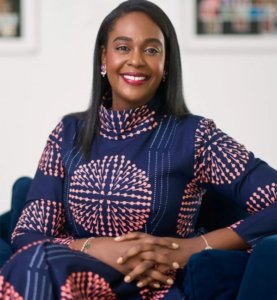
Aminata Kane

The book, launched in Dakar on Oct. 10, was initiated by Aïda Diouf, founder of the nonprofit ALTMYS and a 2026 World Economic Forum Young Global Leader.

Its contributors represent 12 African nationalities and work across finance, technology, sports, literature, fashion, journalism, civil society and the arts.

Each woman writes to the girl she once was, revisiting the experiences that shaped her understanding of ambition, leadership, identity, failure and success.

The format opens a window into parts of professional life that rarely appear in executive biographies.

The women write about questions of legitimacy, comparison with peers, access to professional networks, expectations surrounding motherhood, the pressure to conform to established models of leadership and the challenge of maintaining a sense of self as careers evolve.

The book organizes those experiences around 11 themes, including money, power and freedom, motherhood and choice, mental health and silence, failure and resilience, identity and belonging, leadership and visibility, self-worth, and networks and access.

Leadership begins long before the title

Jocelyne Muhutu-Remy, managing director of Spotify for Sub-Saharan Africa, once associated leadership with forceful personalities who commanded people and issued orders. Experience expanded her understanding of how authority can be exercised.

“Leadership isn’t one thing,” she writes. “Gentle ways and the love of service can sit alongside clarity and resolve.”

Her reflection speaks to a broader question running through the book: women entering positions of authority often encounter established ideas about how a leader should speak, behave and command attention.

Muhutu-Remy’s experience offers a wider definition, one that accommodates different personalities while retaining clarity and resolve.

Angela Wamola has encountered another dimension of leadership through her career in technology.

The GSMA head of Africa describes “broken ladders” with missing rungs for women entering the sector. Her letter encourages her younger self to pursue opportunities through uncertainty, invest in her growth and build relationships with mentors and coaches who can help turn ambition into practical steps.

“You are not a support act,” she writes. “You are a leader-in-waiting.”

Ghanaian fashion designer Aisha Ayensu connects leadership with identity.

The founder and creative director of Christie Brown urges her younger self to pay closer attention to African history and resist narratives that reduce the continent to a story of scarcity. She points to the empires of Mali, Songhai and Kush and to the cultural inheritance she would eventually draw upon as a designer.

“Belong first to yourself. Then to your continent. Then to the world,” Ayensu writes.

Ons Jabeur’s reflection reaches back to a different kind of uncertainty.

The Tunisian tennis player, who became the first Arab and African woman to reach a Grand Slam final, writes that she never knew with certainty that tennis was her destiny. A strong attachment to the sport carried her through limited resources, demanding training and the doubts of others.

Success eventually introduced another lesson. Rankings, media attention and expectations placed increasing pressure on the game she had loved since childhood.

Jabeur’s letter returns to the joy that first drew her to tennis and the confidence of the girl who pursued it before she knew where it would lead.

The courage to speak about doubt

Angélique Kidjo places those individual experiences within a wider conversation about women, ambition and doubt.

The Grammy Award-winning singer wrote the book’s foreword and describes doubt as an inherent part of creating a career, an ambition and a life.

“I want to honour the courage of every contributor to this book,” Kidjo writes. “The courage to tell your story truthfully, to look back at yourself from the most fragile and truthful place of all, the woman you once were, the one who doubted.”

Kidjo sees power in the range of experiences represented in the letters. She writes that sincere and authentic voices can help dismantle narratives that have historically confined African women to externally constructed images.

That plurality is central to the collection. The contributors include corporate executives alongside artists, athletes and activists. Their careers span a Michelin-starred kitchen, Grand Slam tennis courts, telecommunications, finance, literature, contemporary dance, architecture, photography and journalism.

Their experiences present leadership as something shaped through choices, setbacks, relationships and changing ideas about success.

Learning ambition before learning doubt

Diouf traces the origins of the project to a conversation with her first mentee, a young woman who wanted to become a surgeon and also hoped to have children.

Aïda Diouf, Executive Director for Africa at Camusat Group and a World Economic Forum Young Global Leader 2026

The young woman believed those futures might be incompatible and was already considering giving up medicine.

The conversation stayed with Diouf because the choice had emerged before either future had taken shape. Her mentee had begun adjusting her ambition around an anticipated constraint.

Diouf remembered her own outlook at 17. She felt certain that wanting something could make it possible and assumed the barriers she encountered would exist somewhere ahead of her.

Her family, particularly her mother, encouraged her ambitions without asking her to scale them back because she was a girl.

Experience eventually brought uncertainty and difficult choices. The confidence established earlier gave her a foundation from which to confront them.

“Doubt should be something life teaches us, not something we begin with,” Diouf writes.

That idea gives the project its wider purpose.

Diouf believes representation shapes the range of futures young women can imagine for themselves. African women now occupy leadership positions across a growing range of sectors, while many of the journeys that brought them there remain underrepresented, according to material accompanying the project. Greater visibility can help transform an abstract possibility into a path a young woman can begin to imagine pursuing.

The project plans to carry those stories beyond the commercial publication of the book.

ALTMYS aims to distribute 10,000 copies free across more than 10 African countries through schools, universities, libraries, associations and nongovernmental organizations. Senegal, Morocco and Côte d’Ivoire will lead the first phase of the rollout. Proceeds from bookstore sales will be reinvested in the association to support distribution and community initiatives.

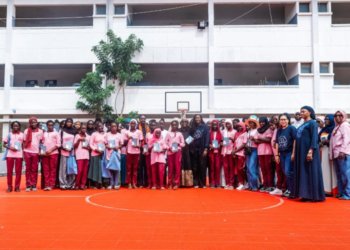
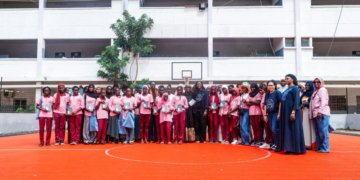
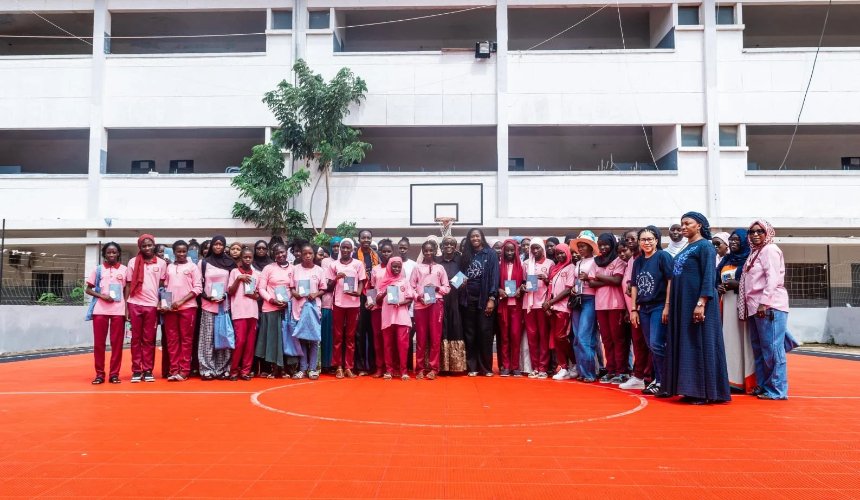
The first distribution brought the project to 50 students at John F. Kennedy High School, an all-girls school in Dakar with a long connection to women’s visibility in Senegalese public life.

The school’s majorettes have participated in Senegal’s Independence Day parade since 1975. The tradition grew from an initiative involving master drummer Doudou Ndiaye Rose and choreographer Germaine Acogny, who is among the 17 contributors to A Letter to My Younger Self.

The setting connects generations of women separated by different professions, circumstances and opportunities.

Across 12 nationalities, the 17 contributors reflect the range of experiences the project seeks to bring together. They are Aisha Ayensu of Ghana, Aminata Kane of Senegal, Angela Wamola of Kenya, Claude Borna of Benin, Coura Carine Sène of Senegal, Djaïli Amadou Amal of Cameroon, Georgiana Viou of Benin, Germaine Acogny of Senegal, Hafsat Abiola of Nigeria, Jocelyne Muhutu-Remy of Rwanda, Julienne Lusenge of the Democratic Republic of the Congo, Marie-Roger Biloa of Cameroon, Miriem Bensalah Chaqroun of Morocco, Ons Jabeur of Tunisia, Paula Nascimento of Angola, Sefora Kodjo of Côte d’Ivoire and Thandiwe Muriu of Kenya.

The contributors now occupy positions that many of them once had to imagine without knowing exactly how they would get there.

Their letters give the next generation something more tangible to work with. They place uncertainty inside the story of achievement and show how authority develops through experience, self-knowledge, relationships and the willingness to keep moving while the destination remains unfinished.
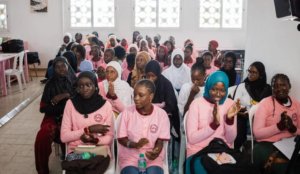

Book launch event in Senegal

Get the inside Story

Stay informed on the stories shaping Africa’s future. Get breaking news, in-depth analysis, opinions and exclusive insights from across the continent delivered to your inbox, free and unfiltered.


Get in touch for more:
Felix Tih
Editorial Director, Bantu Gazette
WhatsApp
LinkedIn
X (Twitter)
Instagram

Related Posts

F1 Returns to Africa as Rwanda Lands 10-Year Grand Prix Deal
Development & Impact

F1 Returns to Africa as Rwanda Lands 10-Year Grand Prix Deal

October 15, 2026
South African Jurist Navi Pillay Wins 2026 Nobel Peace Prize
Development & Impact

South African Jurist Navi Pillay Wins 2026 Nobel Peace Prize

October 11, 2026
Morocco Bets on Sports Hosting to Drive Growth and Gender Equity
Development & Impact

Morocco Bets on Sports Hosting to Drive Growth and Gender Equity

October 11, 2026
Green Mark Puts Botswana Businesses on Path to Sustainability
Development & Impact

Green Mark Puts Botswana Businesses on Path to Sustainability

October 11, 2026
Côte d’Ivoire Launches $7.7 Million Youth Fund to Back Community Projects
Development & Impact

Côte d’Ivoire Launches $7.7 Million Youth Fund to Back Community Projects

October 7, 2026
South Africa’s Billion-Tree Campaign Targets Jobs, Food Security, Greener Communities
Development & Impact

South Africa’s Billion-Tree Campaign Targets Jobs, Food Security, Greener Communities

October 8, 2026

Most Recent

What Africa’s Leading Women Would Tell Their Younger Selves
Development & Impact

What Africa’s Leading Women Would Tell Their Younger Selves

by Felix Tih
October 16, 2026
0

Seventeen African women leaders reflect on self-doubt, failure, identity and power, sharing lessons shaped by careers across business, technology, sports...

Read moreDetails
Southern Africa Bloc Seeks Private Capital to Tap 380 Million-Consumer Market

Southern Africa Bloc Seeks Private Capital to Tap 380 Million-Consumer Market

October 15, 2026
Ethiopia Reports More Than $14.4 Million in Exports Under African Free Trade Area

Gold, Coffee Surge Drives Ethiopia Export Revenue to $2.3 Billion as Refinery Opens

October 16, 2026
Natural Diamond Producers Sign Beijing Declaration to Boost Industry Ties With China

Diamonds Power Botswana’s 8.7% Rebound as Pressure Builds for Broader Growth

October 16, 2026
F1 Returns to Africa as Rwanda Lands 10-Year Grand Prix Deal

F1 Returns to Africa as Rwanda Lands 10-Year Grand Prix Deal

October 15, 2026
Who Gets to Define African Art? Moroccan Cubism and the Right to Self-Representation

Who Gets to Define African Art? Moroccan Cubism and the Right to Self-Representation

October 13, 2026
South African Jurist Navi Pillay Wins 2026 Nobel Peace Prize

South African Jurist Navi Pillay Wins 2026 Nobel Peace Prize

October 11, 2026
What Africa’s Leading Women Would Tell Their Younger Selves
Development & Impact

What Africa’s Leading Women Would Tell Their Younger Selves

by Felix Tih
Reading Time: 5 mins read
October 16, 2026
0

Seventeen African women leaders reflect on self-doubt, failure, identity and power, sharing lessons shaped by careers across business, technology, sports...

Read moreDetails
Southern Africa Bloc Seeks Private Capital to Tap 380 Million-Consumer Market
Business, Trade & Economy

Southern Africa Bloc Seeks Private Capital to Tap 380 Million-Consumer Market

by Sethunya Marang Motoutwane
Reading Time: 2 mins read
October 15, 2026
0

The Southern African Development Community is pushing for more private investment as constrained public finances increase the need for infrastructure...

Read moreDetails
Ethiopia Reports More Than $14.4 Million in Exports Under African Free Trade Area
Business, Trade & Economy

Gold, Coffee Surge Drives Ethiopia Export Revenue to $2.3 Billion as Refinery Opens

by Kalkidan Negash
Reading Time: 3 mins read
October 16, 2026
0

Gold and coffee powered a 176% jump in two-month export receipts, while weak factory shipments underscored Ethiopia’s reliance on commodities...

Read moreDetails

What Africa’s Leading Women Would Tell Their Younger Selves

Seventeen African women leaders reflect on self-doubt, failure, identity and power, sharing lessons shaped by careers across business, technology, sports and the arts

What Africa’s Leading Women Would Tell Their Younger Selves

By the time Aminata Kane found herself waiting to meet Sierra Leone’s prime minister, her career had already placed her in positions of considerable responsibility.

At 33, she was a managing director, sitting in the antechamber of the prime minister’s office, and still found herself wondering what she was doing there.

Kane, now senior vice president and group country manager for Visa in West and Central Africa, looks back on that moment in A Letter to My Younger Self, a new book that brings together personal reflections from 17 African women.

Her experience reflects a theme running through the collection, as professional achievement can outpace the confidence to recognize one’s own authority.

Kane tells her younger self that she already belongs in the spaces she has earned, including moments when the rules appear invisible and her own sense of legitimacy feels uncertain. She also addresses the pressure to work harder to prove that she deserves her position.

Aminata Kane

The book, launched in Dakar on Oct. 10, was initiated by Aïda Diouf, founder of the nonprofit ALTMYS and a 2026 World Economic Forum Young Global Leader.

Its contributors represent 12 African nationalities and work across finance, technology, sports, literature, fashion, journalism, civil society and the arts.

Each woman writes to the girl she once was, revisiting the experiences that shaped her understanding of ambition, leadership, identity, failure and success.

The format opens a window into parts of professional life that rarely appear in executive biographies.

The women write about questions of legitimacy, comparison with peers, access to professional networks, expectations surrounding motherhood, the pressure to conform to established models of leadership and the challenge of maintaining a sense of self as careers evolve.

The book organizes those experiences around 11 themes, including money, power and freedom, motherhood and choice, mental health and silence, failure and resilience, identity and belonging, leadership and visibility, self-worth, and networks and access.

Leadership begins long before the title

Jocelyne Muhutu-Remy, managing director of Spotify for Sub-Saharan Africa, once associated leadership with forceful personalities who commanded people and issued orders. Experience expanded her understanding of how authority can be exercised.

“Leadership isn’t one thing,” she writes. “Gentle ways and the love of service can sit alongside clarity and resolve.”

Her reflection speaks to a broader question running through the book: women entering positions of authority often encounter established ideas about how a leader should speak, behave and command attention.

Muhutu-Remy’s experience offers a wider definition, one that accommodates different personalities while retaining clarity and resolve.

Angela Wamola has encountered another dimension of leadership through her career in technology.

The GSMA head of Africa describes “broken ladders” with missing rungs for women entering the sector. Her letter encourages her younger self to pursue opportunities through uncertainty, invest in her growth and build relationships with mentors and coaches who can help turn ambition into practical steps.

“You are not a support act,” she writes. “You are a leader-in-waiting.”

Ghanaian fashion designer Aisha Ayensu connects leadership with identity.

The founder and creative director of Christie Brown urges her younger self to pay closer attention to African history and resist narratives that reduce the continent to a story of scarcity. She points to the empires of Mali, Songhai and Kush and to the cultural inheritance she would eventually draw upon as a designer.

“Belong first to yourself. Then to your continent. Then to the world,” Ayensu writes.

Ons Jabeur’s reflection reaches back to a different kind of uncertainty.

The Tunisian tennis player, who became the first Arab and African woman to reach a Grand Slam final, writes that she never knew with certainty that tennis was her destiny. A strong attachment to the sport carried her through limited resources, demanding training and the doubts of others.

Success eventually introduced another lesson. Rankings, media attention and expectations placed increasing pressure on the game she had loved since childhood.

Jabeur’s letter returns to the joy that first drew her to tennis and the confidence of the girl who pursued it before she knew where it would lead.

The courage to speak about doubt

Angélique Kidjo places those individual experiences within a wider conversation about women, ambition and doubt.

The Grammy Award-winning singer wrote the book’s foreword and describes doubt as an inherent part of creating a career, an ambition and a life.

“I want to honour the courage of every contributor to this book,” Kidjo writes. “The courage to tell your story truthfully, to look back at yourself from the most fragile and truthful place of all, the woman you once were, the one who doubted.”

Kidjo sees power in the range of experiences represented in the letters. She writes that sincere and authentic voices can help dismantle narratives that have historically confined African women to externally constructed images.

That plurality is central to the collection. The contributors include corporate executives alongside artists, athletes and activists. Their careers span a Michelin-starred kitchen, Grand Slam tennis courts, telecommunications, finance, literature, contemporary dance, architecture, photography and journalism.

Their experiences present leadership as something shaped through choices, setbacks, relationships and changing ideas about success.

Learning ambition before learning doubt

Diouf traces the origins of the project to a conversation with her first mentee, a young woman who wanted to become a surgeon and also hoped to have children.

Aïda Diouf, Executive Director for Africa at Camusat Group and a World Economic Forum Young Global Leader 2026

The young woman believed those futures might be incompatible and was already considering giving up medicine.

The conversation stayed with Diouf because the choice had emerged before either future had taken shape. Her mentee had begun adjusting her ambition around an anticipated constraint.

Diouf remembered her own outlook at 17. She felt certain that wanting something could make it possible and assumed the barriers she encountered would exist somewhere ahead of her.

Her family, particularly her mother, encouraged her ambitions without asking her to scale them back because she was a girl.

Experience eventually brought uncertainty and difficult choices. The confidence established earlier gave her a foundation from which to confront them.

“Doubt should be something life teaches us, not something we begin with,” Diouf writes.

That idea gives the project its wider purpose.

Diouf believes representation shapes the range of futures young women can imagine for themselves. African women now occupy leadership positions across a growing range of sectors, while many of the journeys that brought them there remain underrepresented, according to material accompanying the project. Greater visibility can help transform an abstract possibility into a path a young woman can begin to imagine pursuing.

The project plans to carry those stories beyond the commercial publication of the book.

ALTMYS aims to distribute 10,000 copies free across more than 10 African countries through schools, universities, libraries, associations and nongovernmental organizations. Senegal, Morocco and Côte d’Ivoire will lead the first phase of the rollout. Proceeds from bookstore sales will be reinvested in the association to support distribution and community initiatives.

The first distribution brought the project to 50 students at John F. Kennedy High School, an all-girls school in Dakar with a long connection to women’s visibility in Senegalese public life.

The school’s majorettes have participated in Senegal’s Independence Day parade since 1975. The tradition grew from an initiative involving master drummer Doudou Ndiaye Rose and choreographer Germaine Acogny, who is among the 17 contributors to A Letter to My Younger Self.

The setting connects generations of women separated by different professions, circumstances and opportunities.

Across 12 nationalities, the 17 contributors reflect the range of experiences the project seeks to bring together. They are Aisha Ayensu of Ghana, Aminata Kane of Senegal, Angela Wamola of Kenya, Claude Borna of Benin, Coura Carine Sène of Senegal, Djaïli Amadou Amal of Cameroon, Georgiana Viou of Benin, Germaine Acogny of Senegal, Hafsat Abiola of Nigeria, Jocelyne Muhutu-Remy of Rwanda, Julienne Lusenge of the Democratic Republic of the Congo, Marie-Roger Biloa of Cameroon, Miriem Bensalah Chaqroun of Morocco, Ons Jabeur of Tunisia, Paula Nascimento of Angola, Sefora Kodjo of Côte d’Ivoire and Thandiwe Muriu of Kenya.

The contributors now occupy positions that many of them once had to imagine without knowing exactly how they would get there.

Their letters give the next generation something more tangible to work with. They place uncertainty inside the story of achievement and show how authority develops through experience, self-knowledge, relationships and the willingness to keep moving while the destination remains unfinished.
Book launch event in Senegal

What Africa’s Leading Women Would Tell Their Younger Selves

Seventeen African women leaders reflect on self-doubt, failure, identity and power, sharing lessons shaped by careers across business, technology, sports and the arts

What Africa’s Leading Women Would Tell Their Younger Selves
Felix Tihby Felix Tih
October 16, 2026

By the time Aminata Kane found herself waiting to meet Sierra Leone’s prime minister, her career had already placed her in positions of considerable responsibility.

At 33, she was a managing director, sitting in the antechamber of the prime minister’s office, and still found herself wondering what she was doing there.

Kane, now senior vice president and group country manager for Visa in West and Central Africa, looks back on that moment in A Letter to My Younger Self, a new book that brings together personal reflections from 17 African women.

Her experience reflects a theme running through the collection, as professional achievement can outpace the confidence to recognize one’s own authority.

Kane tells her younger self that she already belongs in the spaces she has earned, including moments when the rules appear invisible and her own sense of legitimacy feels uncertain. She also addresses the pressure to work harder to prove that she deserves her position.

Aminata Kane

The book, launched in Dakar on Oct. 10, was initiated by Aïda Diouf, founder of the nonprofit ALTMYS and a 2026 World Economic Forum Young Global Leader.

Its contributors represent 12 African nationalities and work across finance, technology, sports, literature, fashion, journalism, civil society and the arts.

Each woman writes to the girl she once was, revisiting the experiences that shaped her understanding of ambition, leadership, identity, failure and success.

The format opens a window into parts of professional life that rarely appear in executive biographies.

The women write about questions of legitimacy, comparison with peers, access to professional networks, expectations surrounding motherhood, the pressure to conform to established models of leadership and the challenge of maintaining a sense of self as careers evolve.

The book organizes those experiences around 11 themes, including money, power and freedom, motherhood and choice, mental health and silence, failure and resilience, identity and belonging, leadership and visibility, self-worth, and networks and access.

Leadership begins long before the title

Jocelyne Muhutu-Remy, managing director of Spotify for Sub-Saharan Africa, once associated leadership with forceful personalities who commanded people and issued orders. Experience expanded her understanding of how authority can be exercised.

“Leadership isn’t one thing,” she writes. “Gentle ways and the love of service can sit alongside clarity and resolve.”

Her reflection speaks to a broader question running through the book: women entering positions of authority often encounter established ideas about how a leader should speak, behave and command attention.

Muhutu-Remy’s experience offers a wider definition, one that accommodates different personalities while retaining clarity and resolve.

Angela Wamola has encountered another dimension of leadership through her career in technology.

The GSMA head of Africa describes “broken ladders” with missing rungs for women entering the sector. Her letter encourages her younger self to pursue opportunities through uncertainty, invest in her growth and build relationships with mentors and coaches who can help turn ambition into practical steps.

“You are not a support act,” she writes. “You are a leader-in-waiting.”

Ghanaian fashion designer Aisha Ayensu connects leadership with identity.

The founder and creative director of Christie Brown urges her younger self to pay closer attention to African history and resist narratives that reduce the continent to a story of scarcity. She points to the empires of Mali, Songhai and Kush and to the cultural inheritance she would eventually draw upon as a designer.

“Belong first to yourself. Then to your continent. Then to the world,” Ayensu writes.

Ons Jabeur’s reflection reaches back to a different kind of uncertainty.

The Tunisian tennis player, who became the first Arab and African woman to reach a Grand Slam final, writes that she never knew with certainty that tennis was her destiny. A strong attachment to the sport carried her through limited resources, demanding training and the doubts of others.

Success eventually introduced another lesson. Rankings, media attention and expectations placed increasing pressure on the game she had loved since childhood.

Jabeur’s letter returns to the joy that first drew her to tennis and the confidence of the girl who pursued it before she knew where it would lead.

The courage to speak about doubt

Angélique Kidjo places those individual experiences within a wider conversation about women, ambition and doubt.

The Grammy Award-winning singer wrote the book’s foreword and describes doubt as an inherent part of creating a career, an ambition and a life.

“I want to honour the courage of every contributor to this book,” Kidjo writes. “The courage to tell your story truthfully, to look back at yourself from the most fragile and truthful place of all, the woman you once were, the one who doubted.”

Kidjo sees power in the range of experiences represented in the letters. She writes that sincere and authentic voices can help dismantle narratives that have historically confined African women to externally constructed images.

That plurality is central to the collection. The contributors include corporate executives alongside artists, athletes and activists. Their careers span a Michelin-starred kitchen, Grand Slam tennis courts, telecommunications, finance, literature, contemporary dance, architecture, photography and journalism.

Their experiences present leadership as something shaped through choices, setbacks, relationships and changing ideas about success.

Learning ambition before learning doubt

Diouf traces the origins of the project to a conversation with her first mentee, a young woman who wanted to become a surgeon and also hoped to have children.

Aïda Diouf, Executive Director for Africa at Camusat Group and a World Economic Forum Young Global Leader 2026

The young woman believed those futures might be incompatible and was already considering giving up medicine.

The conversation stayed with Diouf because the choice had emerged before either future had taken shape. Her mentee had begun adjusting her ambition around an anticipated constraint.

Diouf remembered her own outlook at 17. She felt certain that wanting something could make it possible and assumed the barriers she encountered would exist somewhere ahead of her.

Her family, particularly her mother, encouraged her ambitions without asking her to scale them back because she was a girl.

Experience eventually brought uncertainty and difficult choices. The confidence established earlier gave her a foundation from which to confront them.

“Doubt should be something life teaches us, not something we begin with,” Diouf writes.

That idea gives the project its wider purpose.

Diouf believes representation shapes the range of futures young women can imagine for themselves. African women now occupy leadership positions across a growing range of sectors, while many of the journeys that brought them there remain underrepresented, according to material accompanying the project. Greater visibility can help transform an abstract possibility into a path a young woman can begin to imagine pursuing.

The project plans to carry those stories beyond the commercial publication of the book.

ALTMYS aims to distribute 10,000 copies free across more than 10 African countries through schools, universities, libraries, associations and nongovernmental organizations. Senegal, Morocco and Côte d’Ivoire will lead the first phase of the rollout. Proceeds from bookstore sales will be reinvested in the association to support distribution and community initiatives.

The first distribution brought the project to 50 students at John F. Kennedy High School, an all-girls school in Dakar with a long connection to women’s visibility in Senegalese public life.

The school’s majorettes have participated in Senegal’s Independence Day parade since 1975. The tradition grew from an initiative involving master drummer Doudou Ndiaye Rose and choreographer Germaine Acogny, who is among the 17 contributors to A Letter to My Younger Self.

The setting connects generations of women separated by different professions, circumstances and opportunities.

Across 12 nationalities, the 17 contributors reflect the range of experiences the project seeks to bring together. They are Aisha Ayensu of Ghana, Aminata Kane of Senegal, Angela Wamola of Kenya, Claude Borna of Benin, Coura Carine Sène of Senegal, Djaïli Amadou Amal of Cameroon, Georgiana Viou of Benin, Germaine Acogny of Senegal, Hafsat Abiola of Nigeria, Jocelyne Muhutu-Remy of Rwanda, Julienne Lusenge of the Democratic Republic of the Congo, Marie-Roger Biloa of Cameroon, Miriem Bensalah Chaqroun of Morocco, Ons Jabeur of Tunisia, Paula Nascimento of Angola, Sefora Kodjo of Côte d’Ivoire and Thandiwe Muriu of Kenya.

The contributors now occupy positions that many of them once had to imagine without knowing exactly how they would get there.

Their letters give the next generation something more tangible to work with. They place uncertainty inside the story of achievement and show how authority develops through experience, self-knowledge, relationships and the willingness to keep moving while the destination remains unfinished.

Book launch event in Senegal

Get the inside Story

Stay informed on the stories shaping Africa’s future. Get breaking news, in-depth analysis, opinions and exclusive insights from across the continent delivered to your inbox, free and unfiltered.


Get in touch for more:
Felix Tih
Editorial Director, Bantu Gazette
WhatsApp
LinkedIn
X (Twitter)
Instagram

Related Posts

F1 Returns to Africa as Rwanda Lands 10-Year Grand Prix Deal

F1 Returns to Africa as Rwanda Lands 10-Year Grand Prix Deal

by Doyinsola Ibidunni
October 13, 2026
0

...

South African Jurist Navi Pillay Wins 2026 Nobel Peace Prize

South African Jurist Navi Pillay Wins 2026 Nobel Peace Prize

by Naledi Kgosi
October 9, 2026
0

...

Morocco Bets on Sports Hosting to Drive Growth and Gender Equity

Morocco Bets on Sports Hosting to Drive Growth and Gender Equity

by Doyinsola Ibidunni
October 8, 2026
0

...

Green Mark Puts Botswana Businesses on Path to Sustainability

Green Mark Puts Botswana Businesses on Path to Sustainability

by Maureen Amogelang Garetshoge
October 8, 2026
0

...

Côte d’Ivoire Launches $7.7 Million Youth Fund to Back Community Projects

Côte d’Ivoire Launches $7.7 Million Youth Fund to Back Community Projects

by Marina Bisse
October 7, 2026
0

...

South Africa’s Billion-Tree Campaign Targets Jobs, Food Security, Greener Communities

South Africa’s Billion-Tree Campaign Targets Jobs, Food Security, Greener Communities

by Nora Tabe
October 7, 2026
0

...

What Africa’s Leading Women Would Tell Their Younger Selves
Development & Impact

What Africa’s Leading Women Would Tell Their Younger Selves

by Felix Tih
Reading Time: 5 mins read
October 16, 2026
0

Seventeen African women leaders reflect on self-doubt, failure, identity and power, sharing lessons shaped by careers across business, technology, sports...

Read moreDetails
Southern Africa Bloc Seeks Private Capital to Tap 380 Million-Consumer Market

Southern Africa Bloc Seeks Private Capital to Tap 380 Million-Consumer Market

by Sethunya Marang Motoutwane
October 15, 2026
0

The Southern African Development Community is pushing for more private investment as constrained public finances increase the need for infrastructure...

Ethiopia Reports More Than $14.4 Million in Exports Under African Free Trade Area

Gold, Coffee Surge Drives Ethiopia Export Revenue to $2.3 Billion as Refinery Opens

by Kalkidan Negash
October 15, 2026
0

Gold and coffee powered a 176% jump in two-month export receipts, while weak factory shipments underscored Ethiopia’s reliance on commodities...

Natural Diamond Producers Sign Beijing Declaration to Boost Industry Ties With China

Diamonds Power Botswana’s 8.7% Rebound as Pressure Builds for Broader Growth

by Maureen Amogelang Garetshoge
October 15, 2026
0

Botswana’s diamond rebound lifted economic growth in the second quarter, while weaker household spending and non-mining activity sharpened the focus...

F1 Returns to Africa as Rwanda Lands 10-Year Grand Prix Deal

F1 Returns to Africa as Rwanda Lands 10-Year Grand Prix Deal

by Doyinsola Ibidunni
October 13, 2026
0

Kagame says the African Grand Prix is a milestone for the continent, opening a new chapter aimed at creating jobs,...

Bantu Gazette is a pioneering news platform that champions Africa's development, culture, and heritage. We spotlight the continent's successes, address its challenges, and provide insightful coverage of events that shape its future.

Bantu Gazette is a pioneering news platform that champions Africa's development, culture, and heritage. We spotlight the continent's successes, address its challenges, and provide insightful coverage of events that shape its future.

Our Platforms

  • Bantu Magazine
  • Bantu Brief
  • Black Frame Studio

Our Services

  • Bantu Agency
  • Advertise
  • Partnerships

Our Services

  • Editorial Director
  • Opportunities
  • Contact

Bantu Gazette is a pioneering news platform that champions Africa's development, culture, and heritage. We spotlight the continent's successes, address its challenges, and provide insightful coverage of events that shape its future.

Our Platforms

  • Bantu Magazine
  • Bantu Brief
  • Black Frame Studio

Our Services

  • Bantu Agency
  • Advertise
  • Partnerships

Our Services

  • Editorial Director
  • Opportunities
  • Contact
Bantu Gazette
  • Energy & Trade
  • Finance
  • Health
  • Politics & Economy
  • Technology
  • Environment
  • Feature
  • Opinion
  • Changemakers
  • Tourism & Culture
  • Magazine