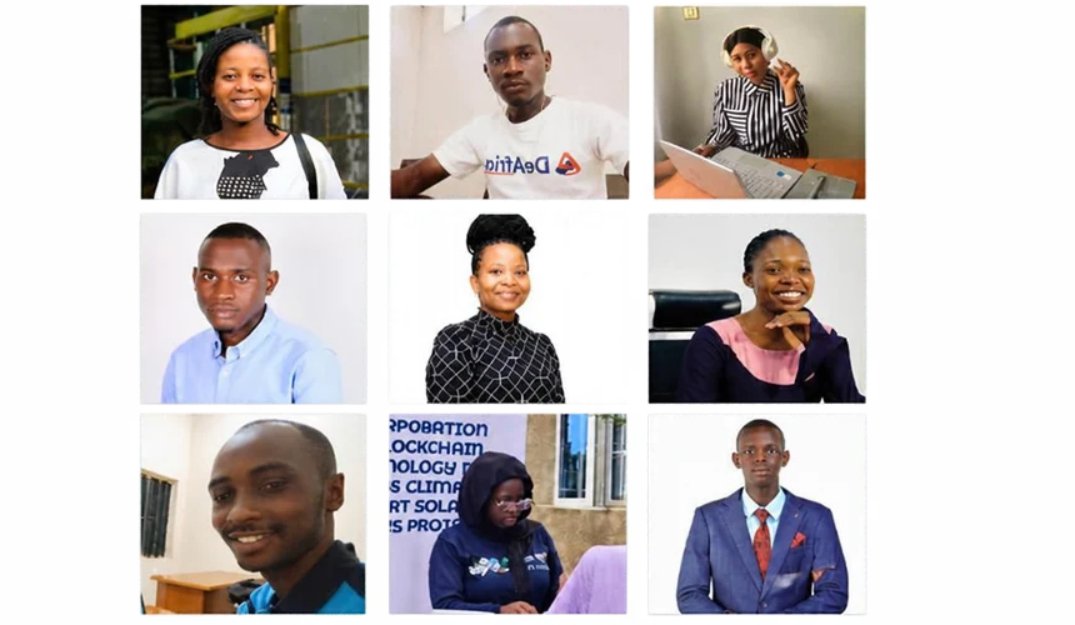

For young Africans entering the workforce, the distance between learning a skill and getting the chance to use it can be difficult to cross.
Across Uganda, Ghana, Nigeria, Kenya, Malawi, and Botswana, young professionals in the Mastercard Foundation Associates Program can make that transition through placements with organizations working in fields ranging from finance and education to artificial intelligence and food security.
Through Breedj Academy and connections with employers and partner organizations, Breedj helps prepare Associates for workplace opportunities and links them with organizations where they can contribute to real assignments.
Some work in person, while others collaborate remotely across geographical boundaries.
Their experiences show what that opportunity can look like when skills leave the classroom and become part of everyday work.
Turning Learning into Practical Experience
In Ghana, Barbara Asantewaa Adjei supports social media management, content creation and administrative work at Gaayan Enterprise, a business offering products and services that include security systems, school sirens, musical instruments and technology solutions.
Adjei said the experience has helped her build confidence alongside technical skills.
She said the program has helped her gain practical professional experience. Her journey has also required resilience.
“There are times that I got cheated by clients. I had setbacks, but I didn’t let it make me want to walk away,” she said. “I learned through it that if situations come, you don’t let the situation overcome you, but you learn the lesson from it.”
That combination of learning and contribution is reflected in other placements.
For Noris Mugume in Uganda, practical experience has come through finance and operations.
At Moracle Foundation, she supports financial documentation, daily reporting, grant research, and administrative work, applying her academic knowledge to responsibilities within an organization.
In Kenya, Martha Iradukunda Rekeraho has had exposure to another side of the digital economy. Her work with Kodryx AI Private Limited includes creative marketing videos, website user interface design, frontend development and chatbot implementation.
She said challenges arose early in the placement, but access to support and team leaders helped her move through them.
“Whenever I faced a challenge, I got the support I needed and I got prompt response,” Rekeraho said.
The experience illustrates how virtual work can give Associates access to technology-focused projects even when they are not working from the same physical location as their colleagues.
Work That Connects with Communities
For some Associates, the value of the placement becomes especially visible when their work brings them into direct contact with learners and communities.
Rachel John, an M&E and Data Analytics Associate with Community Action for Food Security Africa in Nigeria, works on data collection, validation, analysis and reporting for programs focused on food security and reducing post-harvest losses.
Her responsibilities also take her into communities. One experience that stood out involved introducing residents to a parabolic-shaped solar dryer and learning how technology could help reduce post-harvest losses.
The experience taught John that behind every dataset are “real people, real experiences, and real needs.”
Her work shows how data can become more than numbers on a spreadsheet. Collection and analysis are connected to the experiences of people whose needs programs are designed to address.
Education placements offer another example. Usman Adamu, also in Nigeria, teaches geography at Ummul Qura Academy, prepares assignments, assesses students’ work and uses Google Classroom to support learning.
“I had the opportunity to teach students, interact with them, and support their learning,” Adamu said. “Through this experience, I have been able to improve my communication, teaching, and interpersonal skills.”
In Uganda, Ainebyoona Robert supports remote learning for Distance Education for Africa. His responsibilities include preparing learning materials, answering learner questions, assisting with assignment submissions and maintaining attendance records for more than 300 learners.
The work demonstrates the less visible systems needed to make online education function, from accurate records to timely digital support.
Building Networks Through Everyday Work
In Malawi, Francis Gibson works in project support, helping with coordination, documentation, online communication and digital awareness activities connected with environmental and community initiatives.
“This has been an exciting journey for me because it has helped me grow personally and professionally, build skills, impact the community,” Gibson said.
Years of unemployment had made meeting basic needs a struggle for Maureen Amogelang Garetshoge. Her placement at Bantu Gazette as a news contributor and writer brought renewed confidence in her future.
“Beyond the opportunity itself, the financial stability it provides has brought a sense of dignity, relief and hope for a better future,” she said.
The economics and public administration graduate from the University of Botswana is also discovering where her training can take her.
Policies she once studied now become questions to put to economists, business leaders and ministers. Her reporting examines how decisions affect women, young people and small businesses.
Support from her supervisor has helped her sharpen her research, conduct interviews and develop stories centered on African experiences. She said various trainings have strengthened her grounding in journalism and her ability to identify AI-generated content.
Her work has also strengthened her stakeholder engagement skills, helping her build a database of contacts and relationships with experts.
“I am also able to talk to people I wouldn’t normally talk to, like CEOs, economists, and ministers, and it has helped me,” she said.
Across these placements, the work differs, but a common thread runs through the Associates’ experiences. They are learning by doing while organizations receive additional capacity in areas including finance, marketing, design, technology, education, data and project support.
Skills Development and Creativity
Ruth Victor’s placement in Nigeria also opened a path into a new creative field.
Through her placement at Dutrun Wave Limited, Victor works on client design assignments, creating graphics and refining them in response to feedback before the work is shared with clients.
“I’ve had the opportunity to intern as a graphic designer, an experience that allowed me to explore my creativity while developing a practical skill outside my career field,” Victor said.
She said the experience has also helped her learn how to approach visual communication, create engaging designs, understand design principles and use digital tools.
Beyond technical abilities, Victor said the placement has taught her how to collaborate in the workplace and adapt to changing expectations.
Her experience reflects a broader theme across the Associates’ placements. Skills develop through formal training, practice, feedback, collaboration and the freedom to try something new.
For some Associates, that means designing for a client or creating digital content. For others, it means analyzing community data, teaching students, supporting technology projects or helping hundreds of learners navigate remote education.
The Mastercard Foundation Associates Program connects talented young people with 12-month paid work placements across Africa.
The program works through partnerships with external organizations, including Breedj and Talenteum, and with Foundation partner organizations to support Associates in developing leadership, employability, and entrepreneurship skills after graduation.
Breedj’s role is part of that wider effort to narrow the distance between skills development and employment by helping young people prepare for work and connecting them with organizations that can use their capabilities.
The experiences of the Associates show that workplace development can extend beyond technical knowledge. It can also mean learning to collaborate, adapt to feedback, solve problems, build confidence and contribute creative ideas in professional settings.
The setting may change, but the opportunity is the same. It is a chance to move from knowing how to do the work to being trusted to do it.