
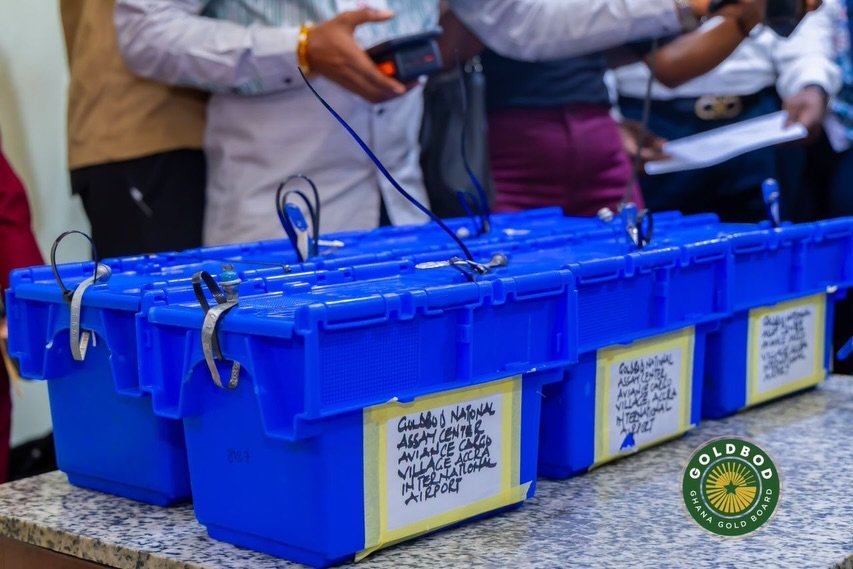

Damang Gold Mine sold the entirety of its first production output, approximately 110 kilograms of gold valued at $11.8 million, to the Ghana Gold Board on April 30 for transfer to the Bank of Ghana’s external reserves.
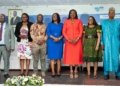
Ghana Gold Board Chief Executive Officer Sammy Gyamfi confirmed the transaction after receiving a delegation from the mine at GoldBod’s Assay Laboratory at Kotoka International Airport in Accra.
The gold will be assayed, valued, and purchased by GoldBod on behalf of the Bank of Ghana, refined, and added to the central bank’s reserve holdings under the Ghana Accelerated National Reserve Accumulation Program.
Gyamfi used the occasion to call on Ghana’s large-scale mining industry to follow suit.
“This bold and patriotic step by Damang Gold Mine must challenge us as a nation to begin a serious conversation about the need for large-scale mining companies to contribute meaningfully to Ghana’s gold reserve accumulation,” he said.
The transaction marks the first production cycle since the Ministry of Lands and Natural Resources awarded the Damang mining lease to Engineers and Planners on April 7, following a competitive tender that drew four bids.
The handover from Gold Fields, which had operated the mine for more than 30 years, was completed April 18.
Large-scale miners in Ghana are typically required to direct approximately 20% of output to the state. Damang sold its entire first batch to GoldBod, exceeding that threshold by 80 percentage points.
Gyamfi said the contrast with the broader industry was stark. Artisanal and small-scale miners contributed an estimated 104 metric tonnes to Ghana’s gold supply, while large-scale mining companies directed comparatively little toward national reserves.
“It is imperative that we reassess the current dynamics,” Gyamfi said. “The disparity between ASM contributions and those of large-scale mining firms raises important questions about how we can better align our extractive sector with national economic priorities.”
The transaction falls under the Ghana Accelerated National Reserve Accumulation Program, the government’s framework for building foreign-exchange buffers through domestic gold purchases.
Ghana’s gross international reserves reached $13.8 billion at the end of 2025, equivalent to 5.7 months of import cover, according to the Ministry of Finance.
Ghana’s economy grew 5.5% in the third quarter of 2025, driven by agriculture, services and information and communication technology, according to the Ghana Statistical Service.
Full-year growth reached 6% in 2025, the fastest pace since 2019.