
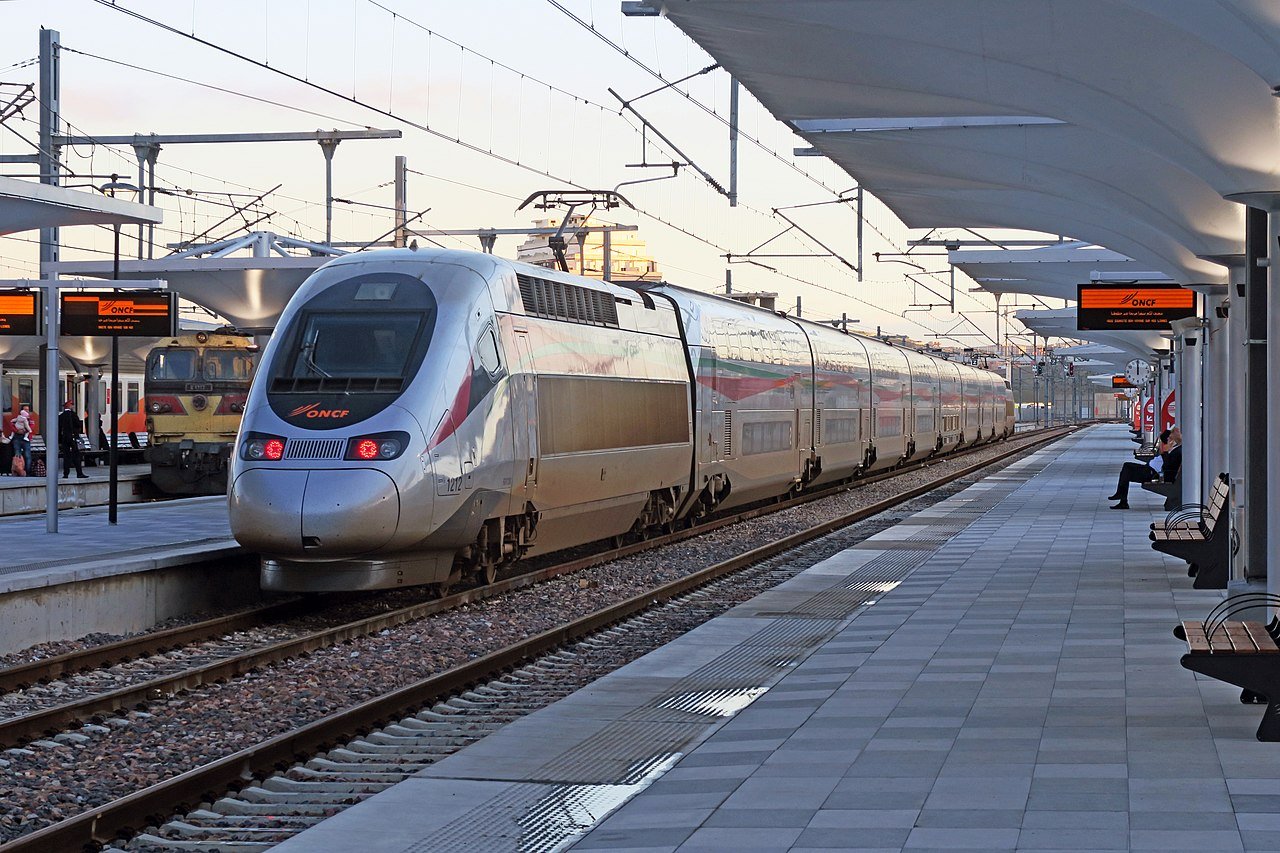

Morocco’s high-speed rail system, Al Boraq, is playing a central role in the logistics of the 2025 Africa Cup of Nations, strengthening the country’s infrastructure ahead of its co-hosting of the 2030 FIFA World Cup.
The train, which connects Tangier, Rabat and Casablanca, has reduced travel time between AFCON host cities, eased congestion and improved access for teams, officials and fans.
The integration of Al Boraq into tournament planning has allowed national teams, referees, media and spectators to travel between matches in hours rather than a full day.
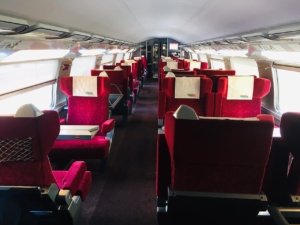
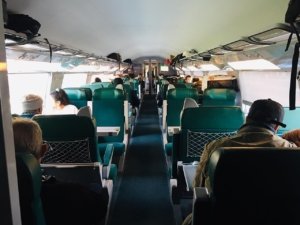
“Onboard the modern Al Boraq high-speed train as I relax, and marvel at stunning views on my way from Rabat through Kenitra to Tangier… This four and a half hours by road only takes 1 hour and 15 minutes in a very comfortable train,” Kenyan football journalist Collins Okinyo posted on social media.
Operating at speeds exceeding 300 kilometers per hour, the line supports Morocco’s strategy of linking sports venues with modern, high-capacity transport.
According to organizers, this alignment between geography and infrastructure reflects a deliberate planning philosophy, with stadiums located within urban centers, supported by reliable transport and high-quality accommodation.
Rabat, the capital, has emerged as a key hub, with Al Boraq and the Rabat–Salé Airport providing direct access to other host cities.
The city is hosting multiple matches, including the opening and final, at the newly rebuilt Prince Moulay Abdellah Sports Complex.
The stadium, with a capacity of 68,000, is connected to the national rail and road network, allowing for easier fan access from Casablanca and Tangier without reliance on road traffic.
In Tangier, the Grand Stade (75,600 capacity) is also fully integrated into the transport system.
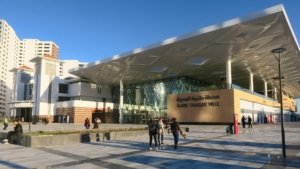
Unlike isolated venues seen in previous international tournaments, its connectivity allows same-day travel for fans from Rabat or Casablanca, improving attendance and economic activity.
Casablanca, the country’s economic center, hosts matches at the Mohammed V Complex.
Its proximity to Al Boraq stations ensures efficient travel and helps distribute tournament activity across the northern corridor.
For the first time in AFCON history, all participating national squads are staying in five-star hotels, each connected to major transport routes, according to organizers. Shorter travel times aid physical recovery, mental preparation and overall performance, they said.
The current model contrasts with earlier tournament experiences, including Brazil in 2014 and South Africa in 2010, where stadiums far from urban centers or lacking transport links became long-term financial liabilities.
Morocco’s approach emphasizes urban integration and infrastructure longevity.
While Al Boraq currently serves the northern and central regions, its planned extension toward Marrakesh and Agadir is part of Morocco’s 2030 infrastructure strategy.
Officials say these expansions reflect a long-term national vision rather than short-term tournament spending. By embedding stadiums into active cityscapes with accessible transport, Morocco aims to avoid the risk of underused “white elephant” facilities.
AFCON 2025, taking place from Dec. 21, 2025, to Jan. 18, 2026, marks the first major test of this model, with an eye toward 2030.
Morocco, a co-host of the FIFA World Cup alongside Spain and Portugal, is using the tournament to demonstrate its readiness to support large-scale global events with sustainable, modern infrastructure at the core.