
ANTALYA, Türkiye
The African Union has placed water security at the center of its climate agenda at COP31 in Antalya, Türkiye, where African officials are pushing for greater investment in climate resilience and economic transformation.
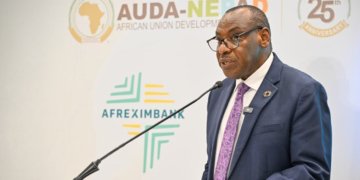
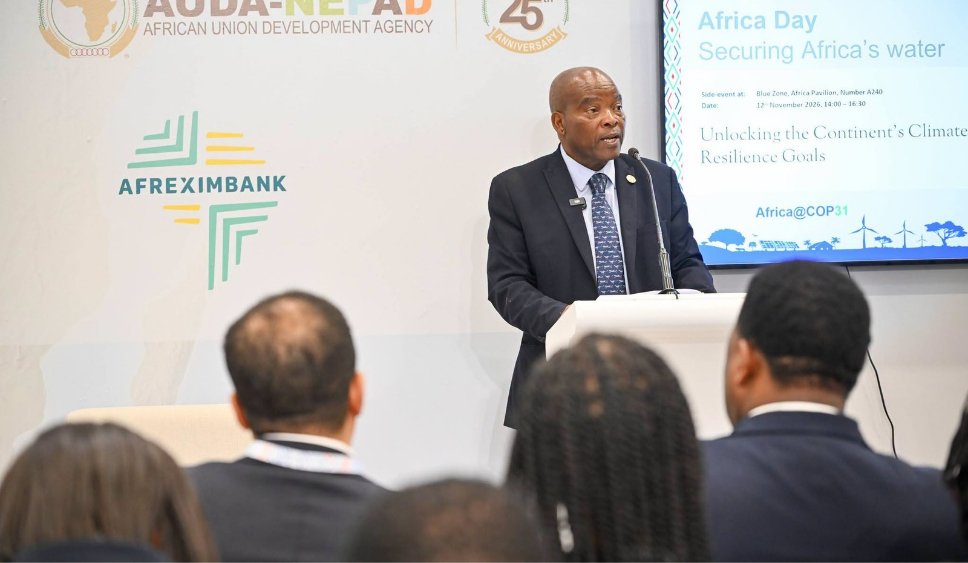
At a ministerial meeting on November 14, AU Commissioner Moses Vilakati, speaking on behalf of African Union Commission Chairperson Mahmoud Ali Youssouf, called on governments to accelerate the preparation of bankable water projects, strengthen coordination across ministries and mobilize financing for implementation.
“We must work together to move from investment commitments to projects that are ready for financing and implementation,” Vilakati said.
The appeal reflects a growing recognition that Africa’s climate ambitions depend on turning investment priorities into functioning infrastructure.
The African Union has cited annual water and sanitation investment needs of $30 billion to $50 billion to meet development goals by 2030. Its Continental Africa Water Investment Programme identifies an additional financing requirement of at least $30 billion a year.
Water security supports agriculture, electricity generation, public health and industry. With climate change increasing pressure on water resources through droughts, floods and changing rainfall patterns, delays in investment carry economic consequences across multiple sectors.
Africa has established policy foundations for expanding investment. African heads of state adopted the Continental Africa Water Investment Programme in 2021, and the AU launched its Africa Water Vision 2063 and Policy in February 2026.
The continent has developed investment guidelines, national planning mechanisms and institutional partnerships intended to mobilize funding. Their success will ultimately depend on the quality of projects governments can prepare and deliver.
A major obstacle is project preparation. Governments may identify urgent needs for irrigation, flood protection, rural drinking-water systems or wastewater treatment facilities. Securing financing requires credible feasibility studies, technical designs, cost estimates, procurement arrangements and maintenance plans.
Investors and development institutions also need to understand who will implement a project, how financial risks will be managed and whether the infrastructure can operate sustainably after construction.
The African Development Bank is addressing this challenge through the African Water Facility, which launched its 2026–2030 strategy in October. The facility supports countries with feasibility studies, technical preparation and financing arrangements intended to move projects toward implementation.
Its strategy identifies a core funding requirement of €75 million to €120 million over five years and calls for greater contributions from African governments alongside international partners.
Preparing projects for financing also requires understanding the economics of water infrastructure. Many investments generate substantial public benefits without producing sufficient commercial revenue to attract private capital independently.
Rural sanitation, affordable household connections and flood protection improve health, productivity and community resilience. Such projects often require public investment, concessional loans, grants or appropriate risk-sharing arrangements.
The African Union has recognized this challenge. During the African Development Bank’s annual meetings in May, Vilakati called for a broader interpretation of bankability that accounts for the economic and social consequences of inadequate water investment.
Financing decisions should reflect the development value of infrastructure while protecting the affordability of essential services.
Economic Evidence Supports Greater Investment
According to research cited by the World Bank, every dollar invested in water and sanitation in Africa generates approximately $7 in economic benefits. The institution also estimates that droughts leave between 600,000 and 900,000 people without jobs each year in sub-Saharan Africa.
Mozambique illustrates this economic exposure. A World Bank assessment published in May found that water-dependent sectors account for more than half the country’s gross value added, over 90% of exports and 84% of employment. Floods and droughts cost Mozambique an estimated 6.7% of gross domestic product annually.
Despite substantial water resources, the country faces infrastructure limitations that constrain reliable storage and distribution. The findings demonstrate how weak water systems can undermine economic performance.
Water security therefore deserves a central place in industrial and economic policy. Reliable irrigation supports agricultural productivity and food processing. Water infrastructure contributes to electricity generation, manufacturing and urban development, while flood protection safeguards productive assets.
Governments seeking to expand industrial output, strengthen food security and create employment have compelling economic reasons to prioritize water investment.
Urgency Increases as Climate Risks Intensify
At COP31, the African Union identified the anticipated 2026–2027 El Niño as a reason to strengthen preparedness, forecasting systems and early action. It called for closer links between climate information, national response plans and financing arrangements that allow authorities to act before disasters occur.
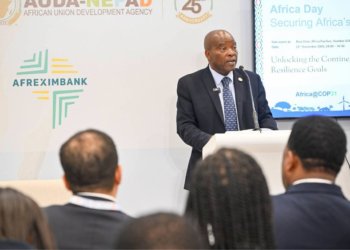
Professor Anthony Nyong, director of climate change and green growth at the African Development Bank, emphasized the connection between ecosystems and infrastructure during Africa Day at COP31.
“As we look towards COP32, let us build a stronger pipeline of water resilience investments,” Nyong said, calling for stronger partnerships and delivery arrangements.
His remarks reinforce the need to finance watershed protection, resilient infrastructure and institutions together.
African governments can strengthen their climate-finance demands through credible national investment programs. Ministries responsible for water, finance, agriculture and infrastructure should coordinate project preparation and establish financing priorities supported by transparent procurement and realistic operating plans.
International partners must expand accessible adaptation finance and provide financing terms suited to water infrastructure. Development banks and climate funds can support feasibility studies, concessional financing, guarantees and institutional capacity.
COP32 in Addis Ababa Will Test Africa’s Climate Ambitions
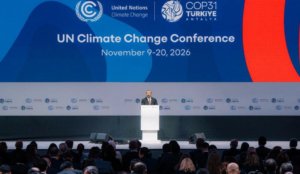
The next major test will come in Addis Ababa, where Ethiopia will host COP32 in 2027. Speaking at the COP31 Leaders’ Summit in Antalya on November 11, Ethiopian Prime Minister Abiy Ahmed pledged to put early climate action at the center of his country’s priorities and strengthen cooperation with the COP31 presidency.
Abiy also emphasized the economic costs of climate damage and the need to protect public resources for essential services.
“Climate action is economic policy,” he said. “The more we spend coping with climate damage, the less we have to invest in schools, health care and opportunity for our young people.”
The Ethiopian prime minister also highlighted Ethiopia’s Green Legacy Initiative, saying the country has planted more than 56 billion seedlings to restore degraded land, expand forest cover and support livelihoods. The figure reflects the government’s reported achievement.
His emphasis on early action offers a direction for COP32. Africa’s water investment agenda should translate that ambition into prepared projects, accessible financing and infrastructure that protects communities before climate disasters occur.
Ethiopia Pledges Early Climate Action