
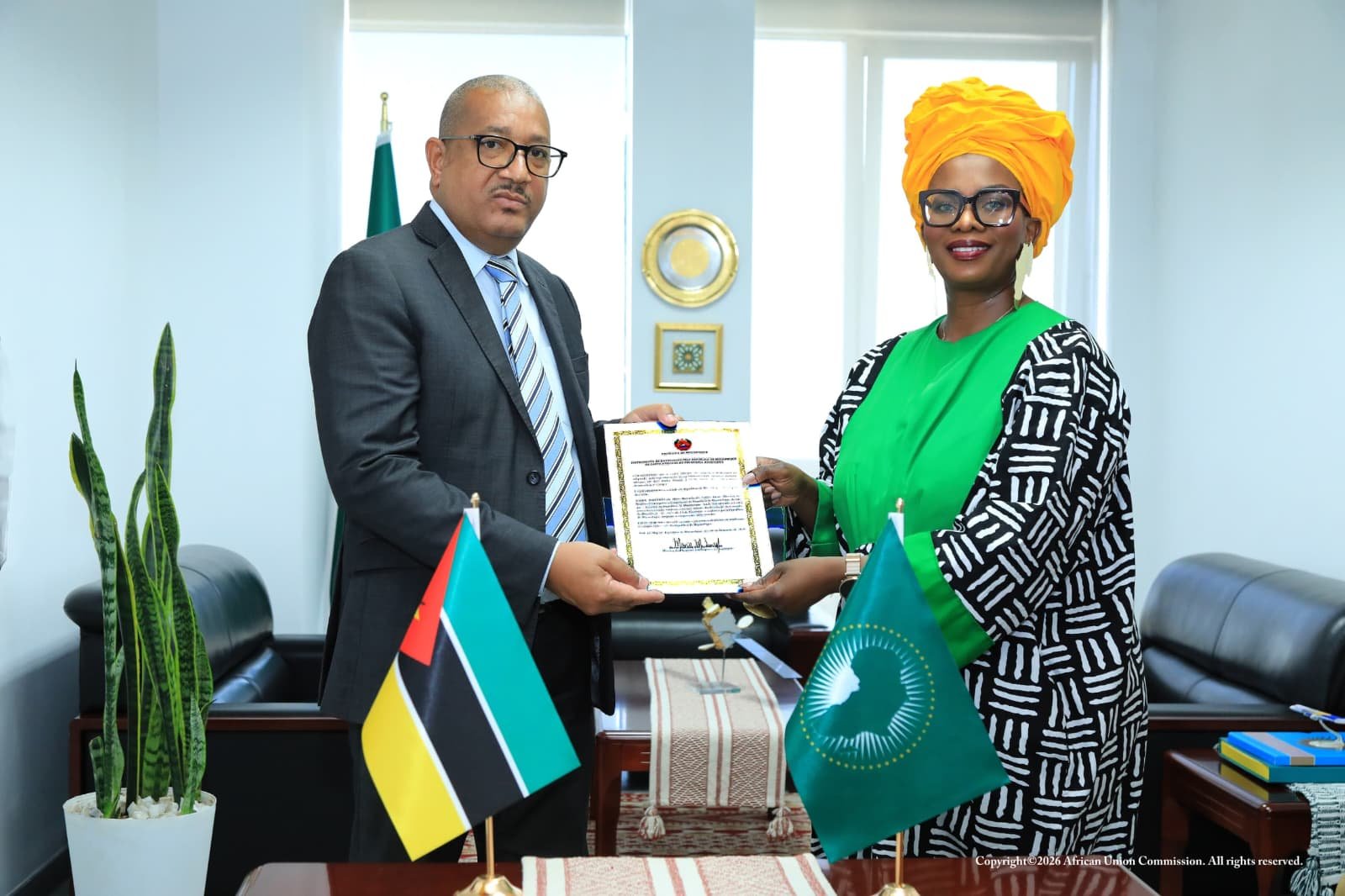

The African Road Safety Charter will enter into force in 30 days after the Republic of Mozambique deposited its instrument of ratification at African Union headquarters in Addis Ababa, Ethiopia, becoming the 15th AU member state to ratify the charter.
With the required number of ratifications secured, the charter shifts from a political commitment to a binding continental legal instrument, the African Union’s Infrastructure and Energy Department said Wednesday.
The milestone strengthens Africa’s unified framework for safer roads and safer mobility, in line with the African Union’s Agenda 2063 vision of modern, safe and efficient transport infrastructure that supports economic growth and regional integration.
The African Union welcomed Mozambique’s leadership and commitment to protecting lives and advancing sustainable transport across the continent.
H.E. Lerato D. Mataboge, African Union commissioner for infrastructure and energy, said the ratification is “a strong political statement to preserve human life and advance Africa’s collective vision of safer roads, safer vehicles and safer road users.”
Road traffic crashes claim nearly 250,000 lives each year in Africa and cost about 2% of the continent’s gross domestic product, according to the African Union.
The African Road Safety Action Plan aims to cut those figures by half, contributing to Agenda 2063 aspirations for improved safety, human security and sustainable development.
The Infrastructure and Energy Department of the African Union Commission leads efforts to accelerate implementation of Agenda 2063 infrastructure programs.
The department promotes, coordinates, implements, and monitors programs and policies on infrastructure development, transport, energy resources, information and communications technology, and postal services at the regional and continental levels.
The 48th Ordinary Session of the Executive Council of the African Union began Wednesday at African Union headquarters in Addis Ababa, with a strong call for enhanced unity, sustainable development and collective action to address the continent’s pressing challenges.