
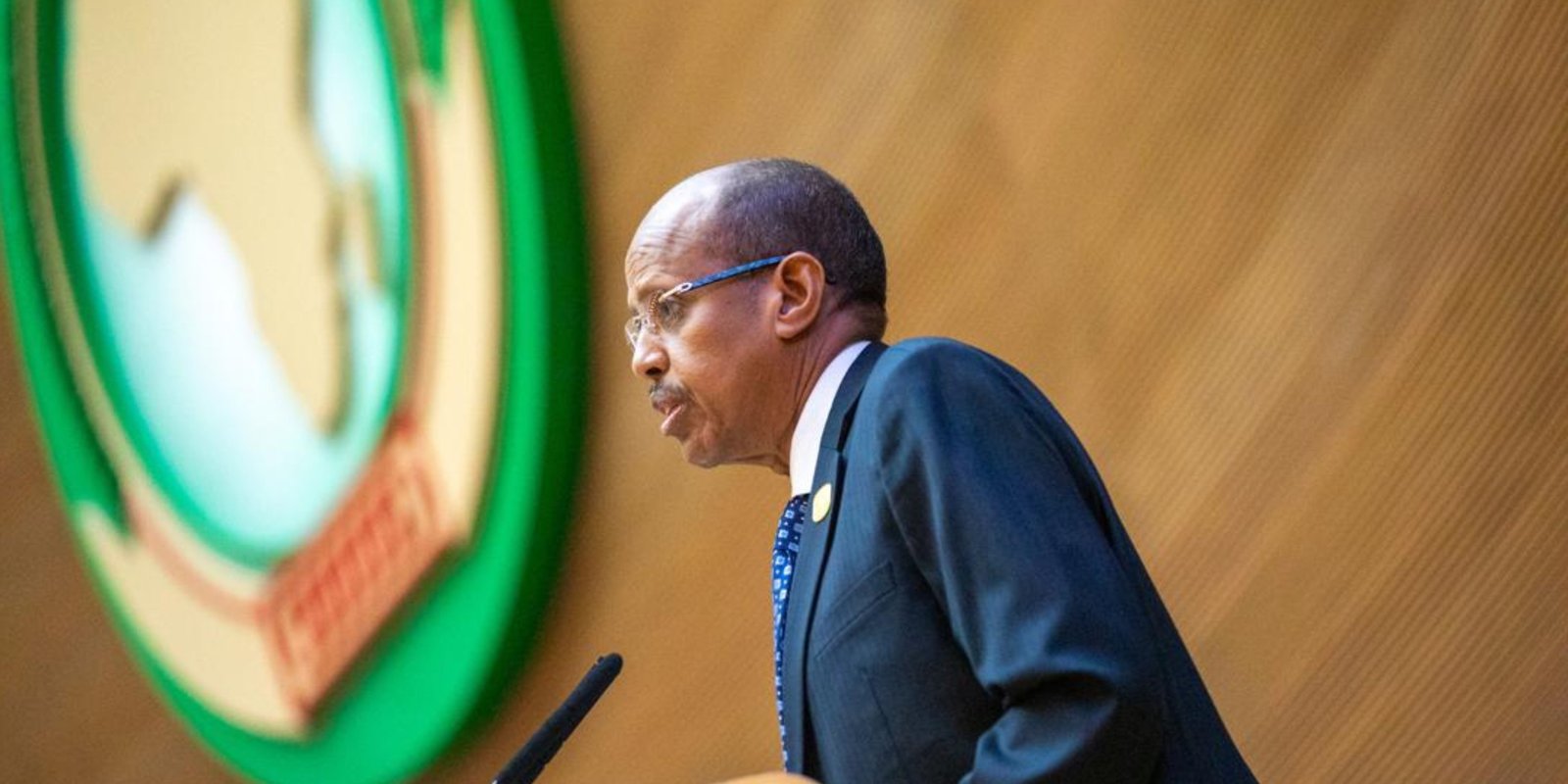

The chairperson of the African Union Commission, Mahmoud Ali Youssouf, on Saturday urged African leaders to move beyond ceremonial leadership transitions and focus on accelerating delivery of Agenda 2063.
Agenda 2063 is the African Union’s blueprint for transforming Africa into a global powerhouse by 2063.
Adopted in 2015, the 50-year framework outlines seven aspirations centered on inclusive development, economic growth, regional integration, peace and security, good governance, cultural renewal and improved quality of life.
The plan is driven by African-led initiatives and rooted in Pan-Africanism and the vision of an African Renaissance.
Delivering a keynote address to the Ministerial Follow-Up Committee on the Implementation of Agenda 2063, Youssouf said leadership changes should translate into renewed momentum, urgency and political commitment to implementation.
He said the second 10-year implementation plan offers a structured path for faster progress, while warning that ambition unsupported by resources will fall short of Africa’s development objectives.
Agenda 2063, he noted, remains underfinanced, with several flagship projects constrained by limited funding and weak institutional capacity.
Youssouf described these gaps as the result of political decisions rather than technical shortcomings.
He said established approaches to implementation have failed to produce the Africa envisioned in Agenda 2063.
He called on governments to align vision with financing, planning with institutional capacity and oversight with accountability.
He also urged the full operationalization of existing implementation tools, reform-oriented governance practices and the removal of policy and institutional barriers that slow execution.
Youssouf said the success of Agenda 2063 will be judged by its impact beyond policy forums.
He stressed that the agenda must translate into visible improvements in the daily lives of African citizens if it is to drive lasting continental transformation.