

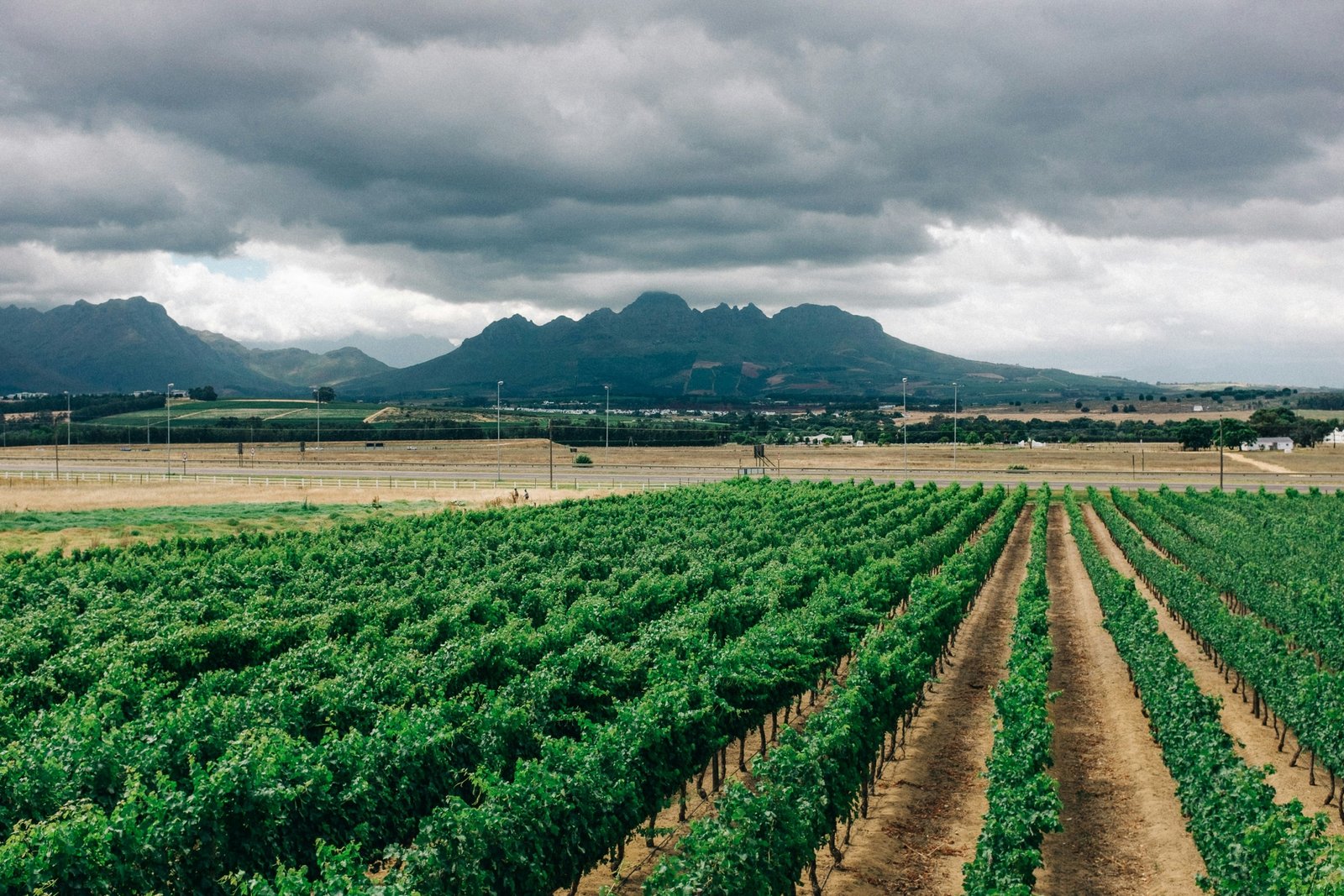

For decades, discussions about African agriculture have emphasized the continent’s vast reserves of arable land while soil health, fertilizer availability and harvest performance have remained closely linked to the structure of global supply chains.
The disruption of shipping through the Strait of Hormuz, the maritime corridor through which up to 30% of globally traded fertilizer products and an estimated 50% of global sulfur exports move, according to the International Food Policy Research Institute and the Food and Agriculture Organization of the United Nations, has exposed a fundamental weakness in the industrial architecture that supports African agriculture.
The Legacy of Import Dependence
Post-independence development policy established many of the structural conditions that continue to shape Africa’s fertilizer economy today. Many African governments adopted an input-intensive version of the Green Revolution that relied heavily on imported chemical fertilizers to increase yields of export crops such as cocoa, coffee and cotton and generate foreign exchange earnings.
Public resources supported imported inputs while domestic chemical manufacturing received limited strategic investment. Over time, this approach created dependence on external supply systems and slowed the development of regional industrial capacity, with consequences that continue to shape agricultural productivity across the continent.
Fertilizer application rates across Africa remain well below global averages because imported inputs are vulnerable to price volatility, supply disruptions and logistical delays.
The African Union’s Africa Fertilizer and Soil Health Action Plan, adopted at the Nairobi Summit in May 2024, finds that average crop yields across sub-Saharan Africa sit at roughly 30% of global benchmarks, reflecting the extent to which soil degradation and input scarcity have constrained agricultural potential.
The same assessment reports that 75% to 80% of the continent’s cultivated land is degraded, with nutrient losses of 30 to 60 kilograms per hectare annually.
Long-term use of standardized imported NPK fertilizers, often disconnected from local soil requirements, has contributed to micronutrient depletion and soil acidification across many agricultural zones. Soil health and fertilizer security, therefore, constitute the same industrial challenge.
Infrastructure and the Cost of Fragmentation
Transport systems continue to shape Africa’s fertilizer economy. Much of the continent’s infrastructure was designed to move minerals and agricultural commodities from inland production zones to coastal ports for export.
These networks served extraction rather than regional integration, and their legacy imposes substantial costs on manufacturing and agricultural distribution alike.
Research published by the International Growth Centre, drawing on World Bank data, places the unit cost of road transport in sub-Saharan Africa at between 40% and 100% higher than comparable costs in Southeast Asia, a gap that reduces competitiveness, increases production expenses and weakens regional trade.
Fragmented rail systems, missing cross-border connections and inefficient border procedures deepen these barriers further.
In many cases, transporting finished fertilizer products from Europe or the Persian Gulf to an African port costs less than moving fertilizer inputs across neighboring African countries.
These inefficiencies entrench dependence on external suppliers and constrain the growth of regional value chains.
The result is a fragmented agricultural supply system in which production, distribution and market access remain disconnected across large parts of the continent.
A New Industrial Opportunity
The Dangote Group’s expansion of its planned fertilizer complex in Gode, in Ethiopia’s Somali region, to more than $4 billion reflects a broader shift toward industrial-scale fertilizer production across the continent.
The project was initially valued at $2.5 billion when a shareholders’ agreement was signed in August 2025 between Dangote Group, which holds a 60% equity stake, and state-owned Ethiopian Investment Holdings, which holds 40%.
The facility is designed to produce three million metric tons of urea annually, a volume that would rank it among the five largest single-site urea production complexes in the world.
Supporting infrastructure now includes a 120-megawatt captive power plant, a two-million-ton NPK blending facility and a polypropylene packaging unit.
In March 2026, Dangote Industries Limited signed a $4.2 billion, 25-year natural gas supply agreement with China’s GCL Group, providing feedstock delivered from the Calub field in the Ogaden Basin through a dedicated 108-kilometer pipeline.
The significance of the Gode project extends beyond production volumes. It demonstrates how African countries can leverage domestic natural gas reserves to support industrial development, improve agricultural productivity and generate regional value across the full fertilizer supply chain.
Production capacity and distribution reach must advance together. Distribution networks, regulatory coordination and market integration determine how effectively fertilizer reaches farmers across the continent.
Efficient rail systems, improved border procedures and harmonized standards can connect production centers with agricultural markets and expand the developmental returns of large-scale investment.
The African Continental Free Trade Area (AfCFTA) provides an important framework for advancing this agenda. Continued progress in trade facilitation, infrastructure connectivity and regulatory alignment can strengthen regional fertilizer markets and improve access for agricultural producers across member states.
The Impact of External Shocks
Recent disruptions to shipping through the Strait of Hormuz have brought Africa’s exposure to external fertilizer markets into sharp focus.
The FAO Chief Economist’s May 2026 Outlook reports that farmers face urea price increases of between 20% and 60% in the current market environment.
The World Bank’s April 2026 Commodity Markets Outlook projects that global urea prices could rise by nearly 60% across 2026 as a whole before easing in 2027 as Middle East exports gradually recover and natural gas prices moderate.
Several African countries carry particularly high levels of exposure to these conditions.
Malawi sources 61.6% of its fertilizer from Gulf imports, according to a March 2026 analysis by Global Sovereign Advisors, making the country among the most vulnerable economies on the continent.
Eastern and Southern African economies, including Kenya, Tanzania and South Africa, draw between 30% and nearly 50% of their fertilizer supply from Gulf exporters, according to the same assessment.
In South Africa’s case, imports from Saudi Arabia, Qatar and Oman accounted for more than half of all nitrogenous fertilizer imports by value between 2019 and 2023, according to research published in the South African Journal of Plant and Soil in 2025.
Agricultural production operates within fixed seasonal cycles. Delays in fertilizer deliveries reduce application rates, lower productivity and compress future harvests.
Supply disruptions originating far beyond the continent carry direct consequences for food production, soil health and agricultural resilience.
These conditions illustrate the close relationship between industrial capacity and food security, where fertilizer availability, transport infrastructure and regional manufacturing capabilities influence agricultural outcomes as directly as weather conditions or farm-level practices.
Reengineering the System
Africa possesses the resources, markets and policy frameworks required to strengthen fertilizer sovereignty and improve soil health. Progress depends on three strategic priorities.
Agricultural investment should place greater emphasis on regional processing industries, raw-material development and local blending facilities.
Expanding investment across the full fertilizer value chain improves supply security and creates new industrial opportunities in countries that hold the natural gas, phosphate and potash resources the continent currently imports at premium cost.
Infrastructure planning must prioritize regional connectivity. Integrated transport networks that link phosphate resources in Morocco, natural gas reserves in Nigeria and Ethiopia, manufacturing facilities and agricultural markets across multiple regions of the continent can convert proximity into competitiveness.
The fragmentation that makes intra-African fertilizer trade more expensive than imports from the Persian Gulf is a policy and infrastructure challenge with practical solutions.
Governments should accelerate implementation of the African Union’s Africa Fertilizer and Soil Health Action Plan through the African Continental Free Trade Area.
The plan entered its main implementation phase in January 2026 and runs through 2034, committing all 55 African Union member states to tripling domestic production and distribution of certified organic and inorganic fertilizers, improving access and affordability for smallholder farmers and reversing soil degradation across at least 30% of degraded cultivated land within the decade.
Improved cross-border movement of agricultural inputs, stronger regional manufacturing ecosystems and greater regulatory coordination can support a more integrated and resilient continental fertilizer market.
Long-term food security depends on the industrial systems that sustain agricultural production.
Strategic investment in manufacturing, infrastructure and regional integration can strengthen soil health, improve agricultural productivity and build a food system grounded in African capacity and African markets.