

Africa’s aspirations under the African Union’s Agenda 2063 and the United Nations Sustainable Development Goals (SDGs) will remain out of reach unless the continent prioritizes inclusive, future-focused education, speakers said during the HERizon Africa Dialogue on Education Leadership held Friday.
Moderated by Gifty Boatemaa Annan, founder and global lead of HERizon Africa, the webinar brought together education leaders from across the continent to explore how educational leadership can drive sustainable and inclusive development.
She framed education as the foundation of Africa’s broader development agenda, arguing that quality education underpins every other development goal.
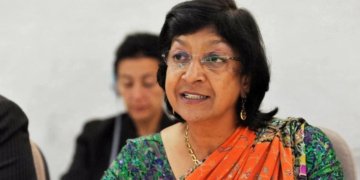
Delivering the keynote address, Prof. Kathija Yassim, head of the Department of Education Leadership and Management at the University of Johannesburg, challenged participants to rethink education beyond preparing students for employment.
Instead, she urged institutions to equip learners to navigate climate change, artificial intelligence, widening inequality, political instability and other complex challenges shaping Africa’s future.
“The future is not something we predict but something we create,” Yassim said, arguing that educational leaders make decisions today whose consequences may only become evident decades later.
She described leadership as an act of stewardship, emphasizing that schools and universities are held in trust for future generations rather than existing solely to meet present-day demands.
Yassim built her presentation around three interconnected commitments she believes should guide Africa’s education systems: sustainability, Ubuntu and decolonization.
She argued that sustainability extends beyond environmental concerns to include equitable access to quality education, poverty reduction, social inclusion and political participation.
According to her, excluding communities from educational opportunities is itself a sustainability challenge.
Drawing on the African philosophy of Ubuntu, Yassim said education should prioritize relationships, collective well-being and shared responsibility over individual achievement.
She suggested that schools and universities should ultimately be judged not only by examination results or global rankings but also by their contribution to community development and social impact.
She also called for the decolonization of African education, urging institutions to value Indigenous knowledge alongside global scholarship. Sustainable solutions, she argued, cannot simply be imported but must be co-created with local communities and rooted in African realities.
Responding to audience questions, Yassim encouraged participants not to wait for governments or institutions before taking action.
Leadership, she said, begins wherever individuals find themselves, whether as students, educators or community members, adding that meaningful change grows through collective responsibility rather than individual effort alone.
She closed with an African proverb that captured the webinar’s central message: “If you want to walk fast, walk alone. If you want to walk far, walk together.”