

ABIDJAN
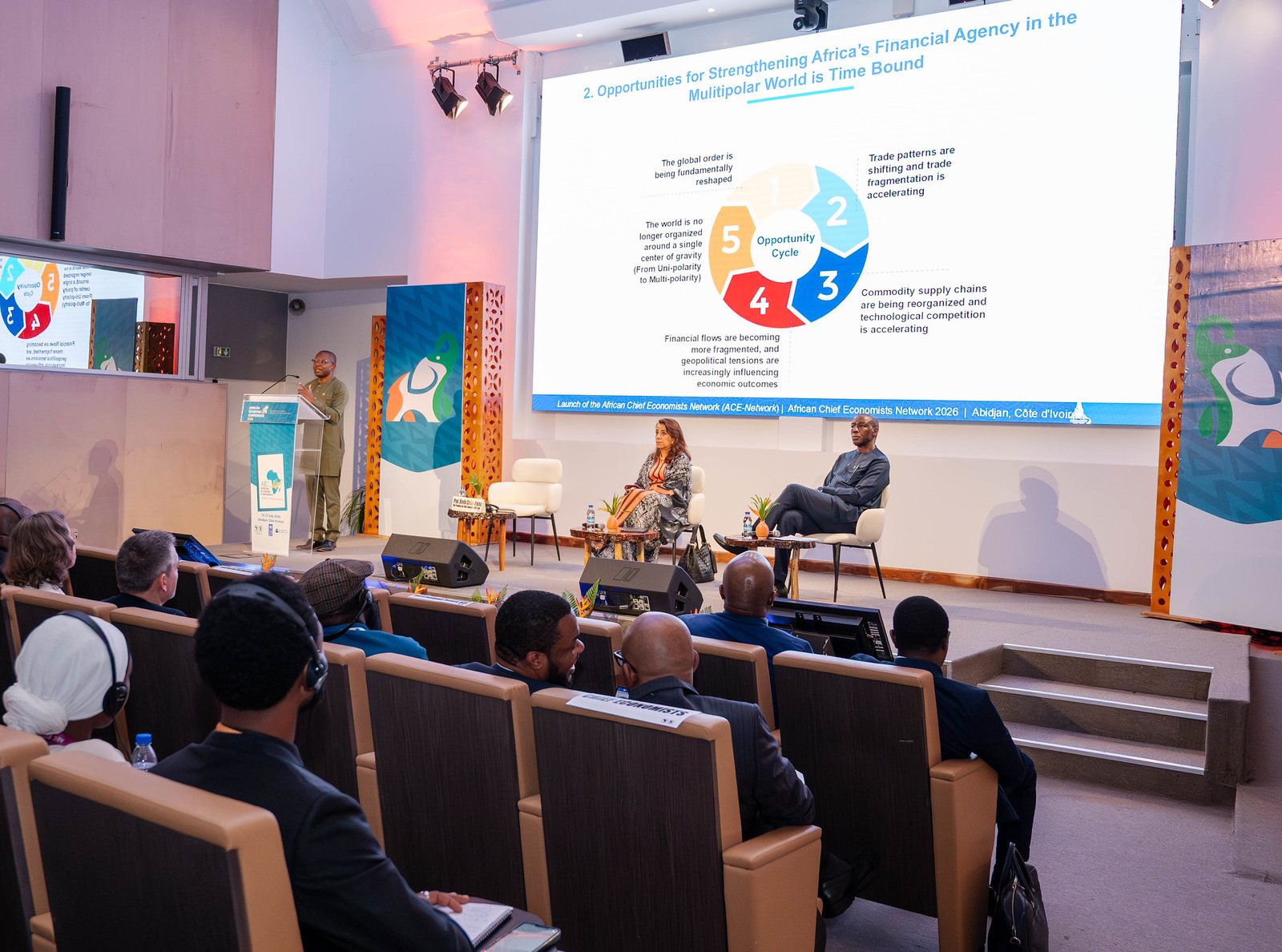
African policymakers and leading economists have launched the African Chief Economists Network, a continent-wide platform aimed at strengthening evidence-based policymaking and helping African governments respond more effectively to mounting global economic pressures.
The network was unveiled as one of the key outcomes of the 2026 African Economic Conference, hosted by the African Development Bank Group in partnership with the United Nations Development Programme and the Organisation for Economic Co-operation and Development.
The initiative was launched on Sunday, July 12, in Abidjan, Côte d’Ivoire, during the 2026 African Economic Conference, as African countries grapple with geopolitical tensions, trade fragmentation, climate shocks, rising debt and changes in the global financial system.
Speaking on behalf of African Development Bank President Sidi Ould Tah, Senior Vice President Marie-Laure Akin-Olugbade described the network as a landmark step toward stronger African policy leadership.
She urged members to ensure research informs practical decisions that improve people’s lives. “It is a big responsibility,” she said, calling for “effective decisions” that deliver meaningful results across the continent.
The invitation-only network will bring together chief economists from development finance institutions, senior government economic advisers, central bank officials, academics, think tank leaders and private-sector economists.
Members will meet annually alongside the African Economic Conference, with quarterly virtual meetings and additional sessions during major economic shocks.
African Development Bank Chief Economist Kevin Urama said Africa must strengthen its knowledge systems to influence reforms of the international financial architecture.
He said the continent has a limited opportunity to shape global reforms and argued that stronger coordination would help governments make better-informed decisions.
He also called for greater investment in research, data systems and knowledge institutions, saying such “soft infrastructure” is as important as physical infrastructure.
UNDP Regional Bureau for Africa Chief Economist Raymond Gilpin described the initiative as “a unified powerhouse” that can bridge the gap between research and public policy.
He said the network could help countries mobilize domestic resources, advance implementation of the African Continental Free Trade Area and develop innovative responses to climate and fiscal challenges.
United Nations Economic Commission for Africa Deputy Executive Secretary Hanan Morsy said no country can navigate today’s interconnected crises alone. She said the network’s success will depend on whether it strengthens policymaking, improves resilience and supports inclusive economic growth.
More than 4,000 participants joined the three-day conference virtually as delegates explored ways to strengthen Africa’s geopolitical influence, expand regional trade, accelerate industrialization and position the continent as a stronger voice in global economic governance.