
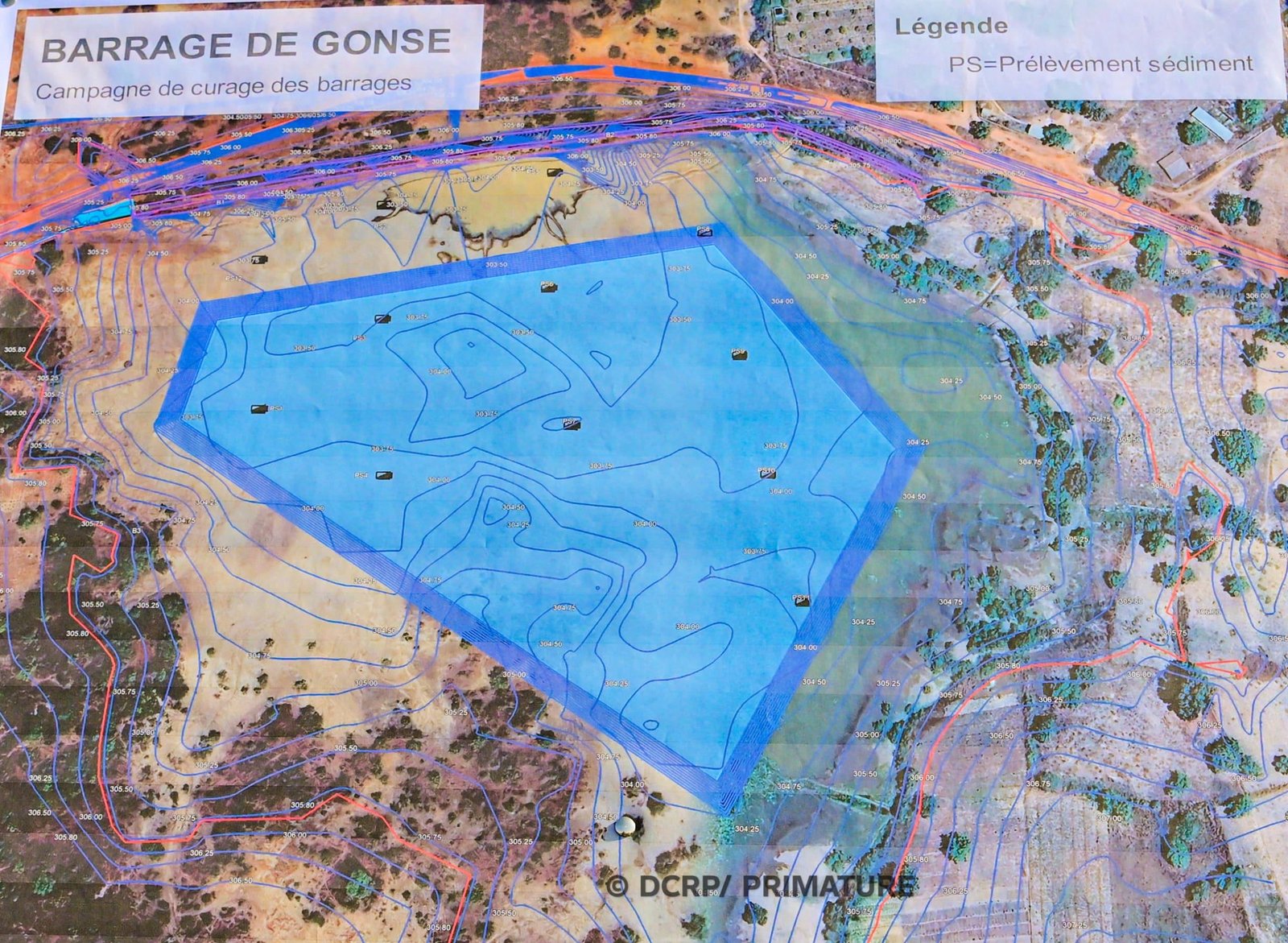

Burkina Faso on Saturday launched a nationwide program to rehabilitate 100 dams, aiming to expand water storage capacity and support agriculture, livestock and fisheries across much of the country.
The initiative was officially launched in Gonsé, a rural commune near the capital, by Prime Minister Rimtalba Jean Emmanuel Ouédraogo, according to a statement from the Prime Minister’s Office.
The campaign focuses on desilting and reinforcing ageing surface water infrastructure that underpins food production and rural livelihoods.
The government plans to intervene in 12 of Burkina Faso’s 17 regions, with an objective of mobilizing at least 50 million cubic meters of additional water for drinking supply and agropastoral and fishery activities.
The work is financed under the 2026 state budget at a cost exceeding 19 billion CFA francs (about $34 million), with implementation expected to take about five months.
Authorities say decades of limited maintenance have left much of the country’s dam infrastructure in poor condition.
Official figures indicate that about 40% of dams are heavily degraded, 50% show moderate deterioration and only 10% remain in good condition.
The average age of these structures is estimated at 30 years, affecting water access for households, irrigation, livestock and market gardening.
Gonsé dam highlights scale of ageing water infrastructure
Built in 1984 with a design capacity of 300,000 cubic meters, its storage has fallen to roughly 211,000 cubic meters due to sediment buildup.
Planned work includes removing nearly 100,000 cubic meters of sediment and reinforcing the embankment over a 30- to 45-day period to restore capacity.
The dam supports about 100 hectares of farmland and serves roughly 200 producers, including vegetable growers, fruit farmers, fishers and livestock keepers from surrounding villages.
Speaking to local residents, Ouédraogo said the program aligns with national efforts under President Ibrahim Traoré to strengthen food self-sufficiency alongside security priorities.
He urged communities to cooperate with contractors and protect rehabilitated sites to preserve the long-term value of the investment.
The project is overseen by the Ministry of Agriculture, Water and Animal and Fishery Resources through specialized public agencies responsible for dams and rural land development.