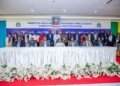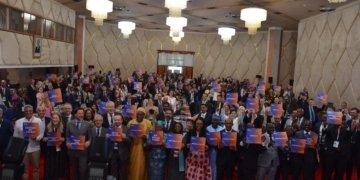

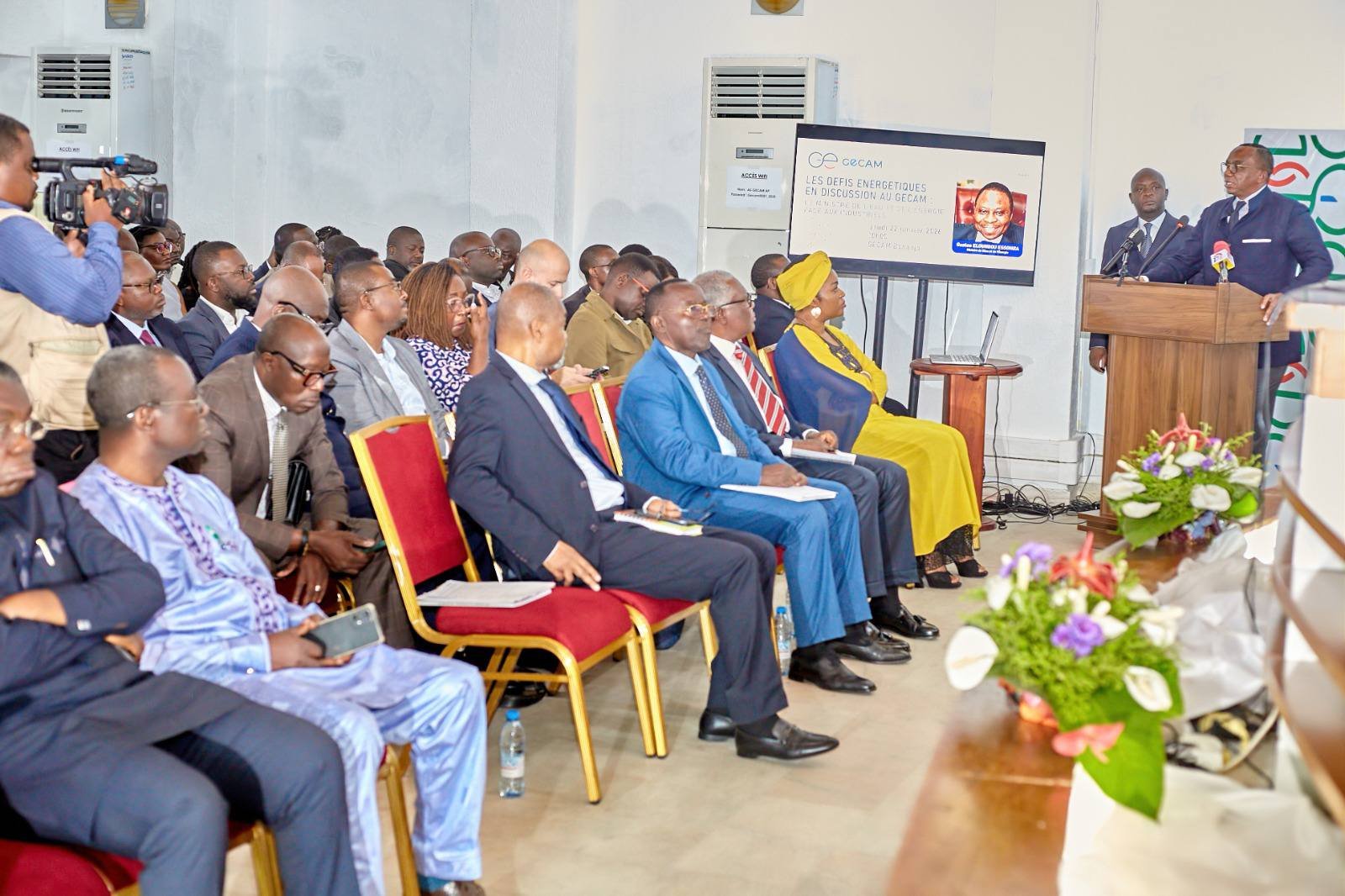

The government of Cameroon and national private-sector leaders agreed on a shared course for energy-sector reform and resilience during a strategic workshop hosted by the Groupement des Entreprises du Cameroun (GECAM) in Douala in late January.
Presiding over the high-level dialogue, Minister of Water and Energy Gaston Eloundou Essomba outlined major initiatives underway to stabilize and strengthen the country’s power sector.
He highlighted the renationalization of Energy of Cameroon (ENEO), the national utility, and the August 2025 signing of the Cameroon Energy Compact as pillars of a long-term strategy to boost installed capacity to 3,000 MW by 2030 and expand access to 8 million more citizens.
“We are aware of the problems, but we are acting,” the minister told more than 200 business leaders in attendance. He acknowledged key challenges, including water shortages, transmission bottlenecks, and ENEO’s monthly operating deficit of 13 billion FCFA.
Business leaders, including GECAM President Célestin Tawamba, called for transparency and urgency. “The more we talk, the worse the situation gets,” he said, warning that investor confidence hinges on immediate progress.
New measures include the rollout of 8,000 smart meters to reduce energy losses, debt refinancing, fraud prevention, and the planned addition of 150 MW of capacity for Douala’s industrial zone by year-end.
The session closed with several joint commitments: a GECAM-MINEE monitoring platform, greater SME integration in public energy projects, and a review of power factor regulations to reflect current economic conditions.
This milestone event, held at GECAM headquarters in Bonanjo, marks a new chapter in collaboration between the government and the private sector to achieve energy resilience and industrial growth.