
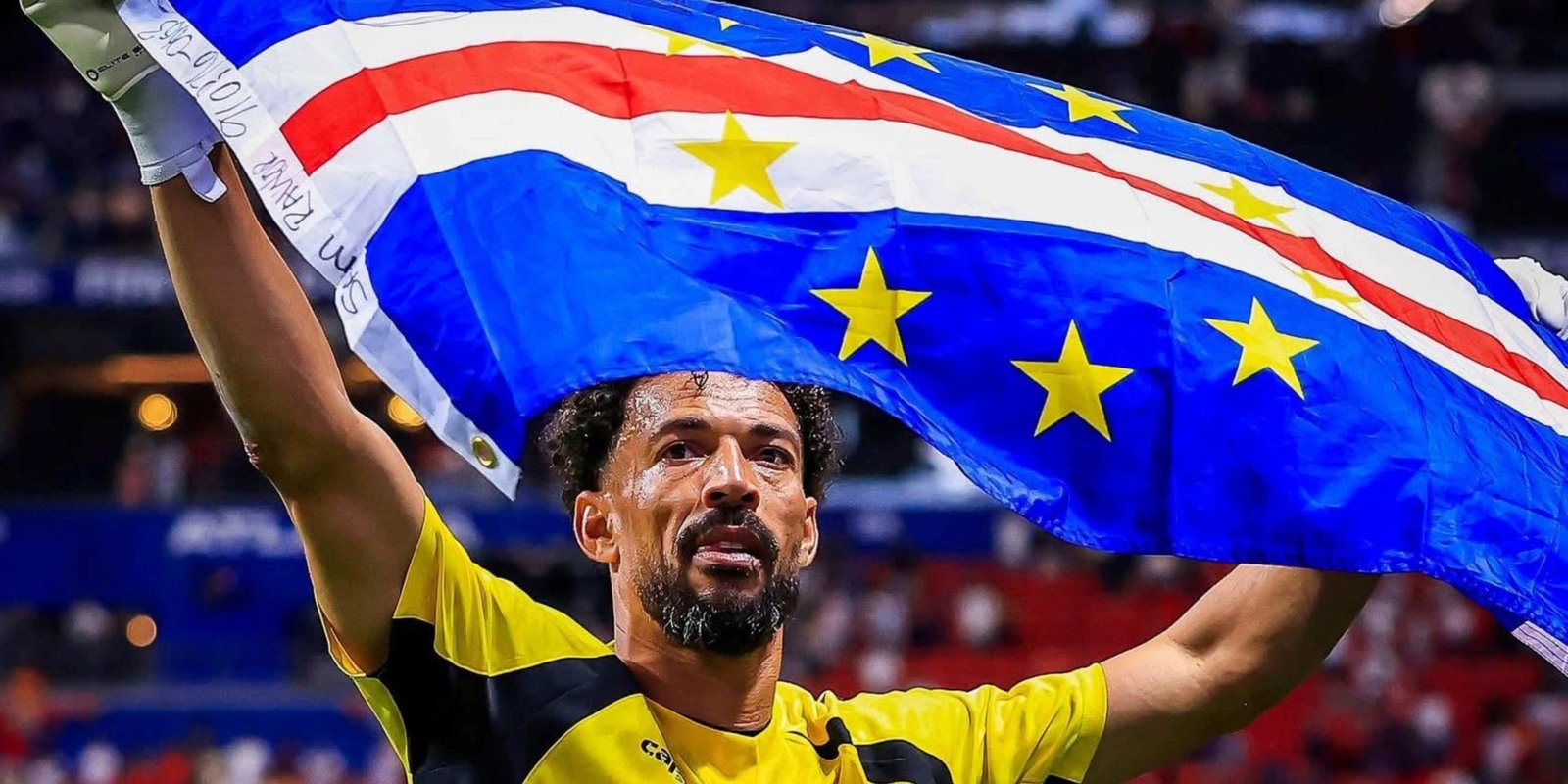
Cape Verde entered Hard Rock Stadium in Miami on Friday to face reigning world champion Argentina two days before the nation marked 51 years of independence. Argentina claimed a 3-2 victory, while Cape Verde earned worldwide admiration through a performance that reflected confidence, discipline and ambition. The match completed a remarkable first FIFA World Cup campaign.
The Blue Sharks opened the tournament with a scoreless draw against Spain on June 15, shared a 2-2 draw with Uruguay on June 21 and held Saudi Arabia to another 0-0 draw on June 26.
Those results secured second place in Group H and an unbeaten group-stage record as Africa celebrated its strongest collective World Cup performance with nine nations reaching the round of 32. Tunisia was the only African nation eliminated in the group stage after finishing last in Group F.
South Africa and Côte d’Ivoire advanced beyond the group stage for the first time. Morocco, Senegal, Ghana, Egypt, Algeria, tournament debutants Cape Verde and DR Congo also reached the knockout stage, marking DR Congo’s return to the World Cup after 52 years.
Morocco advanced to the round of 16 after defeating the Netherlands in a penalty shootout, while Egypt secured its first appearance in the World Cup round of 16 through a penalty victory over Australia. Ghana concluded its campaign following a narrow defeat to Colombia.
Cape Verde produced one of the tournament’s defining stories despite representing a nation of just over half a million people, with Kevin Pina scoring the country’s first World Cup goal against Uruguay as the Blue Sharks conceded only two goals across three group matches against world-class opposition.
The sense of national pride continued after the defeat to Argentina. In a message published on his official Facebook page, Prime Minister Ulisses Correia e Silva reflected on the campaign with a quotation he attributed to Abraham Lincoln, writing, “It is precisely when the climb is steepest that we learn again to reach the mountaintop as a nation and as a people.”
He wrote that the Blue Sharks had made that climb and carried an entire nation to the summit through belief, determination, talent, organization, discipline, teamwork and hard work, describing the campaign as a lesson that reaches far beyond football.
“A journey Africa won’t forget,” the Confederation of African Football wrote in an Instagram post after Cape Verde’s defeat. In a separate post, CAF added, “Cape Verde, you have everything to be proud of,” celebrating the team’s historic campaign.
The island nation’s World Cup campaign has been widely described as evidence that strategic planning, investment in talent, effective organization and collective discipline create excellence in international sport and inspire young people across Africa.
The Government of Cape Verde embraced the tournament as a national event from the opening match. The Council of Ministers approved Resolution 91/2026, granting public servants leave on June 15 so citizens could follow the country’s World Cup debut.
Prime Minister Ulisses Correia e Silva praised a squad built largely from the Cape Verdean diaspora and described it as a reflection of a resilient nation whose achievements continue to reach beyond its size.
FIFA’s Record Investment
The 2026 FIFA World Cup introduced the largest financial distribution in the competition’s history.
The FIFA Council approved a record prize fund before increasing the total distribution to $871 million. Every qualified federation receives $10 million in qualification funding and $2.5 million in preparation support before performance-based prize money. Teams finishing between 17th and 32nd receive $11 million, while round-of-16 participants earn $15 million.
Africa’s 10 qualified federations secured a combined minimum of $125 million before the opening match, and nine associations increased that total through advancement into the knockout stage.
These resources exceed the annual football budgets of many national associations across the continent. Federation leadership now carries responsibility for investing these resources in infrastructure, coaching, youth development, facilities and sustainable institutional growth that strengthens football for future generations.
Visibility Beyond Football
The tournament elevated Cape Verde’s international profile through global exposure that extends far beyond the football pitch.
Prime Minister Correia e Silva wrote that the national flag had reached audiences across the world while international interest in Cape Verde continued to grow.
Tourism remains central to the country’s economy. Cape Verde welcomed approximately 1.18 million international visitors in 2024, and the World Bank reports that tourism contributes roughly one-quarter of national GDP while supporting about 40% of overall economic activity. Global visibility from the World Cup creates valuable opportunities to attract additional visitors, investment and commercial partnerships that strengthen long-term economic development.
Goalkeeper Josimar Dias, widely known as Vozinha, emerged as one of the tournament’s most recognizable personalities. His outstanding performance against Spain attracted worldwide attention and expanded his Instagram following from approximately 50,000 before the tournament to more than 21 million.
A World Cup of Visas
Travel policies shaped the experience of many African supporters throughout the tournament.
Reports of United States visa restrictions, including Presidential Proclamation 10998, affected nationals of 39 countries, among them Côte d’Ivoire and Senegal. The U.S. Department of State confirmed that World Cup visa accommodations applied to players, coaches and tournament personnel, while supporters remained subject to standard immigration requirements.
A visa bond proposal, reported at the time, suggested deposits of up to $15,000 for visitors from several countries including Cape Verde. The administration later waived the requirement for eligible World Cup ticket holders enrolled in FIFA’s priority appointment system.
Supporters from DR Congo encountered additional health-related travel restrictions linked to the Ebola outbreak. Michel Nkuka Mboladinga, known throughout African football as Lumumba Vea, followed the national team in Mexico before missing its decisive match in Atlanta after visa authorities denied his application despite public support from Congolese Ambassador Kapinga Yvette Ngandu.
FIFA confirmed that Somali referee Omar Abdulkadir Artan could not participate after U.S. authorities denied him a visa. His absence prevented the first Somali official appointed to a FIFA World Cup from taking the field.
Travel restrictions reduced the presence of African supporters during one of the continent’s greatest World Cup performances and strengthened the conversation about access and inclusion at global sporting events.
The Legacy Begins Now
Morocco’s role as a co-host of the 2030 FIFA World Cup alongside Spain and Portugal places Africa in a position to contribute directly to the organization of the tournament and the experience of supporters from every region.
The lasting impact of the 2026 World Cup now rests with the continent’s football institutions. Record prize money, worldwide visibility and historic sporting success have created exceptional opportunities for long-term development.
Cape Verde demonstrated that strategic planning, capable leadership and sustained investment produce results at the highest level of international football, and the months following the tournament will reveal how each federation transforms these resources into stronger academies, improved facilities, expanded youth programs and lasting institutional capacity.