
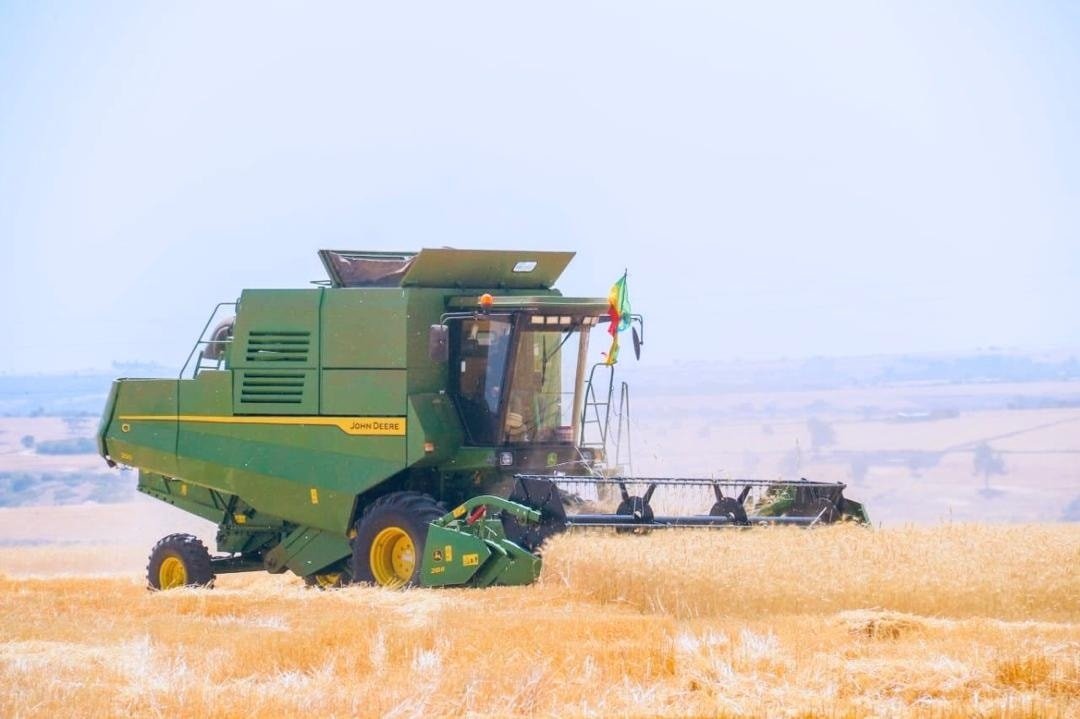

Ethiopia has achieved its largest-ever rain-fed wheat harvest, producing 126.69 million quintals (about 12.7 million metric tons) in the first half of the 2018 Ethiopian calendar year, as part of a national push to reduce grain imports and boost food security.
The harvest marks a major milestone under the country’s National Wheat Program, which supports higher yields and improved market access for smallholder farmers.
Government officials attributed the increase to improved seed varieties, expanded mechanization, and stronger support for smallholder farmers.
The total does not include irrigated wheat and covers the period starting in September 2025.
Prime Minister Abiy Ahmed praised farmers for their performance and called for continued momentum.
In a social media statement, he described the harvest as a breakthrough in Ethiopia’s goal of wheat self-sufficiency.
The National Wheat Program aims to reduce import dependence by raising yields, expanding irrigated farming, and strengthening seed systems in key producing regions.
Wheat remains a vital staple in Ethiopia, with imports historically absorbing a significant share of foreign currency.
According to the Office of the Prime Minister of Ethiopia, rural road projects and public service investments are helping connect farming areas to local and regional markets.
Shorter travel times and lower transport costs are expected to improve sales, raise farmer incomes, and expand access to health care, education, and agricultural support.
The wheat surge supports broader goals under the African Union’s Agenda 2063, which promotes agricultural modernization and food security.
It also advances United Nations Sustainable Development Goals on hunger, poverty, and resilient livelihoods.
If sustained, the gains could reduce pressure on imports and strengthen Ethiopia’s role in regional food security.