
Bantu Gazette

Bantu Gazette
  • Energy & Trade
  • Finance
  • Health
  • Politics & Economy
  • Technology
  • Environment
  • Feature
  • Opinion
  • Changemakers
  • Tourism & Culture
  • Sports
  • Magazine
Menu
  • Black Frame Studio
  • Magazine

Ghana’s President Calls for Africa’s Self-Reliance Amid U.S. Aid Cuts

Ghana’s President Calls for Africa’s Self-Reliance Amid U.S. Aid Cuts
Felix Tihby Felix Tih
February 14, 2025
Reading Time: 4 mins read

Ghana’s President Calls for Africa’s Self-Reliance Amid U.S. Aid Cuts

Ghana’s President Calls for Africa’s Self-Reliance Amid U.S. Aid Cuts
Felix Tihby Felix Tih
July 16, 2025
Reading Time: 4 mins read

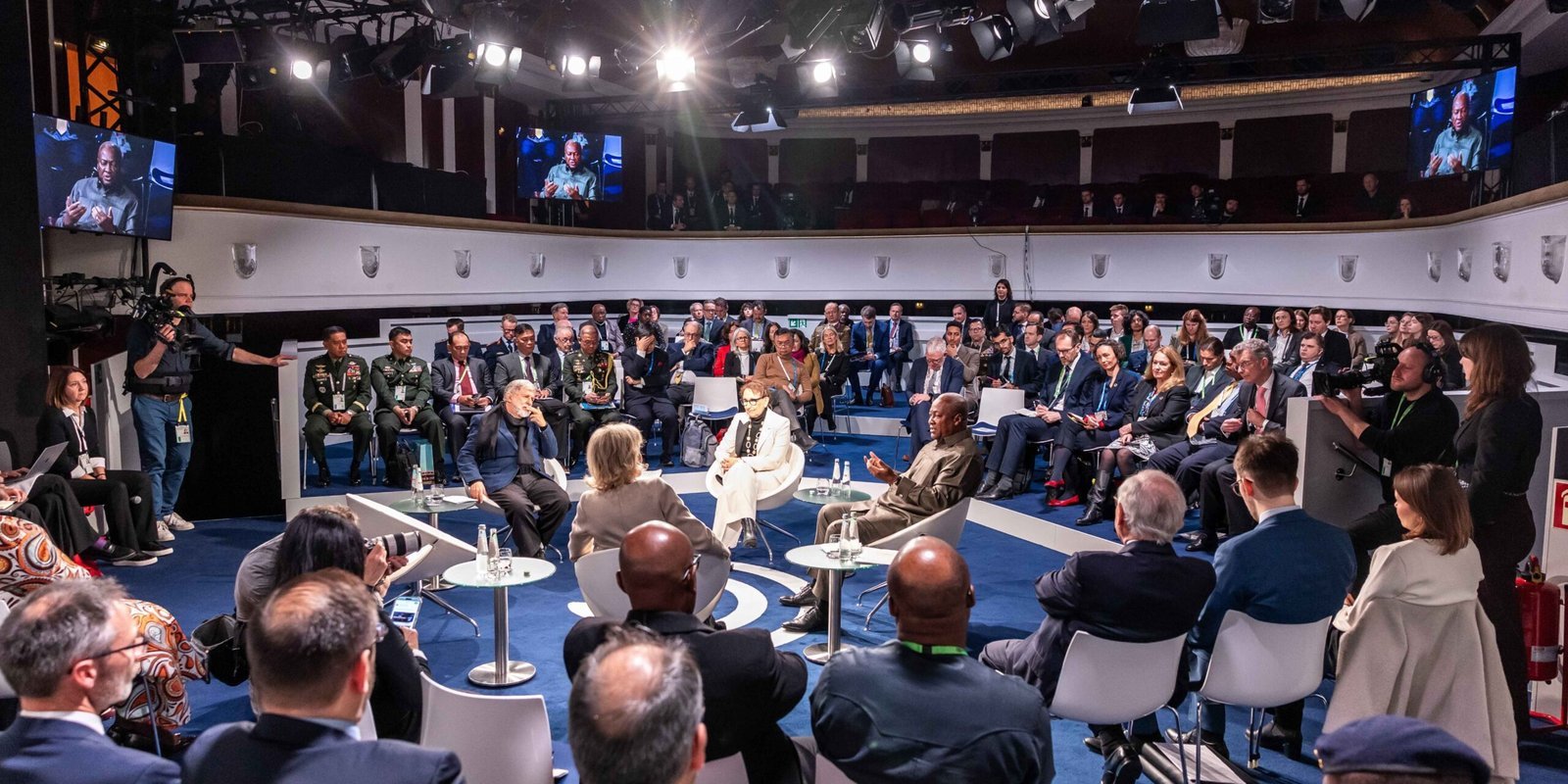
MUNICH (Bantu Gazette) — At the Munich Security Conference, Ghana’s President John Mahama delivered a resolute message Friday: Africa must become self-reliant.

His remarks came in response to the U.S. decision to halt foreign aid.

Addressing a panel titled “Building or Burning Bridges: Global Economic Governance Amid Mult polarization,” Mahama acknowledged Africa’s immediate challenges but emphasized the opportunity to pivot toward economic independence.

Before departing for Munich, Mahama took decisive action. “I issued a directive to our minister of finance to make adjustments in our budget to take up the slack from the disruption in USAID funding,” he said.

According to Mahama, the cut amounts to $156 million for 2025—more than 2 billion Ghanaian cedis—affecting governance, health care, economic growth, and education.

The most critical impact, he noted, is in the health care sector, where funding supports maternity services, HIV treatment, and other vital programs.

Adversity as an Opportunity for Growth

Rather than viewing the aid cut as a crisis, Mahama sees it as a wake-up call. “I believe that it’s adversity and opportunity. It must teach Africa to become more self-reliant,” he stated.

While acknowledging the historic role of the U.S. in global economic governance, he pointed out the shifting landscape.

“The U.S. has prospered from the post-World War order, but it’s gotten to a stage where it wants to recalibrate,” he said, warning that such shifts should be managed with less disruption.

He also cautioned that the U.S. risks losing its soft power, a key tool in its global influence.

A Multipolar World and New Alliances

With the U.S. retreating from international aid, Mahama stressed Africa’s need to forge new partnerships.

“The U.S. is not our only partner,” he said. “As bridges are burning, new bridges are being formed. And we need to look for those new bridges and be able to link the world on those new bridges.”

Rebeca Grynspan, secretary-general of the U.N.’s Trade and Development division, echoed Mahama’s sentiments.

“Thirty percent of global trade today is South-South,” she noted, referring to trade between developing nations. “The African Free Trade Area can add $3.4 trillion to Africa’s economy. And that depends on Africa, not the U.S.”

The Role of Africa’s Free Trade Agreement

Mahama reinforced the importance of the African Continental Free Trade Agreement (AfCFTA) in driving Africa’s economic transformation. “Self-reliance is not only at the national level but on the continental level,” he said.

However, he acknowledged obstacles remain. “Our trade channels have historically been between Africa and Europe, not among ourselves,” he explained.

To change this, he stressed the need for improved infrastructure and logistics. “Most countries are allowing free movement of people. If we have free movement of goods and services across the continent, it will fill a huge gap in South-South trade.”

Equity and Economic Inclusion

Beyond trade, Mahama emphasized the need for inclusive economic policies. “The time has come for us to be more self-reliant, especially when it comes to the vulnerable in our society,” he stated.

He called for stronger safety nets, equitable wealth distribution, and opportunities for Africa’s youth.

“We must bridge the gap between the rich and the poor and put out opportunities for our young people to be able to make a life for themselves.”

With Africa’s youth population set to be the largest in the world in the coming decades, ensuring equitable access to education, entrepreneurship, and employment will be key to sustaining long-term growth.

The Future of Africa’s Economic Strategy

As the global order shifts, Mahama’s message is clear: Africa must take control of its economic future.

The U.S. withdrawal from aid presents a challenge and an opportunity for African nations to strengthen their economies from within.

The AfCFTA, stronger regional collaboration, and inclusive policies will be the pillars of this strategy.

“We must learn how to take care of our vulnerable and make sure they are included in the growth that is taking place,” the Ghanaian president said.

His comments at the Munich Security Conference signal a strong response to U.S. policy shifts and a broader vision for Africa’s economic sovereignty—one built on regional trade, strategic partnerships, and self-sufficiency.

Get the inside Story

Stay informed on the stories shaping Africa’s future. Get breaking news, in-depth analysis, opinions and exclusive insights from across the continent delivered to your inbox, free and unfiltered.


Get in touch for more:
Felix Tih
Editorial Director, Bantu Gazette
WhatsApp
LinkedIn
X (Twitter)
Instagram

Related Posts

Ghana’s Energy Sector Remains Country’s Biggest Economic Risk, Finance Minister Says
Politics & Economy

Ghana Clears $1.47 Billion in Energy Debts, Restores World Bank Guarantee

January 12, 2026
Ethiopia Breaks Ground on Africa’s Largest Airport
Politics & Economy

Ethiopia Breaks Ground on Africa’s Largest Airport

January 10, 2026
Egypt Tapped as Potential Hub for Pan-African Gold Bank
Politics & Economy

Egypt Tapped as Potential Hub for Pan-African Gold Bank

January 6, 2026
Equatorial Guinea Moves Capital from Malabo to Ciudad de la Paz
Finance

Equatorial Guinea Moves Capital from Malabo to Ciudad de la Paz

January 7, 2026
Rwanda Tops Africa in World Bank Business Ready Rankings
Politics & Economy

Rwanda Tops Africa in World Bank Business Ready Rankings

January 3, 2026
Nigeria’s Tinubu Hails Economic Growth After 2025 Gains, Tax Reforms
Politics & Economy

Nigeria’s Tinubu Hails Economic Growth After 2025 Gains, Tax Reforms

January 2, 2026

Most Recent

Nigeria, UAE Agree to Eliminate Tariffs on Over 7,000 Products
Energy & Trade

Nigeria, UAE Agree to Eliminate Tariffs on Over 7,000 Products

by Aissatou Fall
January 13, 2026
0

Nigeria and the United Arab Emirates on Tuesday signed a Comprehensive Economic Partnership Agreement that removes tariffs on more than...

Read moreDetails
Ghana’s Energy Sector Remains Country’s Biggest Economic Risk, Finance Minister Says

Ghana Clears $1.47 Billion in Energy Debts, Restores World Bank Guarantee

January 12, 2026
Eto’o Commends Morocco’s AFCON Hosting, Sportsmanship After Cameroon’s Exit

Eto’o Commends Morocco’s AFCON Hosting, Sportsmanship After Cameroon’s Exit

January 11, 2026
Africa’s Oldest Cremation Pyre Found in Malawi, Dating Back 9,500 Years

Africa’s Oldest Cremation Pyre Found in Malawi, Dating Back 9,500 Years

January 10, 2026
Ethiopia Breaks Ground on Africa’s Largest Airport

Ethiopia Breaks Ground on Africa’s Largest Airport

January 10, 2026
Kenya Secures Funds to Protect Reefs, Grow Coastal Economy

Kenya Secures Funds to Protect Reefs, Grow Coastal Economy

January 9, 2026
Morocco Leverages AFCON 2025 to Boost Global Tourism Visibility

Morocco Leverages AFCON 2025 to Boost Global Tourism Visibility

January 7, 2026
Nigeria, UAE Agree to Eliminate Tariffs on Over 7,000 Products
Energy & Trade

Nigeria, UAE Agree to Eliminate Tariffs on Over 7,000 Products

by Aissatou Fall
Reading Time: 1 min read
January 13, 2026
0

Nigeria and the United Arab Emirates on Tuesday signed a Comprehensive Economic Partnership Agreement that removes tariffs on more than...

Read moreDetails
Ghana’s Energy Sector Remains Country’s Biggest Economic Risk, Finance Minister Says
Politics & Economy

Ghana Clears $1.47 Billion in Energy Debts, Restores World Bank Guarantee

by Marcelo Edjang
Reading Time: 1 min read
January 12, 2026
0

The Government of Ghana paid about $1.47 billion in 2025 to clear energy sector arrears, restore a key World Bank...

Read moreDetails
Eto’o Commends Morocco’s AFCON Hosting, Sportsmanship After Cameroon’s Exit
Sports

Eto’o Commends Morocco’s AFCON Hosting, Sportsmanship After Cameroon’s Exit

by Elise Ntebah
Reading Time: 1 min read
January 11, 2026
0

Samuel Eto’o, president of the Cameroon Football Federation, praised Morocco for its exemplary organization and warm hospitality during the 2025...

Read moreDetails

Ghana’s President Calls for Africa’s Self-Reliance Amid U.S. Aid Cuts

Ghana’s President Calls for Africa’s Self-Reliance Amid U.S. Aid Cuts

MUNICH (Bantu Gazette) — At the Munich Security Conference, Ghana’s President John Mahama delivered a resolute message Friday: Africa must become self-reliant.

His remarks came in response to the U.S. decision to halt foreign aid.

Addressing a panel titled “Building or Burning Bridges: Global Economic Governance Amid Mult polarization,” Mahama acknowledged Africa’s immediate challenges but emphasized the opportunity to pivot toward economic independence.

Before departing for Munich, Mahama took decisive action. “I issued a directive to our minister of finance to make adjustments in our budget to take up the slack from the disruption in USAID funding,” he said.

According to Mahama, the cut amounts to $156 million for 2025—more than 2 billion Ghanaian cedis—affecting governance, health care, economic growth, and education.

The most critical impact, he noted, is in the health care sector, where funding supports maternity services, HIV treatment, and other vital programs.

Adversity as an Opportunity for Growth

Rather than viewing the aid cut as a crisis, Mahama sees it as a wake-up call. “I believe that it’s adversity and opportunity. It must teach Africa to become more self-reliant,” he stated.

While acknowledging the historic role of the U.S. in global economic governance, he pointed out the shifting landscape.

“The U.S. has prospered from the post-World War order, but it’s gotten to a stage where it wants to recalibrate,” he said, warning that such shifts should be managed with less disruption.

He also cautioned that the U.S. risks losing its soft power, a key tool in its global influence.

A Multipolar World and New Alliances

With the U.S. retreating from international aid, Mahama stressed Africa’s need to forge new partnerships.

“The U.S. is not our only partner,” he said. “As bridges are burning, new bridges are being formed. And we need to look for those new bridges and be able to link the world on those new bridges.”

Rebeca Grynspan, secretary-general of the U.N.’s Trade and Development division, echoed Mahama’s sentiments.

“Thirty percent of global trade today is South-South,” she noted, referring to trade between developing nations. “The African Free Trade Area can add $3.4 trillion to Africa’s economy. And that depends on Africa, not the U.S.”

The Role of Africa’s Free Trade Agreement

Mahama reinforced the importance of the African Continental Free Trade Agreement (AfCFTA) in driving Africa’s economic transformation. “Self-reliance is not only at the national level but on the continental level,” he said.

However, he acknowledged obstacles remain. “Our trade channels have historically been between Africa and Europe, not among ourselves,” he explained.

To change this, he stressed the need for improved infrastructure and logistics. “Most countries are allowing free movement of people. If we have free movement of goods and services across the continent, it will fill a huge gap in South-South trade.”

Equity and Economic Inclusion

Beyond trade, Mahama emphasized the need for inclusive economic policies. “The time has come for us to be more self-reliant, especially when it comes to the vulnerable in our society,” he stated.

He called for stronger safety nets, equitable wealth distribution, and opportunities for Africa’s youth.

“We must bridge the gap between the rich and the poor and put out opportunities for our young people to be able to make a life for themselves.”

With Africa’s youth population set to be the largest in the world in the coming decades, ensuring equitable access to education, entrepreneurship, and employment will be key to sustaining long-term growth.

The Future of Africa’s Economic Strategy

As the global order shifts, Mahama’s message is clear: Africa must take control of its economic future.

The U.S. withdrawal from aid presents a challenge and an opportunity for African nations to strengthen their economies from within.

The AfCFTA, stronger regional collaboration, and inclusive policies will be the pillars of this strategy.

“We must learn how to take care of our vulnerable and make sure they are included in the growth that is taking place,” the Ghanaian president said.

His comments at the Munich Security Conference signal a strong response to U.S. policy shifts and a broader vision for Africa’s economic sovereignty—one built on regional trade, strategic partnerships, and self-sufficiency.
Ghana’s President Calls for Africa’s Self-Reliance Amid U.S. Aid Cuts

Ghana’s President Calls for Africa’s Self-Reliance Amid U.S. Aid Cuts
Felix Tihby Felix Tih
February 14, 2025

MUNICH (Bantu Gazette) — At the Munich Security Conference, Ghana’s President John Mahama delivered a resolute message Friday: Africa must become self-reliant.

His remarks came in response to the U.S. decision to halt foreign aid.

Addressing a panel titled “Building or Burning Bridges: Global Economic Governance Amid Mult polarization,” Mahama acknowledged Africa’s immediate challenges but emphasized the opportunity to pivot toward economic independence.

Before departing for Munich, Mahama took decisive action. “I issued a directive to our minister of finance to make adjustments in our budget to take up the slack from the disruption in USAID funding,” he said.

According to Mahama, the cut amounts to $156 million for 2025—more than 2 billion Ghanaian cedis—affecting governance, health care, economic growth, and education.

The most critical impact, he noted, is in the health care sector, where funding supports maternity services, HIV treatment, and other vital programs.

Adversity as an Opportunity for Growth

Rather than viewing the aid cut as a crisis, Mahama sees it as a wake-up call. “I believe that it’s adversity and opportunity. It must teach Africa to become more self-reliant,” he stated.

While acknowledging the historic role of the U.S. in global economic governance, he pointed out the shifting landscape.

“The U.S. has prospered from the post-World War order, but it’s gotten to a stage where it wants to recalibrate,” he said, warning that such shifts should be managed with less disruption.

He also cautioned that the U.S. risks losing its soft power, a key tool in its global influence.

A Multipolar World and New Alliances

With the U.S. retreating from international aid, Mahama stressed Africa’s need to forge new partnerships.

“The U.S. is not our only partner,” he said. “As bridges are burning, new bridges are being formed. And we need to look for those new bridges and be able to link the world on those new bridges.”

Rebeca Grynspan, secretary-general of the U.N.’s Trade and Development division, echoed Mahama’s sentiments.

“Thirty percent of global trade today is South-South,” she noted, referring to trade between developing nations. “The African Free Trade Area can add $3.4 trillion to Africa’s economy. And that depends on Africa, not the U.S.”

The Role of Africa’s Free Trade Agreement

Mahama reinforced the importance of the African Continental Free Trade Agreement (AfCFTA) in driving Africa’s economic transformation. “Self-reliance is not only at the national level but on the continental level,” he said.

However, he acknowledged obstacles remain. “Our trade channels have historically been between Africa and Europe, not among ourselves,” he explained.

To change this, he stressed the need for improved infrastructure and logistics. “Most countries are allowing free movement of people. If we have free movement of goods and services across the continent, it will fill a huge gap in South-South trade.”

Equity and Economic Inclusion

Beyond trade, Mahama emphasized the need for inclusive economic policies. “The time has come for us to be more self-reliant, especially when it comes to the vulnerable in our society,” he stated.

He called for stronger safety nets, equitable wealth distribution, and opportunities for Africa’s youth.

“We must bridge the gap between the rich and the poor and put out opportunities for our young people to be able to make a life for themselves.”

With Africa’s youth population set to be the largest in the world in the coming decades, ensuring equitable access to education, entrepreneurship, and employment will be key to sustaining long-term growth.

The Future of Africa’s Economic Strategy

As the global order shifts, Mahama’s message is clear: Africa must take control of its economic future.

The U.S. withdrawal from aid presents a challenge and an opportunity for African nations to strengthen their economies from within.

The AfCFTA, stronger regional collaboration, and inclusive policies will be the pillars of this strategy.

“We must learn how to take care of our vulnerable and make sure they are included in the growth that is taking place,” the Ghanaian president said.

His comments at the Munich Security Conference signal a strong response to U.S. policy shifts and a broader vision for Africa’s economic sovereignty—one built on regional trade, strategic partnerships, and self-sufficiency.
Get the inside Story

Stay informed on the stories shaping Africa’s future. Get breaking news, in-depth analysis, opinions and exclusive insights from across the continent delivered to your inbox, free and unfiltered.


Get in touch for more:
Felix Tih
Editorial Director, Bantu Gazette
WhatsApp
LinkedIn
X (Twitter)
Instagram

Related Posts

Ghana’s Energy Sector Remains Country’s Biggest Economic Risk, Finance Minister Says

Ghana Clears $1.47 Billion in Energy Debts, Restores World Bank Guarantee

by Marcelo Edjang
January 12, 2026
0

...

Ethiopia Breaks Ground on Africa’s Largest Airport

Ethiopia Breaks Ground on Africa’s Largest Airport

by Maraki Desta
January 10, 2026
0

...

Egypt Tapped as Potential Hub for Pan-African Gold Bank

Egypt Tapped as Potential Hub for Pan-African Gold Bank

by Samira Benhadda
January 6, 2026
0

...

Equatorial Guinea Moves Capital from Malabo to Ciudad de la Paz

Equatorial Guinea Moves Capital from Malabo to Ciudad de la Paz

by Bantu Gazette
January 4, 2026
0

...

Rwanda Tops Africa in World Bank Business Ready Rankings

Rwanda Tops Africa in World Bank Business Ready Rankings

by Jane Mukami
January 3, 2026
0

...

Nigeria’s Tinubu Hails Economic Growth After 2025 Gains, Tax Reforms

Nigeria’s Tinubu Hails Economic Growth After 2025 Gains, Tax Reforms

by Cynthia N. Ganchok
January 2, 2026
0

...

Nigeria, UAE Agree to Eliminate Tariffs on Over 7,000 Products
Energy & Trade

Nigeria, UAE Agree to Eliminate Tariffs on Over 7,000 Products

by Aissatou Fall
Reading Time: 1 min read
January 13, 2026
0

Nigeria and the United Arab Emirates on Tuesday signed a Comprehensive Economic Partnership Agreement that removes tariffs on more than...

Read moreDetails
Ghana’s Energy Sector Remains Country’s Biggest Economic Risk, Finance Minister Says

Ghana Clears $1.47 Billion in Energy Debts, Restores World Bank Guarantee

by Marcelo Edjang
January 12, 2026
0

The Government of Ghana paid about $1.47 billion in 2025 to clear energy sector arrears, restore a key World Bank...

Eto’o Commends Morocco’s AFCON Hosting, Sportsmanship After Cameroon’s Exit

Eto’o Commends Morocco’s AFCON Hosting, Sportsmanship After Cameroon’s Exit

by Elise Ntebah
January 11, 2026
0

Samuel Eto’o, president of the Cameroon Football Federation, praised Morocco for its exemplary organization and warm hospitality during the 2025...

Africa’s Oldest Cremation Pyre Found in Malawi, Dating Back 9,500 Years

Africa’s Oldest Cremation Pyre Found in Malawi, Dating Back 9,500 Years

by Amani Mwakalebela
January 10, 2026
0

Archaeologists have uncovered Africa’s earliest known cremation at the base of Mount Hora in northern Malawi, dating to about 9,500...

Ethiopia Breaks Ground on Africa’s Largest Airport

Ethiopia Breaks Ground on Africa’s Largest Airport

by Maraki Desta
January 10, 2026
0

Ethiopia has broken ground on Bishoftu International Airport, a multi-billion-dollar project set to become the largest aviation infrastructure development in...

Next Post
Djibouti’s Mahamoud Ali Youssouf Elected African Union Commission Chair

Djibouti’s Mahamoud Ali Youssouf Elected African Union Commission Chair

Barbados PM Calls for Africa-Caribbean Unity at AU Summit

Barbados PM Calls for Africa-Caribbean Unity at AU Summit

Un engagement politique et financier essentiel pour freiner la progression des maladies non transmissibles

Un engagement politique et financier essentiel pour freiner la progression des maladies non transmissibles

Africa’s Economic Growth is Strengthening but Remains Vulnerable, Report Says

Africa's Economic Growth is Strengthening but Remains Vulnerable, Report Says

Bantu Gazette is a pioneering news platform that champions Africa's development, culture, and heritage. We spotlight the continent's successes, address its challenges, and provide insightful coverage of events that shape its future.

Bantu Gazette is a pioneering news platform that champions Africa's development, culture, and heritage. We spotlight the continent's successes, address its challenges, and provide insightful coverage of events that shape its future.

Our Platforms

  • Bantu Magazine
  • Bantu Brief
  • Black Frame Studio

Our Services

  • Bantu Agency
  • Advertise
  • Partnerships

Our Services

  • Editorial Director
  • Opportunities
  • Contact

Bantu Gazette is a pioneering news platform that champions Africa's development, culture, and heritage. We spotlight the continent's successes, address its challenges, and provide insightful coverage of events that shape its future.

Our Platforms

  • Bantu Magazine
  • Bantu Brief
  • Black Frame Studio

Our Services

  • Bantu Agency
  • Advertise
  • Partnerships

Our Services

  • Editorial Director
  • Opportunities
  • Contact
Bantu Gazette
  • Energy & Trade
  • Finance
  • Health
  • Politics & Economy
  • Technology
  • Environment
  • Feature
  • Opinion
  • Changemakers
  • Tourism & Culture
  • Magazine