
Bantu Gazette

Bantu Gazette
  • Energy & Trade
  • Finance
  • Health
  • Politics & Economy
  • Technology
  • Environment
  • Feature
  • Opinion
  • Changemakers
  • Tourism & Culture
  • Sports
  • Magazine
Menu
  • Black Frame Studio
  • Magazine

Grand Magal de Touba Draws Millions to Senegal’s Self-Governing City

Special-status city generates €380 million annually through massive pilgrimage, operates outside state control

Grand Magal de Touba Draws Millions to Senegal’s Self-Governing City

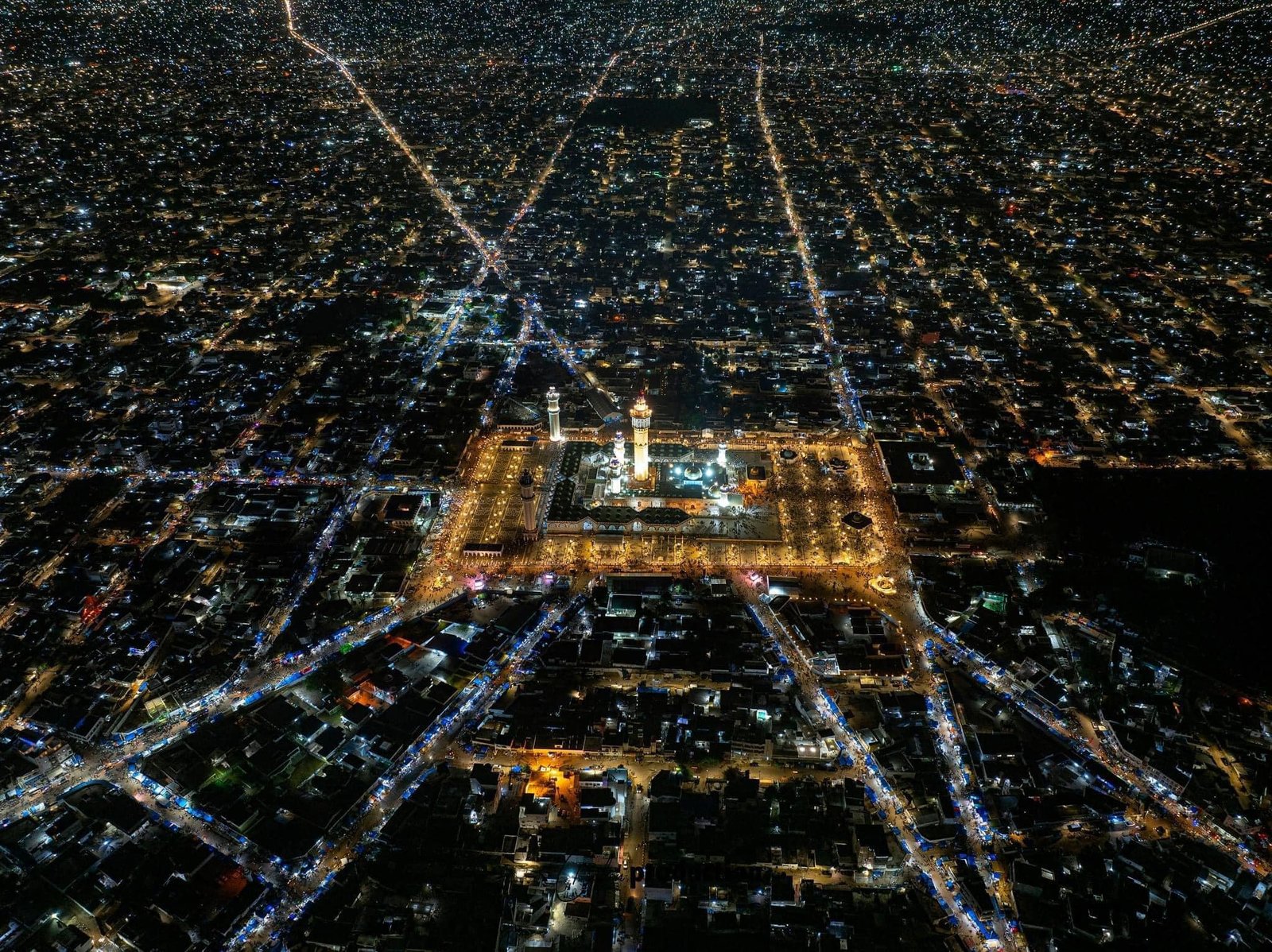
City of Touba. Courtesy of Grand Magal de Touba via social media

Aissatou Fallby Aissatou Fall
August 13, 2025
Reading Time: 2 mins read

Grand Magal de Touba Draws Millions to Senegal’s Self-Governing City

Special-status city generates €380 million annually through massive pilgrimage, operates outside state control

Grand Magal de Touba Draws Millions to Senegal’s Self-Governing City

City of Touba. Courtesy of Grand Magal de Touba via social media

Grand Magal de Touba Draws Millions to Senegal’s Self-Governing City

City of Touba. Courtesy of Grand Magal de Touba via social media

Aissatou Fallby Aissatou Fall
August 16, 2025
Reading Time: 2 mins read

Pilgrims from across the world are gathering in Touba for the Grand Magal, an annual religious event that transforms Senegal’s second-largest city into the center of one of Africa’s largest pilgrimages.

The pilgrimage commemorates the 1895 arrest and exile of Cheikh Amadou Bamba by French colonial authorities.

Held on the 18th of Safar in the Islamic lunar calendar, the Grand Magal has become one of Africa’s largest religious gatherings.

During the Grand Magal, daily life in Touba shifts to accommodate the influx of pilgrims. Makeshift clinics, prayer tents, and communal kitchens appear across the city.

Roads are filled with processions, Qur’an recitations echo through the streets, and markets operate around the clock.

Despite the crowds, the event is marked by a spirit of discipline and hospitality, with Mouride volunteers ensuring smooth logistics and services.

The city operates without a mayor or municipal budget, governed instead by the khalife général des Mourides, a religious authority that manages everything from infrastructure to social services.

The city’s unique governance model centers on the Grand Magal, an annual pilgrimage that draws between 3 million and 5 million visitors each year.

The event generates an estimated 250 billion CFA francs (€380 million) in economic activity, according to researchers at Ali Job University in Bambey.

Self-Funded Infrastructure

Touba finances its operations through three main sources: voluntary contributions from disciples, remittances from Mouride communities abroad, and profits from agriculture and trade ventures.

The Senegalese state provides limited services including security, sanitation support, and health reinforcement during the pilgrimage.

The religious authority handles urban planning, infrastructure development, and daily administration.

On Wednesday, President Bassirou Diomaye Faye issued a statement offering warm wishes to the Mouride community for the Grand Magal, calling for Senegal to remain a country of lasting peace and shared prosperity.

The Great Mosque of Touba, one of Africa’s largest religious buildings, continues expanding through community contributions.

During the Grand Magal, volunteers organize free meals, water distribution, and health services for millions of pilgrims without external donor support.

Economic Impact and Policy Innovation

Transport companies operate at full capacity during the pilgrimage, moving visitors from Blaise Diagne International Airport and regional hubs.

Farmers in Senegal’s peanut-growing regions increase production ahead of the event.

Local traders and artisans report order increases for clothing, religious texts, household goods, and food supplies.

The economic activity extends throughout the year through ongoing remittances and trade networks.

Touba banned smoking in all public spaces in 1980, 34 years before Senegal enacted national tobacco control legislation in 2014. Mouride authorities enforce the prohibition for religious reasons.

The measure has attracted attention from health advocates across Africa as an example of religious governance implementing progressive policies ahead of national governments.

Rapid population growth without state urban planning creates infrastructure strain. Waste management after the pilgrimage remains a persistent challenge.

Seasonal population surges stress water, electricity, and transport systems. City officials require coordination with national agencies for large-scale health and sanitation needs during peak periods.

The Man Behind the Vision
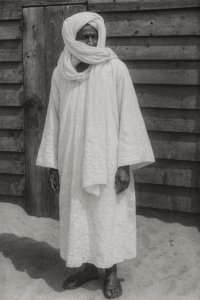
AI-generated image of Cheikh Amadou Bamba of Touba

The governance model traces to Cheikh Amadou Bamba Mbacké (1853–1927), who founded the Mouride Brotherhood. French colonial authorities arrested and exiled him twice, first to Gabon in 1895 and later to Mauritania, accusing him of rebellion.

Bamba’s focus on moral renewal, self-reliance, and Islamic education became the foundation of the current system. His refusal to use violence and his extensive religious writings built a following that continues to define Touba’s operations.

The city demonstrates how faith-based governance can generate economic activity and maintain social services independent of traditional municipal structures.


Touba, Senegal – Bantu Gazette August 12, 2025
Get the inside Story

Stay informed on the stories shaping Africa’s future. Get breaking news, in-depth analysis, opinions and exclusive insights from across the continent delivered to your inbox, free and unfiltered.


Get in touch for more:
Felix Tih
Editorial Director, Bantu Gazette
WhatsApp
LinkedIn
X (Twitter)
Instagram

Related Posts

Africa’s Oldest Cremation Pyre Found in Malawi, Dating Back 9,500 Years
Tourism & Culture

Africa’s Oldest Cremation Pyre Found in Malawi, Dating Back 9,500 Years

January 10, 2026
Morocco Leverages AFCON 2025 to Boost Global Tourism Visibility
Tourism & Culture

Morocco Leverages AFCON 2025 to Boost Global Tourism Visibility

January 7, 2026
Nigeria Ranks First in Global Generosity, Survey Finds
Tourism & Culture

Nigeria Ranks First in Global Generosity, Survey Finds

January 7, 2026
Iconic Eyo Festival Returns to Lagos After Eight-Year Break
Tourism & Culture

Iconic Eyo Festival Returns to Lagos After Eight-Year Break

December 31, 2025
Timbuktu Hosts Mali’s National Cultural Biennale
Tourism & Culture

Timbuktu Hosts Mali’s National Cultural Biennale

December 19, 2025
Cotonou Comedy Festival Expands Benin’s Cultural Footprint in Africa
Tourism & Culture

Cotonou Comedy Festival Expands Benin’s Cultural Footprint in Africa

December 10, 2025

Most Recent

Nigeria, UAE Agree to Eliminate Tariffs on Over 7,000 Products
Energy & Trade

Nigeria, UAE Agree to Eliminate Tariffs on Over 7,000 Products

by Aissatou Fall
January 13, 2026
0

Nigeria and the United Arab Emirates on Tuesday signed a Comprehensive Economic Partnership Agreement that removes tariffs on more than...

Read moreDetails
Ghana’s Energy Sector Remains Country’s Biggest Economic Risk, Finance Minister Says

Ghana Clears $1.47 Billion in Energy Debts, Restores World Bank Guarantee

January 12, 2026
Eto’o Commends Morocco’s AFCON Hosting, Sportsmanship After Cameroon’s Exit

Eto’o Commends Morocco’s AFCON Hosting, Sportsmanship After Cameroon’s Exit

January 11, 2026
Africa’s Oldest Cremation Pyre Found in Malawi, Dating Back 9,500 Years

Africa’s Oldest Cremation Pyre Found in Malawi, Dating Back 9,500 Years

January 10, 2026
Ethiopia Breaks Ground on Africa’s Largest Airport

Ethiopia Breaks Ground on Africa’s Largest Airport

January 10, 2026
Kenya Secures Funds to Protect Reefs, Grow Coastal Economy

Kenya Secures Funds to Protect Reefs, Grow Coastal Economy

January 9, 2026
Morocco Leverages AFCON 2025 to Boost Global Tourism Visibility

Morocco Leverages AFCON 2025 to Boost Global Tourism Visibility

January 7, 2026
Nigeria, UAE Agree to Eliminate Tariffs on Over 7,000 Products
Energy & Trade

Nigeria, UAE Agree to Eliminate Tariffs on Over 7,000 Products

by Aissatou Fall
Reading Time: 1 min read
January 13, 2026
0

Nigeria and the United Arab Emirates on Tuesday signed a Comprehensive Economic Partnership Agreement that removes tariffs on more than...

Read moreDetails
Ghana’s Energy Sector Remains Country’s Biggest Economic Risk, Finance Minister Says
Politics & Economy

Ghana Clears $1.47 Billion in Energy Debts, Restores World Bank Guarantee

by Marcelo Edjang
Reading Time: 1 min read
January 12, 2026
0

The Government of Ghana paid about $1.47 billion in 2025 to clear energy sector arrears, restore a key World Bank...

Read moreDetails
Eto’o Commends Morocco’s AFCON Hosting, Sportsmanship After Cameroon’s Exit
Sports

Eto’o Commends Morocco’s AFCON Hosting, Sportsmanship After Cameroon’s Exit

by Elise Ntebah
Reading Time: 1 min read
January 11, 2026
0

Samuel Eto’o, president of the Cameroon Football Federation, praised Morocco for its exemplary organization and warm hospitality during the 2025...

Read moreDetails

Grand Magal de Touba Draws Millions to Senegal’s Self-Governing City

Special-status city generates €380 million annually through massive pilgrimage, operates outside state control

Grand Magal de Touba Draws Millions to Senegal’s Self-Governing City

City of Touba. Courtesy of Grand Magal de Touba via social media

Pilgrims from across the world are gathering in Touba for the Grand Magal, an annual religious event that transforms Senegal’s second-largest city into the center of one of Africa’s largest pilgrimages.

The pilgrimage commemorates the 1895 arrest and exile of Cheikh Amadou Bamba by French colonial authorities.

Held on the 18th of Safar in the Islamic lunar calendar, the Grand Magal has become one of Africa’s largest religious gatherings.

During the Grand Magal, daily life in Touba shifts to accommodate the influx of pilgrims. Makeshift clinics, prayer tents, and communal kitchens appear across the city.

Roads are filled with processions, Qur’an recitations echo through the streets, and markets operate around the clock.

Despite the crowds, the event is marked by a spirit of discipline and hospitality, with Mouride volunteers ensuring smooth logistics and services.

The city operates without a mayor or municipal budget, governed instead by the khalife général des Mourides, a religious authority that manages everything from infrastructure to social services.

The city’s unique governance model centers on the Grand Magal, an annual pilgrimage that draws between 3 million and 5 million visitors each year.

The event generates an estimated 250 billion CFA francs (€380 million) in economic activity, according to researchers at Ali Job University in Bambey.

Self-Funded Infrastructure

Touba finances its operations through three main sources: voluntary contributions from disciples, remittances from Mouride communities abroad, and profits from agriculture and trade ventures.

The Senegalese state provides limited services including security, sanitation support, and health reinforcement during the pilgrimage.

The religious authority handles urban planning, infrastructure development, and daily administration.

On Wednesday, President Bassirou Diomaye Faye issued a statement offering warm wishes to the Mouride community for the Grand Magal, calling for Senegal to remain a country of lasting peace and shared prosperity.

The Great Mosque of Touba, one of Africa’s largest religious buildings, continues expanding through community contributions.

During the Grand Magal, volunteers organize free meals, water distribution, and health services for millions of pilgrims without external donor support.

Economic Impact and Policy Innovation

Transport companies operate at full capacity during the pilgrimage, moving visitors from Blaise Diagne International Airport and regional hubs.

Farmers in Senegal’s peanut-growing regions increase production ahead of the event.

Local traders and artisans report order increases for clothing, religious texts, household goods, and food supplies.

The economic activity extends throughout the year through ongoing remittances and trade networks.

Touba banned smoking in all public spaces in 1980, 34 years before Senegal enacted national tobacco control legislation in 2014. Mouride authorities enforce the prohibition for religious reasons.

The measure has attracted attention from health advocates across Africa as an example of religious governance implementing progressive policies ahead of national governments.

Rapid population growth without state urban planning creates infrastructure strain. Waste management after the pilgrimage remains a persistent challenge.

Seasonal population surges stress water, electricity, and transport systems. City officials require coordination with national agencies for large-scale health and sanitation needs during peak periods.

The Man Behind the Vision

AI-generated image of Cheikh Amadou Bamba of Touba

The governance model traces to Cheikh Amadou Bamba Mbacké (1853–1927), who founded the Mouride Brotherhood. French colonial authorities arrested and exiled him twice, first to Gabon in 1895 and later to Mauritania, accusing him of rebellion.

Bamba’s focus on moral renewal, self-reliance, and Islamic education became the foundation of the current system. His refusal to use violence and his extensive religious writings built a following that continues to define Touba’s operations.

The city demonstrates how faith-based governance can generate economic activity and maintain social services independent of traditional municipal structures.


Touba, Senegal – Bantu Gazette August 12, 2025

Grand Magal de Touba Draws Millions to Senegal’s Self-Governing City

Special-status city generates €380 million annually through massive pilgrimage, operates outside state control

Grand Magal de Touba Draws Millions to Senegal’s Self-Governing City

City of Touba. Courtesy of Grand Magal de Touba via social media

Aissatou Fallby Aissatou Fall
August 13, 2025

Pilgrims from across the world are gathering in Touba for the Grand Magal, an annual religious event that transforms Senegal’s second-largest city into the center of one of Africa’s largest pilgrimages.

The pilgrimage commemorates the 1895 arrest and exile of Cheikh Amadou Bamba by French colonial authorities.

Held on the 18th of Safar in the Islamic lunar calendar, the Grand Magal has become one of Africa’s largest religious gatherings.

During the Grand Magal, daily life in Touba shifts to accommodate the influx of pilgrims. Makeshift clinics, prayer tents, and communal kitchens appear across the city.

Roads are filled with processions, Qur’an recitations echo through the streets, and markets operate around the clock.

Despite the crowds, the event is marked by a spirit of discipline and hospitality, with Mouride volunteers ensuring smooth logistics and services.

The city operates without a mayor or municipal budget, governed instead by the khalife général des Mourides, a religious authority that manages everything from infrastructure to social services.

The city’s unique governance model centers on the Grand Magal, an annual pilgrimage that draws between 3 million and 5 million visitors each year.

The event generates an estimated 250 billion CFA francs (€380 million) in economic activity, according to researchers at Ali Job University in Bambey.

Self-Funded Infrastructure

Touba finances its operations through three main sources: voluntary contributions from disciples, remittances from Mouride communities abroad, and profits from agriculture and trade ventures.

The Senegalese state provides limited services including security, sanitation support, and health reinforcement during the pilgrimage.

The religious authority handles urban planning, infrastructure development, and daily administration.

On Wednesday, President Bassirou Diomaye Faye issued a statement offering warm wishes to the Mouride community for the Grand Magal, calling for Senegal to remain a country of lasting peace and shared prosperity.

The Great Mosque of Touba, one of Africa’s largest religious buildings, continues expanding through community contributions.

During the Grand Magal, volunteers organize free meals, water distribution, and health services for millions of pilgrims without external donor support.

Economic Impact and Policy Innovation

Transport companies operate at full capacity during the pilgrimage, moving visitors from Blaise Diagne International Airport and regional hubs.

Farmers in Senegal’s peanut-growing regions increase production ahead of the event.

Local traders and artisans report order increases for clothing, religious texts, household goods, and food supplies.

The economic activity extends throughout the year through ongoing remittances and trade networks.

Touba banned smoking in all public spaces in 1980, 34 years before Senegal enacted national tobacco control legislation in 2014. Mouride authorities enforce the prohibition for religious reasons.

The measure has attracted attention from health advocates across Africa as an example of religious governance implementing progressive policies ahead of national governments.

Rapid population growth without state urban planning creates infrastructure strain. Waste management after the pilgrimage remains a persistent challenge.

Seasonal population surges stress water, electricity, and transport systems. City officials require coordination with national agencies for large-scale health and sanitation needs during peak periods.

The Man Behind the Vision

AI-generated image of Cheikh Amadou Bamba of Touba

The governance model traces to Cheikh Amadou Bamba Mbacké (1853–1927), who founded the Mouride Brotherhood. French colonial authorities arrested and exiled him twice, first to Gabon in 1895 and later to Mauritania, accusing him of rebellion.

Bamba’s focus on moral renewal, self-reliance, and Islamic education became the foundation of the current system. His refusal to use violence and his extensive religious writings built a following that continues to define Touba’s operations.

The city demonstrates how faith-based governance can generate economic activity and maintain social services independent of traditional municipal structures.


Touba, Senegal – Bantu Gazette August 12, 2025

Get the inside Story

Stay informed on the stories shaping Africa’s future. Get breaking news, in-depth analysis, opinions and exclusive insights from across the continent delivered to your inbox, free and unfiltered.


Get in touch for more:
Felix Tih
Editorial Director, Bantu Gazette
WhatsApp
LinkedIn
X (Twitter)
Instagram

Related Posts

Africa’s Oldest Cremation Pyre Found in Malawi, Dating Back 9,500 Years

Africa’s Oldest Cremation Pyre Found in Malawi, Dating Back 9,500 Years

by Amani Mwakalebela
January 10, 2026
0

...

Morocco Leverages AFCON 2025 to Boost Global Tourism Visibility

Morocco Leverages AFCON 2025 to Boost Global Tourism Visibility

by Felix Tih
January 7, 2026
0

...

Nigeria Ranks First in Global Generosity, Survey Finds

Nigeria Ranks First in Global Generosity, Survey Finds

by Genoveva Ntutumu
January 7, 2026
0

...

Iconic Eyo Festival Returns to Lagos After Eight-Year Break

Iconic Eyo Festival Returns to Lagos After Eight-Year Break

by Amani Mwakalebela
December 28, 2025
0

...

Timbuktu Hosts Mali’s National Cultural Biennale

Timbuktu Hosts Mali’s National Cultural Biennale

by Bantu Gazette
December 19, 2025
0

...

Cotonou Comedy Festival Expands Benin’s Cultural Footprint in Africa

Cotonou Comedy Festival Expands Benin’s Cultural Footprint in Africa

by Aissatou Fall
December 7, 2025
0

...

Nigeria, UAE Agree to Eliminate Tariffs on Over 7,000 Products
Energy & Trade

Nigeria, UAE Agree to Eliminate Tariffs on Over 7,000 Products

by Aissatou Fall
Reading Time: 1 min read
January 13, 2026
0

Nigeria and the United Arab Emirates on Tuesday signed a Comprehensive Economic Partnership Agreement that removes tariffs on more than...

Read moreDetails
Ghana’s Energy Sector Remains Country’s Biggest Economic Risk, Finance Minister Says

Ghana Clears $1.47 Billion in Energy Debts, Restores World Bank Guarantee

by Marcelo Edjang
January 12, 2026
0

The Government of Ghana paid about $1.47 billion in 2025 to clear energy sector arrears, restore a key World Bank...

Eto’o Commends Morocco’s AFCON Hosting, Sportsmanship After Cameroon’s Exit

Eto’o Commends Morocco’s AFCON Hosting, Sportsmanship After Cameroon’s Exit

by Elise Ntebah
January 11, 2026
0

Samuel Eto’o, president of the Cameroon Football Federation, praised Morocco for its exemplary organization and warm hospitality during the 2025...

Africa’s Oldest Cremation Pyre Found in Malawi, Dating Back 9,500 Years

Africa’s Oldest Cremation Pyre Found in Malawi, Dating Back 9,500 Years

by Amani Mwakalebela
January 10, 2026
0

Archaeologists have uncovered Africa’s earliest known cremation at the base of Mount Hora in northern Malawi, dating to about 9,500...

Ethiopia Breaks Ground on Africa’s Largest Airport

Ethiopia Breaks Ground on Africa’s Largest Airport

by Maraki Desta
January 10, 2026
0

Ethiopia has broken ground on Bishoftu International Airport, a multi-billion-dollar project set to become the largest aviation infrastructure development in...

Next Post
Africa50 Tops $1.4 Billion in Assets as Infrastructure Push Expands

Africa50 Tops $1.4 Billion in Assets as Infrastructure Push Expands

Gabon President Sets 10% Economic Growth Target for 5th Republic

Gabon President Sets 10% Economic Growth Target for 5th Republic

South Africa’s $40M Unity Dialogue Faces Political Boycotts

South Africa's $40M Unity Dialogue Faces Political Boycotts

500 Global, UN Launch 3 African Startup Programs in Nairobi

500 Global, UN Launch 3 African Startup Programs in Nairobi

Bantu Gazette is a pioneering news platform that champions Africa's development, culture, and heritage. We spotlight the continent's successes, address its challenges, and provide insightful coverage of events that shape its future.

Bantu Gazette is a pioneering news platform that champions Africa's development, culture, and heritage. We spotlight the continent's successes, address its challenges, and provide insightful coverage of events that shape its future.

Our Platforms

  • Bantu Magazine
  • Bantu Brief
  • Black Frame Studio

Our Services

  • Bantu Agency
  • Advertise
  • Partnerships

Our Services

  • Editorial Director
  • Opportunities
  • Contact

Bantu Gazette is a pioneering news platform that champions Africa's development, culture, and heritage. We spotlight the continent's successes, address its challenges, and provide insightful coverage of events that shape its future.

Our Platforms

  • Bantu Magazine
  • Bantu Brief
  • Black Frame Studio

Our Services

  • Bantu Agency
  • Advertise
  • Partnerships

Our Services

  • Editorial Director
  • Opportunities
  • Contact
Bantu Gazette
  • Energy & Trade
  • Finance
  • Health
  • Politics & Economy
  • Technology
  • Environment
  • Feature
  • Opinion
  • Changemakers
  • Tourism & Culture
  • Magazine