
Bantu Gazette

Bantu Gazette
  • Energy & Trade
  • Finance
  • Health
  • Politics & Economy
  • Technology
  • Environment
  • Feature
  • Opinion
  • Changemakers
  • Tourism & Culture
  • Sports
  • Magazine
Menu
  • Black Frame Studio
  • Magazine

Grand Magal de Touba Draws Millions to Senegal’s Self-Governing City

Special-status city generates €380 million annually through massive pilgrimage, operates outside state control

Grand Magal de Touba Draws Millions to Senegal’s Self-Governing City

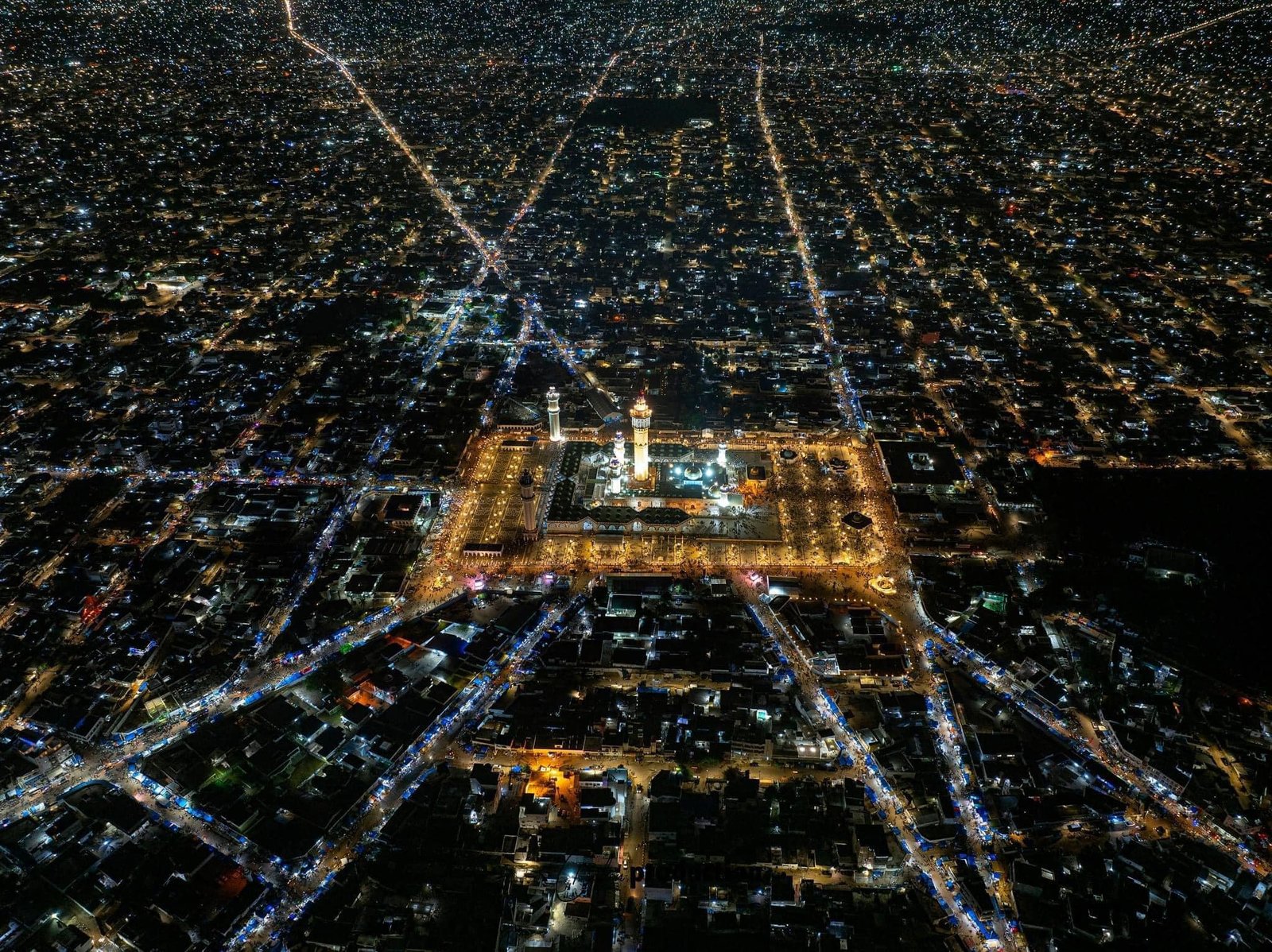
City of Touba. Courtesy of Grand Magal de Touba via social media

Aissatou Fallby Aissatou Fall
August 13, 2025
Reading Time: 2 mins read

Grand Magal de Touba Draws Millions to Senegal’s Self-Governing City

Special-status city generates €380 million annually through massive pilgrimage, operates outside state control

Grand Magal de Touba Draws Millions to Senegal’s Self-Governing City

City of Touba. Courtesy of Grand Magal de Touba via social media

Grand Magal de Touba Draws Millions to Senegal’s Self-Governing City

City of Touba. Courtesy of Grand Magal de Touba via social media

Aissatou Fallby Aissatou Fall
August 16, 2025
Reading Time: 2 mins read

Pilgrims from across the world are gathering in Touba for the Grand Magal, an annual religious event that transforms Senegal’s second-largest city into the center of one of Africa’s largest pilgrimages.

The pilgrimage commemorates the 1895 arrest and exile of Cheikh Amadou Bamba by French colonial authorities.

Held on the 18th of Safar in the Islamic lunar calendar, the Grand Magal has become one of Africa’s largest religious gatherings.

During the Grand Magal, daily life in Touba shifts to accommodate the influx of pilgrims. Makeshift clinics, prayer tents, and communal kitchens appear across the city.

Roads are filled with processions, Qur’an recitations echo through the streets, and markets operate around the clock.

Despite the crowds, the event is marked by a spirit of discipline and hospitality, with Mouride volunteers ensuring smooth logistics and services.

The city operates without a mayor or municipal budget, governed instead by the khalife général des Mourides, a religious authority that manages everything from infrastructure to social services.

The city’s unique governance model centers on the Grand Magal, an annual pilgrimage that draws between 3 million and 5 million visitors each year.

The event generates an estimated 250 billion CFA francs (€380 million) in economic activity, according to researchers at Ali Job University in Bambey.

Self-Funded Infrastructure

Touba finances its operations through three main sources: voluntary contributions from disciples, remittances from Mouride communities abroad, and profits from agriculture and trade ventures.

The Senegalese state provides limited services including security, sanitation support, and health reinforcement during the pilgrimage.

The religious authority handles urban planning, infrastructure development, and daily administration.

On Wednesday, President Bassirou Diomaye Faye issued a statement offering warm wishes to the Mouride community for the Grand Magal, calling for Senegal to remain a country of lasting peace and shared prosperity.

The Great Mosque of Touba, one of Africa’s largest religious buildings, continues expanding through community contributions.

During the Grand Magal, volunteers organize free meals, water distribution, and health services for millions of pilgrims without external donor support.

Economic Impact and Policy Innovation

Transport companies operate at full capacity during the pilgrimage, moving visitors from Blaise Diagne International Airport and regional hubs.

Farmers in Senegal’s peanut-growing regions increase production ahead of the event.

Local traders and artisans report order increases for clothing, religious texts, household goods, and food supplies.

The economic activity extends throughout the year through ongoing remittances and trade networks.

Touba banned smoking in all public spaces in 1980, 34 years before Senegal enacted national tobacco control legislation in 2014. Mouride authorities enforce the prohibition for religious reasons.

The measure has attracted attention from health advocates across Africa as an example of religious governance implementing progressive policies ahead of national governments.

Rapid population growth without state urban planning creates infrastructure strain. Waste management after the pilgrimage remains a persistent challenge.

Seasonal population surges stress water, electricity, and transport systems. City officials require coordination with national agencies for large-scale health and sanitation needs during peak periods.

The Man Behind the Vision
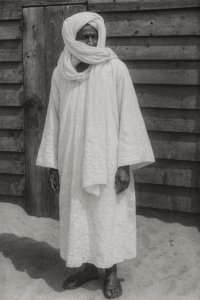
AI-generated image of Cheikh Amadou Bamba of Touba

The governance model traces to Cheikh Amadou Bamba Mbacké (1853–1927), who founded the Mouride Brotherhood. French colonial authorities arrested and exiled him twice, first to Gabon in 1895 and later to Mauritania, accusing him of rebellion.

Bamba’s focus on moral renewal, self-reliance, and Islamic education became the foundation of the current system. His refusal to use violence and his extensive religious writings built a following that continues to define Touba’s operations.

The city demonstrates how faith-based governance can generate economic activity and maintain social services independent of traditional municipal structures.


Touba, Senegal – Bantu Gazette August 12, 2025

Get the inside Story

Stay informed on the stories shaping Africa’s future. Get breaking news, in-depth analysis, opinions and exclusive insights from across the continent delivered to your inbox, free and unfiltered.


Get in touch for more:
Felix Tih
Editorial Director, Bantu Gazette
WhatsApp
LinkedIn
X (Twitter)
Instagram

Related Posts

Namibia President Calls for Preservation of Cultural Heritage
Tourism & Culture

Namibia President Calls for Preservation of Cultural Heritage

June 3, 2026
Uganda Positions Tourism for Regional Growth Ahead of 2027 AFCON
Tourism & Culture

Uganda Positions Tourism for Regional Growth Ahead of 2027 AFCON

May 26, 2026
‘Never Miss an Opportunity to Tell Your Story’
Tourism & Culture

‘Never Miss an Opportunity to Tell Your Story’

May 17, 2026
Rwanda Highlights Skills Development in Creative Economy Strategy
Tourism & Culture

Rwanda Highlights Skills Development in Creative Economy Strategy

May 22, 2026
Ethiopia Receives Emperor Tewodros II Relics as African Heritage Repatriations Gather Pace
Tourism & Culture

Ethiopia Receives Emperor Tewodros II Relics as African Heritage Repatriations Gather Pace

May 13, 2026
African Creators Gather at Adwa Memorial to Reclaim the Continent’s Story
Tourism & Culture

African Creators Gather at Adwa Memorial to Reclaim the Continent’s Story

May 8, 2026

Most Recent

Benin Announces Free Public Secondary Education for All Girls
Changemakers

Benin Announces Free Public Secondary Education for All Girls

by Aissatou Fall
June 4, 2026
0

President Romuald Wadagni says the policy will remove financial barriers to education and help thousands of girls stay in school...

Read moreDetails
Zimbabwe Secures Non-Permanent Seat on U.N. Security Council

Zimbabwe Secures Non-Permanent Seat on U.N. Security Council

June 3, 2026
Dangote Retains Africa’s Most Admired Brand Title for 8th Consecutive Year

Dangote Retains Africa’s Most Admired Brand Title for 8th Consecutive Year

June 4, 2026
Rwanda’s RSSB Tigers Make History with 2026 BAL Championship Victory

Rwanda’s RSSB Tigers Make History with 2026 BAL Championship Victory

June 4, 2026
Research Finds Consumer Demand, Not Herd Size, Drives African Dairy Development

Research Finds Consumer Demand, Not Herd Size, Drives African Dairy Development

June 3, 2026
African Electric Mobility Firm Spiro Raises $215 Million for Continental Expansion

African Electric Mobility Firm Spiro Raises $215 Million for Continental Expansion

June 3, 2026
Millions Turn Out for Ethiopia’s 7th General Election as Leaders and International Observers Monitor the Poll

Millions Turn Out for Ethiopia’s 7th General Election as Leaders and International Observers Monitor the Poll

June 3, 2026
Benin Announces Free Public Secondary Education for All Girls
Changemakers

Benin Announces Free Public Secondary Education for All Girls

by Aissatou Fall
Reading Time: 2 mins read
June 4, 2026
0

President Romuald Wadagni says the policy will remove financial barriers to education and help thousands of girls stay in school...

Read moreDetails
Zimbabwe Secures Non-Permanent Seat on U.N. Security Council
Politics & Economy

Zimbabwe Secures Non-Permanent Seat on U.N. Security Council

by Naledi Kgosi
Reading Time: 2 mins read
June 3, 2026
0

The southern African nation will begin a two-year term in January 2027, marking its return to the council after more...

Read moreDetails
Dangote Retains Africa’s Most Admired Brand Title for 8th Consecutive Year
Changemakers

Dangote Retains Africa’s Most Admired Brand Title for 8th Consecutive Year

by Aissatou Fall
Reading Time: 2 mins read
June 4, 2026
0

The industrial conglomerate topped the 2026 Brand Africa rankings and said the honor validates its commitment to building industries and...

Read moreDetails

Grand Magal de Touba Draws Millions to Senegal’s Self-Governing City

Special-status city generates €380 million annually through massive pilgrimage, operates outside state control

Grand Magal de Touba Draws Millions to Senegal’s Self-Governing City

City of Touba. Courtesy of Grand Magal de Touba via social media

Pilgrims from across the world are gathering in Touba for the Grand Magal, an annual religious event that transforms Senegal’s second-largest city into the center of one of Africa’s largest pilgrimages.

The pilgrimage commemorates the 1895 arrest and exile of Cheikh Amadou Bamba by French colonial authorities.

Held on the 18th of Safar in the Islamic lunar calendar, the Grand Magal has become one of Africa’s largest religious gatherings.

During the Grand Magal, daily life in Touba shifts to accommodate the influx of pilgrims. Makeshift clinics, prayer tents, and communal kitchens appear across the city.

Roads are filled with processions, Qur’an recitations echo through the streets, and markets operate around the clock.

Despite the crowds, the event is marked by a spirit of discipline and hospitality, with Mouride volunteers ensuring smooth logistics and services.

The city operates without a mayor or municipal budget, governed instead by the khalife général des Mourides, a religious authority that manages everything from infrastructure to social services.

The city’s unique governance model centers on the Grand Magal, an annual pilgrimage that draws between 3 million and 5 million visitors each year.

The event generates an estimated 250 billion CFA francs (€380 million) in economic activity, according to researchers at Ali Job University in Bambey.

Self-Funded Infrastructure

Touba finances its operations through three main sources: voluntary contributions from disciples, remittances from Mouride communities abroad, and profits from agriculture and trade ventures.

The Senegalese state provides limited services including security, sanitation support, and health reinforcement during the pilgrimage.

The religious authority handles urban planning, infrastructure development, and daily administration.

On Wednesday, President Bassirou Diomaye Faye issued a statement offering warm wishes to the Mouride community for the Grand Magal, calling for Senegal to remain a country of lasting peace and shared prosperity.

The Great Mosque of Touba, one of Africa’s largest religious buildings, continues expanding through community contributions.

During the Grand Magal, volunteers organize free meals, water distribution, and health services for millions of pilgrims without external donor support.

Economic Impact and Policy Innovation

Transport companies operate at full capacity during the pilgrimage, moving visitors from Blaise Diagne International Airport and regional hubs.

Farmers in Senegal’s peanut-growing regions increase production ahead of the event.

Local traders and artisans report order increases for clothing, religious texts, household goods, and food supplies.

The economic activity extends throughout the year through ongoing remittances and trade networks.

Touba banned smoking in all public spaces in 1980, 34 years before Senegal enacted national tobacco control legislation in 2014. Mouride authorities enforce the prohibition for religious reasons.

The measure has attracted attention from health advocates across Africa as an example of religious governance implementing progressive policies ahead of national governments.

Rapid population growth without state urban planning creates infrastructure strain. Waste management after the pilgrimage remains a persistent challenge.

Seasonal population surges stress water, electricity, and transport systems. City officials require coordination with national agencies for large-scale health and sanitation needs during peak periods.

The Man Behind the Vision

AI-generated image of Cheikh Amadou Bamba of Touba

The governance model traces to Cheikh Amadou Bamba Mbacké (1853–1927), who founded the Mouride Brotherhood. French colonial authorities arrested and exiled him twice, first to Gabon in 1895 and later to Mauritania, accusing him of rebellion.

Bamba’s focus on moral renewal, self-reliance, and Islamic education became the foundation of the current system. His refusal to use violence and his extensive religious writings built a following that continues to define Touba’s operations.

The city demonstrates how faith-based governance can generate economic activity and maintain social services independent of traditional municipal structures.


Touba, Senegal – Bantu Gazette August 12, 2025

Grand Magal de Touba Draws Millions to Senegal’s Self-Governing City

Special-status city generates €380 million annually through massive pilgrimage, operates outside state control

Grand Magal de Touba Draws Millions to Senegal’s Self-Governing City

City of Touba. Courtesy of Grand Magal de Touba via social media

Aissatou Fallby Aissatou Fall
August 13, 2025

Pilgrims from across the world are gathering in Touba for the Grand Magal, an annual religious event that transforms Senegal’s second-largest city into the center of one of Africa’s largest pilgrimages.

The pilgrimage commemorates the 1895 arrest and exile of Cheikh Amadou Bamba by French colonial authorities.

Held on the 18th of Safar in the Islamic lunar calendar, the Grand Magal has become one of Africa’s largest religious gatherings.

During the Grand Magal, daily life in Touba shifts to accommodate the influx of pilgrims. Makeshift clinics, prayer tents, and communal kitchens appear across the city.

Roads are filled with processions, Qur’an recitations echo through the streets, and markets operate around the clock.

Despite the crowds, the event is marked by a spirit of discipline and hospitality, with Mouride volunteers ensuring smooth logistics and services.

The city operates without a mayor or municipal budget, governed instead by the khalife général des Mourides, a religious authority that manages everything from infrastructure to social services.

The city’s unique governance model centers on the Grand Magal, an annual pilgrimage that draws between 3 million and 5 million visitors each year.

The event generates an estimated 250 billion CFA francs (€380 million) in economic activity, according to researchers at Ali Job University in Bambey.

Self-Funded Infrastructure

Touba finances its operations through three main sources: voluntary contributions from disciples, remittances from Mouride communities abroad, and profits from agriculture and trade ventures.

The Senegalese state provides limited services including security, sanitation support, and health reinforcement during the pilgrimage.

The religious authority handles urban planning, infrastructure development, and daily administration.

On Wednesday, President Bassirou Diomaye Faye issued a statement offering warm wishes to the Mouride community for the Grand Magal, calling for Senegal to remain a country of lasting peace and shared prosperity.

The Great Mosque of Touba, one of Africa’s largest religious buildings, continues expanding through community contributions.

During the Grand Magal, volunteers organize free meals, water distribution, and health services for millions of pilgrims without external donor support.

Economic Impact and Policy Innovation

Transport companies operate at full capacity during the pilgrimage, moving visitors from Blaise Diagne International Airport and regional hubs.

Farmers in Senegal’s peanut-growing regions increase production ahead of the event.

Local traders and artisans report order increases for clothing, religious texts, household goods, and food supplies.

The economic activity extends throughout the year through ongoing remittances and trade networks.

Touba banned smoking in all public spaces in 1980, 34 years before Senegal enacted national tobacco control legislation in 2014. Mouride authorities enforce the prohibition for religious reasons.

The measure has attracted attention from health advocates across Africa as an example of religious governance implementing progressive policies ahead of national governments.

Rapid population growth without state urban planning creates infrastructure strain. Waste management after the pilgrimage remains a persistent challenge.

Seasonal population surges stress water, electricity, and transport systems. City officials require coordination with national agencies for large-scale health and sanitation needs during peak periods.

The Man Behind the Vision

AI-generated image of Cheikh Amadou Bamba of Touba

The governance model traces to Cheikh Amadou Bamba Mbacké (1853–1927), who founded the Mouride Brotherhood. French colonial authorities arrested and exiled him twice, first to Gabon in 1895 and later to Mauritania, accusing him of rebellion.

Bamba’s focus on moral renewal, self-reliance, and Islamic education became the foundation of the current system. His refusal to use violence and his extensive religious writings built a following that continues to define Touba’s operations.

The city demonstrates how faith-based governance can generate economic activity and maintain social services independent of traditional municipal structures.


Touba, Senegal – Bantu Gazette August 12, 2025

Get the inside Story

Stay informed on the stories shaping Africa’s future. Get breaking news, in-depth analysis, opinions and exclusive insights from across the continent delivered to your inbox, free and unfiltered.


Get in touch for more:
Felix Tih
Editorial Director, Bantu Gazette
WhatsApp
LinkedIn
X (Twitter)
Instagram

Related Posts

Namibia President Calls for Preservation of Cultural Heritage

Namibia President Calls for Preservation of Cultural Heritage

by Naledi Kgosi
May 25, 2026
0

...

Uganda Positions Tourism for Regional Growth Ahead of 2027 AFCON

Uganda Positions Tourism for Regional Growth Ahead of 2027 AFCON

by Felix Tih
May 22, 2026
0

...

‘Never Miss an Opportunity to Tell Your Story’

‘Never Miss an Opportunity to Tell Your Story’

by Bukelwa Maphanga
May 16, 2026
0

...

Rwanda Highlights Skills Development in Creative Economy Strategy

Rwanda Highlights Skills Development in Creative Economy Strategy

by Jane Mukami
May 15, 2026
0

...

Ethiopia Receives Emperor Tewodros II Relics as African Heritage Repatriations Gather Pace

Ethiopia Receives Emperor Tewodros II Relics as African Heritage Repatriations Gather Pace

by Kalkidan Negash
May 13, 2026
0

...

African Creators Gather at Adwa Memorial to Reclaim the Continent’s Story

African Creators Gather at Adwa Memorial to Reclaim the Continent’s Story

by Kalkidan Negash
May 8, 2026
0

...

Benin Announces Free Public Secondary Education for All Girls
Changemakers

Benin Announces Free Public Secondary Education for All Girls

by Aissatou Fall
Reading Time: 2 mins read
June 4, 2026
0

President Romuald Wadagni says the policy will remove financial barriers to education and help thousands of girls stay in school...

Read moreDetails
Zimbabwe Secures Non-Permanent Seat on U.N. Security Council

Zimbabwe Secures Non-Permanent Seat on U.N. Security Council

by Naledi Kgosi
June 3, 2026
0

The southern African nation will begin a two-year term in January 2027, marking its return to the council after more...

Dangote Retains Africa’s Most Admired Brand Title for 8th Consecutive Year

Dangote Retains Africa’s Most Admired Brand Title for 8th Consecutive Year

by Aissatou Fall
June 3, 2026
0

The industrial conglomerate topped the 2026 Brand Africa rankings and said the honor validates its commitment to building industries and...

Rwanda’s RSSB Tigers Make History with 2026 BAL Championship Victory

Rwanda’s RSSB Tigers Make History with 2026 BAL Championship Victory

by Amani Mwakalebela
June 3, 2026
0

The Kigali-based club became the first team from Rwanda to capture the Basketball Africa League championship with a 90-88 win...

Research Finds Consumer Demand, Not Herd Size, Drives African Dairy Development

Research Finds Consumer Demand, Not Herd Size, Drives African Dairy Development

by Marina Bisse
June 3, 2026
0

Policy support and higher dairy consumption have helped North Africa build stronger dairy sectors than regions with larger cattle populations,...

Next Post
Africa50 Tops $1.4 Billion in Assets as Infrastructure Push Expands

Africa50 Tops $1.4 Billion in Assets as Infrastructure Push Expands

Gabon President Sets 10% Economic Growth Target for 5th Republic

Gabon President Sets 10% Economic Growth Target for 5th Republic

South Africa’s $40M Unity Dialogue Faces Political Boycotts

South Africa's $40M Unity Dialogue Faces Political Boycotts

500 Global, UN Launch 3 African Startup Programs in Nairobi

500 Global, UN Launch 3 African Startup Programs in Nairobi

Bantu Gazette is a pioneering news platform that champions Africa's development, culture, and heritage. We spotlight the continent's successes, address its challenges, and provide insightful coverage of events that shape its future.

Bantu Gazette is a pioneering news platform that champions Africa's development, culture, and heritage. We spotlight the continent's successes, address its challenges, and provide insightful coverage of events that shape its future.

Our Platforms

  • Bantu Magazine
  • Bantu Brief
  • Black Frame Studio

Our Services

  • Bantu Agency
  • Advertise
  • Partnerships

Our Services

  • Editorial Director
  • Opportunities
  • Contact

Bantu Gazette is a pioneering news platform that champions Africa's development, culture, and heritage. We spotlight the continent's successes, address its challenges, and provide insightful coverage of events that shape its future.

Our Platforms

  • Bantu Magazine
  • Bantu Brief
  • Black Frame Studio

Our Services

  • Bantu Agency
  • Advertise
  • Partnerships

Our Services

  • Editorial Director
  • Opportunities
  • Contact
Bantu Gazette
  • Energy & Trade
  • Finance
  • Health
  • Politics & Economy
  • Technology
  • Environment
  • Feature
  • Opinion
  • Changemakers
  • Tourism & Culture
  • Magazine