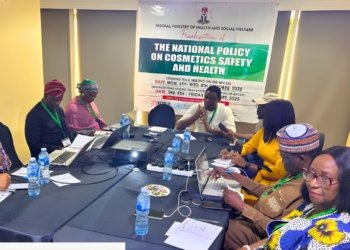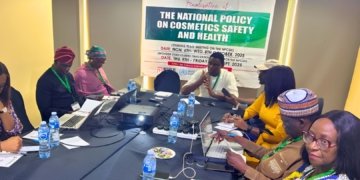

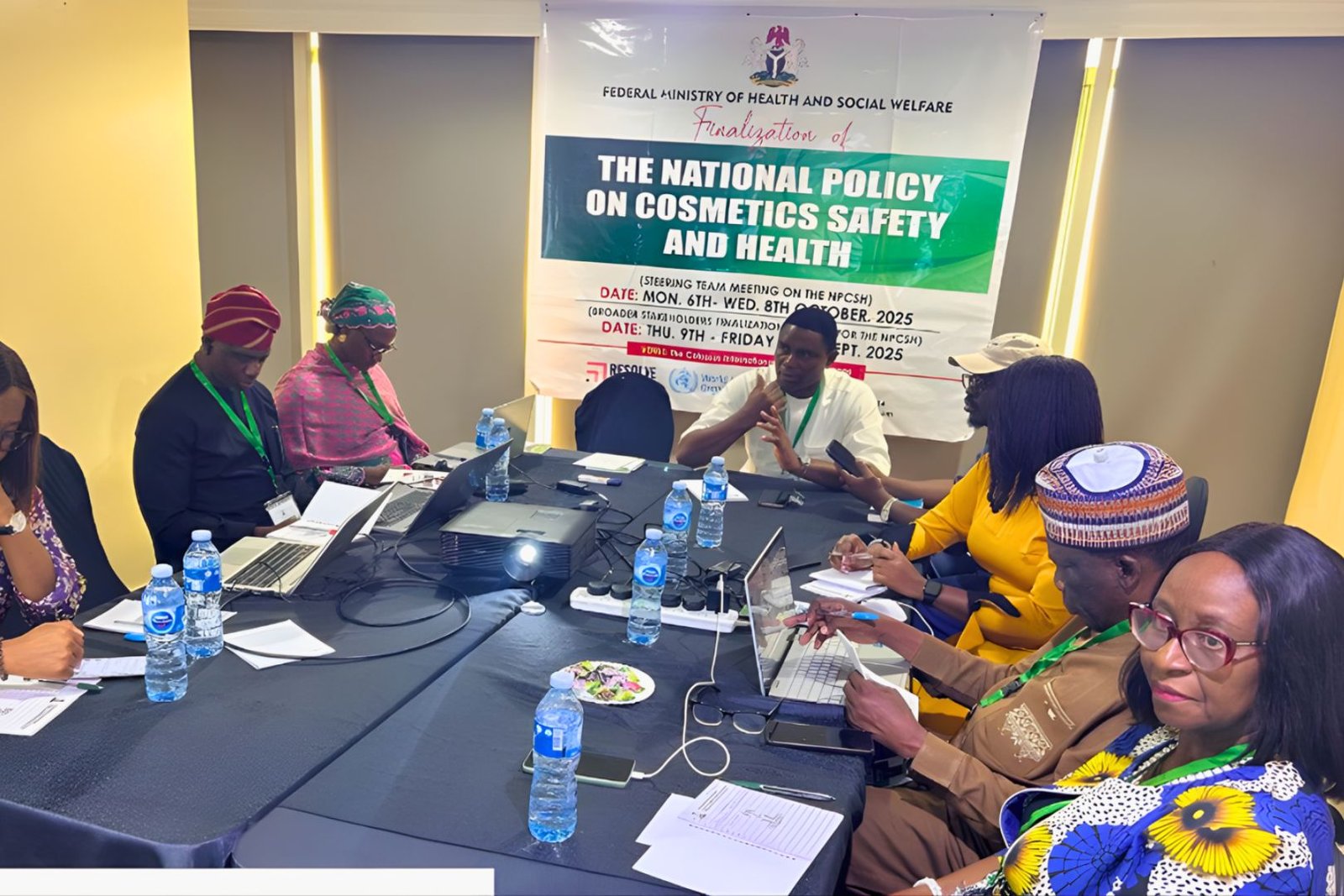

Nigeria has approved its first national policy on cosmetics safety, establishing a unified system to regulate how cosmetic products are manufactured, imported, sold, used and disposed of across all 36 states and the Federal Capital Territory.
The move aims to strengthen oversight of Nigeria’s rapidly expanding cosmetics industry and address growing concerns about harmful ingredients, contamination and weak regulation in personal care products.
The policy was launched at the 66th National Council on Health in Calabar, the World Health Organization (WHO) said in a statement March 11.
Nigeria’s cosmetics market is valued at about $7.8 billion and has expanded rapidly in recent years, becoming an increasingly sophisticated segment of the country’s consumer sector.
Globally, the cosmetics industry is valued at more than $429.2 billion, creating economic opportunities as well as regulatory challenges, particularly in low- and middle-income countries such as Nigeria.
Since 2022, nearly 9,000 cosmetic products have been registered under national regulatory requirements overseen by the National Agency for Food and Drug Administration and Control, reflecting strengthened compliance efforts.
Research in Anambra State found lead contamination in 62% of tested cosmetics, with concentrations in some cases exceeding four times the WHO’s permissible limit.
Separate investigations in Ibadan and Lagos confirmed cadmium, lead and nickel levels above international safety thresholds in personal care products.
Market surveillance in Kano found widespread mislabeling and repackaging.
Audu Tanimu, a National Agency for Food and Drug Administration and Control officer, noted that “some products are intentionally labelled to avoid suspicion, but laboratory testing shows restricted substances.”
The policy introduces three areas of action, including a unified national regulatory system to set safety and quality standards across agencies and a national early warning system to accelerate detection of harmful products.
It also supports safer manufacturing and trade practices aligned with African Continental Free Trade Area frameworks.
The WHO worked with Nigeria’s Federal Ministry of Health, the drug regulator, state governments, civil society and industry groups to develop the policy.
Implementation is supported by funding from the U.K. Foreign, Commonwealth and Development Office and Resolve to Save Lives.
The Federal Ministry of Health, the drug regulator and private sector actors will lead the rollout across all states.