
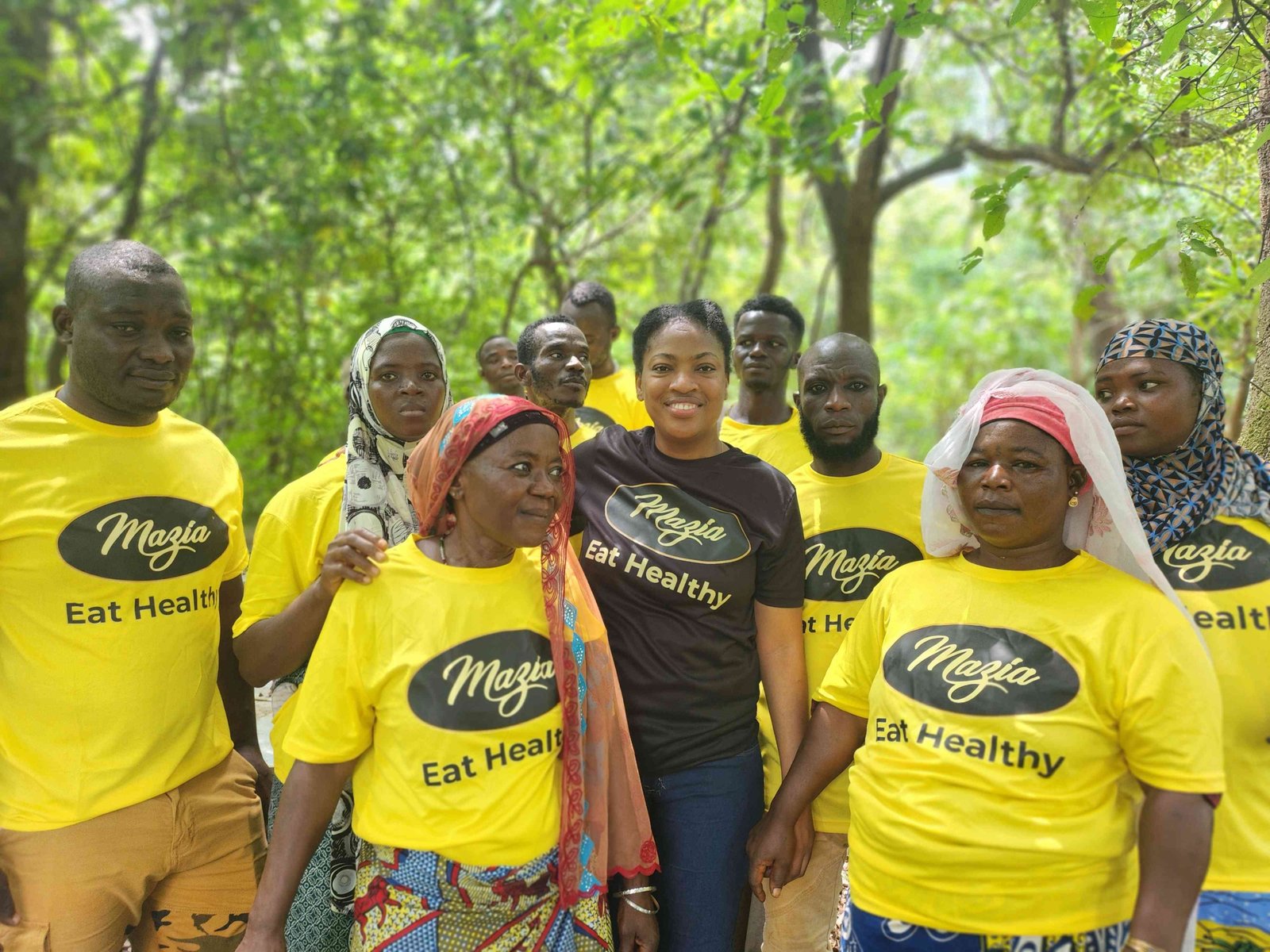

Florence Tomazia Cossou never planned to become a regional trade leader.
She launched her venture with a mission to promote healthier food options in Ghana while creating reliable income for local farmers.
What began as a modest processing operation has since grown into an export business reaching six African countries.
Along the way, Florence has had to overcome industry barriers that often hold back women entrepreneurs.
These include financing gaps, limited market access and regulatory systems designed for larger companies.
“Establishing the business [Mazia Co] was inspired by my passion to provide healthier food options and support local farmers,” she said.
“I aimed to solve the problem of post-harvest losses and limited access to quality, nutritious products in the market.”

Mazia Co Enterprise, based in Accra, Ghana, is a woman-led agro-processing company producing premium honey, herbal teas, dried mangoes and honey-based lip care products.
The company sources natural ingredients from smallholder farmers across Ghana and supplies both local and international markets. Goods are processed locally and shipped to Côte d’Ivoire, Benin, Togo, Burkina Faso, Namibia and Kenya.
Its mission centers on promoting healthier lifestyles through sustainable, high-quality food and wellness products.
These trade relationships would have been difficult to build just a few years ago, when smaller enterprises had limited access to regional markets.
Trade Agreements Create Opportunity. Partnerships Make It Work
Much of the growth has been shaped by timing. The business began to scale in 2021, the same year the African Continental Free Trade Area, or AfCFTA, came into effect.
The agreement created a single market across 54 African countries, reducing tariffs and simplifying cross-border trade for businesses of all sizes.
“Access to markets, both local and export, has significantly influenced our growth strategy,” Florence told Bantu Gazette.
“We’ve been able to export our products to countries like Côte d’Ivoire, Benin, Togo, Burkina Faso, Namibia and Kenya, thanks to the opportunities provided by the AfCFTA,” she added.
While the agreement opened new doors, Florence credits much of her success to key partnerships.
Support from the AfCFTA Secretariat, the United Nations Development Programme and the Organisation Internationale de la Francophonie helped her business access technical expertise and greater market visibility.
“These international partnerships have enabled us to expand our reach and improve our products,” she said.
Even with this support, women-led agribusinesses continue to face tough challenges.
Many cannot access financing because of high interest rates or strict collateral requirements. Florence has seen these limitations firsthand.
“As the founder and CEO [of Mazia Co], I’ve identified several challenges that women-led agribusinesses face in Ghana and across Africa,” she said.
“Limited access to finance, high interest rates and stringent collateral requirements from financial institutions are some of the most pressing issues.”
She believes addressing these challenges requires a combination of strategic thinking, adaptability and persistence.
Building Stability for Farmers and the Business
At the heart of the model are the farmers who supply its raw materials. By purchasing directly from producers, Florence’s company helps stabilize incomes in rural communities that often lack consistent buyers.
“By buying raw materials from local farmers, we provide them with a stable income source and support their livelihoods,” she said.
The original goal of reducing post-harvest losses remains central. Ghana produces surplus crops each year, but poor infrastructure and limited storage lead to significant waste.
Processing and exporting these goods reduces spoilage and ensures farmers can earn more from their harvests.
For producers, this approach means better prices and less waste. For Florence, it means reliable access to ingredients and the ability to serve multiple markets from a local base.
A Glimpse Into the Future of Intra-African Trade
This expansion mirrors a larger trend across the continent. Before AfCFTA took effect, only about 15 percent of Africa’s trade occurred between African countries, according to the African Export-Import Bank.
The goal of the agreement is to raise that number by eliminating both tariff and non-tariff barriers.
For entrepreneurs like Florence, AfCFTA creates a path to regional growth without the steep costs that used to favor multinational companies.
She sees even more opportunity ahead.
“In five years, I envision becoming a leading brand in Ghana and beyond, with a significant increase in our reach, exports and impact,” she said.
“We’ll continue to innovate, improve our products and explore new markets, leveraging frameworks like AfCFTA to drive growth and development,” she added.
That vision will require more than favorable trade policy. It will also depend on continuous innovation, strong networks and the flexibility to respond to shifting political and economic conditions.
More Than a Business, a Case Study
Florence’s journey offers a look at what is possible when local sourcing, smart partnerships and regional integration come together.
Her work now connects Ghanaian farmers to buyers in six African countries. The challenge ahead is maintaining that progress as new competitors emerge and the trade landscape evolves.
Her story reflects the potential of AfCFTA to create new pathways for small enterprises that once struggled to grow beyond national borders.
Florence’s experience shows that with the right mix of vision, collaboration and access, even a small business can rise to play a meaningful role in shaping Africa’s economic future.
Reporting by Felix Tih