

Bantu Gazette

Bantu Gazette
  • Energy & Trade
  • Finance
  • Health
  • Politics & Economy
  • Technology
  • Environment
  • Feature
  • Opinion
  • Changemakers
  • Tourism & Culture
  • Sports
  • Magazine
Menu
  • Black Frame Studio
  • Magazine

Seeking the Global Stage, Ethiopia’s Sculptors Stand Ready

Rooted in history and driven by resilience, Ethiopian artists work patiently toward broader recognition

Seeking the Global Stage, Ethiopia’s Sculptors Stand Ready

Creative works by Dereje Yehualashet and Ermias Dereje

Abel Gorfu Asefaby Abel Gorfu Asefa
February 13, 2026
Reading Time: 4 mins read

Seeking the Global Stage, Ethiopia’s Sculptors Stand Ready

Rooted in history and driven by resilience, Ethiopian artists work patiently toward broader recognition

Seeking the Global Stage, Ethiopia’s Sculptors Stand Ready

Creative works by Dereje Yehualashet and Ermias Dereje

Seeking the Global Stage, Ethiopia’s Sculptors Stand Ready

Creative works by Dereje Yehualashet and Ermias Dereje

Abel Gorfu Asefaby Abel Gorfu Asefa
February 19, 2026
Reading Time: 4 mins read

In a modest workshop in Addis Ababa, master sculptor Dereje Yehualashet bends over a single block of wood, shaping it with steady hands and unwavering focus.

The room is quiet except for the sound of carving tools meeting timber.

There are no gallery lights or international collectors present, yet the work unfolding here carries the weight of history.

Each sculpture begins as raw material and slowly becomes a story. Each angle is measured with care. Each detail is refined through patience and discipline.

Dereje carves his sculptures from a single piece of wood, a method that demands precision and endurance.

“Every angle has to be perfect,” he told Bantu Gazette, explaining that a large sculpture can take more than a year to complete.

Sculpture, he said, is “100 percent handmade,” requiring work day and night.

His pieces draw from Ethiopian history and spiritual symbolism, including a monumental representation of the Victory of Adwa, the 1896 battle in which Ethiopia defeated Italian colonial forces and preserved its sovereignty. The victory remains a powerful symbol of African resistance.

“All the artworks we are building represent Ethiopia and Africa,” he said. “We are building art that represents Africa entirely.”
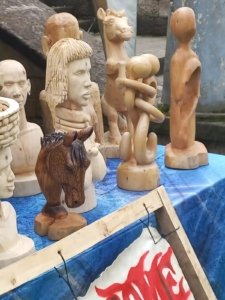
Where wood breathes heritage, Dereje Yehualashet’s hands carve Ethiopia’s soul into timeless form.

Preserving History Through Art

For Dereje, sculpture is both a cultural preservation effort and a personal mission, reflecting what he describes as a deeper meaning behind his work.

“These sculptures are living cultural treasures for future generations,” he said, adding that they also hold untapped economic potential.

He described his motivation in simple but powerful terms. “There is no giving up,” he said. “I sacrifice time that I should spend with my children just for creating an impact.”

His ambition reaches beyond the present moment. He shared his dream of creating a record-breaking monument that represents his country on a global scale.

“To achieve it, I pay all the sacrifice it takes,” he said. Even after the closure of Miracle Sculptures and Art Studio due to limited market access, he never stopped creating.

The studio may have closed its doors, but the vision behind it remained alive in his hands.
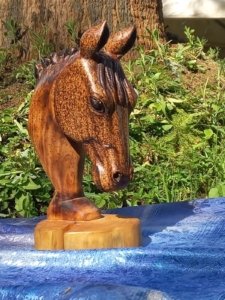
From timber to spirit, a stallion awakens. Masterfully sculpted by Artist Dereje Yehualashet.

The Reality Behind the Craft

Speaking about his work, sculptor and painter Ermias Dereje shared similar perspectives, emphasizing the cultural weight and personal meaning behind his artistic practice.

He described his journey into art as beginning with a childhood competition that awakened his confidence and set him on a professional path.

Over nearly a decade, he refined his skills through practice, competitions and commissions. His love for art, he said, always came first.

Income followed later and often unpredictably.

Ermias offered concrete insight into the investment behind each sculpture. A medium- to large-sized wooden or stone piece can cost between 5,000 and 20,000 Ethiopian birr (about $30 – $130) in materials alone.

Beyond that are months of labor, often requiring 80 to 120 full days from concept to completion.

“People see the final object but not the months of life and resources poured into it,” he said.

In the local market, he explained, it is difficult to price such work fairly because many admire it but do not purchase it.
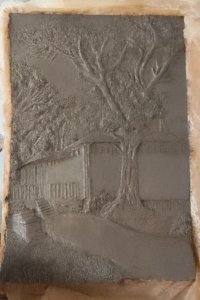
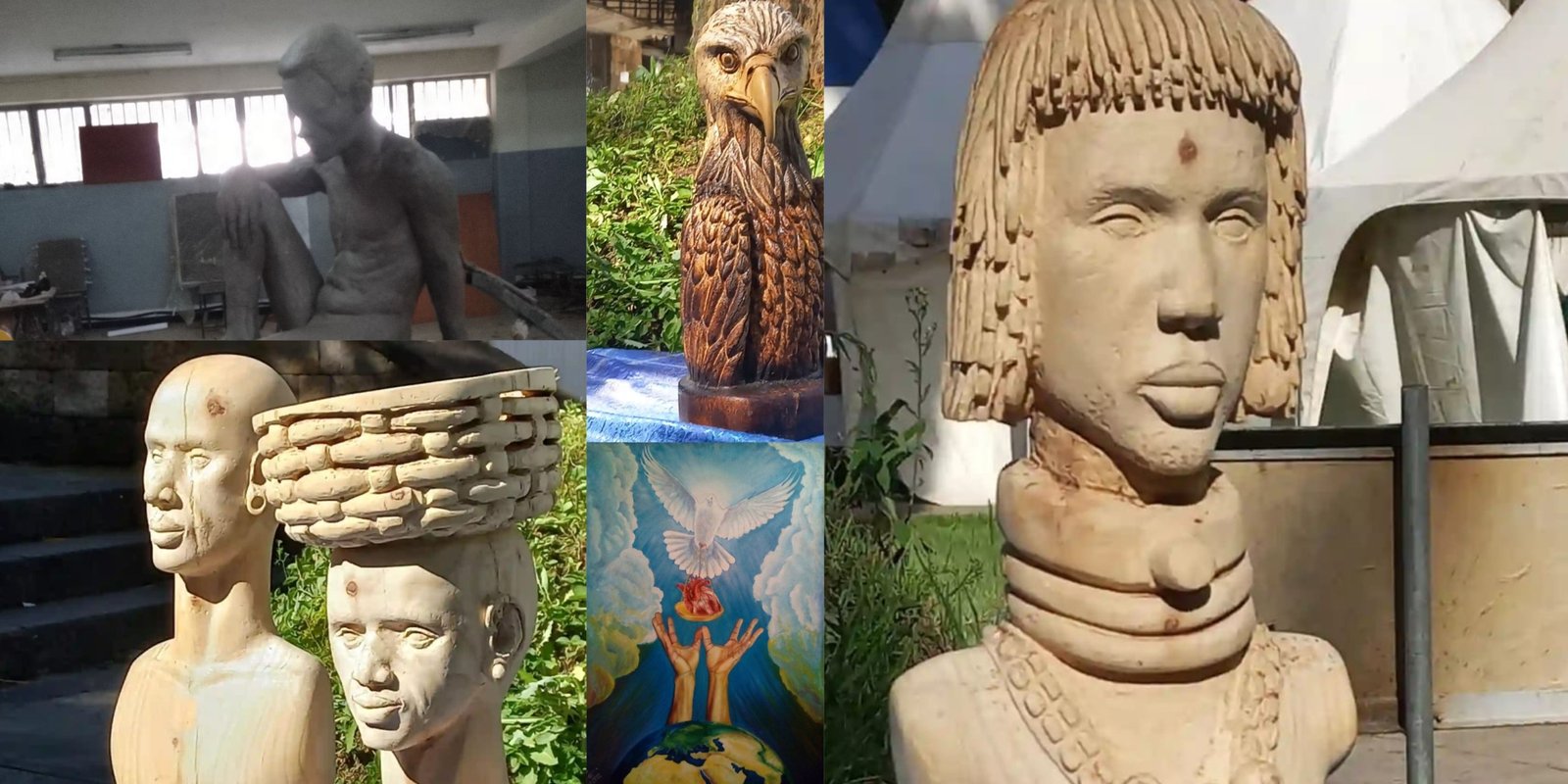
Clay Relief by Ermias Dereje, Graduate of Teferi Mekonnen School of Fine Art, Addis Ababa. A textured canvas that transforms earth into memory, blending architecture, nature, and heritage through sculptural depth

Talent Without a Market

Both artists described a common challenge. Dereje stated plainly that “the main challenge is lack of market access.”

He explained that international exhibitions often require quotas for sculptures of different sizes, which is difficult to meet without consistent sales.

Without revenue, production slows. Without exposure, opportunities remain limited.

“Without an audience that values and purchases art, art loses its worth,” Ermias said.

He added that admiration alone is not enough. Internationally, art is treated as an asset, with collectors competing in auctions and investing seriously.

Locally, exhibitions may draw praise, but praise rarely translates into purchase.

As he put it, “You must sell it and at the right value. Otherwise, you would rather starve than sell your work cheaply.”
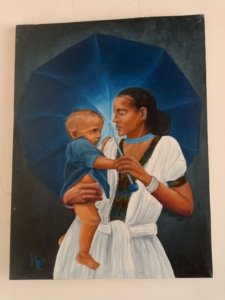
Mother and Child, A timeless embrace. In this luminous work, Ermias Dereje captures the quiet strength of tradition and the universal language of love, painted with cultural grace and emotional depth.

A Collection Waiting for Its Moment

Despite these constraints, the artists remain prepared. Ermias confirmed to Bantu Gazette that he currently has five major sculptures that are ready for exhibition and stored securely.

In addition, he has at least a dozen more works in progress, many about 80 percent complete.

He explained that he often leaves the final 10 percent unfinished until an exhibition is confirmed, so the sculpture appears new and alive at its debut.

Dereje also continues to create from his home workshop, though he described the space as a major constraint.

Still, he views the collection produced at Miracle Sculptures and Art Studio as a cohesive body of work.

“My intention is to leave a legacy,” he said. The pieces are connected by a shared goal of representing Ethiopia’s culture and history for future generations.

Together, they form what could be seen as a hidden national gallery, preserved not in a museum but in storage rooms and private studios.

Africa’s Expanding Art Horizon

Their stories unfold at a time when the broader African art market is gaining international recognition.

The African contemporary art market has become a significant segment of the global art trade.

According to the Artnet Intelligence Report 2024, auction sales of works by African-born artists reach tens of millions of dollars annually, with leading figures such as El Anatsui, Julie Mehretu, Njideka Akunyili Crosby and Amoako Boafo achieving multimillion-dollar results at major auction houses.

At the same time, ultra-contemporary artists under 45 account for the highest sales volumes, often at more accessible price points, reflecting strong demand and a broadening collector base.

Despite this momentum, African artists still account for a small share of global contemporary art sales, underscoring substantial growth potential in the years ahead.

For Ethiopian sculptors, this moment represents possibility. The talent, discipline and cultural depth are present.

What remains is greater visibility and connection to audiences who understand art as both heritage and investment.
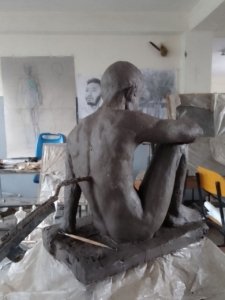
Seated Figure, Clay in motion. Ermias Dereje transforms earth into living form, sculpting silence, strength, and humanity in three dimensions.

A Call for Unity and Collaboration

“Collaboration is no longer optional. It is essential,” Ermias said.

He proposed the creation of professional, curated exhibition spaces at major diplomatic hubs, where international visitors could not only admire but also purchase artworks.

He emphasized that artists are ready to deliver high-quality work when provided with structured platforms and logistical support.

Dereje shared a similar hope regarding pan African platforms. “If the African Union provided a pavilion, it would be a major breakthrough,” he said, noting that such exposure would benefit not only individual artists but Ethiopian and African culture as a whole.

In workshops across Addis Ababa, chisels continue to rise and fall against wood and stone.

The artists are working, refining, preparing. Their sculptures carry stories of Adwa, faith, sacrifice and aspiration.

Whether displayed locally or on international stages, they stand as testaments to Ethiopia’s enduring creative spirit.

The renaissance they envisage is already being carved, one careful strike at a time.

Bantu Gazette contacted the Ministry of Culture and Sports for comment on support structures for sculptors and potential exhibition platforms, but did not receive a response by the time of publication.
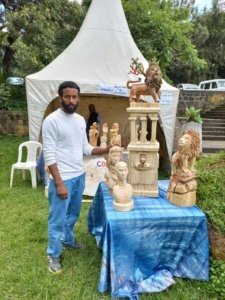
Where heritage meets mastery—Sculptor Dereje Yehualashet showcasing living stories carved in wood at the Ethiopian Ministry of Culture and Sport Art Exhibition.

By Abel Gorfu Asefa
ADDIS ABABA, Ethiopia
Get the inside Story

Stay informed on the stories shaping Africa’s future. Get breaking news, in-depth analysis, opinions and exclusive insights from across the continent delivered to your inbox, free and unfiltered.


Get in touch for more:
Felix Tih
Editorial Director, Bantu Gazette
WhatsApp
LinkedIn
X (Twitter)
Instagram

Related Posts

Ethiopia Receives Emperor Tewodros II Relics as African Heritage Repatriations Gather Pace
Tourism & Culture

Ethiopia Receives Emperor Tewodros II Relics as African Heritage Repatriations Gather Pace

May 13, 2026
African Creators Gather at Adwa Memorial to Reclaim the Continent’s Story
Tourism & Culture

African Creators Gather at Adwa Memorial to Reclaim the Continent’s Story

May 8, 2026
The Father of Ethio-Jazz Takes His Farewell Bow
Feature

The Father of Ethio-Jazz Takes His Farewell Bow

May 7, 2026
‘Two Days Without a Penny’: Ethiopia’s Fuel Crisis Through the Eyes of Drivers
Feature

‘Two Days Without a Penny’: Ethiopia’s Fuel Crisis Through the Eyes of Drivers

April 11, 2026
Young Ethiopian Founders Turn Ideas Into Real Solutions
Feature

Young Ethiopian Founders Turn Ideas Into Real Solutions

April 10, 2026
Ethiopia Overhauls Visa Framework to Attract Long-Term Investors
Tourism & Culture

Ethiopia Overhauls Visa Framework to Attract Long-Term Investors

April 8, 2026

Most Recent

Liberia to Build its 1st Electrical Manufacturing Plant in $26M Deal with Kenyan Firm
Energy & Trade

Liberia to Build its 1st Electrical Manufacturing Plant in $26M Deal with Kenyan Firm

by Aissatou Fall
May 14, 2026
0

The Liberia Electricity Corporation (LEC) signed a $26 million agreement with Kenyan firm Thames Electricals Limited on Tuesday to establish...

Read moreDetails
South Africa Allocates $1.7 Billion to Road Agency for Network Expansion

South Africa Allocates $1.7 Billion to Road Agency for Network Expansion

May 13, 2026
Ethiopia Receives Emperor Tewodros II Relics as African Heritage Repatriations Gather Pace

Ethiopia Receives Emperor Tewodros II Relics as African Heritage Repatriations Gather Pace

May 13, 2026
Rwanda Secures €45M to Expand Climate-Resilient Irrigation in Drought-Prone East

Rwanda Secures €45M to Expand Climate-Resilient Irrigation in Drought-Prone East

May 12, 2026
Ethiopian Airlines Named Fastest Growing Airline as Award Streak Continues

Ethiopian Airlines Named Fastest Growing Airline as Award Streak Continues

May 12, 2026
President Faye Says Senegal’s Sporting Success Must Power National Development

President Faye Says Senegal’s Sporting Success Must Power National Development

May 12, 2026
Safaricom Ethiopia Records 130.9% Revenue Growth

Safaricom Ethiopia Records 130.9% Revenue Growth

May 12, 2026
Liberia to Build its 1st Electrical Manufacturing Plant in $26M Deal with Kenyan Firm
Energy & Trade

Liberia to Build its 1st Electrical Manufacturing Plant in $26M Deal with Kenyan Firm

by Aissatou Fall
Reading Time: 2 mins read
May 14, 2026
0

The Liberia Electricity Corporation (LEC) signed a $26 million agreement with Kenyan firm Thames Electricals Limited on Tuesday to establish...

Read moreDetails
South Africa Allocates $1.7 Billion to Road Agency for Network Expansion
Politics & Economy

South Africa Allocates $1.7 Billion to Road Agency for Network Expansion

by Naledi Kgosi
Reading Time: 1 min read
May 13, 2026
0

South Africa's government has allocated nearly R31 billion (about $1.7 billion) to the country's national roads agency this financial year...

Read moreDetails
Ethiopia Receives Emperor Tewodros II Relics as African Heritage Repatriations Gather Pace
Tourism & Culture

Ethiopia Receives Emperor Tewodros II Relics as African Heritage Repatriations Gather Pace

by Kalkidan Negash
Reading Time: 2 mins read
May 13, 2026
0

ADDIS ABABA Ethiopia formally received relics belonging to Emperor Tewodros II on Tuesday during a ceremony at St Martin's Chapel...

Read moreDetails

Seeking the Global Stage, Ethiopia’s Sculptors Stand Ready

Rooted in history and driven by resilience, Ethiopian artists work patiently toward broader recognition

Seeking the Global Stage, Ethiopia’s Sculptors Stand Ready

Creative works by Dereje Yehualashet and Ermias Dereje

In a modest workshop in Addis Ababa, master sculptor Dereje Yehualashet bends over a single block of wood, shaping it with steady hands and unwavering focus.

The room is quiet except for the sound of carving tools meeting timber.

There are no gallery lights or international collectors present, yet the work unfolding here carries the weight of history.

Each sculpture begins as raw material and slowly becomes a story. Each angle is measured with care. Each detail is refined through patience and discipline.

Dereje carves his sculptures from a single piece of wood, a method that demands precision and endurance.

“Every angle has to be perfect,” he told Bantu Gazette, explaining that a large sculpture can take more than a year to complete.

Sculpture, he said, is “100 percent handmade,” requiring work day and night.

His pieces draw from Ethiopian history and spiritual symbolism, including a monumental representation of the Victory of Adwa, the 1896 battle in which Ethiopia defeated Italian colonial forces and preserved its sovereignty. The victory remains a powerful symbol of African resistance.

“All the artworks we are building represent Ethiopia and Africa,” he said. “We are building art that represents Africa entirely.”

Where wood breathes heritage, Dereje Yehualashet’s hands carve Ethiopia’s soul into timeless form.

Preserving History Through Art

For Dereje, sculpture is both a cultural preservation effort and a personal mission, reflecting what he describes as a deeper meaning behind his work.

“These sculptures are living cultural treasures for future generations,” he said, adding that they also hold untapped economic potential.

He described his motivation in simple but powerful terms. “There is no giving up,” he said. “I sacrifice time that I should spend with my children just for creating an impact.”

His ambition reaches beyond the present moment. He shared his dream of creating a record-breaking monument that represents his country on a global scale.

“To achieve it, I pay all the sacrifice it takes,” he said. Even after the closure of Miracle Sculptures and Art Studio due to limited market access, he never stopped creating.

The studio may have closed its doors, but the vision behind it remained alive in his hands.

From timber to spirit, a stallion awakens. Masterfully sculpted by Artist Dereje Yehualashet.

The Reality Behind the Craft

Speaking about his work, sculptor and painter Ermias Dereje shared similar perspectives, emphasizing the cultural weight and personal meaning behind his artistic practice.

He described his journey into art as beginning with a childhood competition that awakened his confidence and set him on a professional path.

Over nearly a decade, he refined his skills through practice, competitions and commissions. His love for art, he said, always came first.

Income followed later and often unpredictably.

Ermias offered concrete insight into the investment behind each sculpture. A medium- to large-sized wooden or stone piece can cost between 5,000 and 20,000 Ethiopian birr (about $30 – $130) in materials alone.

Beyond that are months of labor, often requiring 80 to 120 full days from concept to completion.

“People see the final object but not the months of life and resources poured into it,” he said.

In the local market, he explained, it is difficult to price such work fairly because many admire it but do not purchase it.

Clay Relief by Ermias Dereje, Graduate of Teferi Mekonnen School of Fine Art, Addis Ababa. A textured canvas that transforms earth into memory, blending architecture, nature, and heritage through sculptural depth

Talent Without a Market

Both artists described a common challenge. Dereje stated plainly that “the main challenge is lack of market access.”

He explained that international exhibitions often require quotas for sculptures of different sizes, which is difficult to meet without consistent sales.

Without revenue, production slows. Without exposure, opportunities remain limited.

“Without an audience that values and purchases art, art loses its worth,” Ermias said.

He added that admiration alone is not enough. Internationally, art is treated as an asset, with collectors competing in auctions and investing seriously.

Locally, exhibitions may draw praise, but praise rarely translates into purchase.

As he put it, “You must sell it and at the right value. Otherwise, you would rather starve than sell your work cheaply.”

Mother and Child, A timeless embrace. In this luminous work, Ermias Dereje captures the quiet strength of tradition and the universal language of love, painted with cultural grace and emotional depth.

A Collection Waiting for Its Moment

Despite these constraints, the artists remain prepared. Ermias confirmed to Bantu Gazette that he currently has five major sculptures that are ready for exhibition and stored securely.

In addition, he has at least a dozen more works in progress, many about 80 percent complete.

He explained that he often leaves the final 10 percent unfinished until an exhibition is confirmed, so the sculpture appears new and alive at its debut.

Dereje also continues to create from his home workshop, though he described the space as a major constraint.

Still, he views the collection produced at Miracle Sculptures and Art Studio as a cohesive body of work.

“My intention is to leave a legacy,” he said. The pieces are connected by a shared goal of representing Ethiopia’s culture and history for future generations.

Together, they form what could be seen as a hidden national gallery, preserved not in a museum but in storage rooms and private studios.

Africa’s Expanding Art Horizon

Their stories unfold at a time when the broader African art market is gaining international recognition.

The African contemporary art market has become a significant segment of the global art trade.

According to the Artnet Intelligence Report 2024, auction sales of works by African-born artists reach tens of millions of dollars annually, with leading figures such as El Anatsui, Julie Mehretu, Njideka Akunyili Crosby and Amoako Boafo achieving multimillion-dollar results at major auction houses.

At the same time, ultra-contemporary artists under 45 account for the highest sales volumes, often at more accessible price points, reflecting strong demand and a broadening collector base.

Despite this momentum, African artists still account for a small share of global contemporary art sales, underscoring substantial growth potential in the years ahead.

For Ethiopian sculptors, this moment represents possibility. The talent, discipline and cultural depth are present.

What remains is greater visibility and connection to audiences who understand art as both heritage and investment.

Seated Figure, Clay in motion. Ermias Dereje transforms earth into living form, sculpting silence, strength, and humanity in three dimensions.

A Call for Unity and Collaboration

“Collaboration is no longer optional. It is essential,” Ermias said.

He proposed the creation of professional, curated exhibition spaces at major diplomatic hubs, where international visitors could not only admire but also purchase artworks.

He emphasized that artists are ready to deliver high-quality work when provided with structured platforms and logistical support.

Dereje shared a similar hope regarding pan African platforms. “If the African Union provided a pavilion, it would be a major breakthrough,” he said, noting that such exposure would benefit not only individual artists but Ethiopian and African culture as a whole.

In workshops across Addis Ababa, chisels continue to rise and fall against wood and stone.

The artists are working, refining, preparing. Their sculptures carry stories of Adwa, faith, sacrifice and aspiration.

Whether displayed locally or on international stages, they stand as testaments to Ethiopia’s enduring creative spirit.

The renaissance they envisage is already being carved, one careful strike at a time.

Bantu Gazette contacted the Ministry of Culture and Sports for comment on support structures for sculptors and potential exhibition platforms, but did not receive a response by the time of publication.

Where heritage meets mastery—Sculptor Dereje Yehualashet showcasing living stories carved in wood at the Ethiopian Ministry of Culture and Sport Art Exhibition.

By Abel Gorfu Asefa
ADDIS ABABA, Ethiopia

Seeking the Global Stage, Ethiopia’s Sculptors Stand Ready

Rooted in history and driven by resilience, Ethiopian artists work patiently toward broader recognition

Seeking the Global Stage, Ethiopia’s Sculptors Stand Ready

Creative works by Dereje Yehualashet and Ermias Dereje

Abel Gorfu Asefaby Abel Gorfu Asefa
February 13, 2026

In a modest workshop in Addis Ababa, master sculptor Dereje Yehualashet bends over a single block of wood, shaping it with steady hands and unwavering focus.

The room is quiet except for the sound of carving tools meeting timber.

There are no gallery lights or international collectors present, yet the work unfolding here carries the weight of history.

Each sculpture begins as raw material and slowly becomes a story. Each angle is measured with care. Each detail is refined through patience and discipline.

Dereje carves his sculptures from a single piece of wood, a method that demands precision and endurance.

“Every angle has to be perfect,” he told Bantu Gazette, explaining that a large sculpture can take more than a year to complete.

Sculpture, he said, is “100 percent handmade,” requiring work day and night.

His pieces draw from Ethiopian history and spiritual symbolism, including a monumental representation of the Victory of Adwa, the 1896 battle in which Ethiopia defeated Italian colonial forces and preserved its sovereignty. The victory remains a powerful symbol of African resistance.

“All the artworks we are building represent Ethiopia and Africa,” he said. “We are building art that represents Africa entirely.”

Where wood breathes heritage, Dereje Yehualashet’s hands carve Ethiopia’s soul into timeless form.

Preserving History Through Art

For Dereje, sculpture is both a cultural preservation effort and a personal mission, reflecting what he describes as a deeper meaning behind his work.

“These sculptures are living cultural treasures for future generations,” he said, adding that they also hold untapped economic potential.

He described his motivation in simple but powerful terms. “There is no giving up,” he said. “I sacrifice time that I should spend with my children just for creating an impact.”

His ambition reaches beyond the present moment. He shared his dream of creating a record-breaking monument that represents his country on a global scale.

“To achieve it, I pay all the sacrifice it takes,” he said. Even after the closure of Miracle Sculptures and Art Studio due to limited market access, he never stopped creating.

The studio may have closed its doors, but the vision behind it remained alive in his hands.

From timber to spirit, a stallion awakens. Masterfully sculpted by Artist Dereje Yehualashet.

The Reality Behind the Craft

Speaking about his work, sculptor and painter Ermias Dereje shared similar perspectives, emphasizing the cultural weight and personal meaning behind his artistic practice.

He described his journey into art as beginning with a childhood competition that awakened his confidence and set him on a professional path.

Over nearly a decade, he refined his skills through practice, competitions and commissions. His love for art, he said, always came first.

Income followed later and often unpredictably.

Ermias offered concrete insight into the investment behind each sculpture. A medium- to large-sized wooden or stone piece can cost between 5,000 and 20,000 Ethiopian birr (about $30 – $130) in materials alone.

Beyond that are months of labor, often requiring 80 to 120 full days from concept to completion.

“People see the final object but not the months of life and resources poured into it,” he said.

In the local market, he explained, it is difficult to price such work fairly because many admire it but do not purchase it.

Clay Relief by Ermias Dereje, Graduate of Teferi Mekonnen School of Fine Art, Addis Ababa. A textured canvas that transforms earth into memory, blending architecture, nature, and heritage through sculptural depth

Talent Without a Market

Both artists described a common challenge. Dereje stated plainly that “the main challenge is lack of market access.”

He explained that international exhibitions often require quotas for sculptures of different sizes, which is difficult to meet without consistent sales.

Without revenue, production slows. Without exposure, opportunities remain limited.

“Without an audience that values and purchases art, art loses its worth,” Ermias said.

He added that admiration alone is not enough. Internationally, art is treated as an asset, with collectors competing in auctions and investing seriously.

Locally, exhibitions may draw praise, but praise rarely translates into purchase.

As he put it, “You must sell it and at the right value. Otherwise, you would rather starve than sell your work cheaply.”

Mother and Child, A timeless embrace. In this luminous work, Ermias Dereje captures the quiet strength of tradition and the universal language of love, painted with cultural grace and emotional depth.

A Collection Waiting for Its Moment

Despite these constraints, the artists remain prepared. Ermias confirmed to Bantu Gazette that he currently has five major sculptures that are ready for exhibition and stored securely.

In addition, he has at least a dozen more works in progress, many about 80 percent complete.

He explained that he often leaves the final 10 percent unfinished until an exhibition is confirmed, so the sculpture appears new and alive at its debut.

Dereje also continues to create from his home workshop, though he described the space as a major constraint.

Still, he views the collection produced at Miracle Sculptures and Art Studio as a cohesive body of work.

“My intention is to leave a legacy,” he said. The pieces are connected by a shared goal of representing Ethiopia’s culture and history for future generations.

Together, they form what could be seen as a hidden national gallery, preserved not in a museum but in storage rooms and private studios.

Africa’s Expanding Art Horizon

Their stories unfold at a time when the broader African art market is gaining international recognition.

The African contemporary art market has become a significant segment of the global art trade.

According to the Artnet Intelligence Report 2024, auction sales of works by African-born artists reach tens of millions of dollars annually, with leading figures such as El Anatsui, Julie Mehretu, Njideka Akunyili Crosby and Amoako Boafo achieving multimillion-dollar results at major auction houses.

At the same time, ultra-contemporary artists under 45 account for the highest sales volumes, often at more accessible price points, reflecting strong demand and a broadening collector base.

Despite this momentum, African artists still account for a small share of global contemporary art sales, underscoring substantial growth potential in the years ahead.

For Ethiopian sculptors, this moment represents possibility. The talent, discipline and cultural depth are present.

What remains is greater visibility and connection to audiences who understand art as both heritage and investment.

Seated Figure, Clay in motion. Ermias Dereje transforms earth into living form, sculpting silence, strength, and humanity in three dimensions.

A Call for Unity and Collaboration

“Collaboration is no longer optional. It is essential,” Ermias said.

He proposed the creation of professional, curated exhibition spaces at major diplomatic hubs, where international visitors could not only admire but also purchase artworks.

He emphasized that artists are ready to deliver high-quality work when provided with structured platforms and logistical support.

Dereje shared a similar hope regarding pan African platforms. “If the African Union provided a pavilion, it would be a major breakthrough,” he said, noting that such exposure would benefit not only individual artists but Ethiopian and African culture as a whole.

In workshops across Addis Ababa, chisels continue to rise and fall against wood and stone.

The artists are working, refining, preparing. Their sculptures carry stories of Adwa, faith, sacrifice and aspiration.

Whether displayed locally or on international stages, they stand as testaments to Ethiopia’s enduring creative spirit.

The renaissance they envisage is already being carved, one careful strike at a time.

Bantu Gazette contacted the Ministry of Culture and Sports for comment on support structures for sculptors and potential exhibition platforms, but did not receive a response by the time of publication.

Where heritage meets mastery—Sculptor Dereje Yehualashet showcasing living stories carved in wood at the Ethiopian Ministry of Culture and Sport Art Exhibition.

By Abel Gorfu Asefa
ADDIS ABABA, Ethiopia

Get the inside Story

Stay informed on the stories shaping Africa’s future. Get breaking news, in-depth analysis, opinions and exclusive insights from across the continent delivered to your inbox, free and unfiltered.


Get in touch for more:
Felix Tih
Editorial Director, Bantu Gazette
WhatsApp
LinkedIn
X (Twitter)
Instagram

Related Posts

Ethiopia Receives Emperor Tewodros II Relics as African Heritage Repatriations Gather Pace

Ethiopia Receives Emperor Tewodros II Relics as African Heritage Repatriations Gather Pace

by Kalkidan Negash
May 13, 2026
0

...

African Creators Gather at Adwa Memorial to Reclaim the Continent’s Story

African Creators Gather at Adwa Memorial to Reclaim the Continent’s Story

by Kalkidan Negash
May 8, 2026
0

...

The Father of Ethio-Jazz Takes His Farewell Bow

The Father of Ethio-Jazz Takes His Farewell Bow

by Kalkidan Negash
May 7, 2026
0

...

‘Two Days Without a Penny’: Ethiopia’s Fuel Crisis Through the Eyes of Drivers

‘Two Days Without a Penny’: Ethiopia’s Fuel Crisis Through the Eyes of Drivers

by Abel Gorfu Asefa
April 11, 2026
0

...

Young Ethiopian Founders Turn Ideas Into Real Solutions

Young Ethiopian Founders Turn Ideas Into Real Solutions

by Abel Gorfu Asefa
April 10, 2026
0

...

Ethiopia Overhauls Visa Framework to Attract Long-Term Investors

Ethiopia Overhauls Visa Framework to Attract Long-Term Investors

by Felix Tih
April 7, 2026
0

...

Liberia to Build its 1st Electrical Manufacturing Plant in $26M Deal with Kenyan Firm
Energy & Trade

Liberia to Build its 1st Electrical Manufacturing Plant in $26M Deal with Kenyan Firm

by Aissatou Fall
Reading Time: 2 mins read
May 14, 2026
0

The Liberia Electricity Corporation (LEC) signed a $26 million agreement with Kenyan firm Thames Electricals Limited on Tuesday to establish...

Read moreDetails
South Africa Allocates $1.7 Billion to Road Agency for Network Expansion

South Africa Allocates $1.7 Billion to Road Agency for Network Expansion

by Naledi Kgosi
May 13, 2026
0

South Africa's government has allocated nearly R31 billion (about $1.7 billion) to the country's national roads agency this financial year...

Ethiopia Receives Emperor Tewodros II Relics as African Heritage Repatriations Gather Pace

Ethiopia Receives Emperor Tewodros II Relics as African Heritage Repatriations Gather Pace

by Kalkidan Negash
May 13, 2026
0

ADDIS ABABA Ethiopia formally received relics belonging to Emperor Tewodros II on Tuesday during a ceremony at St Martin's Chapel...

Rwanda Secures €45M to Expand Climate-Resilient Irrigation in Drought-Prone East

Rwanda Secures €45M to Expand Climate-Resilient Irrigation in Drought-Prone East

by Marina Bisse
May 12, 2026
0

Rwanda has secured €45.4 million in additional financing to build a climate-resilient irrigation system across 3,073 hectares of agricultural land...

Ethiopian Airlines Named Fastest Growing Airline as Award Streak Continues

Ethiopian Airlines Named Fastest Growing Airline as Award Streak Continues

by Kalkidan Negash
May 12, 2026
0

ADDIS ABABA Ethiopian Airlines received the Fastest-Growing Airline (Africa) honor at the Athens International Airport 2026 Awards, marking another major...

Next Post
Lomé Workshop Highlights Tax Policy Role in Africa’s Climate Strategy

Lomé Workshop Highlights Tax Policy Role in Africa’s Climate Strategy

Nigeria, Angola Sign Visa Waiver for Diplomatic, Service Passport Holders

Nigeria, Angola Sign Visa Waiver for Diplomatic, Service Passport Holders

Ghana Battles to Save Cocoa Industry as Production Falls to 20-Year Low

Ghana to End Foreign Cocoa Financing, Process Minerals Locally by 2030

Africa Business Forum Urges Stronger Investment for Jobs, Innovation

Africa Business Forum Urges Stronger Investment for Jobs, Innovation

Bantu Gazette is a pioneering news platform that champions Africa's development, culture, and heritage. We spotlight the continent's successes, address its challenges, and provide insightful coverage of events that shape its future.

Bantu Gazette is a pioneering news platform that champions Africa's development, culture, and heritage. We spotlight the continent's successes, address its challenges, and provide insightful coverage of events that shape its future.

Our Platforms

  • Bantu Magazine
  • Bantu Brief
  • Black Frame Studio

Our Services

  • Bantu Agency
  • Advertise
  • Partnerships

Our Services

  • Editorial Director
  • Opportunities
  • Contact

Bantu Gazette is a pioneering news platform that champions Africa's development, culture, and heritage. We spotlight the continent's successes, address its challenges, and provide insightful coverage of events that shape its future.

Our Platforms

  • Bantu Magazine
  • Bantu Brief
  • Black Frame Studio

Our Services

  • Bantu Agency
  • Advertise
  • Partnerships

Our Services

  • Editorial Director
  • Opportunities
  • Contact
Bantu Gazette
  • Energy & Trade
  • Finance
  • Health
  • Politics & Economy
  • Technology
  • Environment
  • Feature
  • Opinion
  • Changemakers
  • Tourism & Culture
  • Magazine