


Bantu Gazette

Bantu Gazette
  • Energy & Trade
  • Finance
  • Health
  • Politics & Economy
  • Technology
  • Environment
  • Feature
  • Opinion
  • Changemakers
  • Tourism & Culture
  • Sports
  • Magazine
Menu
  • Black Frame Studio
  • Magazine

‘Two Days Without a Penny’: Ethiopia’s Fuel Crisis Through the Eyes of Drivers

Fuel shortage disrupts livelihoods and daily movement in Addis Ababa

‘Two Days Without a Penny’: Ethiopia’s Fuel Crisis Through the Eyes of Drivers
Abel Gorfu Asefaby Abel Gorfu Asefa
April 11, 2026
Reading Time: 3 mins read

‘Two Days Without a Penny’: Ethiopia’s Fuel Crisis Through the Eyes of Drivers

Fuel shortage disrupts livelihoods and daily movement in Addis Ababa

‘Two Days Without a Penny’: Ethiopia’s Fuel Crisis Through the Eyes of Drivers
Abel Gorfu Asefaby Abel Gorfu Asefa
April 11, 2026
Reading Time: 3 mins read

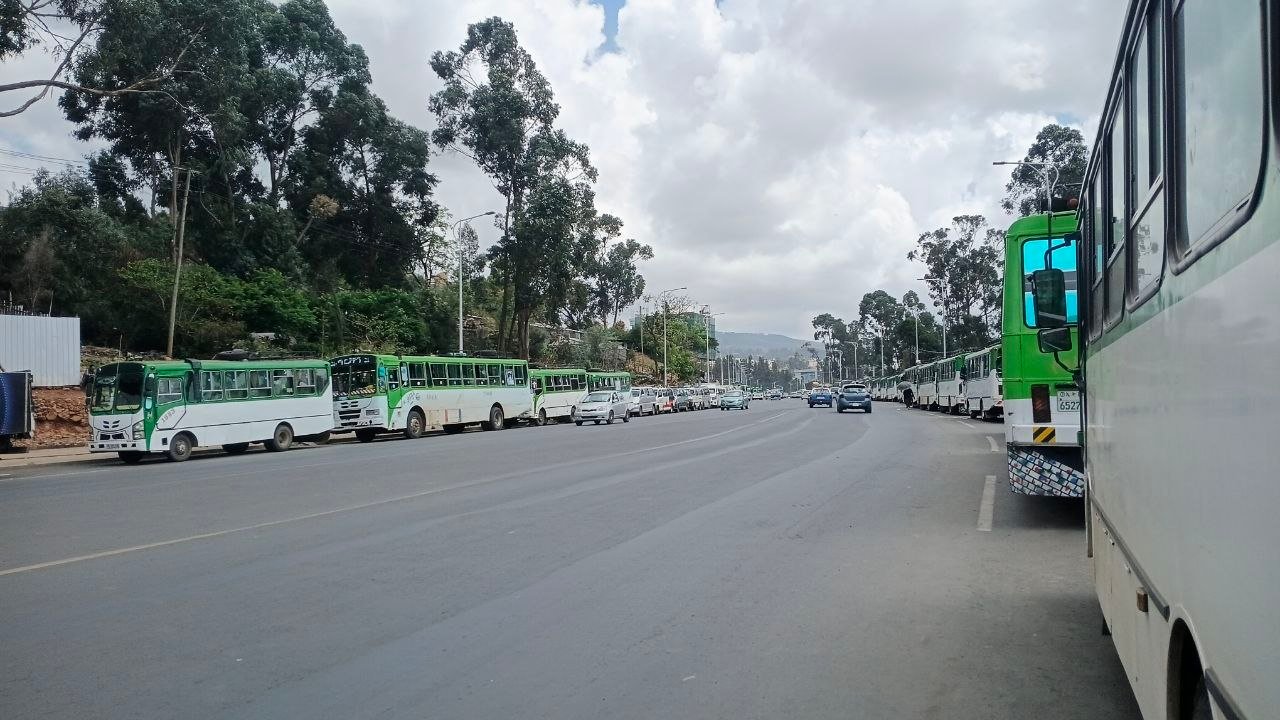
Ethiopia faces a sharp fuel shortage, and transport workers across the capital report losing days of income in long queues. Commuters struggle to reach workplaces, schools and essential services.

Fuel stations across Addis Ababa show lines of vehicles stretching more than five kilometers. Drivers often remain in their vehicles for multiple nights while waiting to refuel.

Samuel Bekele, 24, a city minibus driver who agreed to be identified and photographed, said he went two full days without earning any income.

Samuel Bekele

“I’m spending more than I’m earning just to stay in line,” he said while sitting in his vehicle after hours of waiting. “Even when we finally get fuel, the income from the trip will not cover what we lost.”

Interviews conducted April 6-10, 2026, across multiple fuel stations in the capital, Addis Ababa, revealed a consistent pattern of prolonged waiting times, limited fuel access, and increasing financial pressure.

Solomon, a cross-country bus driver and father of three, described an unsustainable cycle of several days of waiting followed by a single day of work.

“If this continues, transportation as a business may not survive,” he said. “There is no other job for me.”

Public’s Burden

Commuters across the city report arriving at work hours late. Some now walk long distances to reach their jobs.

An office worker in the Bole area, who spoke to Bantu Gazette on condition of anonymity, said she leaves home at 5 a.m. to arrive by 8 a.m., a commute that previously took less than an hour.

“My employer understands, but for how long?” she said. “Eventually, they will replace me with someone who lives closer.”

Students miss morning exams, and patients struggle to reach hospitals. Public transport availability has grown increasingly unpredictable, while alternative options remain unaffordable and disrupt daily routines.

The official price of diesel rose to 163.09 birr (roughly $1.04) per liter on April 1. Drivers report that the real cost includes lost time, missed trips and higher prices on informal markets.

Several drivers said they waited for hours or days, only for stations to run out of fuel before they reached the front of the line.

“We are not asking for charity,” one driver said. “We are asking to work. We cannot work without fuel.”

System Under Strain

Government officials acknowledged the scale of the disruption. Trade Minister Kassahun Gofe told parliament that daily diesel supply dropped from 9.2 million liters to 4.5 million liters. He said 180,000 metric tons of expected fuel did not arrive.

The minister said a small number of companies control most fuel distribution and authorities arrested hundreds of individuals in connection with hoarding and illegal trading.

Disruptions in global oil markets have intensified the shortage. Economists point to escalating conflict in the Middle East involving the United States, Israel and Iran, which has slowed tanker traffic through the Strait of Hormuz. The disruption has reduced deliveries from Gulf refineries and left Ethiopia short of contracted supplies.

The drop in supply, which represents about half of previous daily levels, places significant strain on transport operations in the capital. Economic activity in the city depends heavily on road movement.

Visits to multiple fuel stations across Addis Ababa revealed queues stretching several kilometers, with drivers remaining in place for extended periods. Some slept in their vehicles overnight, while others relied on limited food supplies.

Drivers at several locations described uncertainty about when fuel would arrive and whether supplies would meet demand.

Public transport stops reflected similar conditions. In some areas, passengers waited without clear information on when vehicles would arrive.

An elderly man at a bus stop said he postponed visiting family because transport had become unreliable.

Ripple Effects on Supply

Dereje, a vegetable and fruit trader who depends on deliveries from regional suppliers, said transport delays are disrupting supply chains.

“If this continues, we will start to see serious shortages,” he said. “Most of what we sell depends on transport from outside the city.”

Drivers also raised concerns about sustaining their livelihoods. Many rely on vehicles purchased with loans, which require regular use.

“If we cannot move, we cannot pay,” one driver said. “If we cannot pay, we risk losing everything.”

Global oil markets remain uncertain, while drivers and commuters in Addis Ababa face immediate concerns about how long the situation will continue.

For many, the timeline remains unclear.

“No one can keep working like this,” Samuel said. “Not much longer.”

 

Get the inside Story

Stay informed on the stories shaping Africa’s future. Get breaking news, in-depth analysis, opinions and exclusive insights from across the continent delivered to your inbox, free and unfiltered.


Get in touch for more:
Felix Tih
Editorial Director, Bantu Gazette
WhatsApp
LinkedIn
X (Twitter)
Instagram

Related Posts

The Father of Ethio-Jazz Takes His Farewell Bow
Feature

The Father of Ethio-Jazz Takes His Farewell Bow

May 7, 2026
Young Ethiopian Founders Turn Ideas Into Real Solutions
Feature

Young Ethiopian Founders Turn Ideas Into Real Solutions

April 10, 2026
At 24, an Ethiopian Woman Preserves a 1,000-Year-Old Manuscript Tradition
Feature

At 24, an Ethiopian Woman Preserves a 1,000-Year-Old Manuscript Tradition

April 13, 2026
In Kigali, Delphine Kamasiga’s Pottery Café Helps Artisans Reach New Markets
Feature

In Kigali, Delphine Kamaziga’s Pottery Café Helps Artisans Reach New Markets

March 8, 2026
Seeking the Global Stage, Ethiopia’s Sculptors Stand Ready
Feature

Seeking the Global Stage, Ethiopia’s Sculptors Stand Ready

February 19, 2026
Saving Ghana’s Harvest, One Export at a Time
Energy & Trade

Saving Ghana’s Harvest, One Export at a Time

January 23, 2026

Most Recent

Republic of Congo Goes Visa-Free for All Africans Starting January 2027
Uncategorized

Republic of Congo Goes Visa-Free for All Africans Starting January 2027

by Marina Bisse
May 26, 2026
0

President Denis Sassou-N'Guesso made the announcement on Africa Day in Brazzaville as the African Development Bank opened its annual meetings...

Read moreDetails
Senegal Appoints New Prime Minister as Faye Moves to Contain Fiscal Crisis

Senegal Appoints New Prime Minister as Faye Moves to Contain Fiscal Crisis

May 26, 2026
Namibia President Calls for Preservation of Cultural Heritage

Namibia President Calls for Preservation of Cultural Heritage

May 25, 2026
Bantu Gazette

Africa Is Speaking for Itself

May 25, 2026
Benin’s Romuald Wadagni Sworn In, Pledges Continuity and Inclusive Growth

Benin’s Romuald Wadagni Sworn In, Pledges Continuity and Inclusive Growth

May 25, 2026
Afreximbank Ends Fitch Ratings Relationship, Cites Misalignment

Afreximbank Net Income Rises 25% in First Quarter on Lending Growth

May 23, 2026
Mali Records 65,500 Net Jobs Created in 2025, Best Performance in Five Years

Mali Minister Urges Youth to Reject ‘Easy Money’ and Promote Social Cohesion

May 23, 2026
Republic of Congo Goes Visa-Free for All Africans Starting January 2027
Uncategorized

Republic of Congo Goes Visa-Free for All Africans Starting January 2027

by Marina Bisse
Reading Time: 2 mins read
May 26, 2026
0

President Denis Sassou-N'Guesso made the announcement on Africa Day in Brazzaville as the African Development Bank opened its annual meetings...

Read moreDetails
Senegal Appoints New Prime Minister as Faye Moves to Contain Fiscal Crisis
Politics & Economy

Senegal Appoints New Prime Minister as Faye Moves to Contain Fiscal Crisis

by Aissatou Fall
Reading Time: 2 mins read
May 26, 2026
0

Veteran central banker takes the helm as Senegal races to stabilize its public finances and reengage frozen negotiations with international...

Read moreDetails
Namibia President Calls for Preservation of Cultural Heritage
Tourism & Culture

Namibia President Calls for Preservation of Cultural Heritage

by Naledi Kgosi
Reading Time: 2 mins read
May 25, 2026
0

President Netumbo Nandi-Ndaitwah on Saturday called on Namibians to preserve the country’s cultural heritage and indigenous knowledge systems, saying they...

Read moreDetails

‘Two Days Without a Penny’: Ethiopia’s Fuel Crisis Through the Eyes of Drivers

Fuel shortage disrupts livelihoods and daily movement in Addis Ababa

‘Two Days Without a Penny’: Ethiopia’s Fuel Crisis Through the Eyes of Drivers

Ethiopia faces a sharp fuel shortage, and transport workers across the capital report losing days of income in long queues. Commuters struggle to reach workplaces, schools and essential services.

Fuel stations across Addis Ababa show lines of vehicles stretching more than five kilometers. Drivers often remain in their vehicles for multiple nights while waiting to refuel.

Samuel Bekele, 24, a city minibus driver who agreed to be identified and photographed, said he went two full days without earning any income.

Samuel Bekele

“I’m spending more than I’m earning just to stay in line,” he said while sitting in his vehicle after hours of waiting. “Even when we finally get fuel, the income from the trip will not cover what we lost.”

Interviews conducted April 6-10, 2026, across multiple fuel stations in the capital, Addis Ababa, revealed a consistent pattern of prolonged waiting times, limited fuel access, and increasing financial pressure.

Solomon, a cross-country bus driver and father of three, described an unsustainable cycle of several days of waiting followed by a single day of work.

“If this continues, transportation as a business may not survive,” he said. “There is no other job for me.”

Public’s Burden

Commuters across the city report arriving at work hours late. Some now walk long distances to reach their jobs.

An office worker in the Bole area, who spoke to Bantu Gazette on condition of anonymity, said she leaves home at 5 a.m. to arrive by 8 a.m., a commute that previously took less than an hour.

“My employer understands, but for how long?” she said. “Eventually, they will replace me with someone who lives closer.”

Students miss morning exams, and patients struggle to reach hospitals. Public transport availability has grown increasingly unpredictable, while alternative options remain unaffordable and disrupt daily routines.

The official price of diesel rose to 163.09 birr (roughly $1.04) per liter on April 1. Drivers report that the real cost includes lost time, missed trips and higher prices on informal markets.

Several drivers said they waited for hours or days, only for stations to run out of fuel before they reached the front of the line.

“We are not asking for charity,” one driver said. “We are asking to work. We cannot work without fuel.”

System Under Strain

Government officials acknowledged the scale of the disruption. Trade Minister Kassahun Gofe told parliament that daily diesel supply dropped from 9.2 million liters to 4.5 million liters. He said 180,000 metric tons of expected fuel did not arrive.

The minister said a small number of companies control most fuel distribution and authorities arrested hundreds of individuals in connection with hoarding and illegal trading.

Disruptions in global oil markets have intensified the shortage. Economists point to escalating conflict in the Middle East involving the United States, Israel and Iran, which has slowed tanker traffic through the Strait of Hormuz. The disruption has reduced deliveries from Gulf refineries and left Ethiopia short of contracted supplies.

The drop in supply, which represents about half of previous daily levels, places significant strain on transport operations in the capital. Economic activity in the city depends heavily on road movement.

Visits to multiple fuel stations across Addis Ababa revealed queues stretching several kilometers, with drivers remaining in place for extended periods. Some slept in their vehicles overnight, while others relied on limited food supplies.

Drivers at several locations described uncertainty about when fuel would arrive and whether supplies would meet demand.

Public transport stops reflected similar conditions. In some areas, passengers waited without clear information on when vehicles would arrive.

An elderly man at a bus stop said he postponed visiting family because transport had become unreliable.

Ripple Effects on Supply

Dereje, a vegetable and fruit trader who depends on deliveries from regional suppliers, said transport delays are disrupting supply chains.

“If this continues, we will start to see serious shortages,” he said. “Most of what we sell depends on transport from outside the city.”

Drivers also raised concerns about sustaining their livelihoods. Many rely on vehicles purchased with loans, which require regular use.

“If we cannot move, we cannot pay,” one driver said. “If we cannot pay, we risk losing everything.”

Global oil markets remain uncertain, while drivers and commuters in Addis Ababa face immediate concerns about how long the situation will continue.

For many, the timeline remains unclear.

“No one can keep working like this,” Samuel said. “Not much longer.”

 

‘Two Days Without a Penny’: Ethiopia’s Fuel Crisis Through the Eyes of Drivers

Fuel shortage disrupts livelihoods and daily movement in Addis Ababa

‘Two Days Without a Penny’: Ethiopia’s Fuel Crisis Through the Eyes of Drivers
Abel Gorfu Asefaby Abel Gorfu Asefa
April 11, 2026

Ethiopia faces a sharp fuel shortage, and transport workers across the capital report losing days of income in long queues. Commuters struggle to reach workplaces, schools and essential services.

Fuel stations across Addis Ababa show lines of vehicles stretching more than five kilometers. Drivers often remain in their vehicles for multiple nights while waiting to refuel.

Samuel Bekele, 24, a city minibus driver who agreed to be identified and photographed, said he went two full days without earning any income.

Samuel Bekele

“I’m spending more than I’m earning just to stay in line,” he said while sitting in his vehicle after hours of waiting. “Even when we finally get fuel, the income from the trip will not cover what we lost.”

Interviews conducted April 6-10, 2026, across multiple fuel stations in the capital, Addis Ababa, revealed a consistent pattern of prolonged waiting times, limited fuel access, and increasing financial pressure.

Solomon, a cross-country bus driver and father of three, described an unsustainable cycle of several days of waiting followed by a single day of work.

“If this continues, transportation as a business may not survive,” he said. “There is no other job for me.”

Public’s Burden

Commuters across the city report arriving at work hours late. Some now walk long distances to reach their jobs.

An office worker in the Bole area, who spoke to Bantu Gazette on condition of anonymity, said she leaves home at 5 a.m. to arrive by 8 a.m., a commute that previously took less than an hour.

“My employer understands, but for how long?” she said. “Eventually, they will replace me with someone who lives closer.”

Students miss morning exams, and patients struggle to reach hospitals. Public transport availability has grown increasingly unpredictable, while alternative options remain unaffordable and disrupt daily routines.

The official price of diesel rose to 163.09 birr (roughly $1.04) per liter on April 1. Drivers report that the real cost includes lost time, missed trips and higher prices on informal markets.

Several drivers said they waited for hours or days, only for stations to run out of fuel before they reached the front of the line.

“We are not asking for charity,” one driver said. “We are asking to work. We cannot work without fuel.”

System Under Strain

Government officials acknowledged the scale of the disruption. Trade Minister Kassahun Gofe told parliament that daily diesel supply dropped from 9.2 million liters to 4.5 million liters. He said 180,000 metric tons of expected fuel did not arrive.

The minister said a small number of companies control most fuel distribution and authorities arrested hundreds of individuals in connection with hoarding and illegal trading.

Disruptions in global oil markets have intensified the shortage. Economists point to escalating conflict in the Middle East involving the United States, Israel and Iran, which has slowed tanker traffic through the Strait of Hormuz. The disruption has reduced deliveries from Gulf refineries and left Ethiopia short of contracted supplies.

The drop in supply, which represents about half of previous daily levels, places significant strain on transport operations in the capital. Economic activity in the city depends heavily on road movement.

Visits to multiple fuel stations across Addis Ababa revealed queues stretching several kilometers, with drivers remaining in place for extended periods. Some slept in their vehicles overnight, while others relied on limited food supplies.

Drivers at several locations described uncertainty about when fuel would arrive and whether supplies would meet demand.

Public transport stops reflected similar conditions. In some areas, passengers waited without clear information on when vehicles would arrive.

An elderly man at a bus stop said he postponed visiting family because transport had become unreliable.

Ripple Effects on Supply

Dereje, a vegetable and fruit trader who depends on deliveries from regional suppliers, said transport delays are disrupting supply chains.

“If this continues, we will start to see serious shortages,” he said. “Most of what we sell depends on transport from outside the city.”

Drivers also raised concerns about sustaining their livelihoods. Many rely on vehicles purchased with loans, which require regular use.

“If we cannot move, we cannot pay,” one driver said. “If we cannot pay, we risk losing everything.”

Global oil markets remain uncertain, while drivers and commuters in Addis Ababa face immediate concerns about how long the situation will continue.

For many, the timeline remains unclear.

“No one can keep working like this,” Samuel said. “Not much longer.”

 

Get the inside Story

Stay informed on the stories shaping Africa’s future. Get breaking news, in-depth analysis, opinions and exclusive insights from across the continent delivered to your inbox, free and unfiltered.


Get in touch for more:
Felix Tih
Editorial Director, Bantu Gazette
WhatsApp
LinkedIn
X (Twitter)
Instagram

Related Posts

The Father of Ethio-Jazz Takes His Farewell Bow

The Father of Ethio-Jazz Takes His Farewell Bow

by Kalkidan Negash
May 7, 2026
0

...

Young Ethiopian Founders Turn Ideas Into Real Solutions

Young Ethiopian Founders Turn Ideas Into Real Solutions

by Abel Gorfu Asefa
April 10, 2026
0

...

At 24, an Ethiopian Woman Preserves a 1,000-Year-Old Manuscript Tradition

At 24, an Ethiopian Woman Preserves a 1,000-Year-Old Manuscript Tradition

by Abel Gorfu Asefa
March 8, 2026
0

...

In Kigali, Delphine Kamasiga’s Pottery Café Helps Artisans Reach New Markets

In Kigali, Delphine Kamaziga’s Pottery Café Helps Artisans Reach New Markets

by Felix Tih
March 8, 2026
0

...

Seeking the Global Stage, Ethiopia’s Sculptors Stand Ready

Seeking the Global Stage, Ethiopia’s Sculptors Stand Ready

by Abel Gorfu Asefa
February 13, 2026
0

...

Saving Ghana’s Harvest, One Export at a Time

Saving Ghana’s Harvest, One Export at a Time

by Felix Tih
January 22, 2026
0

...

Republic of Congo Goes Visa-Free for All Africans Starting January 2027
Uncategorized

Republic of Congo Goes Visa-Free for All Africans Starting January 2027

by Marina Bisse
Reading Time: 2 mins read
May 26, 2026
0

President Denis Sassou-N'Guesso made the announcement on Africa Day in Brazzaville as the African Development Bank opened its annual meetings...

Read moreDetails
Senegal Appoints New Prime Minister as Faye Moves to Contain Fiscal Crisis

Senegal Appoints New Prime Minister as Faye Moves to Contain Fiscal Crisis

by Aissatou Fall
May 26, 2026
0

Veteran central banker takes the helm as Senegal races to stabilize its public finances and reengage frozen negotiations with international...

Namibia President Calls for Preservation of Cultural Heritage

Namibia President Calls for Preservation of Cultural Heritage

by Naledi Kgosi
May 25, 2026
0

President Netumbo Nandi-Ndaitwah on Saturday called on Namibians to preserve the country’s cultural heritage and indigenous knowledge systems, saying they...

Bantu Gazette

Africa Is Speaking for Itself

by Felix Tih
May 25, 2026
0

From media and technology to politics and culture, Africa is shaping its global image through stronger voices, institutions, and ideas...

Benin’s Romuald Wadagni Sworn In, Pledges Continuity and Inclusive Growth

Benin’s Romuald Wadagni Sworn In, Pledges Continuity and Inclusive Growth

by Felix Tih
May 24, 2026
0

In first address, President Wadagni vows to deepen reforms, expand opportunity and preserve democratic continuity in Benin

Next Post
Namibia Deepens Regional Ties Through Trade and Energy

Namibia Targets 24,000 Jobs From $3.8 Billion Investment Pipeline

Liberia Cabinet Adopts Infrastructure Roadmap, Monrovia Redevelopment Plan

Liberia Cabinet Adopts Infrastructure Roadmap, Monrovia Redevelopment Plan

Kenya Manufacturers Warn Logistics Costs Undercut Intra-African Trade Gains

Kenya Manufacturers Warn Logistics Costs Undercut Intra-African Trade Gains

AU, Côte d'Ivoire Launch Continental Education Accountability Framework

Bantu Gazette is a pioneering news platform that champions Africa's development, culture, and heritage. We spotlight the continent's successes, address its challenges, and provide insightful coverage of events that shape its future.

Bantu Gazette is a pioneering news platform that champions Africa's development, culture, and heritage. We spotlight the continent's successes, address its challenges, and provide insightful coverage of events that shape its future.

Our Platforms

  • Bantu Magazine
  • Bantu Brief
  • Black Frame Studio

Our Services

  • Bantu Agency
  • Advertise
  • Partnerships

Our Services

  • Editorial Director
  • Opportunities
  • Contact

Bantu Gazette is a pioneering news platform that champions Africa's development, culture, and heritage. We spotlight the continent's successes, address its challenges, and provide insightful coverage of events that shape its future.

Our Platforms

  • Bantu Magazine
  • Bantu Brief
  • Black Frame Studio

Our Services

  • Bantu Agency
  • Advertise
  • Partnerships

Our Services

  • Editorial Director
  • Opportunities
  • Contact
Bantu Gazette
  • Energy & Trade
  • Finance
  • Health
  • Politics & Economy
  • Technology
  • Environment
  • Feature
  • Opinion
  • Changemakers
  • Tourism & Culture
  • Magazine