

KINSHASA, Democratic Republic of Congo
The Democratic Republic of Congo has raised $1.25 billion in its first-ever Eurobond issuance, drawing more than $5.3 billion in investor orders, over four times the targeted amount, in a landmark entry to international capital markets.
The order book opened on April 9, following a series of investor roadshows in Washington, New York, London, and Paris since late 2025, according to the country’s Finance Ministry.
Strong demand from European and U.S. investors helped lower yields from initial guidance, highlighting confidence in Congo’s reform trajectory and improving credit outlook.
In a statement, the Finance Ministry said the oversubscription reflected “long-term engagement with international investors” and recognition of structural reforms that have strengthened macroeconomic stability and governance.
Those reforms, accelerated since mid-2024, prompted S&P Global Ratings to revise Congo’s outlook to positive in January 2026.
The government described the transaction as part of a broader strategy to diversify financing sources by combining concessional and commercial funding.
Establishing a sovereign yield curve, officials said, will serve as a benchmark for future borrowing by both the state and Congolese corporates.
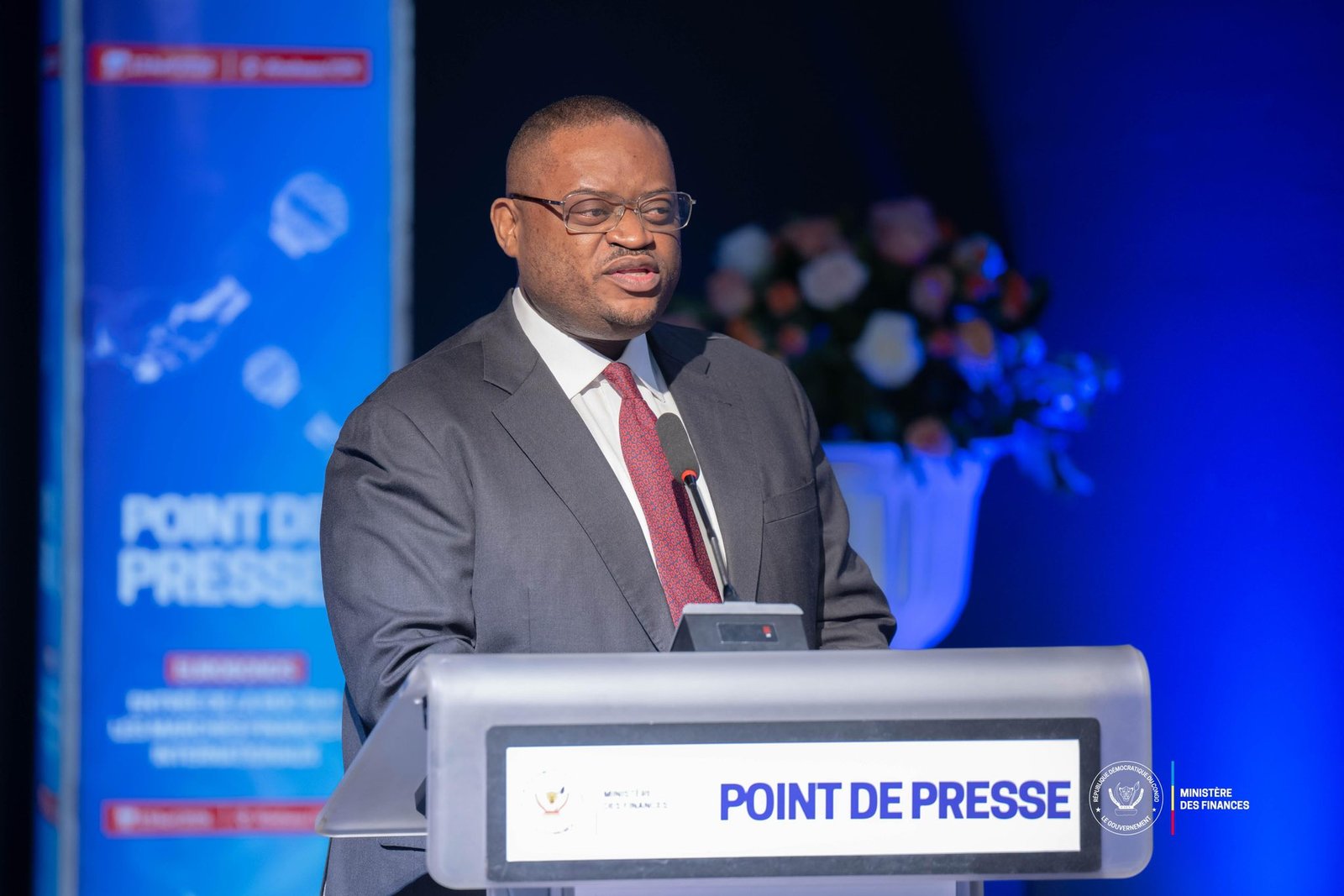
Finance Minister Doudou Roussel Fwamba Likunde hailed the issuance as “a lever of economic transformation, carried out in full respect of debt sustainability,” crediting the leadership of President Félix Antoine Tshisekedi Tshilombo and Prime Minister Judith Suminwa Tuluka.
He also praised the ministry’s technical teams and advisers White & Case, Rothschild & Co, Citigroup, Standard Chartered and Rawbank.
The reforms have been supported by close cooperation with Bretton Woods institutions, including International Monetary Fund programs.
The IMF, in its April 2026 projections, forecast Congo’s economy to expand 5.9% this year, driven largely by copper and cobalt mining, placing it among Africa’s faster-growing economies.
“This historic issuance signals Congo’s arrival on global markets,” Likunde said. “The best is yet to come.”